Eccentric Trunk Rotation Drills to Improve Rotational Power and Spine Safety
You build rotational power and protect your spine by focusing on eccentric trunk rotation drills that prioritize controlled deceleration over speed. Using cable machines or resistance bands, you enhance core stability while minimizing shear forces. Slow eccentrics boost neuromuscular coordination, strengthening deep stabilizers with predictable loading. Add dumbbell halos and offset kettlebell holds to improve anti-rotation control and trunk stiffness-key for athletic performance and spine resilience. There’s a smarter way to train rotation, and it starts with control.
Notable Insights
- Perform eccentric trunk rotations with 3–4 seconds of controlled deceleration to build rotational power and enhance core stability.
- Use cable machines or resistance bands to provide adjustable, sustained resistance during rotational movements.
- Focus on engaging deep core musculature to improve spinal resilience and reduce shear forces during dynamic motions.
- Maintain strict tempo control to minimize spine compression and avoid momentum-driven, high-load rotations.
- Incorporate dumbbell halos and offset kettlebell holds to develop anti-rotation strength and neuromuscular coordination.
Build Rotational Power Safely With Eccentrics
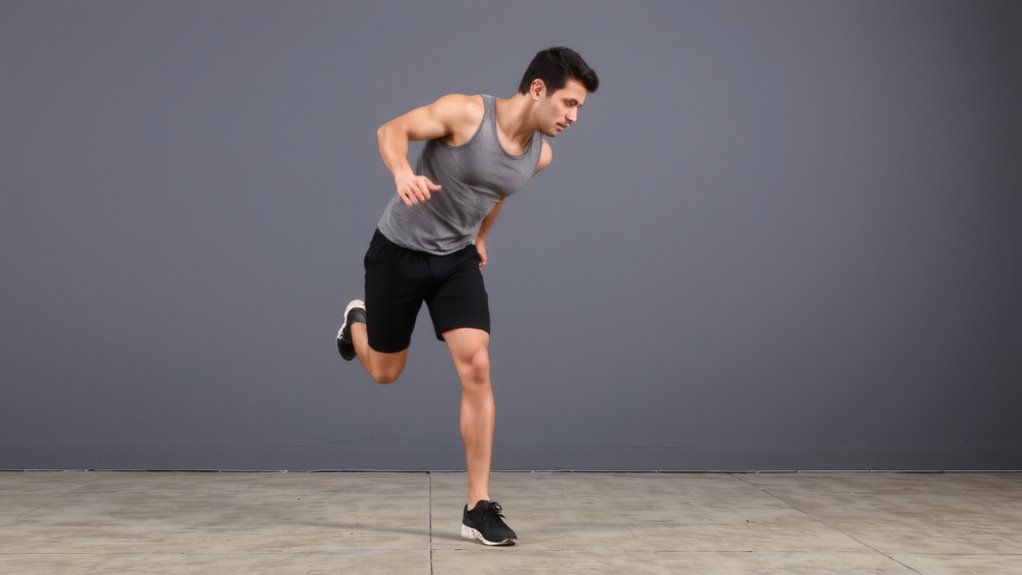
While traditional rotation exercises often emphasize speed and range of motion, eccentric trunk rotation drills focus on controlled deceleration to build rotational power safely. You’re not just twisting-you’re resisting, engaging deep core musculature to enhance spinal resilience and dynamic stability. These drills force your torso to slow down rotation under load, mimicking real-world movements like swinging or throwing. That control doesn’t just protect your spine-it strengthens it over time. You’ll notice improved coordination and reduced risk of shear forces during explosive motions. Equipment like cable machines or resistance bands works best, letting you adjust tension gradually. Consistency matters more than intensity here. Over weeks, you’ll see measurable gains in control and power output. It’s not flashy, but it’s functional. For long-term spine health and performance, eccentric focus isn’t optional-it’s essential.
Reduce Spine Load With Controlled Rotation
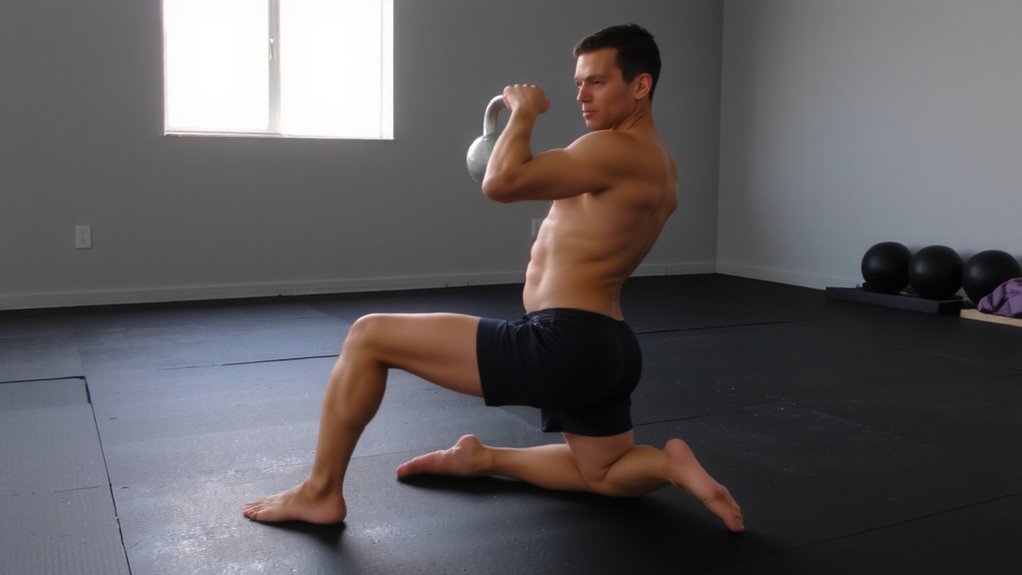
Because traditional rotation exercises often overload the spine through momentum-driven movements, controlled rotation offers a smarter way to train without compromise. You’re minimizing spine compression and joint shear by moving deliberately, especially during the eccentric phase. This approach keeps forces predictable, reducing injury risk while still challenging rotational strength. Unlike ballistic twists, where momentum spikes load unpredictably, controlled rotation guarantees muscular engagement throughout the full range. You’re not just moving less violently-you’re moving smarter, letting your core absorb and resist force safely. Equipment like rotary cables or landmines helps, but only if you maintain tempo. Without control, even low-weight tools can generate harmful joint shear. Focus on form, not speed, and you’ll protect your spine while building real power. It’s not about eliminating load-it’s about managing it. With consistent practice, your body learns to rotate efficiently under tension, not strain.
How Eccentrics Boost Core Neuromuscular Control
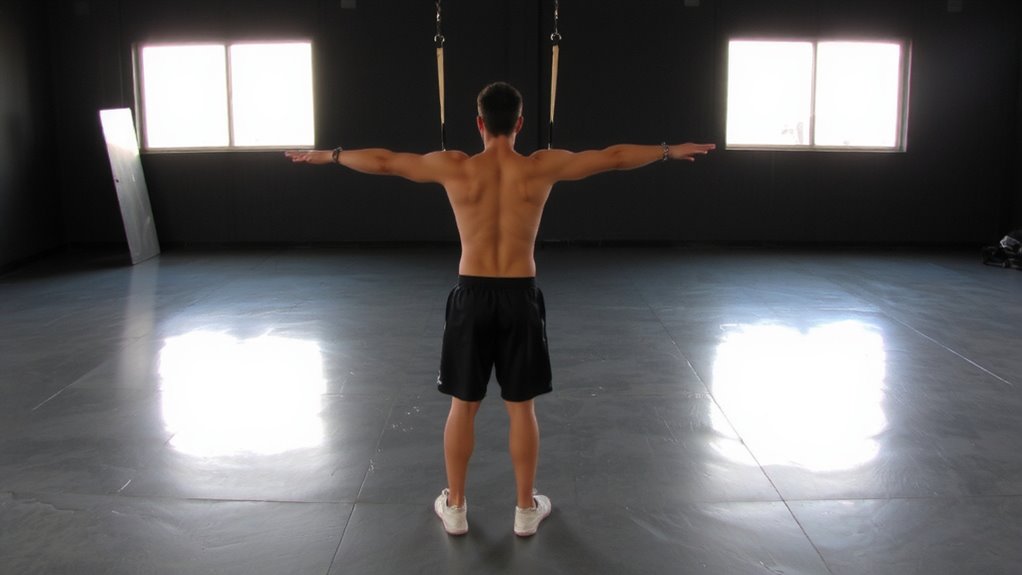
When you slow down the eccentric phase of a trunk rotation, you’re not just resisting movement-you’re refining how your core responds to load. This deliberate deceleration enhances muscle coordination, forcing your abdominals, obliques, and spinal stabilizers to communicate more efficiently under tension. Over time, this fosters neural adaptation, meaning your nervous system learns to recruit core muscles faster and with greater precision. You’re not just building strength-you’re teaching your body to control rotation before it becomes destabilizing. That’s critical for athletic performance and injury prevention. Eccentrics demand focus, and that mental engagement sharpens motor control. Unlike passive recovery tools, these drills actively rebuild neuromuscular integrity, making them a smarter choice than static gear like foam rollers. The carryover to dynamic sports movements is clear: better timing, smoother shifts, and a more resilient spine. It’s not just training-it’s reprogramming.
Do Band-Resisted Eccentric Rotations
If you’re serious about building rotational control, band-resisted eccentric rotations deliver targeted resistance that’s both adjustable and joint-friendly. You can fine-tune the band tension to match your strength level, making it ideal for progressive training without spinal compression. Focus on a slow rotational tempo-around 3–4 seconds per turn-to maximize time under tension and enhance neuromuscular coordination. These drills emphasize control during the lengthening phase, strengthening deep core stabilizers while reducing injury risk. Below is a quick guide to optimizing your setup:
| Phase | Band Tension | Rotational Tempo |
|---|---|---|
| Initiation | Moderate | Controlled start |
| Eccentric | High (challenge) | 3–4 seconds per rep |
| Return | Sustained | Smooth, no recoil |
Use durable, non-slip anchor points and inspect bands regularly. When performed consistently, this method builds functional power safely and effectively.
Master Core Control With Dumbbell Halo Eccentrics
While many prioritize explosive rotation, refining control through slow, loaded movement patterns like the dumbbell halo eccentric builds a foundation most athletes overlook. Dumbbell halos challenge your thoracic mobility and core stability as you guide the weight in a smooth circular path around your head. The key is controlled momentum-don’t let the dumbbell swing; instead, resist gravity by engaging your obliques, lats, and deep spinal stabilizers throughout the full range. Move slowly, especially during the eccentric phase, to maximize time under tension and enhance neuromuscular coordination. This drill teaches your trunk to decelerate rotation, a critical skill for sports performance and spine safety. Perform 2–3 sets of 6–8 reps clockwise and counterclockwise, using a moderate weight that allows flawless technique. Dumbbell halos aren’t flashy, but their impact on trunk control is unmatched when done with disciplined, controlled momentum.
Use Offset Kettlebell Holds for Anti-Rotation
Your grip on anti-rotation strength gets put to the test with offset kettlebell holds, a deceptively simple drill that exposes even minor weaknesses in core stability. The offset loading forces your obliques, glutes, and spinal stabilizers to work overtime, resisting rotational pull. Unlike symmetrical carries, this variation demands true grip integration, linking hand strength to trunk control through neural coordination. You’ll feel it fast-even light bells challenge endurance.
| Benefit | Mechanism | Practical Use |
|---|---|---|
| Trunk stiffness | Offset loading disrupts balance, requiring isometric compensation | Ideal for injury prevention in rotational athletes |
| Grip integration | Force transfer from hand to core enhances neuromuscular efficiency | Builds resilience during unilateral work |
| Spine safety | Encourages neutral spine under lateral stress | Safer than dynamic rotation for beginners |
Use moderate loads, focus on posture, and progress duration-not weight.
Program Eccentrics for Golf, Baseball & Sport Power
A well-programmed eccentric training regimen can markedly amplify rotational power in sports like golf and baseball, where explosive trunk deceler游戏代 and redirection are critical. You need rotational specificity-training movements that mimic your sport’s mechanics-to build real-world strength safely. Eccentric trunk rotations, especially with controlled resistance like cables or bands, enhance sport specific deceleration by conditioning connective tissues and neuromuscular coordination. These drills slow down the backswing follow-through or post-pitch rotation, reducing spinal shear. Implement 2–3 sets of 8–10 slow eccentrics (4–5 seconds down), focusing on control over speed. Pair them with sport-specific patterns to guarantee transfer. Devices like rotational trainers or eccentric-focused belts offer measurable resistance but require consistent anchoring and alignment. Though not flashy, they reliably improve stability and power output when used correctly-making them a smart, low-risk addition to performance programming.
On a final note
You’ll build stronger, safer rotation by emphasizing eccentric control-it reduces spinal compression while boosting neuromuscular coordination. Tools like resistance bands, dumbbells, and offset kettlebells aren’t just functional; they’re effective for sport-specific power in golf or baseball. When programmed consistently, these drills enhance core stability and injury resilience. The right gear, well-maintained, supports long-term progression, making eccentric training a smart, sustainable choice for athletic development and spine health.