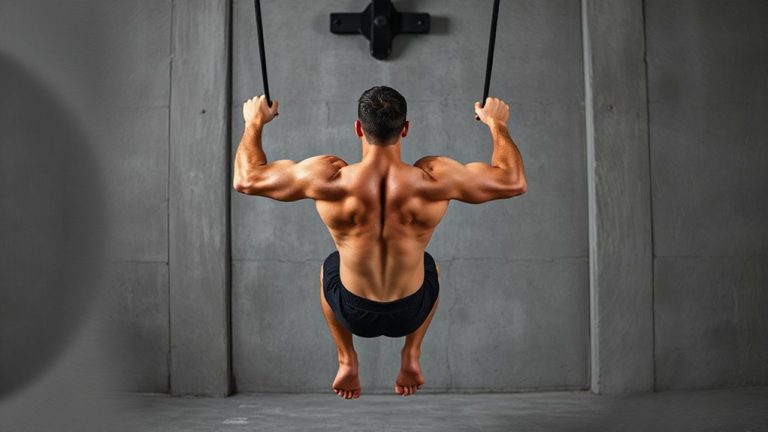
Eccentric Overhead Squats to Improve Shoulder and Core Integration
You build real shoulder and core integration by controlling the descent in eccentric overhead squats, not just lifting fast. A 3–5 second lowering phase increases time under tension, reinforcing proper joint alignment while reducing strain on your spine and shoulders. Keep your arms locked out, ribs down, and engage your lats to stay stable. Avoid elbow flaring or wrist collapse-they break overhead integrity. Master the movement progressively, and you’ll discover how strength and stability truly connect.
Notable Insights
- Eccentric overhead squats enhance shoulder and core integration by emphasizing controlled descent under load.
- Maintaining locked-out arms and engaged lats improves neuromuscular coordination and stability.
- A slow 3–5 second descent increases time under tension, boosting strength and alignment.
- Avoid elbow flare and wrist collapse to preserve overhead integrity and reduce injury risk.
- Progress from dowel drills to light weights, prioritizing form for optimal shoulder-core synergy.
Why Eccentric Overhead Squats Fix Shoulder and Core Weakness
While most lifters focus on the concentric phase of the overhead squat, it’s the eccentric-your controlled descent-that delivers the real benefit when targeting shoulder and core deficiencies. You’re not just building strength; you’re refining joint alignment under load, which reduces strain on vulnerable areas like the AC joint and lumbar spine. By slowing the descent, you force your shoulder stabilizers and anterior core to work in sync, enhancing neuromuscular coordination critical for dynamic stability. This controlled loading teaches your body to maintain a stacked, efficient posture even as fatigue builds. Unlike ballistic or rushed reps, the eccentric phase demands precision, making it ideal for correcting compensatory patterns. Over time, you’ll notice improved control during overhead movements and better transfer to athletic performance. It’s not about ego lifting-it’s about smart, sustainable gains through deliberate tension and timing.
How to Perform the Eccentric Overhead Squat With Control
One deliberate rep done right beats ten sloppy ones when mastering the eccentric overhead squat. To build real strength and stability, you need tempo control-aim for a slow 3–5 second descent. This lengthens the time under tension, forcing your shoulders and core to work together. Keep the barbell locked out overhead with arms fully extended, maintaining a neutral wrist and ribcage down to avoid compensation. Your mobility focus should be on thoracic extension and ankle dorsiflexion, both critical for depth without collapse. Engage your lats to stabilize the weight and prevent forward lean. Drive elbows up and slightly forward to maintain the bar path over mid-foot. Breathe into the belly during descent, bracing hard at the bottom. Use of resistance bands or a PVC pipe can help refine positioning before loading. Control isn’t just safer-you’ll build functional range and neural precision that carry over to heavier lifts.
Form Mistakes That Sabotage Your Stability
You’ve got the slow descent down and you’re bracing hard at the bottom, but even with perfect tempo, small errors can wreck your balance and undo the gains you’re working for. Elbow flare is one such mistake-it shifts load away from your shoulders and core, reducing integration and inviting strain. When your elbows shoot out instead of staying stacked over wrists, you lose tension and stability. Equally damaging is wrist collapse, where your hands break alignment under load, compromising bar path and joint safety. This often stems from poor grip or limited wrist mobility, but it weakens force transfer and forces you to compensate elsewhere. Both flaws disrupt the overhead integrity the eccentric squat demands. You might maintain form briefly, but over time, these inconsistencies erode control, limit carryover, and increase injury risk. Correct them early-keep elbows forward, wrists firm-so every rep builds real stability.
Eccentric Overhead Squat Progressions for Every Level
How do you build the strength, mobility, and control needed to nail a full-depth eccentric overhead squat without crumbling under the bar? Start with mobility drills targeting your shoulders, hips, and thoracic spine-these lay the foundation for a stable, upright position. If you’re new, use a PVC pipe or dowel to practice slow, controlled descents, focusing on form. As you gain confidence, progress to light kettlebells or dumbbells, then barbells. Each phase boosts strength gains while reinforcing joint integrity. Athletes with solid baselines can add resistance or extend time under tension. Consistency matters more than intensity-small, progressive steps yield better long-term results than forced reps. Use wrist wraps or lifting shoes if needed, but don’t rely on gear to fix poor mechanics. Let proper progression guide your gains.
How to Program Eccentric Overhead Squats by Goal and Fitness Level
Now that you’ve built foundational mobility and control through structured progressions, it’s time to match your programming to your goals and current fitness level. If you’re aiming for shoulder stability and core integration, lower reps (3–5) with longer eccentric phases (4–6 seconds) and full recovery work best-these programming variables emphasize neuromuscular control. For hypertrophy or endurance, higher reps (8–12) with moderate tempo (3–4 seconds down) increase time under tension. Beginners should stick to goblet or band-assisted eccentric overhead squats-this exercise selection reduces load complexity while maintaining movement integrity. Intermediate to advanced lifters can use barbell variations or add instability (e.g., foam pads) to heighten demand. Always prioritize form over volume. Adjust volume and frequency based on recovery capacity; soreness in the shoulders or low back means you’ve likely overreached. Thoughtful exercise selection and smart programming variables make all the difference.
On a final note
You’ll find eccentric overhead squats build real strength by syncing shoulder stability with core control. They’re demanding but efficient, exposing weaknesses most lifts miss. When programmed right, they boost mobility and motor control simultaneously. Use quality gear-knee sleeves for joint feedback, a non-slip mat for foot anchoring-and expect gains in posture and movement precision. Recovery matters too; soreness in the right places means it’s working.