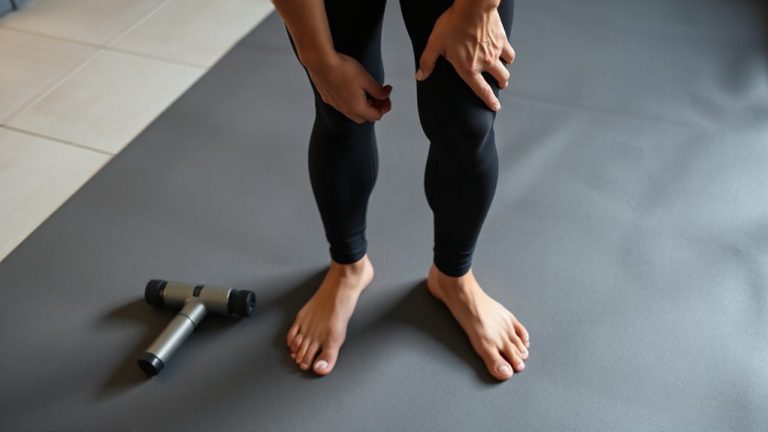
How Collagen Peptides Before Bed Support Joint Recovery and Sleep Quality
Taking collagen peptides before bed gives your body key amino acids like glycine and proline just when it starts overnight repair. Glycine helps you fall asleep faster and boosts deep sleep, while proline fuels cartilage regeneration and joint repair. With better absorption on an empty stomach, nighttime dosing supports recovery more effectively than daytime use. This smart timing acts like high-performance recovery gear-maximizing your body’s natural healing. You’ll see how the right collagen type makes it even more effective.
Notable Insights
- Collagen peptides supply essential amino acids that support cartilage regeneration and tissue repair during overnight recovery.
- Glycine in collagen acts as a natural sedative, promoting faster sleep onset and deeper, restorative sleep stages.
- Proline fuels joint matrix production and stabilizes collagen structure, enhancing tissue repair while you sleep.
- Taking collagen before bed optimizes bioavailability on an empty stomach and aligns with the body’s peak repair cycle.
- Marine and bovine collagen offer high absorption and glycine content, supporting both joint health and sleep quality.
How Collagen Peptides Boost Overnight Recovery

Your overnight recovery gets a noticeable upgrade when collagen peptides enter the equation. These bioactive proteins supply essential amino acids that support cartilage regeneration and accelerate tissue repair while you sleep. Since your body repairs structural damage during rest, taking collagen peptides before bed guarantees raw materials are available precisely when needed. Clinical studies show improved joint comfort and mobility after consistent use, especially in active individuals. Unlike bulkier recovery supplements, collagen peptides mix easily and digest quickly, making them practical for nighttime routines. They’re not a standalone solution, but when paired with quality recovery gear-like supportive mattresses or foam rollers-collagen enhances the body’s natural healing rhythm. Though results vary, most users report less morning stiffness within weeks. For fitness enthusiasts, this means better long-term joint health and more resilient soft tissues, which matters when training demands are high.
Why Glycine Helps You Fall Into Deeper Sleep?

What if a single amino acid could shift your sleep from light dozing to truly restorative rest? Glycine does just that. When you take collagen peptides before bed, you’re supplying your body with glycine, which supports deeper sleep by lowering core body temperature and calming brain activity. This amino acid acts like a natural sedative, helping you fall asleep faster and stay in the more restorative stages longer. You’ll notice smoother shifts through sleep cycles, with less nighttime wakefulness. Studies show glycine improves sleep quality without grogginess, so you wake up feeling refreshed. Unlike sleep aids that dull brain activity too much, glycine fine-tunes it-supporting memory consolidation and mental recovery. It’s not a knockout pill; it’s a subtle regulator. For anyone serious about recovery, glycine’s role in enhancing deep sleep makes it a smart, science-backed part of your nightly routine.
How Proline Repairs Joints While You Sleep

Collagen peptides do more than support better sleep-they also deliver key amino acids like proline that go to work while you rest. Proline plays a critical role in cartilage regeneration and tissue repair, helping maintain joint integrity during recovery phases. As you sleep, your body shifts into repair mode, making it an ideal window for proline to support structural healing. It stabilizes collagen’s structure and boosts new collagen synthesis, essential for durable joint function.
| Benefit | How Proline Helps |
|---|---|
| Cartilage regeneration | Fuels matrix production in joint tissues |
| Tissue repair | Enhances collagen cross-linking for strength |
Regular intake before bed guarantees sustained amino acid availability overnight, aligning with your body’s natural recovery rhythm. High-quality collagen supplements provide concentrated proline levels, outperforming generic protein sources in targeted joint support. This makes them a practical addition to recovery-focused fitness routines.
Is Bedtime the Best Time for Collagen?
Could bedtime truly be the most favorable window for collagen supplementation, especially when recovery is the goal? Research suggests that collagen timing plays a key role in maximizing benefits. Taking collagen peptides before sleep may enhance bedtime absorption, aligning with your body’s natural repair cycles. During sleep, tissue regeneration peaks, making it an ideal opportunity to fuel joint and connective tissue recovery. Unlike daytime dosing, which competes with meals and other supplements, nighttime intake avoids interference, potentially improving bioavailability. While collagen timing isn’t one-size-fits-all, bedtime offers a consistent, empty-stomach window that supports steady amino acid uptake. This strategic approach leverages your body’s overnight processes, optimizing the supply of critical building blocks when they’re most needed. For those prioritizing fitness recovery, considering bedtime as your collagen moment makes physiological sense-pairing smart supplementation with the body’s innate rhythms for better long-term results.
What the Science Says About Collagen and Recovery
You’re likely already aware that your body undergoes significant repair during sleep, and emerging studies suggest collagen peptides taken before bed can actively support this process. Research shows that supplemental collagen boosts collagen synthesis, especially when paired with vitamin C and timed around periods of physiological demand like overnight recovery. Collagen peptides provide bioavailable amino acids-particularly glycine and proline-that support connective tissue repair, making them relevant for athletes or anyone experiencing joint stress. Clinical trials indicate improved joint comfort and reduced markers of cartilage breakdown with daily collagen intake. While evidence isn’t unanimous, consistent use appears to enhance the structural integrity of tendons and ligaments over time. Unlike many fitness recovery aids that focus on muscles alone, collagen targets the matrix between joints, adding functional support where traditional gear falls short. It’s not a miracle fix, but combined with proper training and rest, it’s a scientifically backed tool that complements long-term joint health and tissue repair.
Best Collagen Types for Sleep and Joints
Why do certain collagen types seem to work better for overnight recovery and joint support? It comes down to collagen absorption and amino acid balance. Type I and III collagen support skin and muscle repair, but for joints and sleep, Type II stands out. Sourced typically from chicken sternum, it targets cartilage specifically. Meanwhile, marine collagen offers high bioavailability, enhancing nighttime absorption. Bovine collagen delivers a broad amino acid balance, including glycine-shown to support deeper sleep. When you prioritize rest and joint health, choosing the right type makes a real difference.
| Collagen Type | Best For |
|---|---|
| Type II | Joint cartilage repair |
| Marine | Faster absorption |
| Bovine | Sleep support, glycine |
Easy Ways to Take Collagen Before Bed
How can you make the most of collagen supplementation during sleep without disrupting your routine? Taking collagen peptides before bed can be simple and effective with smart flavor mixing and proper dosage timing. Mix unflavored or vanilla collagen powder into warm almond milk or a nighttime smoothie-it blends easily and won’t keep you up. For best results, aim for 10–15 grams about 30 to 60 minutes before sleep, giving your body time to absorb it during early recovery phases. Since collagen supports joint repair and tissue regeneration, aligning dosage timing with your body’s natural repair cycle enhances benefits. Flavor mixing with calming ingredients like tart cherry or cinnamon improves palatability without added sugar. Unlike bulky supplements or gear-heavy recovery tools, collagen is low-effort and fits seamlessly into evening habits, offering consistent support for sleep quality and joint health when used thoughtfully.
On a final note
You’ll likely notice better joint recovery and sleep quality when taking collagen peptides before bed. Glycine helps regulate your sleep cycle, while proline supports tissue repair overnight. Research suggests collagen type I and III are especially effective for joint and skin health. Taken consistently, collagen fits well into a smart recovery routine. Paired with quality fitness gear and rest, it’s a practical upgrade to nighttime recovery-simple, science-backed, and efficient.