Slow Weight Shifting in Tai Chi Form to Restore Balance After Plyometric Training
Plyo jumps overload your joints and disrupt balance, but slow weight shifting in Tai Chi helps reset your system. You retrain proprioception and improve joint alignment through controlled, mindful shifts. Movements like Wave Hands Like Clouds enhance neuromuscular control while promoting recovery. Practiced post-workout, Tai Chi reduces stiffness and supports core stability. Use a non-slip mat and focus on breath to maximize benefits-there’s more to gain with the right form.
Notable Insights
- Slow weight shifting in Tai Chi reestablishes balance by enhancing proprioception after plyometric joint overload.
- Deliberate transitions like Wave Hands Like Clouds improve neuromuscular control and correct movement compensation patterns.
- Grounding stances such as Wu Ji promote joint alignment and stability lost during explosive plyo landings.
- Coordinated breath and movement in Tai Chi reduce post-training stiffness and support muscle elasticity recovery.
- Consistent practice on low-compression mats ensures safe, effective weight transfer and proper knee alignment.
How Plyo Jumps Wreck Your Balance (And How Tai Chi Fixes It)
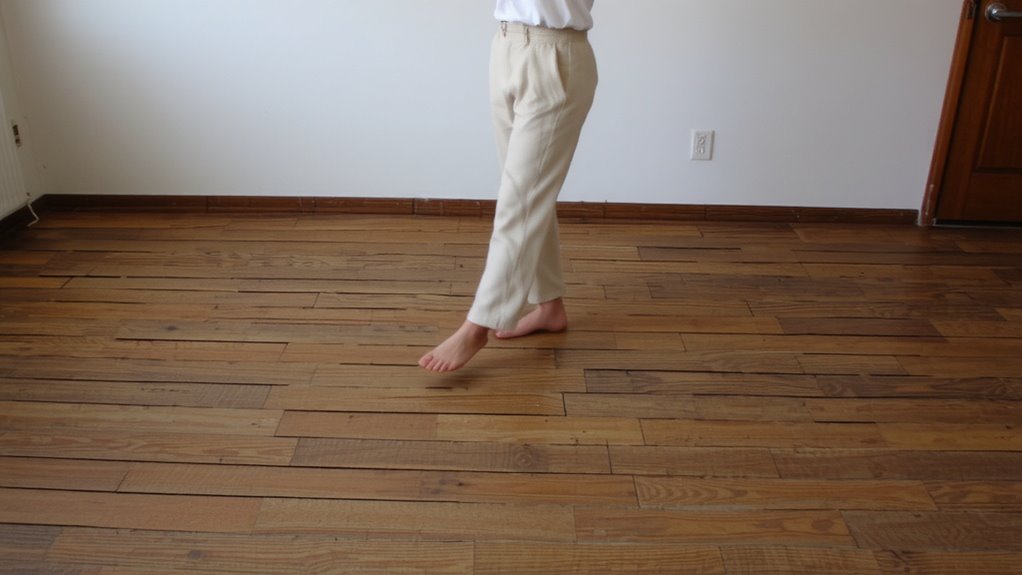
While plyo jumps can boost explosive power, they often compromise balance by overloading joints and reinforcing shallow, reactive movement patterns that neglect core stability. You might not realize it, but these jumps frequently encourage poor knee alignment, increasing injury risk over time. The rapid, forceful landings don’t allow your body to adjust properly, leading to compensation patterns that stick. That’s where slow weight shifting in Tai Chi comes in-not as a substitute for power training, but as a tool for neural recalibration. By deliberately moving your center of mass, you retrain coordination, improve proprioception, and reestablish control. Unlike aggressive recovery gear that numbs symptoms, Tai Chi addresses the root cause: movement dysfunction. You’re not just recovering; you’re rebuilding smarter. The practice demands no special equipment, just consistency-and that’s what makes it effective.
What Science Says About Slow Weight Shifting for Recovery
You already know plyo jumps can destabilize your movement patterns, reinforcing reactive habits that neglect deep stabilization and joint control. Slow weight shifting counters this by promoting neural adaptation and restoring muscle elasticity. Research shows deliberate movement recalibrates sensory feedback and improves proprioception. It’s not just about stretching-controlled shifts enhance coordination and reduce stiffness post-training.
| Benefit | Mechanism |
|---|---|
| Joint alignment | Gradual load redistribution |
| Neuromuscular control | Enhanced neural adaptation |
| Recovery speed | Improved muscle elasticity |
| Movement efficiency | Refined motor patterning |
This isn’t passive recovery-it’s active recalibration. Unlike foam rolling or static stretching alone, slow weight shifting integrates balance, timing, and muscle responsiveness. You’re retraining your system, not just relaxing it. The result? Stronger post-plyometric resilience and fewer compensatory patterns. It’s recovery that works with your body’s design, not against it.
Fit Tai Chi Into Your Cool-Down Routine
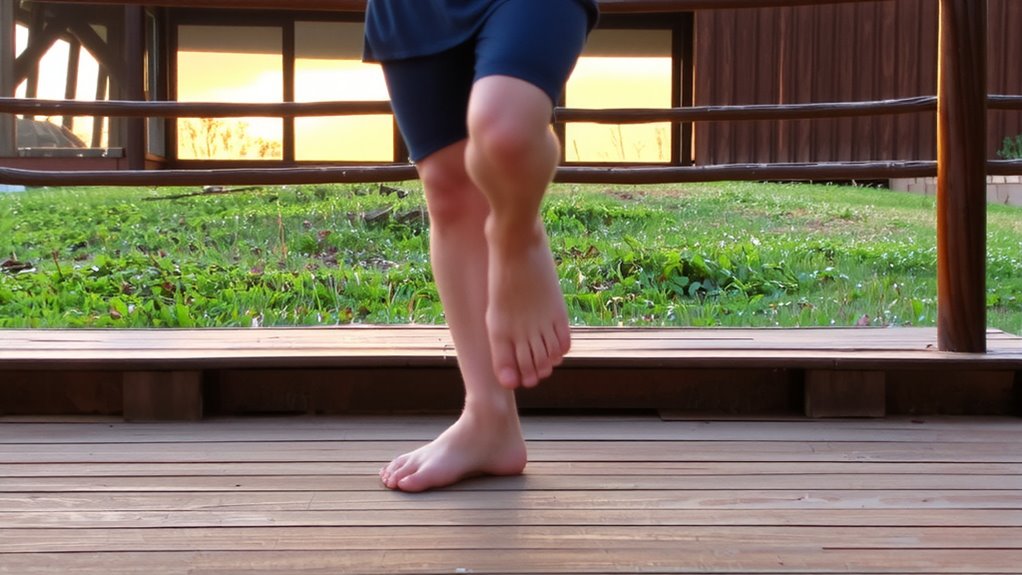
Sometimes, the most effective cooldowns aren’t about intensity-they’re about intention. You can seamlessly integrate Tai Chi into your cool-down routine by dedicating just 5–10 minutes post-workout to slow, controlled movements. This practice enhances recovery by promoting meditation focus and breath awareness, helping shift your nervous system from stress to restoration. Unlike aggressive stretching or static holds, Tai Chi’s fluid shifts support muscle relaxation while maintaining joint mobility. You don’t need special fitness gear-just supportive shoes or a non-slip mat to guarantee stability. The emphasis on deliberate weight shifting improves circulation and reduces post-plyo inflammation. When performed consistently, this method proves more effective than passive recovery. It’s not just about cooling down-it’s about recalibrating. The combination of mental clarity and physical ease makes Tai Chi a practical, low-impact cooldown strategy backed by both tradition and physiology.
Tai Chi Moves That Restore Post-Plyo Proprioception
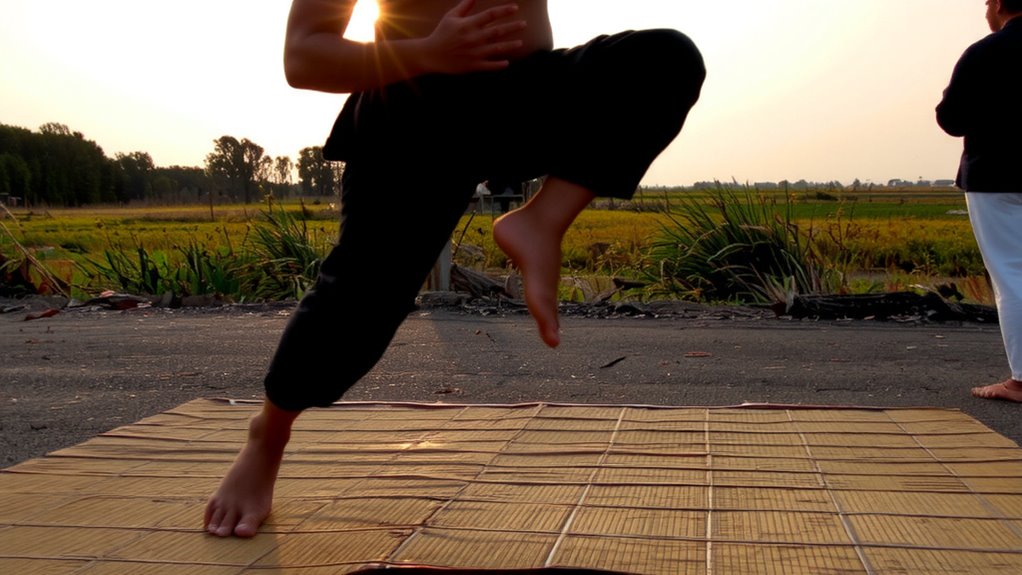
Because explosive plyometric training taxes both muscle and neural feedback systems, reintroducing balance and body awareness becomes critical-this is where Tai Chi’s signature weight-shifting moves shine. You engage grounding stances like *Wu Ji* and *Horse Stance* to reestablish stability, letting your joints and fascia reset after high-impact stress. These positions aren’t just static; they anchor your awareness so you can execute mindful shifts between postures such as *Wave Hands Like Clouds* and *Brush Knee*. Each movement retrains proprioception by demanding subtle control, slow momentum, and joint articulation. Unlike passive cooldowns, these flows actively recalibrate neuromuscular communication, helping your body relearn safe ranges of motion. When paired with proper recovery gear-like low-compression mats that support joint alignment-these Tai Chi techniques become even more effective. The result? You don’t just cool down; you restore functional awareness essential for long-term resilience and injury prevention.
Tai Chi Mistakes That Hurt Balance Recovery
While precision in movement defines effective Tai Chi practice, even minor errors can undermine its recovery benefits-especially when reestablishing balance post-plyometric training. You might not realize how improper posture reduces your stability, causing misalignment that challenges joint integrity and slows neuromuscular recalibration. Slouching or locking your knees disrupts the natural flow of weight transfer, making recovery less efficient. Uneven breathing exacerbates this-shallow or irregular breaths limit oxygen delivery, impairing focus and coordination when you need them most. These mistakes diminish Tai Chi’s restorative potential, turning a corrective practice into a source of compensatory strain. For best balance recovery, you must maintain a relaxed yet aligned frame and synchronize breath with motion. Fitness recovery isn’t just about time invested; it’s about technique quality. Proper form guarantees your body reapplies what it learns during training, so flaws in execution directly impact functional outcomes.
On a final note
You’ve pushed your limits with plyo jumps, but now your balance needs recalibrating. Slow weight shifting in tai chi restores proprioception by retraining neural pathways, not just relaxing muscles. Studies show controlled movement improves post-activation recovery better than static stretching. Integrating tai chi into your cool-down boosts stability, reduces injury risk, and enhances neuromuscular efficiency. Proper form matters-rushed execution undermines benefits. For recovery, invest in supportive, flexible gear that allows full range of motion without restriction.