Catch-to-Finish Cue Refinement in Rowing to Mitigate Lumbar Shear Forces
You’re risking your lower back if you lead with your spine instead of your hips at the catch. Maintain a neutral spine with a sharp exhale to engage your core and reduce lumbar shear. Initiate the drive with legs, keeping torso stable until shins are vertical. Proper sequencing-legs, body, arms-distributes force safely. Strong, consistent cues build safer movement patterns that protect your spine without sacrificing power. There’s more to optimizing your stroke efficiently and sustainably.
Notable Insights
- Initiate the catch with a hip hinge, maintaining a neutral spine to minimize lumbar flexion and shear forces.
- Ensure shins are vertical and knees aligned over ankles to optimize leverage and reduce spinal loading.
- Engage the core forcefully at the catch through a sharp exhale to enhance intra-abdominal pressure and spine stability.
- Begin the drive with leg propulsion while keeping the torso stable to prevent premature upper body motion and shear stress.
- Sequence the stroke as legs, then body, then arms to ensure smooth force transfer and protect the lower back.
Why Rowing Shear Forces Cause Back Pain
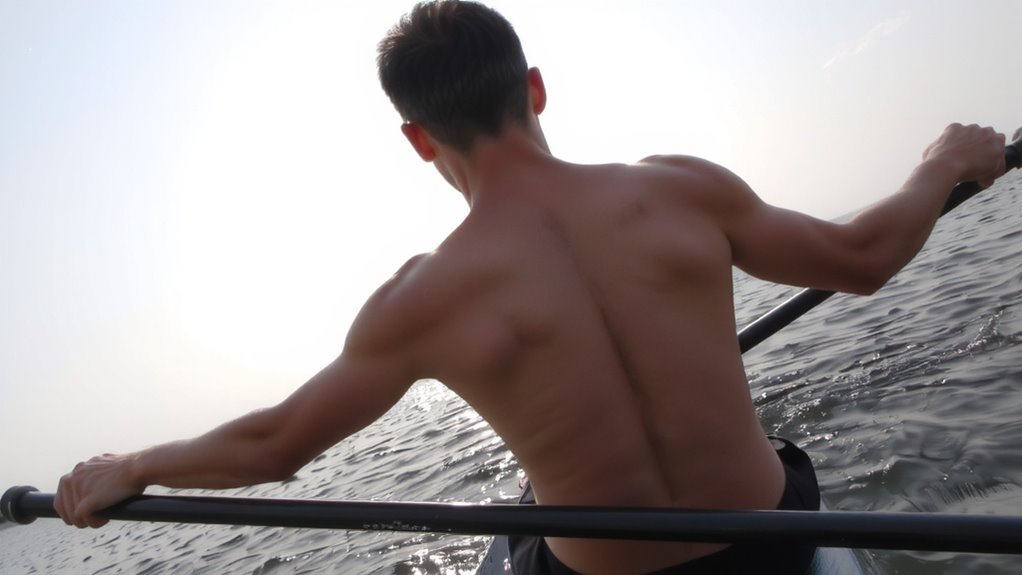
While you might think rowing is a low-impact sport that’s easy on the spine, the repetitive shear forces generated during the catch phase actually place significant stress on your lower back-especially if your technique or equipment setup isn’t optimized. Excessive lumbar flexion at the catch increases anterior shear on the vertebrae, straining ligaments and discs. When combined with spinal compression from forceful drive initiation, the cumulative load can lead to pain or chronic injury. Fitness recovery protocols often overlook how repeated motion under suboptimal alignment diminishes tissue resilience. Recovery gear like foam rollers or percussion devices may help manage symptoms, but they don’t correct the root biomechanical issue. Without addressing lumbar flexion and spinal compression through cue refinement-such as maintaining a neutral spine and optimizing foot placement-recovery becomes reactive rather than preventive. Effective long-term back health in rowers depends on integrating proper cues with smart training design, not relying solely on post-workout recovery tools. Incorporating targeted back stretching equipment can complement technical adjustments by improving spinal mobility and reducing baseline tension.
How the Catch Phase Increases Spine Load
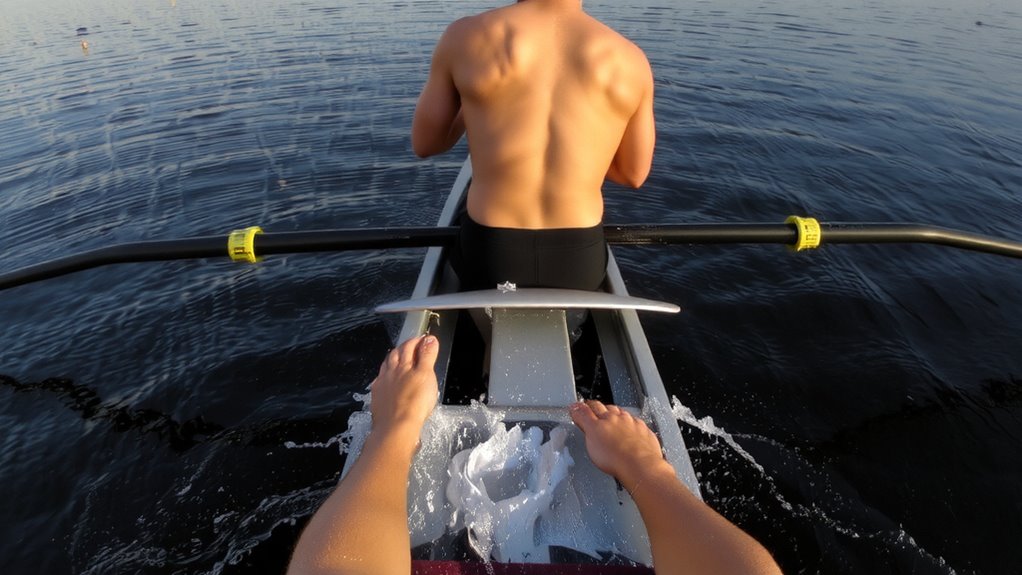
Because your spine bears more than just the weight of your body during the catch phase, understanding how load accumulates is key to preventing long-term injury. The forward reach and bent posture amplify spinal compression, especially when you load the legs before the back is ready. This timing mismatch often triggers joint misalignment, increasing shear forces on lumbar discs. Rapid force transfer from leg drive can overload the spine if your core isn’t engaged early, turning proper mechanics into a risk. Using targeted interventions like lumbar traction devices can help alleviate disc pressure and support spinal health over time.
| Factor | Effect on Spine |
|---|---|
| Spinal compression | Increases disc pressure, reducing cushioning |
| Joint misalignment | Promotes uneven load distribution, raising injury risk |
| Premature leg drive | Amplifies shear forces before torso is stabilized |
You’re not just moving water-you’re managing force under fatigue, where precision beats power.
Set the Right Posture at the Catch

The catch position isn’t just about reaching far-it’s about setting a strong, stable posture that protects your spine and maximizes power transfer. You need a precise hip hinge to maintain a neutral spine, preventing excessive lumbar flexion that increases shear forces. As you lean forward, your hips should lead while your back stays long and engaged. Poor knee alignment-either caving in or flaring out-compromises force production and adds joint stress. Your shins should be vertical, knees stacked over ankles, ensuring ideal leverage. Maintaining this posture relies on mobility in the hips and ankles, not just brute reach. Cues like “chest tall” and “sit bones forward” help reinforce proper positioning. When done right, the catch sets up a powerful, spine-friendly drive phase. Focusing on these details reduces injury risk and enhances efficiency stroke after stroke. A well-designed indoor rowing machine can support proper biomechanics and help maintain safe, effective technique.
Time the Drive to Reduce Spine Stress
When you initiate the drive from the catch, how quickly you apply force makes all the difference for your lower back. Rushing into the stroke increases lumbar shear forces, especially if your torso starts moving before your legs. Proper stroke timing guarantees force builds gradually, letting the legs lead while the back stays stable. Drive synchronization across the crew amplifies this benefit-when everyone moves in phase, the boat runs smoother and individual strain drops. You’re not just protecting your spine; you’re rowing more efficiently. Think of it as a whip-like sequence: legs, then body, then arms. If you yank too early, the energy lags and stress concentrates in your lower back. Mastering this timing isn’t just technique-it’s injury prevention. You’ll row stronger, longer, with less wear on your joints.
Engage Your Core to Protect Your Back
Think of your core as a built-in support belt-tightening it before the catch keeps your lower back safe and your stroke powerful. Proper muscle activation begins with a sharp exhale at the catch, bracing your abdominals like a coiled spring. This breathing technique increases intra-abdominal pressure, stabilizing your spine against shear forces. Engaging not just the abs but also the obliques and transverse abdominis guarantees full engagement, reducing lumbar strain during drive initiation. You’re not just protecting your back-you’re creating a rigid frame for efficient force transfer. Unlike passive support from fitness gear, this natural activation doesn’t weaken muscles over time. Over-reliance on external support belts may actually impair neuromuscular feedback, hindering long-term resilience. Precision in timing and depth of engagement matters more than intensity. Mastering this cue builds durable strength and promotes safer, repeatable technique. Success hinges on consistent practice, not equipment.
Apply Cues Without Losing Power
You’ve got the cues-core tight, back protected, posture sharp-but now comes the real test: applying them without draining your power. The key is syncing your leg drive with precise blade depth to maintain momentum and efficiency. Overemphasizing form can dull your explosion at the catch, but neglecting it spikes shear forces on your spine. Balance is everything.
| Cue Focus | Effect on Power & Safety |
|---|---|
| Sharp catch | Maximizes leg drive, reduces slippage |
| Shallow blade | Decreases resistance, weakens stroke |
| Deep blade | Increases load, risks washout |
| Full leg drive | Transfers power efficiently, safe spine |
Drive hard through your legs while keeping the blade at ideal depth-just below surface. This maintains purchase without jerking your lower back. Proper execution lets power flow smoothly from legs to handle, protecting your lumbar while boosting stroke effectiveness.
On a final note
You’ve seen how catch-to-finish cue refinement reduces lumbiz shear forces by aligning posture, timing, and core engagement. Proper form at the catch decreases spinal load, while coordinated drive initiation distributes force efficiently. These cues don’t sacrifice power-they enhance control and sustainability. When applied consistently, they support long-term back health, making them essential in rowing technique. Recovery isn’t just rest; it’s intelligent movement that prevents cumulative strain.