Seated Row Machine Adjustments to Target Lower Trapezius in Post-Neck/Shoulder Injury Phases
Set the seat so the handles align with your mid-abdomen to target the lower trapezius effectively. Use a slight forward tilt-10 to 15 degrees-to free up shoulder movement and reduce spinal compression. Grip the wide handles to limit internal rotation and protect sensitive joints. Shorten your pull, stopping elbows before your torso, to maintain scapular control and avoid strain. Focus on pulling with your shoulder blades, not just your arms-precision here builds safer, more lasting strength. You’ll find even small adjustments can greatly improve muscle engagement and recovery outcomes.
Notable Insights
- Set seat height so handles align with mid-abdomen to optimize lower trapezius activation.
- Use a forward seat tilt of 10 to 15 degrees to promote unrestricted scapular movement.
- Maintain a neutral spine and avoid shrugging to isolate lower trapezius effectively.
- Employ a wide grip to reduce shoulder joint stress and prevent impingement.
- Shorten the pull range so elbows stop before the torso to protect scapular mechanics.
Why Strengthen the Lower Traps After Injury
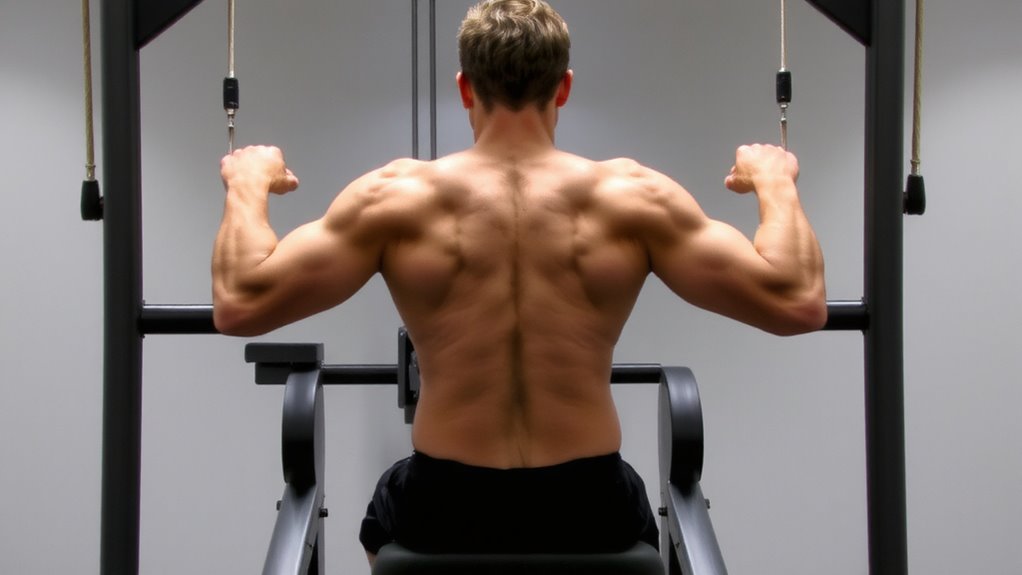
You’ve probably noticed how a shoulder or neck injury throws off your entire upper body movement, and that’s especially true when the lower trapezius muscles weaken from disuse. When these muscles weaken, they disrupt scapular control, leading to muscle imbalance that alters posture and movement efficiency. This imbalance increases strain on the neck and upper traps, creating a cycle of dysfunction. Strengthening the lower traps helps restore proper shoulder mechanics, promoting better alignment and reducing compensatory patterns. In recovery, targeted activation supports injury prevention by improving muscular coordination and endurance. Equipment like the seated row machine, when used correctly, allows controlled, progressive loading ideal for rebuilding strength without overloading healing tissues. It’s not just about resistance-it’s about retraining movement quality. Focusing on lower trap engagement guarantees a more resilient, balanced upper back, essential for long-term shoulder health and functional performance during daily and athletic activities.
Set Seat Height to Target Lower Traps
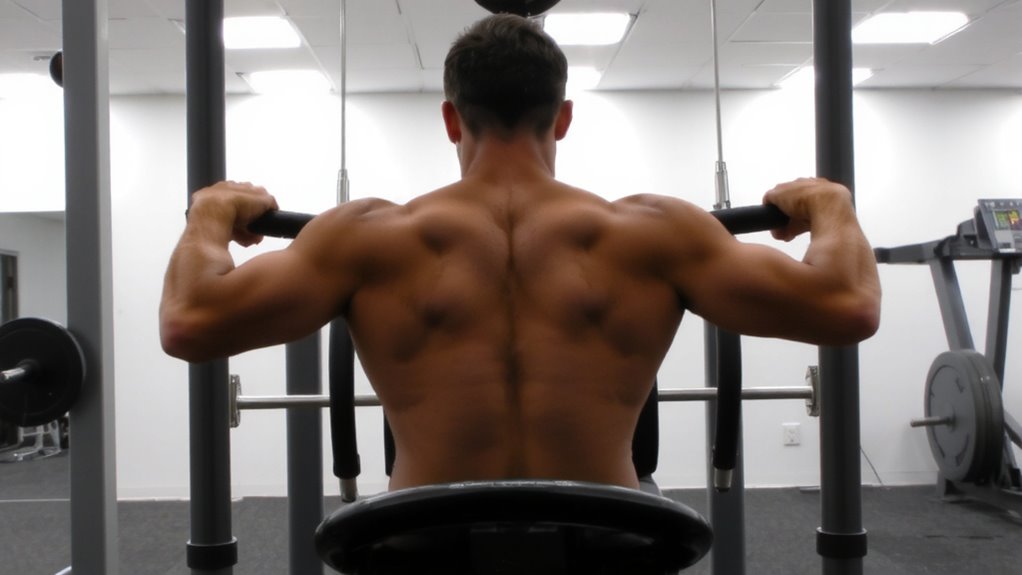
Proper seat height isn’t just a detail-it’s a determinant of muscle emphasis during seated row exercises. If the seat is too high or too low, you’ll compromise scapular mechanics and reduce lower trapezius activation. Ideal seat positioning aligns your handles with your mid-abdomen, allowing a neutral spine and full retraction without shrugging. This alignment enhances muscle isolation, directing tension where it’s needed most. Most machines offer adjustable seats, so take time to set it right-your recovery depends on precision. When the handle pulls from too high a point, upper traps dominate; too low, and you recruit lats excessively. Neither supports ideal lower trap development post-injury. Correct seat height promotes controlled, targeted movement, letting you rebuild strength safely. It’s a small adjustment with outsized impact on neuromuscular re-education and long-term shoulder health.
Tilt Forward to Free Up Shoulder Movement
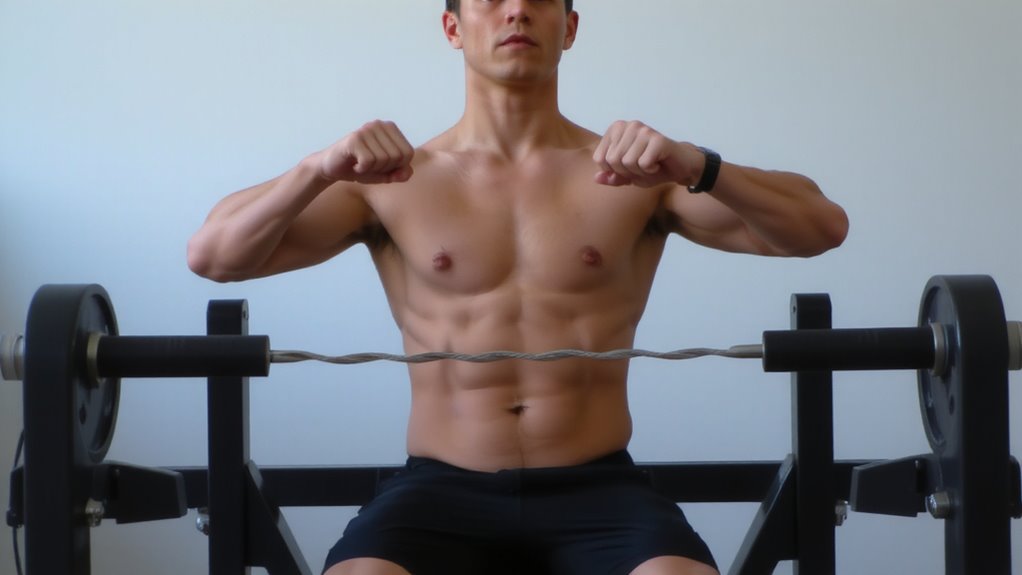
Leaning the seat forward slightly changes how your shoulders engage during the pull, especially when you’re rebuilding range of motion after strain. A forward tilt reduces compression on the thoracic spine and encourages scapular retraction without impingement. This position promotes unrestricted movement, allowing your shoulder blades to glide smoothly along the rib cage. Most seated row machines offer adjustable seat angles, so setting a mild forward tilt-about 10 to 15 degrees-can enhance lower trapezius activation while reducing strain on healing tissues. You’ll likely notice improved control and less compensation from the upper traps or neck muscles. The forward tilt also aligns the resistance vector better with your natural movement path, boosting mechanical efficiency. Over time, this adjustment supports safer strengthening, especially during post-injury phases when mechanics matter most. Use this setup to maintain proper form while gradually increasing load.
Use a Wide Grip to Protect Shoulders
A wide grip on the seated row machine can substantially reduce stress on the shoulder joints, especially during rehabilitation or when managing chronic tightness. Using a wider grip width encourages proper scapular movement and minimizes internal rotation, which often aggravates sensitive joints. You’ll notice less impingement and greater comfort, particularly if you’ve had prior injury. This adjustment promotes joint protection by aligning the arms in a more natural plane, reducing shear forces on the glenohumeral joint. Machines with adjustable handles let you fine-tune grip width to suit your frame, enhancing both safety and effectiveness. While a narrow grip may activate the mid-back more, it often compromises shoulder health. For recovery-focused routines, prioritizing joint protection over maximum load makes long-term sense. Sticking with a wide grip supports sustainable form, targets the lower trapezius efficiently, and maintains shoulder integrity throughout your workout.
Shorten Your Pull for Safer Motion
While pulling too far on the seated row machine might feel like you’re getting a deeper contraction, you’re actually increasing the risk of lumbar hyperextension and shoulder overuse. Instead, shorten your pull to achieve a controlled motion that keeps tension in the lower trapezius without compromising joint integrity. By stopping just before your elbows pass your torso, you maintain proper scapular mechanics and avoid recruiting compensatory muscles. This technique promotes reduced strain across the neck and upper traps-critical during post-injury recovery. Many machines allow adjustable stroke length, so use those settings to limit range if needed. You’ll still build strength, but with safer, more targeted activation. It’s not about how far you pull, but how well you control it. Shortened strokes aren’t a limitation-they’re an upgrade in movement precision.
Pull With Your Shoulder Blades, Not Just Arms
Because the seated row machine targets upper back development and scapular stability, how you initiate the movement matters far more than raw pulling power. You should start each rep by squeezing your shoulder blades together-this scapular retraction activates the lower trapezius and prevents overreliance on the biceps or upper traps. It’s not just about pulling the handle; it’s about creating a strong mind muscle connection with your mid-back. Focus on feeling the contraction between your shoulder blades, not just moving the weight. This technique reduces strain on healing neck and shoulder tissues while building functional strength. Machines allowing upright posture and neutral grips support this better. Avoid jerking or leaning back-control wins here. Proper form turns a simple row into effective, safe post-injury rehabilitation.
On a final note
You’ve got the tools to rebuild safely, and that matters. Proper seat height and a forward tilt help you hit the lower traps without straining healing tissue. A wide grip and shortened pull reduce joint stress, while focusing on scapular movement boosts neuromuscular control. These machine adjustments aren’t just convenient-they’re biomechanically sound choices that support lasting recovery and smarter strength training post-injury.