Ankle Mobility Drills With Heel Walks and Toe Walks for Functional Mobility
You need good ankle mobility for daily movement, and heel walks boost dorsiflexion by stretching the front ankle while strengthening calves eccentrically. Toe walks build plantar flexor strength, improving push-off power and foot alignment. Perform both drills with control-avoid toe drag or early heel lift-to build functional stability. Do them 3–5 times weekly, especially on recovery days, to support squats, balance, and joint health; consistent practice delivers real gains. There’s more to optimizing your routine just ahead.
Notable Insights
- Heel walks improve ankle dorsiflexion by maintaining heel elevation and stretching the anterior ankle capsule.
- Toe walks enhance plantar flexor strength and promote proper toe alignment for better push-off mechanics.
- Both drills build eccentric calf control, aiding stability in squats, lunges, and uneven terrain.
- Avoid common mistakes like toe drag or early heel lift to maximize mobility and prevent strain.
- Perform 3–5 times weekly with small, controlled steps for lasting gains in functional ankle mobility.
Why Ankle Mobility Matters for Daily Movement
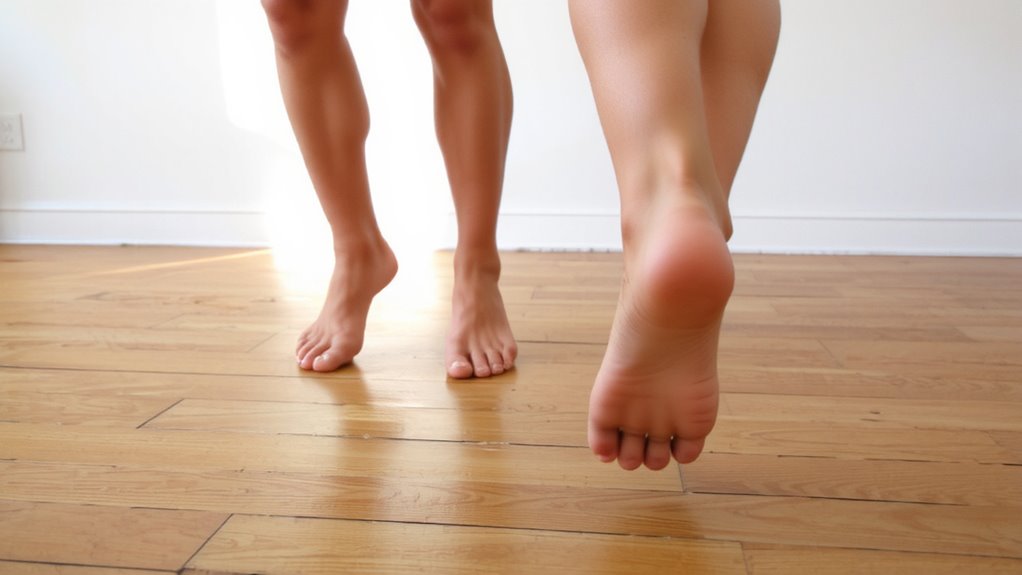
Movement starts at the ground, and your ankles are the foundation. Without adequate ankle mobility, your entire kinetic chain suffers. You rely on ankle stability every time you walk, climb stairs, or shift direction. Poor joint alignment in the ankle can lead to compensatory movements, increasing injury risk in the knees, hips, and lower back. Daily movement demands flexibility and control-especially when traversing uneven surfaces. Limited dorsiflexion restricts squat depth and balance, making simple tasks harder. You need consistent mobility work to maintain functional performance. While fitness recovery tools like foam rollers and compression gear may aid circulation and reduce soreness, they can’t correct misalignment or replace active ankle training. True improvement comes from deliberate drills that enhance range of motion and neuromuscular control. Prioritize ankle stability now, and you’ll improve joint alignment, movement efficiency, and long-term joint health-something no recovery device alone can guarantee.
Boost Mobility With Heel Walks
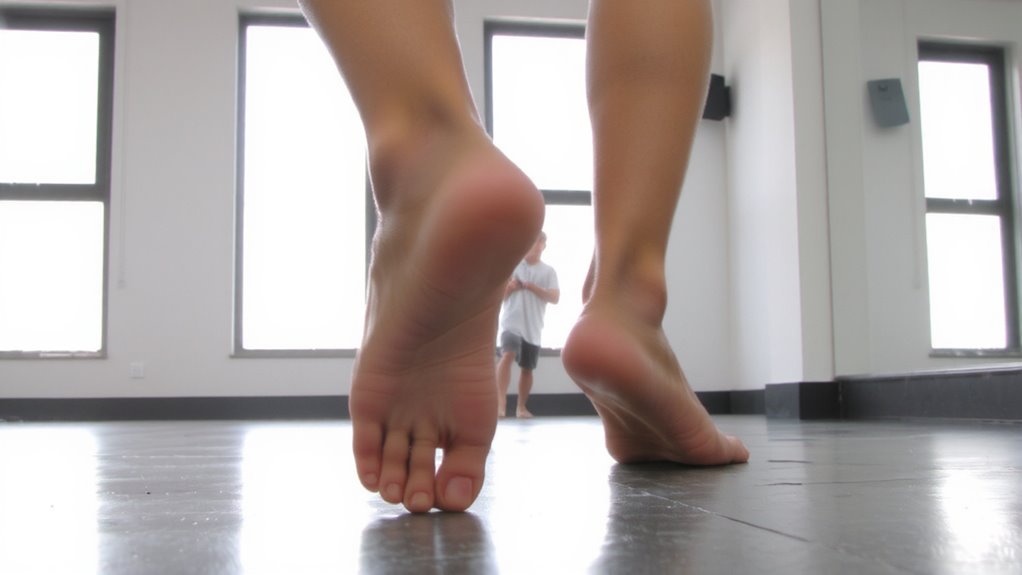
Heel walks are a surprisingly effective way to build ankle dorsiflexion and strengthen the muscles supporting your lower leg. As you walk forward on your heels, you maintain constant heel elevation, which stretches the anterior ankle and enhances range of motion over time. This movement also promotes controlled calf activation, not through contraction but by eccentric loading as you lower the foot. You’ll notice improved balance and stability, especially during deep squats or lunges, where dorsiflexion is essential. Performing heel walks regularly can correct compensatory patterns caused by stiff ankles. They require no fitness gear, making them ideal for recovery days or warm-ups. The drill’s simplicity doesn’t undermine its effectiveness-quite the opposite. It targets mobility with precision, delivering measurable improvements in functional movement. Incorporate them into your routine for at least 20–30 seconds per set, and you’ll likely observe better joint awareness and reduced stiffness, particularly if you sit often or wear supportive footwear all day.
Build Strength and Flexibility Using Toe Walks
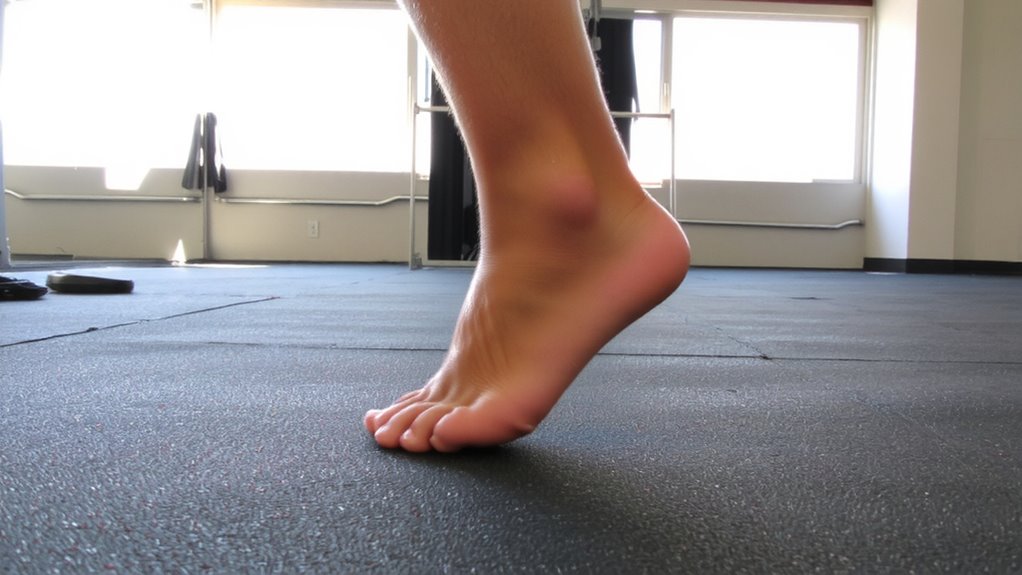
While often overlooked, toe walks are a potent drill for developing both ankle strength and plantar flexor flexibility, especially when performed with control and consistency. You’ll boost calf activation and refine toe alignment, which translates to better push-off power in walking and running. Maintaining an upright posture while progressing slowly guarantees maximal muscle engagement and joint mobility.
| Benefit | Details |
|---|---|
| Toe alignment | Promotes proper foot mechanics, reducing strain |
| Calf activation | Enhances soleus and gastrocnemius strength |
| Joint mobility | Improves dorsiflexion indirectly through balance |
| Functional carryover | Supports athletic movements and daily tasks |
Performing 2–3 sets of 20–30 seconds builds resilience without overloading the Achilles. You’ll notice improved foot control and reduced stiffness over time. Consistent execution turns this simple drill into a cornerstone of lower limb health, especially when integrated with broader mobility work.
Avoid These Heel & Toe Walking Mistakes
You’ve likely felt the burn in your calves and noticed sharper foot control after doing toe walks, but if form slips, even this effective drill can reinforce poor habits. Letting your heel lift too early during toe walks reduces range of motion and limits strength gains. Similarly, allowing a toe drag during heel walks shifts stress to the lower back and strains the plantar fascia. Both mistakes compromise ankle mobility instead of enhancing it. You’ll get better results by maintaining a controlled heel lift and preventing toe drag throughout each stride. Keep your steps small and deliberate-this isn’t about distance, but precision. Engaging the tibialis anterior during heel walks and fully extending through the toes during toe walks builds functional strength. Avoid rushing; quality reps beat quantity every time. These adjustments guarantee you’re training movement patterns correctly, not reinforcing compensations that could hinder performance or recovery.
Progress From Basic Walks for Greater Gains
How do you turn simple heel and toe walks into more effective mobility-building exercises? By progressing intelligently. Once basic form is mastered, challenge ankle stability and joint alignment with variations. Try walking backward on heels or toes to engage muscles differently. Add a soft surface like a mat to increase demand on stabilizing muscles. These tweaks boost proprioception and build resilience.
| Exercise Variation | You’ll Feel It In | Gain You’ll Notice |
|---|---|---|
| Heel walks on toes | Shins, calves | Better dorsiflexion |
| Uneven surface walks | Ankles, feet | Sharper balance |
| Slow tempo walks | Joints, core | Smoother joint alignment |
Progressing guarantees continued adaptation. Without it, gains plateau. You’re not just moving-you’re refining control, precision, and ankle stability with every step. This is functional mobility that transfers to real-world movement.
When to Do Ankle Mobility Drills for Best Results
Adding variety to heel and toe walks builds ankle strength and stability, but timing these drills right can make or break your progress. For ideal frequency, aim to perform ankle mobility drills 3–5 times weekly, integrating them into warm-ups or recovery sessions. Morning routines benefit from light drills to activate joints, while post-workout timing helps reset range of motion after loading. Timing considerations should account for training volume-avoid intense mobility work right before heavy lower-body lifting, as pre-activation fatigue might impair performance. Conversely, evening sessions can enhance circulation and support recovery. Consistency trumps intensity; daily short bouts yield better long-term gains than sporadic, prolonged efforts. Ankle drills fit well with foam rolling or stretching, forming a recovery-focused routine. When paired with proper footwear that supports natural foot motion, these drills maintain joint health and prevent stiffness, ensuring your lower limbs stay resilient through training cycles.
On a final note
You’ve seen how heel and toe walks boost ankle mobility, strength, and functional movement. These drills, when done correctly, enhance joint stability and muscle coordination essential for daily activities. Pairing them with quality recovery gear-like compression sleeves or foam rollers-supports long-term joint health. Consistency matters more than intensity, and proper form prevents injury. For best results, integrate these movements into warm-ups or cooldowns regularly. It’s practical, effective, and backed by movement science.