Building Lateral Stability in Basketball Players With Resisted Lateral Lunges
You build real lateral stability by nailing the form on resisted lateral lunges-keep your spine neutral, push through the heel, and control the descent. This strengthens hips, glutes, and adductors to protect knees and power cuts. Bands offer smooth resistance for game-like movement, while weights add overload if your form holds. Do them 2–3 times weekly, fresh in the session, to boost defensive slides and force transfer; there’s more to accessing your edge than just reps.
Notable Insights
- Perform resisted lateral lunges with proper form to maximize functional strength and glute-adductor engagement.
- Maintain a neutral spine and push through the heel to enhance lateral stability and reduce injury risk.
- Use resistance bands for joint-friendly, adjustable load that supports dynamic movement patterns.
- Train 2–3 times weekly on lower-body or agility days for optimal neuromuscular adaptation and recovery.
- Progress from bodyweight to bands to weights to continuously challenge frontal plane strength and control.
Do Resisted Lateral Lunges With Perfect Form
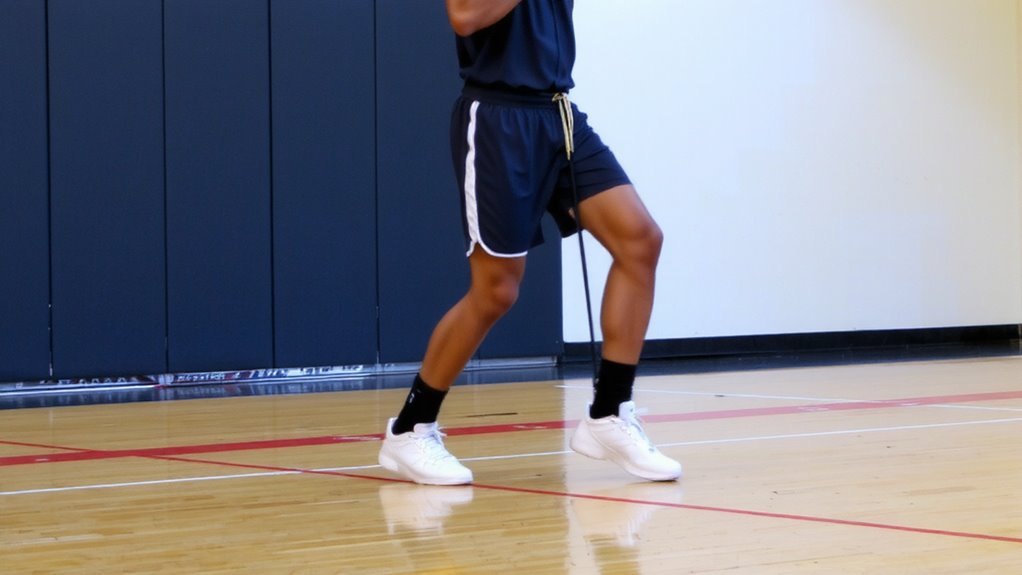
A single set of resisted lateral lunges done with precise execution can deliver more functional strength gains than multiple sets performed with sloppy technique. You’ll maximize muscle activation by focusing on form cues like a neutral spine, controlled descent, and pushing through the heel of your stance foot. These cues guarantee your glutes and adductors engage properly, building true lateral stability. Avoid leaning forward or letting your knee cave inward-small mistakes that diminish returns. Using resistance bands or a cable machine adds load without compromising form, provided you maintain tension throughout the movement. Quality trumps quantity every time, especially when targeting sport-specific strength. Proper execution not only trains muscles but also reinforces neuromuscular patterns essential for sharp cuts on the court. Investing in durable fitness gear-like non-slip bands or adjustable cables-supports consistent, effective training. You’ll get better long-term results by prioritizing precision over reps.
Why Resisted Lateral Lunges Prevent Injuries and Boost Performance
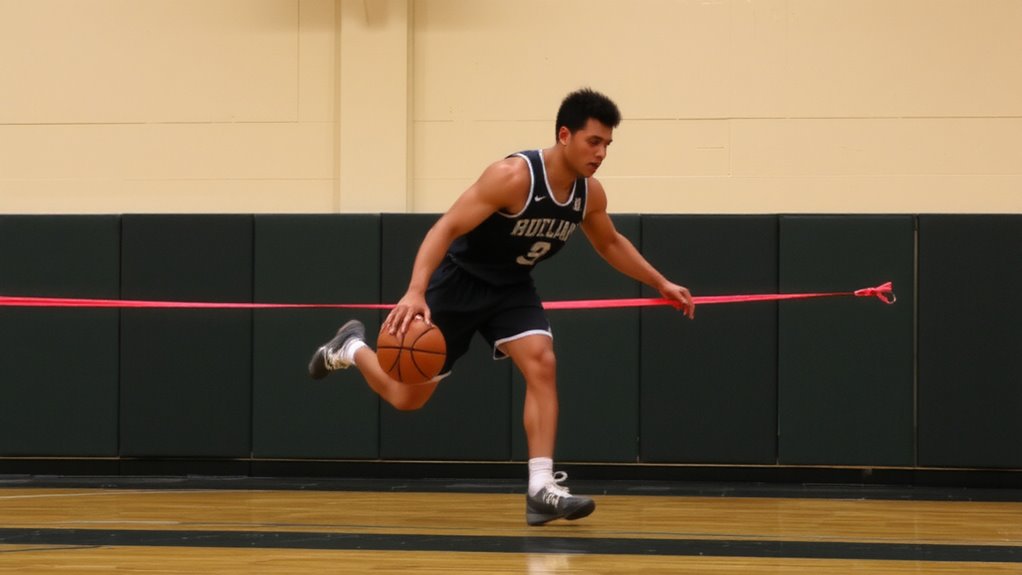
Because basketball demands rapid side-to-side movement, resisting those motions deliberately through lateral lunges builds the joint integrity and muscular coordination that protect against common lower-body injuries. You develop stronger hips, glutes, and adductors, which stabilize your knee during sharp cuts and landings-key for injury prevention. The added resistance increases time under tension, promoting tendon resilience and neuromuscular control. This doesn’t just shield you from sprains or strains; it translates directly to performance enhancement. You’ll notice quicker lateral bursts, improved balance under duress, and more efficient force transfer during defensive slides and drives. By training movement-specific strength, you condition your body to handle game-like demands safely and powerfully. Resisted lateral lunges aren’t just supplemental-they’re a strategic tool that bridges strength and agility. When programmed consistently, they reduce breakdown risk while sharpening athletic output on the court.
Choose Bands, Weights, or Bodyweight for Basketball-Specific Gains
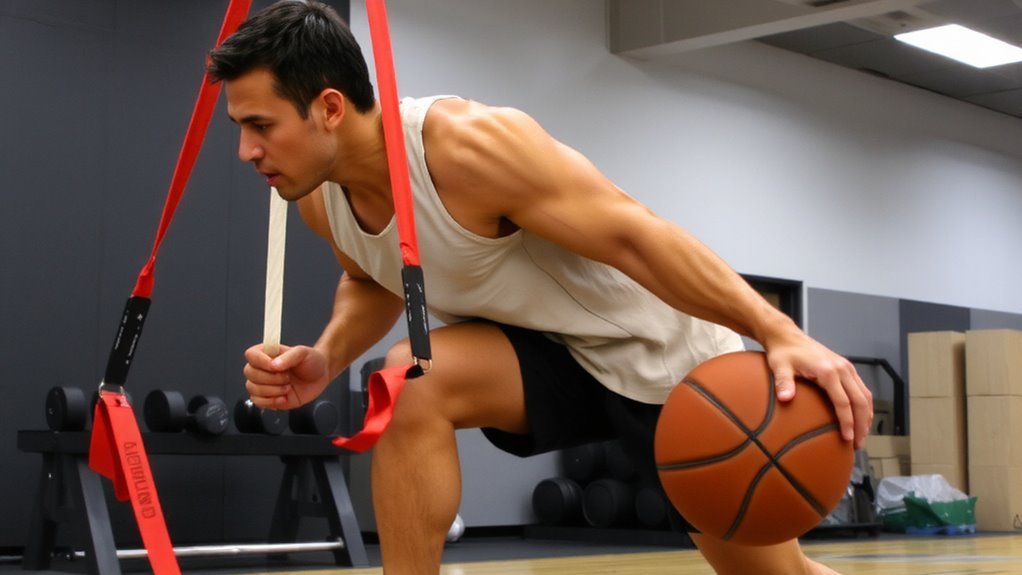
How do you choose the right resistance method when every rep counts? For basketball-specific gains, your tool must match the movement’s demands. Bands offer adjustable band tension, making them ideal for dynamic lateral lunges that mimic on-court action. They’re portable, joint-friendly, and allow smooth resistance curves. But they can wear out and offer less overload over time. Dumbbells or kettlebells provide consistent load and solid weight progression, building real strength-yet they may restrict range or alter balance. Bodyweight builds control and endurance but lacks resistance for advanced athletes. A hybrid approach often wins: start with bodyweight to master form, add band tension for sport-specific pull, then integrate weight progression for strength. Each method has trade-offs in durability, scalability, and movement fidelity. Pick based on training phase, not preference.
Fit Resisted Lateral Lunges Into Your Weekly Workout
Resisted lateral lunges shouldn’t just be tacked on at the end of your workout-they need strategic placement to maximize strength gains and movement efficiency without tanking your recovery. Aim for two to three sessions weekly, aligning with your lower-body or agility training days to support basketball-specific demands. That training frequency strikes a balance: enough to stimulate adaptation, not so much that it hampers performance. Perform them early in the session when your neuromuscular system is fresh, especially if using heavier loads. Your equipment selection directly affects intensity and joint stress-bands offer variable resistance and portability, while dumbbells or weighted vests increase load stability. Choose based on your goals and recovery capacity. Poor gear choices can compromise form and delay recovery, so prioritize equipment that matches your skill and fatigue levels. Plan smart, and you’ll build lateral power without overreaching.
How Resisted Lateral Lunges Sharpen Defensive Slides and Cuts
While defensive footwork in basketball relies heavily on precision and timing, adding resisted lateral lunges to your training can sharpen those movements by building strength and neuromuscular control in the frontal plane. You develop greater force production during defensive slides, allowing quicker shifts and tighter cuts. The added resistance forces your glutes, adductors, and quads to adapt, enhancing stability when shuffling side-to-side. Over time, this translates to improved defensive agility, helping you stay in front of your opponent without overreaching or losing balance. Quickness development isn’t just about speed-it’s about control, and resisted lunges train both. You’ll notice sharper deceleration and more explosive directional changes during live play. The drill mirrors game-like demands, so your body learns to fire efficiently under load. Consistent execution with proper form guarantees you gain mobility and strength without risking injury-making it a high-value movement for serious players.
On a final note
You’ll build stronger, more stable movements with resisted lateral lunges, especially when performed with control. They enhance hip strength and knee alignment-key for injury prevention and sharp defensive slides. Whether using bands, weights, or bodyweight, consistency matters most. Pair them with proper recovery tools like foam rollers and compression gear to maintain performance. This combo supports resilience, letting you train harder and recover faster-critical for long basketball seasons.