Implementing Anti-Rotation Core Exercises for Golfers Returning From Back Injury
You need anti-rotation exercises to rebuild core control after a back injury, because golf’s swing forces your spine to handle intense twisting and load. These drills-with resistance bands or cables-train your muscles to resist unwanted motion, protecting healing discs. Moves like Pallof presses and bird-dogs improve spinal stability while reprogramming safe movement patterns. When performed correctly, they build endurance without compression. Mastering this control means you’re closer to returning to the swing with confidence.
Notable Insights
- Prioritize anti-rotation exercises like Pallof presses to build core stability without spinal compression.
- Use resistance bands and cables to safely simulate rotational demands of the golf swing.
- Progress from isometric holds to dynamic movements only after achieving pain-free, controlled motion.
- Retrain neuromuscular control with exercises like bird-dog to maintain a neutral spine under load.
- Integrate slow-motion swings and short irons first, using video feedback to ensure proper mechanics.
Why Anti-Rotation Training Is Your Best Defense After Back Injury
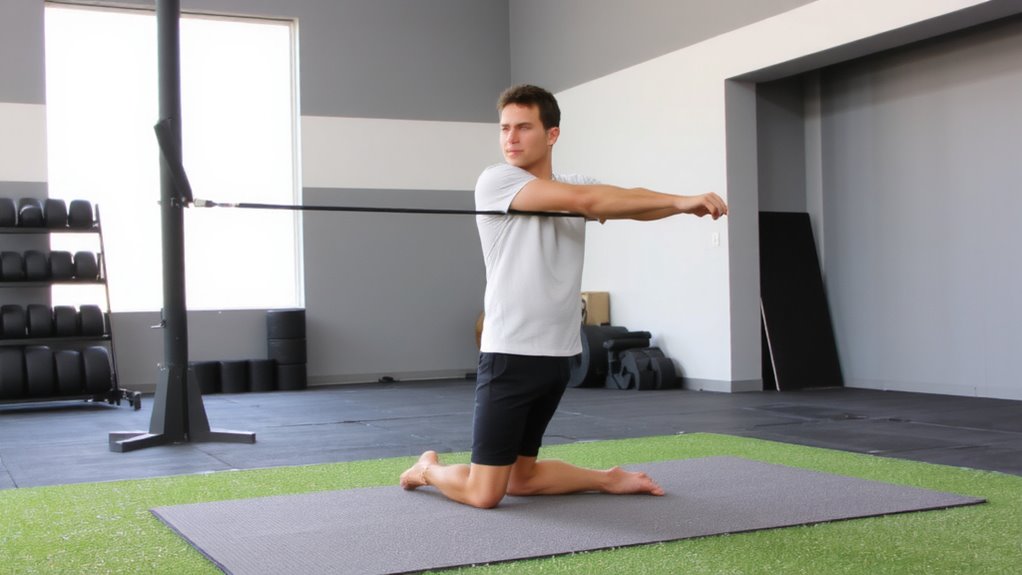
Why do so many golfers struggle to return to form after a back injury? Poor spinal alignment and weak muscular endurance often undermine recovery, even when pain fades. You might feel ready, but your core could still lack the stability to handle rotational forces. Anti-rotation training strengthens the muscles that resist unwanted twisting, protecting your spine during the swing. Unlike traditional core work, it emphasizes control over movement, which builds functional strength safely. This type of training improves neuromuscular coordination, helping maintain proper alignment under load. Equipment like resistance bands and cable machines offer adjustable tension, making progression measurable. Used consistently, these tools enhance endurance without excessive spinal compression. For golfers, that means more consistent, injury-resistant performance. Anti-rotation isn’t just rehab-it’s a foundation. With better muscular endurance and alignment awareness, you’re not just healing; you’re building a more resilient swing from the ground up.
How Golf’s Swing Challenges a Healing Spine (And Why Anti-Rotation Helps)?
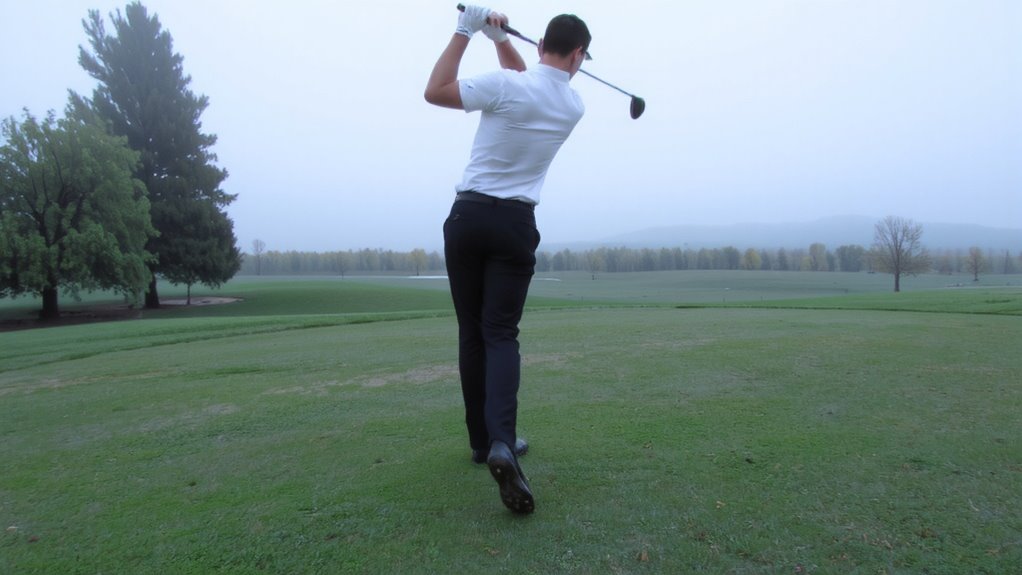
How does the golf swing place unique demands on a spine still recovering from injury? It generates high levels of spine loading and rotational shear, especially during powerful downswings. When you twist forcefully, your healing vertebrae and discs face uneven pressure, increasing re-injury risk. Unlike general movement, the golf swing combines speed and torque, placing your core in a vulnerable position. Anti-rotation training counters this by teaching your muscles to stabilize, not just move. You’re not building brute strength-you’re enhancing control. These exercises reduce harmful motion transfer through the spine, decreasing rotational shear during impact. They condition your core to resist excessive twisting, managing spine loading more safely. By training anti-rotation patterns, you maintain swing power while protecting healing structures. It’s not about limiting performance-it’s about intelligent reinforcement. Smart recovery means moving efficiently, not recklessly. Your spine doesn’t just need rest; it needs reprogramming.
7 Anti-Rotation Moves That Protect Your Back During Swings
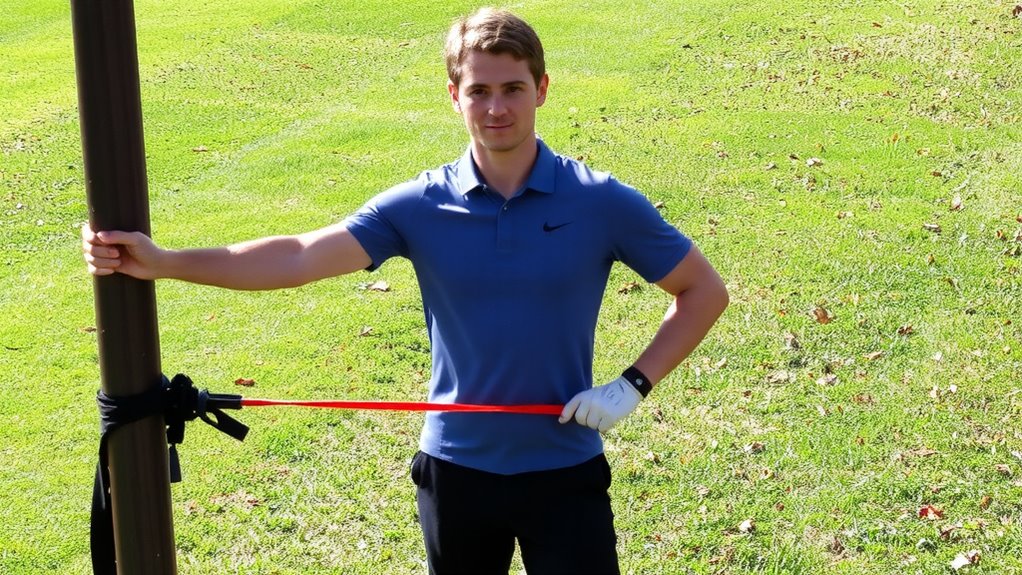
You’ve already seen how the golf swing can stress a recovering spine with intense rotational forces and uneven loading-but knowing the risk isn’t enough. Anti-rotation exercises like the Pallof press and bird-dog build spine stabilization by training your core to resist unwanted motion. These moves enhance rotational control, ensuring power comes from the hips and thorax-not the lower back. You’ll maintain a neutral spine under load, mimicking the stability needed mid-swing. Resistance bands and cable machines offer consistent tension, making them effective tools for reinforcing proper mechanics. Unlike traditional ab work, these drills emphasize function over flexion, reducing compressive forces. When performed correctly, they condition your obliques and transverse abdominis to brace dynamically, protecting your back. You’re not just strengthening-you’re retraining movement patterns critical for safe play. Consistency matters more than intensity here; daily practice builds the neuromuscular control essential for long-term spine stabilization and injury resilience. A best core workout machine can provide adjustable resistance and consistent feedback for mastering these anti-rotation patterns at home.
How to Progress Safely From Rehab to Full Swings
While your core strength and movement control have improved through targeted anti-rotation work, returning to full golf swings demands more than just symptom relief-it requires a structured progression that aligns tissue tolerance with biomechanical demand. Start with slow-motion swings, focusing on controlled rotation and proper swing tempo to reinforce stability without overloading healing tissues. Gradually increase speed only when movement feels smooth and pain-free. Introduce short irons first, advancing to longer clubs as control improves. Pay close attention to club release: premature or forced release can spike spinal load. Use video feedback to objectively assess mechanics and guarantee timing stays coordinated. Progression isn’t linear-fluctuations in soreness or control mean you may need to scale back. Trusting this process reduces re-injury risk and builds swing resilience grounded in functional recovery, not just strength.
Stop These Mistakes That Sabotage Core Stability
What if the very exercises meant to stabilize your core are actually undermining it? Many golfers sabotage their recovery by neglecting proper core bracing and spine alignment. You might be holding your breath or over-tensing your abdominals, turning a stabilization drill into a strain on your lower back. Effective core bracing isn’t about squeezing as hard as possible-it’s a light, coordinated engagement of your deep abdominals, just enough to support your spine without restricting movement. Poor spine alignment compounds the issue: tilting your pelvis or rounding your back during exercises shifts stress to vulnerable areas. That defeats the purpose of anti-rotation work. You’re not just building strength-you’re retraining muscle timing and control. Without attention to these details, even well-designed routines lose effectiveness. Focus on precision, not reps. Your back’s stability depends on consistency in form, not force.
Bridge Rehab to Practice With Injury-Safe Warm-Up Drills
Maintaining proper core engagement and spinal alignment lays the foundation for safe, effective movement, especially when returning to training after discomfort or injury. Bridge variations are a smart starting point because they retrain neuromuscular control without compressing the spine. You’ll build foundational strength by progressing from double-leg to single-leg bridges, all while focusing on pelvis control and glute activation. Apply stability cues like “ribs down” and “belly tight” to prevent overarching the low back. These cues guarantee you’re targeting the right muscles and avoiding compensation patterns. Done correctly, bridge variations enhance posterior chain coordination, which translates to better support during golf’s asymmetrical motions. Use them as part of your injury-safe warm-up drills to prime the core before more dynamic work. Consistent practice improves motor control, making everyday movement and rehab gains more sustainable.
When Is Your Back Ready for Full Rotation With Anti-Rotation Training?
How do you know when your back can safely handle full rotation after focusing on anti-rotation training? It comes down to consistent control and pain-free movement. You’ve built a foundation-now assess your spinal mobility with slow, controlled twists in both directions. If you move smoothly without discomfort, you’re likely nearing rotational readiness. Test it during exercises like resisted band rotations or controlled medicine ball chops. Do your core muscles engage without compensation from your hips or neck? That’s a strong sign. Rotational readiness isn’t just about flexibility-it’s about stability under load. If any movement causes pinching or uneven motion, dial it back. Track progress weekly, and pair assessments with sport-specific drills. Only when your spine moves freely and your core resists unwanted motion should you reintroduce full golf rotation. Trust function, not timeline.
On a final note
You’ve learned that anti-rotation exercises rebuild core control critical after back injury. These moves stabilize your spine, countering golf’s rotational demands. Used consistently, they bridge rehab to performance safely. The right fitness gear-like resistance bands or training cuffs-enhances feedback and resistance without strain. Progress only when movement quality, not pain, guides you. This approach isn’t just protective-it’s foundational for a resilient return to full swings.