The Role of Progressive Muscle Relaxation in Reducing Athletic Burnout
You’re pushing hard, but without recovery, burnout creeps in-PMR helps by cutting mental and physical strain. It boosts mind-body awareness, lowers cortisol, and shifts your nervous system into repair mode. Just 10–20 minutes a few times a week, done post-workout or at bedtime, can reduce fatigue and improve sleep. Unlike fitness trackers or gear, PMR actively trains your body to release tension. Pair it with smart training, and you’ll stay sharper, longer-with less risk of crashing. There’s more to how top performers use it.
Notable Insights
- PMR reduces physical and mental exhaustion by promoting deep muscle relaxation and nervous system balance.
- It enhances recovery by lowering cortisol levels, supporting immune function and tissue repair.
- Regular PMR practice improves sleep quality, a key factor in preventing athletic burnout.
- By increasing body awareness, PMR helps athletes detect and address early signs of overtraining.
- PMR builds stress resilience, helping athletes manage performance pressure and emotional strain effectively.
What Is Athletic Burnout and Why It Hurts Performance
Burnout isn’t just fatigue-it’s a prolonged state of physical, emotional, and mental exhaustion that sneaks up when recovery and training fall out of balance. You push through workouts, ignore rest days, and underestimate recovery, not realizing you’re setting yourself up for overtraining consequences like diminished performance, chronic soreness, and weakened immunity. Mental fatigue causes often stem from constant pressure, lack of sleep, and obsessive focus on results, leaving you drained even before you step into the gym. These factors don’t just slow progress-they reverse it. Over time, motivation drops, focus wavers, and even simple drills feel overwhelming. Ignoring these signs compromises both immediate output and long-term athletic development. Performance isn’t just about intensity; it’s about sustainable effort. Without proper recovery, all the advanced fitness gear and high-tech tracking tools won’t compensate for a body and mind running on empty.
How PMR Helps Athletes Recover Mentally and Physically
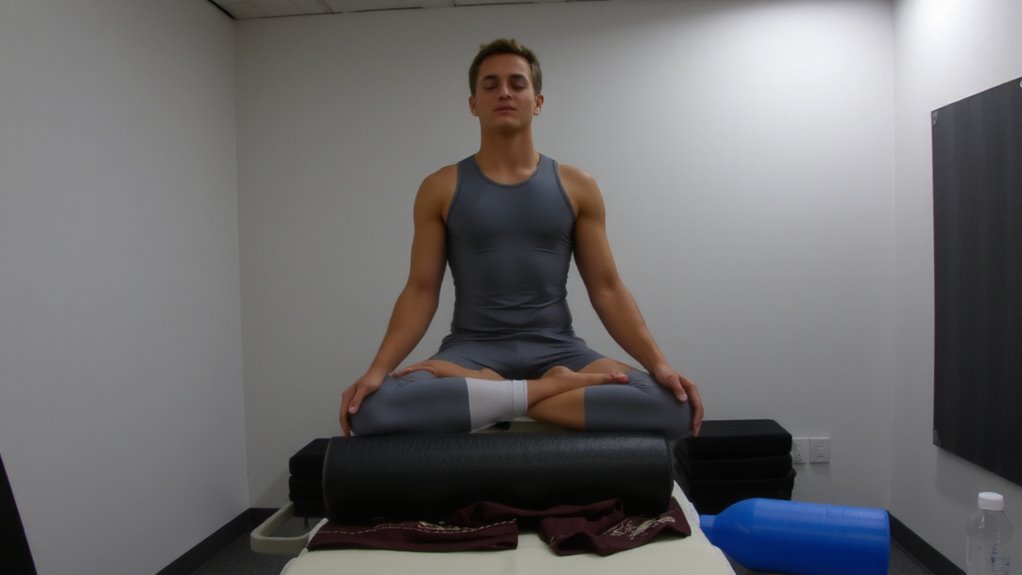
You’ve likely pushed through the warning signs-tiredness that won’t lift, workouts that feel heavier each day, a mental fog that dulls your focus-and realized too late that rest isn’t just a pause, it’s a requirement. Progressive Muscle Relaxation (PMR) helps you rebuild by strengthening the mind body connection, guiding you to recognize and release tension stored in muscles after intense training. You regain control, not just over physical tightness, but over racing thoughts and emotional strain. With regular practice, PMR boosts stress resilience, making it easier to handle competition pressure and daily demands without tipping into burnout. Unlike passive recovery tools, PMR is active mental training-accessible, equipment-free, and effective. It doesn’t replace fitness gear like foam rollers or recovery boots, but complements them by addressing psychological fatigue. When recovery targets both mind and body, you adapt faster, train smarter, and stay resilient season after season.
What Science Says About PMR and Athlete Recovery

Research stands as the anchor separating trend from technique, and when it comes to Progressive Muscle Relaxation (PMR), the evidence backing athlete recovery is both growing and compelling. You’re not just calming your mind-PMR supports real physiological shifts. Studies show it aids neurological adaptation by enhancing mind-muscle communication, which improves coordination and recovery speed after intense training. It also helps regulate cortisol, supporting hormonal balance essential for muscle repair and immune function. When you practice PMR regularly, you’re not just resting-you’re optimizing internal conditions for recovery. Unlike passive rest, PMR actively reduces sympathetic nervous system activity, shifting you into parasympathetic dominance, where healing happens most efficiently. The data suggests you’ll see better sleep, reduced fatigue, and improved readiness. While it doesn’t replace proper gear or conditioning, PMR is a science-backed recovery tool that’s low-cost, accessible, and effective when applied consistently.
Step-by-Step PMR for Athletes
While mastering the physical demands of training often takes priority, refining recovery with structured techniques like Progressive Muscle Relaxation (PMR) can make a measurable difference in an athlete’s resilience and performance. You start PMR by focusing on one muscle group-like your feet-tensing it for 5–7 seconds, then releasing to notice the contrast in muscle tension. Move systematically upward, working through calves, thighs, abdomen, and so on. Pair each contraction and release with slow breath control, inhaling as you prepare, exhaling as you let go. This builds body awareness and teaches you to detect early signs of strain. PMR isn’t just about relaxation; it’s a precision tool that enhances recovery quality. When practiced consistently, it complements physical training by reducing residual tension, improving mental clarity, and supporting long-term athletic sustainability without relying on external gear.
When and How Often Athletes Should Use PMR
How often should you weave Progressive Muscle Relaxation (PMR) into your training cycle to truly offset burnout without disrupting performance goals? For most athletes, a timing frequency of 3 to 5 sessions per week delivers ideal balance. If your training load is high, daily PMR can aid recovery-especially when scheduled post-workout or before bed. Session duration typically ranges from 10 to 20 minutes, enough to engage all major muscle groups without causing mental fatigue. Shorter sessions (under 10 minutes) may lack depth, while longer ones risk diminishing returns. Consistency matters more than length; even brief, focused practice builds resilience over time. Pair PMR with recovery-focused fitness gear-like compression wear or foam rollers-for enhanced physical restoration. This combination supports nervous system regulation, making it easier to manage stress. You don’t need perfect conditions-just a quiet space and deliberate effort. Over weeks, this routine strengthens mental recovery as much as physical, keeping burnout at bay. Top recovery tools can further amplify these benefits by targeting muscle tension and improving circulation. Top recovery tools are especially effective when integrated alongside mindfulness practices like PMR.
How Real Athletes Use PMR to Prevent Burnout
Ever wonder how elite athletes stay mentally sharp while pushing their bodies to the limit? You’re probably using PMR more effectively than you think. Top performers incorporate it regularly, not just for recovery but as part of breath control and focus training. You tense and release muscle groups systematically, often after training sessions or before competition, to reduce tension and sharpen mental clarity. Many use it alongside mindfulness apps or heart rate monitors to track physiological responses, ensuring peak recovery. You’re not just relaxing-you’re reprogramming your nervous system to handle stress better. Breath control is central, pairing slow inhales with muscle release to enhance parasympathetic activation. Focus training follows naturally, as consistent PMR improves concentration and emotional regulation. Equipment like biofeedback sensors can support practice, but isn’t necessary-just 10 minutes daily yields measurable results. You don’t need gadgets to succeed, but when paired with smart recovery habits, they boost consistency and insight.
Common PMR Mistakes Athletes Make
If you’re rushing through PMR sessions right after intense training, you’re likely undermining their full recovery potential. Incorrect timing-like performing PMR when your body is still elevated from exercise-reduces its effectiveness. Your nervous system needs a cooldown period; jumping straight into relaxation techniques too soon disrupts that shift. You’re better off waiting 10–15 minutes post-workout, letting heart rate and cortisol levels stabilize. Another common error is muscle overcontraction-squeezing too hard during the tensing phase, especially in large muscle groups like quads or shoulders. This not only increases fatigue but can trigger microstrain, counteracting recovery. Proper PMR relies on moderate, controlled tension followed by deliberate release. Doing it right means syncing breath with each contraction and focusing on the contrast between tension and relaxation. For athletes using fitness gear like compression wear or recovery boots, integrating well-timed PMR improves overall recovery synergy.
On a final note
You’ll find progressive muscle relaxation (PMR) effective for recovery, blending mental clarity with physical rest. It lowers cortisol, eases muscle tension, and improves sleep-key for overtrained athletes. When paired with quality recovery gear like compression wear or foam rollers, PMR enhances restorative outcomes. Used consistently post-training, it helps prevent burnout. The method’s simplicity and science-backed benefits make it a practical, low-cost tool in any athlete’s recovery routine.