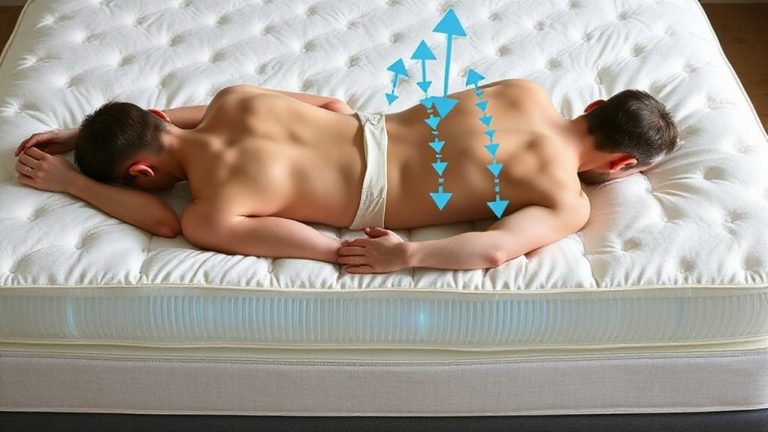
Lumbar Mobility Drills With Supine Spinal Waves
You can boost lumbar mobility with supine spinal waves by lying on your back, knees bent, and peeling your spine off the floor one vertebra at a time. This drill enhances neuromuscular control, promotes alignment, and activates deep core muscles far better than passive stretching. It’s low-risk, needs no fitness gear, and works well in warm-ups or recovery. Focus on breathing and precision-mistakes like rushing or holding your breath reduce effectiveness. There’s more to explore about perfecting the movement.
Notable Insights
- Supine spinal waves enhance lumbar mobility by promoting segmental spinal articulation in a controlled, wave-like motion.
- They improve neuromuscular coordination and core activation, specifically targeting deep stabilizing muscles of the lumbar spine.
- Perform the drill lying on your back, peeling the spine off the floor vertebra by vertebra with precise, slow movement.
- Use supine spinal waves in warm-ups to prime the spine or in recovery to reduce stiffness and restore alignment.
- Avoid common errors like breath-holding, excessive momentum, or sacrificing form for speed to ensure safe, effective execution.
What Are Supine Spinal Waves?
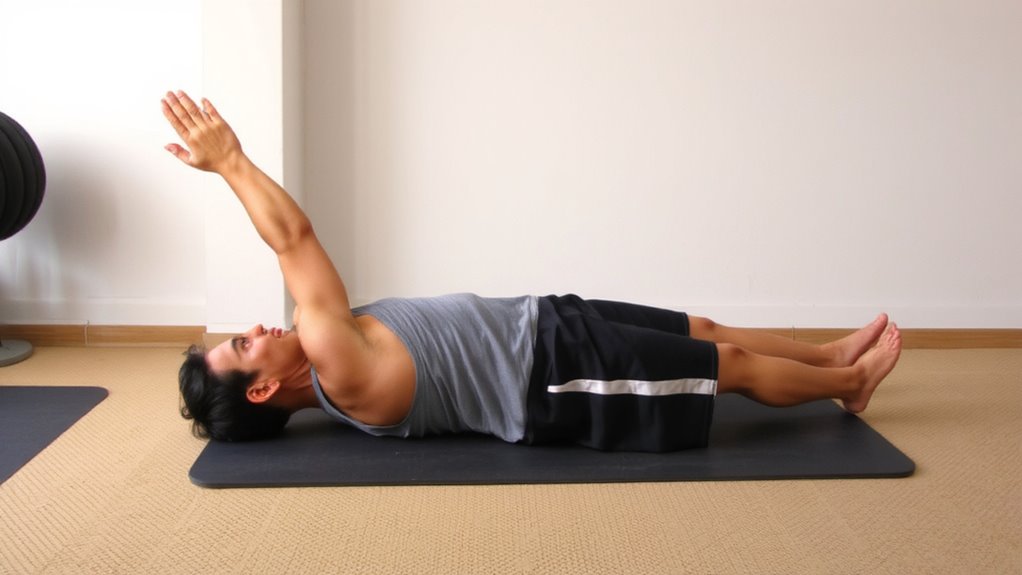
Why lie flat when you can move with purpose? Supine spinal waves aren’t just a fancy floor roll-they’re a dynamic drill that boosts lumbar mobility through controlled, wave-like motion. You start flat on your back, peeling the spine off the ground segment by segment, promoting precise anatomical alignment and reducing compensatory movement. This drill heavily relies on neuromuscular coordination, teaching your brain to isolate vertebrae and fire the right muscles at the right time. Unlike passive stretches, it demands active engagement, making it more effective for functional mobility. It’s low-risk, needs no fitness gear, and fits seamlessly into recovery routines. When performed consistently, it enhances spinal awareness and movement quality. Though it won’t replace loaded strengthening, it’s a smart addition to any recovery-focused regimen, especially for those relearning how to move efficiently after inactivity or strain.
Why Supine Spinal Waves Improve Mobility
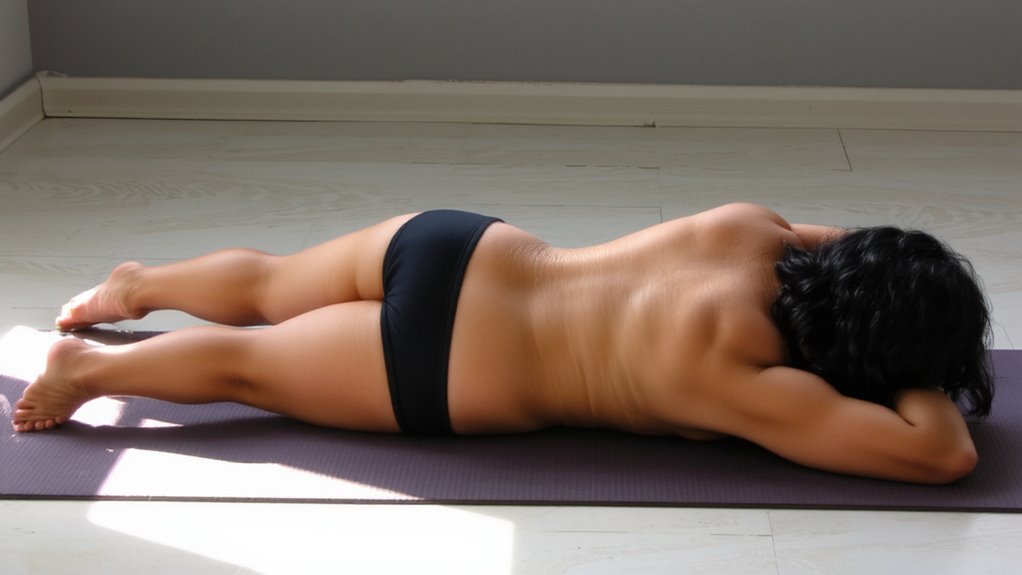
How do supine spinal waves actually enhance mobility, rather than just mimicking movement? Because they demand real-time pelvic stability and refined neuromuscular coordination. When you lift and ripple your spine off the floor, segment by segment, you’re not just stretching-you’re teaching your nervous system to control spinal motion with precision. Each wave forces subtle muscle activations in the deep core and posterior chain, improving joint articulation while reinforcing proper alignment. Unlike ballistic movements, these drills emphasize quality over speed, allowing you to feel and correct imbalances. Over time, this builds more efficient movement patterns that transfer to lifting, bending, and twisting in daily life. The supine position removes gravity’s influence, letting you focus purely on motor control. That’s why, despite their simplicity, supine spinal waves are a powerful tool for developing functional lumbar mobility-grounded in coordination, not just flexibility.
When to Do Supine Spinal Waves: Warm-Up or Recovery
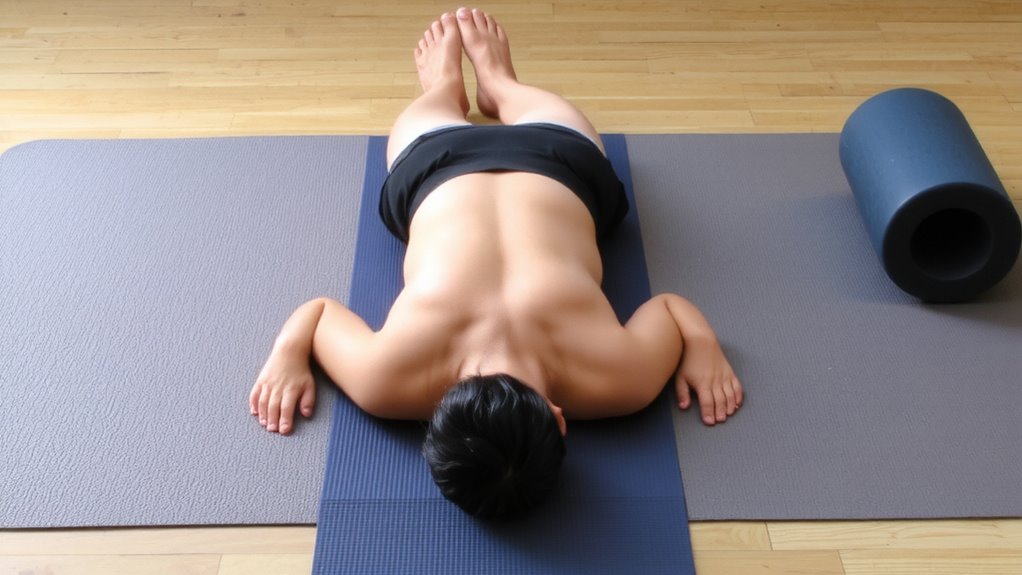
When should you add supine spinal waves to your routine-during warm-up or as part of recovery? You can do them effectively in both phases, but each serves a different purpose. As a warm-up, they prime your spine with gentle movement, syncing your breathing rhythm to motion and enhancing muscle activation across the core and posterior chain. This prepares your body for heavier lifts by improving neuromuscular coordination. During recovery, these waves help reset spinal alignment, reduce stiffness, and encourage parasympathetic engagement through controlled breathing rhythm. They’re especially useful post-workout when muscles are tight or fatigued. Unlike aggressive mobilization tools, this drill requires no fitness gear, making it accessible and low-risk. While warm-up use boosts performance readiness, recovery application supports long-term mobility maintenance. Choose based on your goal: activation before activity, or soothing release after. Both contexts benefit from mindful execution.
How to Do Supine Spinal Waves (Step by Step)
Spinal awareness starts with your connection to the floor. Lie on your back, knees bent, feet flat. Begin with a slow breathing rhythm-inhale deeply through the nose, exhale fully through the mouth. Initiate core activation by gently drawing your navel toward your spine without holding your breath. Initiate the wave from your pelvis, peeling one vertebra at a time off the floor until your hips lift naturally. Pause briefly, then reverse the motion with control, setting each segment down mindfully.
| Phase | Focus |
|---|---|
| 1 | Pelvic tilt initiation |
| 2 | Breath-coordinated lift |
| 3 | Mid-back extension |
| 4 | Core activation maintenance |
| 5 | Controlled segmental descent |
Maintain a consistent breathing rhythm throughout to enhance neuromuscular coordination. Core activation isn’t forceful-it’s subtle, stabilizing support. This drill improves segmental spine control, making it valuable for recovery and preparation alike.
Mistakes People Make Doing Spinal Waves
Why do so many struggle to feel the benefits of supine spinal waves despite practicing them regularly? You’re likely making a few key mistakes. Improper breathing disrupts rhythm and reduces engagement-remember to inhale during flexion, exhale on extension. Without deliberate breath control, you lose intra-abdominal pressure, limiting spinal articulation. Another common error is relying on excessive momentum. Instead of moving vertebra by vertebra, you end up thrusting or rocking, turning a mobility drill into a ballistic motion. That not only diminishes lumbar awareness but also increases injury risk. You’re aiming for precision, not speed. Stay grounded, initiate movement from the pelvis, and maintain control throughout. These aren’t cardio reps-they’re neuromuscular re-education. When performed with focus and correct breathing, spinal waves enhance segmental motion. Eliminate momentum, synchronize breath, and you’ll notice improved mobility, better recovery, and greater mind-muscle connection over time.
Spinal Wave Variations for Every Level
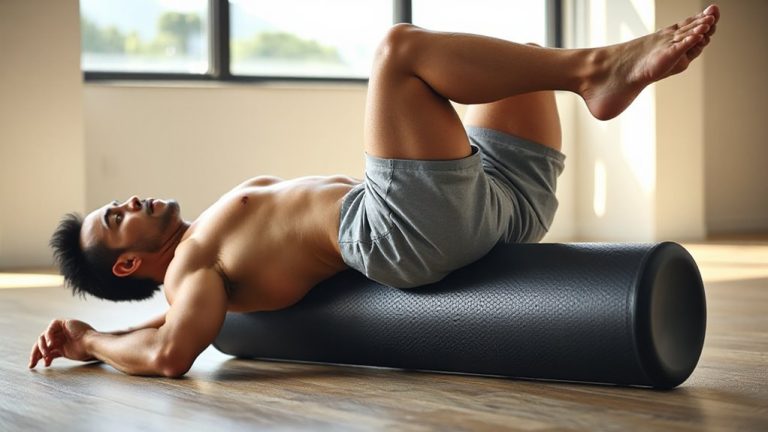
How do you make spinal waves work for your body, no matter your flexibility or strength level? You adapt the movement. Start with small, controlled lifts if you’re a beginner-just peel your pelvis off the floor and roll up vertebra by vertebra. This builds neural engagement safely. More experienced movers can amplify the motion, adding dynamic tension by resisting the movement slightly with abdominal control. Use a therapy ball under your knees for added feedback or a foam roller along your spine to guide alignment. These variations challenge coordination and proprioception. Whether you’re recovering from stiffness or fine-tuning performance, spinal wave modifications scale intelligently. They integrate mobility, stability, and mindfulness without equipment overload. Simple setups-a mat and body awareness-yield strong returns. The drill’s value lies in its adaptability, making it a smart tool in any recovery or fitness gear strategy.
On a final note
You’ve seen how supine spinal waves boost lumbar mobility through controlled segmental movement. This drill enhances spinal articulation, making it ideal for warm-ups or recovery. When paired with quality fitness gear-like supportive mats that cushion the spine-performance improves. You’ll feel the difference in alignment and motion. Avoid rushing; focus on form to prevent mistakes. It’s not flashy, but it’s effective, building resilience and functional range you can actually use.