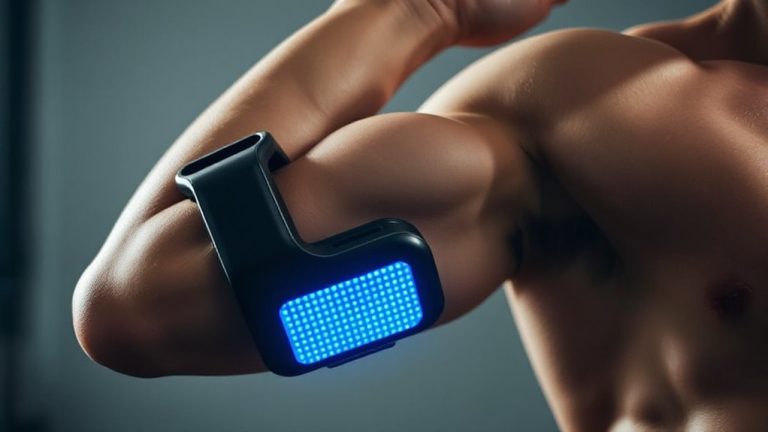
Simulated Batting Practice With Deceleration Emphasis for Hitters Returning From Elbow Surgery
You’re rebuilding safely when you use simulated batting practice with deceleration emphasis after elbow surgery. This approach reduces joint stress while retraining your nervous system to control the swing’s end. Resisted bands and tempo cues like “slow turn, pause, fire” boost neuromuscular control. Lightweight bats and progressive effort phases help restore timing without straining healing tissues-your next step reveals how to structure it precisely.
Notable Insights
- Simulated batting practice reduces joint stress while allowing focus on controlled swing mechanics and deceleration timing.
- Emphasize eccentric loading of forearm flexors and rotator cuff during follow-through to protect healing elbow ligaments.
- Use resistance bands or inertia trainers to replicate deceleration demands without excessive joint strain.
- Apply tempo cues like “slow turn, pause, fire” to retrain neuromuscular timing and prevent compensatory movements.
- Progress gradually from 50% to 95% effort in phased stages, guided by muscle fatigue and tissue tolerance.
Why Deceleration Training Protects Healing Elbows
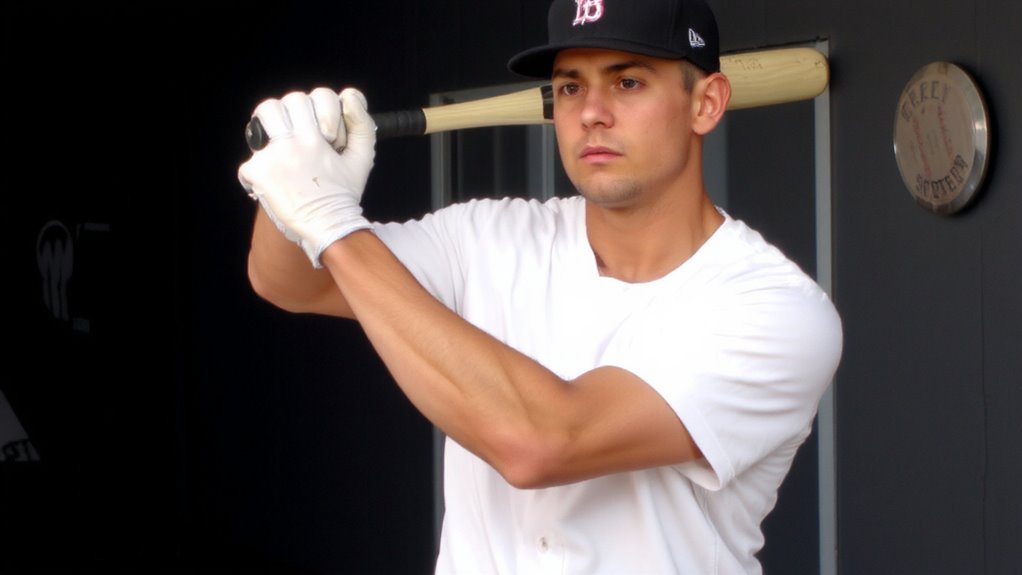
While your elbow’s healing timeline hinges on surgical precision and rest, what you do during active recovery-especially deceleration training-can make or break your return to full function. You’re not just rebuilding strength; you’re retraining your nervous system to control the violent motion of a swing’s follow-through. Without this, joint stress skyrockets as loose connective tissues absorb forces meant for engaged muscles. Deceleration drills condition the brachialis, forearm flexors, and rotator cuff to handle load eccentrically, reducing strain on healing ligaments. Muscle fatigue becomes a useful signal-when monitored-showing when tissues need recovery, not more volume. Fitness gear like resisted bands and inertia-based trainers help replicate controlled swing endings, letting you practice safe load distribution. These tools aren’t just convenient; they’re performance-shaping, bridging rehab to real-world demand. Ignoring deceleration? That’s gambling with stability, inviting setbacks when live swings return.
Simulated BP vs. Live Swings: What’s Safer After Surgery?
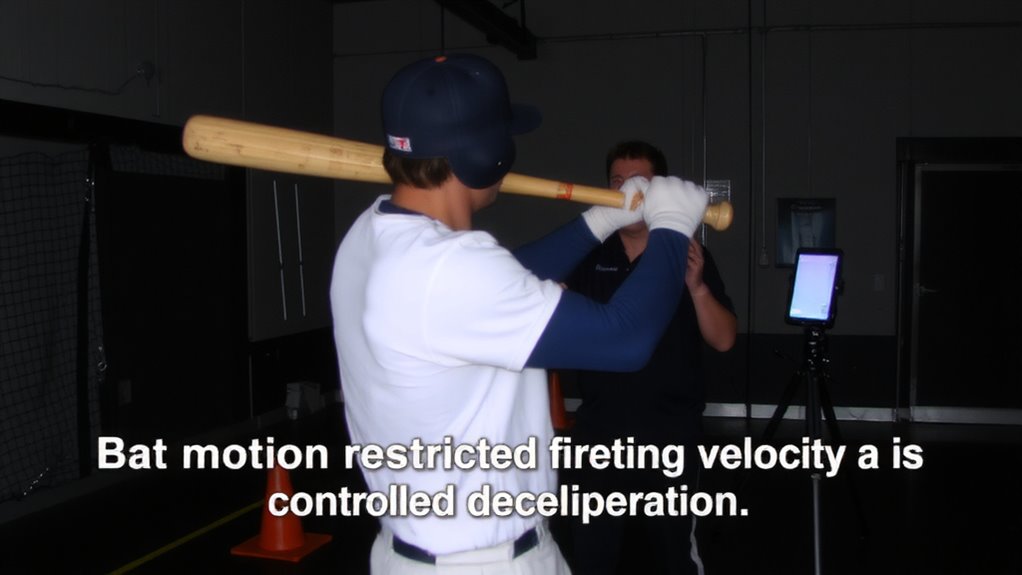
If you’re keen to get back into batting after elbow surgery, you’ll need to choose wisely between simulated batting practice (BP) and live swings-because not all swings are created equal during recovery. Simulated BP lets you control swing frequency and reduce joint stress, making it safer early on. Without a pitched ball, you can focus on mechanics and deceleration, critical for protecting healing tissue. Live swings, while game-realistic, increase joint stress due to higher velocity and timing demands. Even if your arm feels strong, uncontrolled swing frequency may overload the elbow before it’s ready. Simulated BP also allows use of lightweight or restricted-movement training bats, enhancing neuromuscular re-education with less strain. You’ll maintain timing and intent without the risks of full-speed pitches. For structured rebuilding, simulated swings provide consistent, measurable progress-key for monitored return-to-play protocols. They’re not a permanent fix, but a smarter interim tool.
How to Build a Step-by-Step Deceleration Drill
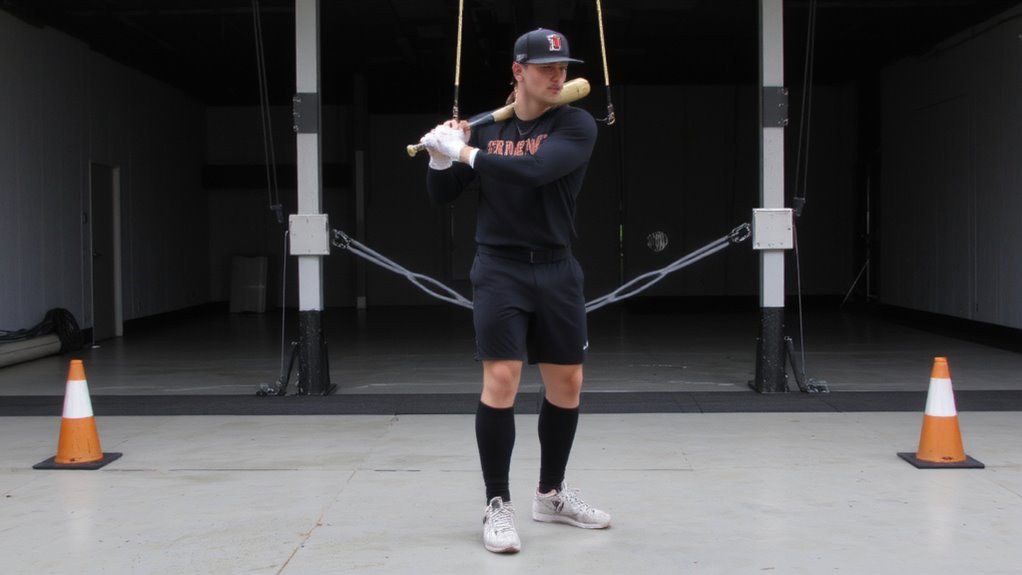
Since deceleration is just as critical as acceleration in protecting your elbow after surgery, building a step-by-step deceleration drill lets you regain control without overloading healing tissues. Start with proper stance alignment-feet shoulder-width apart, hips and shoulders squared to the target-to guarantee balanced, efficient movement. Begin each swing slowly, focusing on smooth shifts from acceleration to deceleration. Gradually increase intensity over weeks, not days, to match tissue tolerance. Use a lightweight bat or training donut to emphasize control, not power. Monitor grip pressure closely; excessive tension increases elbow strain and disrupts neuromuscular timing. Keep your grip relaxed-firm enough to control the bat, but not so tight that it limits forearm mobility. Perform drills daily, using mirrors or video feedback to assess form consistency. These measures support safer reintegration into full batting mechanics, building confidence in your swing’s stability while minimizing re-injury risk during recovery.
Use Tempo Cues to Regain Swing Control
What if the key to retraining your swing after elbow surgery wasn’t in raw strength but in rhythm? Tempo control becomes your foundation during recovery, helping you rebuild movement with precision. Using verbal or auditory cues-like “slow turn, pause, fire”-guides your body through safer, more coordinated sequencing. These cues sharpen your swing awareness, letting you feel imbalances or compensations before they become habits. Without proper tempo, even correct mechanics can stress healing tissues. By focusing on controlled timing, you’re not just repeating swings-you’re retraining neuromuscular pathways critical for timing and joint protection. This phase isn’t about power; it’s about consistency, feedback, and refining movement quality. Tools like metronomes or coach-led counts provide real-time feedback, reinforcing safer patterns. When tempo is prioritized, swing awareness improves, reducing re-injury risk. It’s a subtle shift-from force to finesse-that makes long-term return possible.
From Slow-Motion to Game Speed: A Safe Progression
How do you bridge the gap between careful rehab and the demands of live competition? You progress deliberately, matching intensity to tissue tolerance. Start slow, yes-but don’t stay there. Gradually increase swing tempo while monitoring for arm fatigue and joint instability. Use deceleration drills to train control at higher speeds. Below is a progression model:
| Phase | Intensity (% max effort) |
|---|---|
| 1 | 50% – full control |
| 2 | 65% – mild muscle burn |
| 3 | 80% – near-game timing |
| 4 | 95% – simulated at-bats |
Each stage should last 3–5 sessions, depending on recovery response. Pushing too hard too soon increases strain risk, especially if joint instability lingers. Let arm fatigue guide volume, not ego. The right progression respects healing tissue while rebuilding neuromuscular confidence-key to returning strong and staying in the lineup.
Common Mistakes Hitters Make Returning Too Soon
Even when the doctor clears you for batting practice, pushing into live swings too quickly can undo weeks of careful rehab. Overconfidence risks creep in when you feel pain-free, making you ignore subtle signs of strain. You might jump straight into high-speed drills without retraining neuromuscular timing, setting the stage for re-injury. Premature loading-especially during the stride and rotation phases-places excessive torque on the healing elbow, particularly the UCL. Deceleration patterns remain underdeveloped if progression isn’t gradual, reducing your ability to safely absorb forces post-contact. Hitters often neglect eccentric control, favoring power over precision, which defeats the purpose of structured reconditioning. Proper simulated batting practice must emphasize slow build-up, real-time feedback, and joint-specific strengthening. Resist the urge to mimic pre-injury performance too soon. Your recovery hinges on discipline, not intensity. Smart progression protects long-term performance.
On a final note
You’re building resilience, not just rebuilding strength. Deceleration-focused simulated BP refines eccentric control, critical for protecting your healing elbow. This isn’t just safer than live swings-it’s smarter, addressing muscle timing and joint stability. Proper gear, like dampened bats or resistance bands, supports progression without overload. You’ll advance confidently from slow-mo precision to game speed, provided you respect the process-rushing erodes gains and risks reinjury.