Applying Kinesiology Tape to Support Healing Shoulders Without Restricting Motion
You can support your healing shoulder without limiting movement by applying kinesiology tape properly. Clean and dry the skin first, trim any long hair, and avoid lotions. Use a Y- or I-strip with 25–50% stretch in the middle, anchoring ends without tension. Rub the tape to activate adhesion, which boosts circulation and reduces pain. Worn for up to five days, it lifts skin to ease pressure while letting you stay active-learn how to optimize each step for lasting relief and performance.
Notable Insights
- Apply kinesiology tape to clean, dry skin to ensure strong adhesion and effective support.
- Use 25–50% stretch on the middle section and anchor ends without tension for optimal support.
- Choose Y-shaped or I-shaped tape cuts based on the area needing coverage and support.
- Rub the tape after application to activate the adhesive and enhance proprioception and drainage.
- Wear tape for up to five days, replacing earlier if irritation, lifting, or reduced support occurs.
How Kinesiology Tape Helps Shoulder Pain
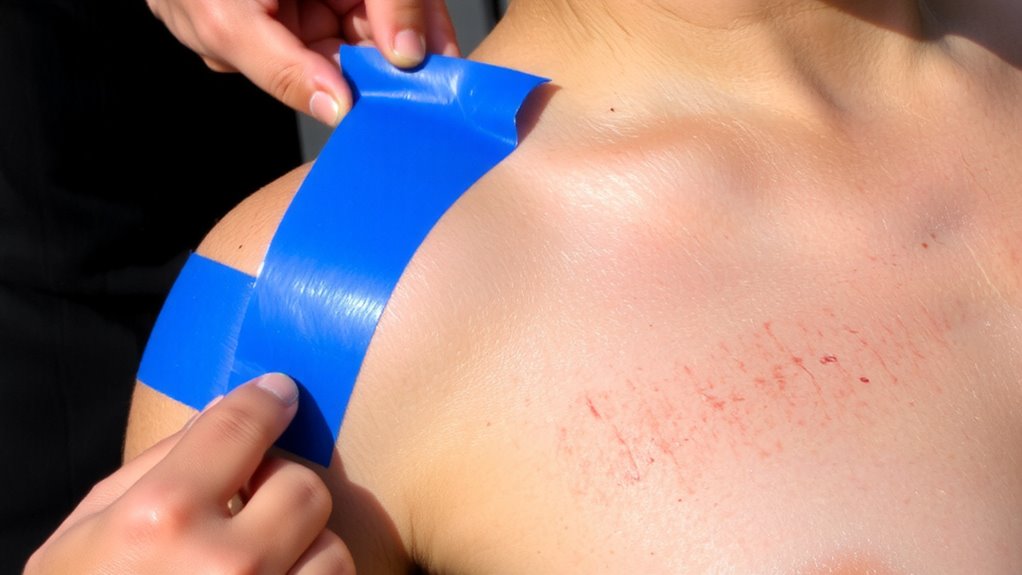
While you might be skeptical about how a simple strip of tape can make a real difference, kinesiology tape has gained traction among athletes and physical therapists for its ability to support shoulder recovery without restricting movement. You’re likely seeking effective pain relief, and this elastic therapeutic tape may help by gently lifting the skin, which can ease pressure on underlying tissues and promote circulation. Many users report noticeable inflammation reduction within days of proper application. The tape’s unique design mimics human skin’s elasticity, allowing full range of motion while still providing support. Unlike rigid braces, it doesn’t limit activity, making it ideal for ongoing fitness recovery. Evidence remains mixed, but clinical observations suggest benefits when used alongside other treatments. As part of a broader recovery strategy, kinesiology tape offers a practical, non-invasive option that supports healing while keeping you mobile and engaged in your routine.
Prepare Your Shoulder for Taping
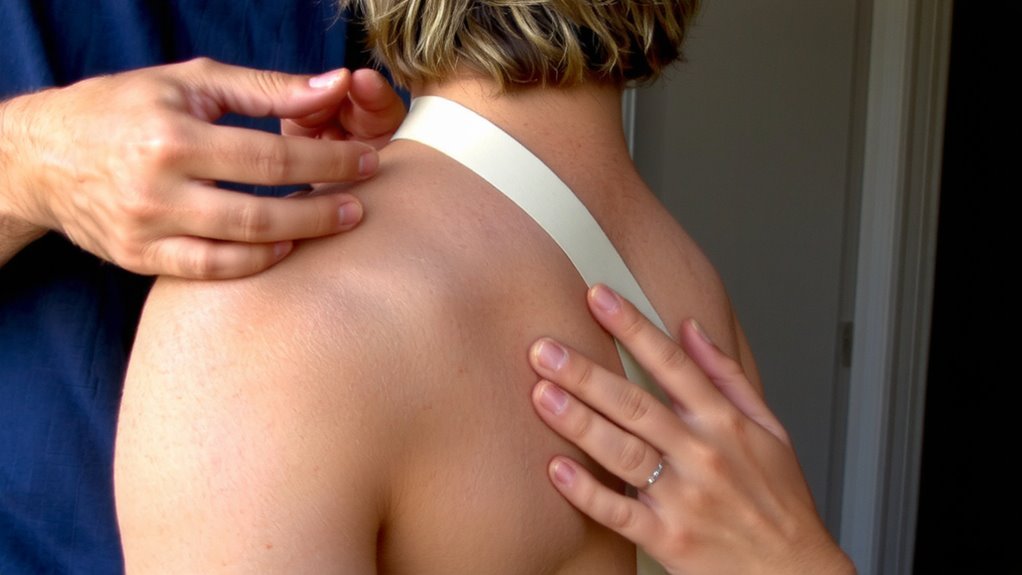
Proper skin prep is key to getting the most out of your kinesiology tape application. You’ll want clean, dry skin to guarantee strong tape adhesion and lasting support. Start with skin preparation: wipe the shoulder area with alcohol or soap and water to remove oil, sweat, or lotion. Let it dry completely-moisture weakens adhesion fast. If you have hair, consider trimming longer patches to prevent discomfort during removal. Avoid applying lotion right before taping; it creates a barrier that reduces effectiveness. A well-prepped shoulder holds the tape longer and performs better during movement. Good tape adhesion means fewer adjustments and more consistent support throughout recovery. When you prep right, the tape stays put through activity and sweat, delivering the benefits kinesiology tape is known for. This simple step makes a measurable difference in how well your recovery gear works.
Apply Kinesiology Tape: Step-by-Step Support
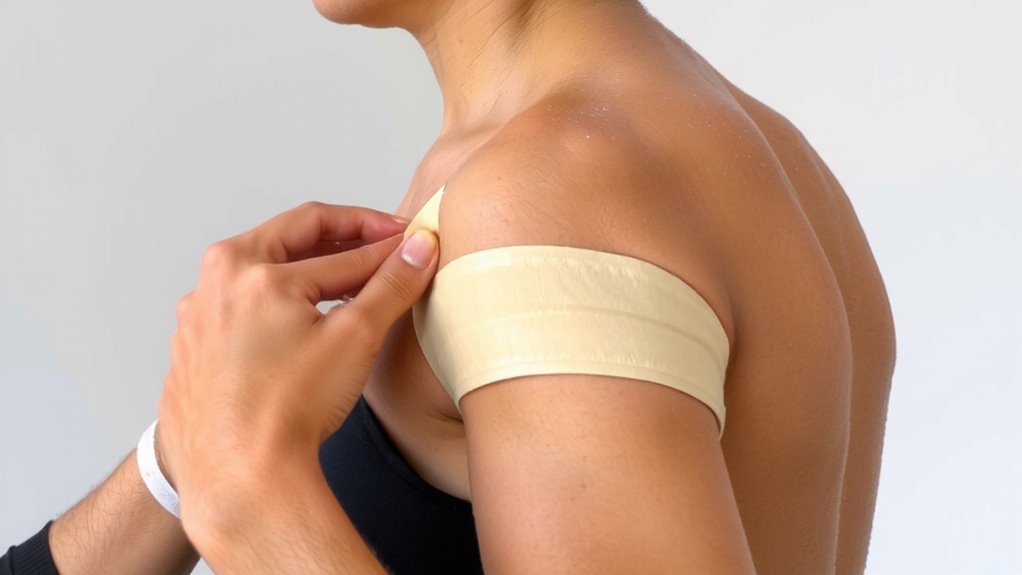
How do you guarantee your kinesiology tape delivers the right balance of support and flexibility during shoulder recovery? You start with proper tension control-apply the middle section of the tape with 25–50% stretch over the target muscles, allowing dynamic support without restricting blood flow or movement. Anchor placement is critical: begin and end the strip without stretch, securely adhering to the skin to prevent peeling and maintain positioning during motion. Use a Y-shaped or I-shaped cut depending on shoulder area coverage, gently rubbing each segment to activate adhesive. Proper application enhances proprioception and promotes lymphatic drainage, supporting fitness recovery without immobilization. The tape should move *with* your body, not against it, maintaining structural integrity through daily activity. Applied correctly, kinesiology tape becomes a reliable component of recovery gear-functional, adaptive, and minimally invasive when tension control and anchor placement are prioritized.
Avoid These Common Shoulder Taping Mistakes
If you’re taping your shoulder without considering skin preparation, you’re likely undermining the tape’s effectiveness from the start-failing to clean and dry the area properly can lead to poor adhesion, especially in active individuals who sweat or move frequently. Applying tape with improper tension is another common error; too much stretches the adhesive beyond its therapeutic range, while too little reduces support. You also risk diminishing benefits with incorrect alignment-placing anchors or tails off key muscle lines weakens biomechanical guidance and sensory feedback. Avoid taping over hair without trimming; it compromises both comfort and hold. Overlapping strips excessively or pulling the skin too tight during application creates unnecessary pressure, potentially restricting motion instead of facilitating it. These mistakes reduce kinesiology tape’s ability to promote recovery without constriction. Correct technique guarantees peak performance, letting you train smarter and recover more efficiently.
How Long to Wear & When to Replace Tape
Generally, you’ll get the best results from kinesiology tape when wearing it for three to five days, depending on your activity level and skin type-this window balances adhesion longevity with skin health. Your taping duration should never exceed five days, as adhesive effectiveness declines and skin irritation risks increase. Sweat, movement, and clothing friction wear down the tape, so monitor for lifting edges or loss of tension. The ideal replacement frequency is every 3–5 days or sooner if you notice peeling, itching, or reduced support. For active individuals, shorter taping duration may be necessary to maintain performance benefits. High-quality tape resists moisture and retains elasticity, but even premium brands degrade over time. Replacing tape regularly guarantees consistent therapeutic support without compromising skin integrity. Always remove it gently, cleanse the area, and allow the skin to breathe before reapplying.
On a final note
You’ll find kinesiology tape a practical tool for supporting shoulder recovery without limiting mobility. It gently stabilizes tissues, may reduce pain, and promotes circulation when applied correctly. While not a standalone fix, it complements rest, rehab exercises, and proper form. Choose high-quality tape with strong adhesive and stretch, and replace it every few days or after intense sweating. Used wisely, it’s a reliable addition to your recovery gear.