Building a Predictable Sleep Ritual Around Foam Rolling and Static Stretching
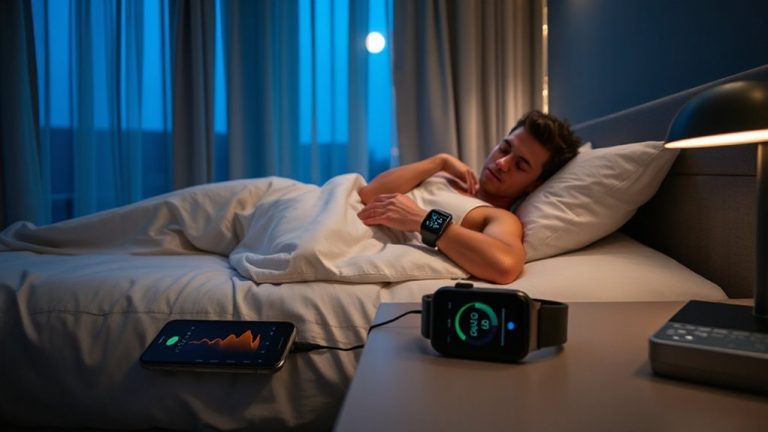
You can build a predictable sleep ritual by starting with five minutes of foam rolling using a high-density roller, which releases muscle tension and boosts circulation. Follow with five static stretches-like child’s pose and forward folds-held for 30 seconds each to calm your nervous system. Doing this 20 to 30 minutes before bed at the same time and place each night strengthens circadian cues and improves sleep onset. Pair slow breathing with the routine to enhance relaxation. Consistency and simple gear, like a foam roller and stretching strap, increase long-term recovery and mobility benefits. Stick with it, and you’ll see how small, disciplined actions compound into better rest and physical performance.
Notable Insights
- Consistent timing and routine build circadian strength and improve sleep onset predictability.
- Foam rolling for five minutes before bed releases muscle tension and enhances recovery.
- Static stretching after foam rolling calms the nervous system and improves sleep readiness.
- Perform key stretches like child’s pose and spinal twists for 30 seconds each to relieve tension.
- Use foam rollers and stretching straps to support discipline and long-term habit adherence.
Why a Sleep Ritual Beats Counting Sheep
While counting sheep might sound like a harmless bedtime tradition, it doesn’t actually address the physical tension that often keeps you awake-something a targeted sleep ritual with foam rolling and stretching can do. Sleep psychology shows that mental distractions alone rarely trigger the relaxation response needed for sleep onset. Instead, combining mindful movement with deliberate breath work actively signals your nervous system to shift into rest mode. You’re not just calming your mind-you’re telling your muscles to release stored stress. Unlike passive strategies, this approach leverages physiological feedback, making it more effective for long-term sleep quality. Tools like foam rollers and stretching straps aren’t just fitness gear; they’re recovery aids that prep your body for restoration. When used consistently, they help condition both body and mind for sleep, turning bedtime into a predictable, physical unwinding process rooted in science, not habit alone. For best results, choose a foam roller with the appropriate density and texture to match your body’s needs, such as those highlighted in reviews of the best foam rollers.
Foam Rolling: Your Body’s Nightly Reset Button
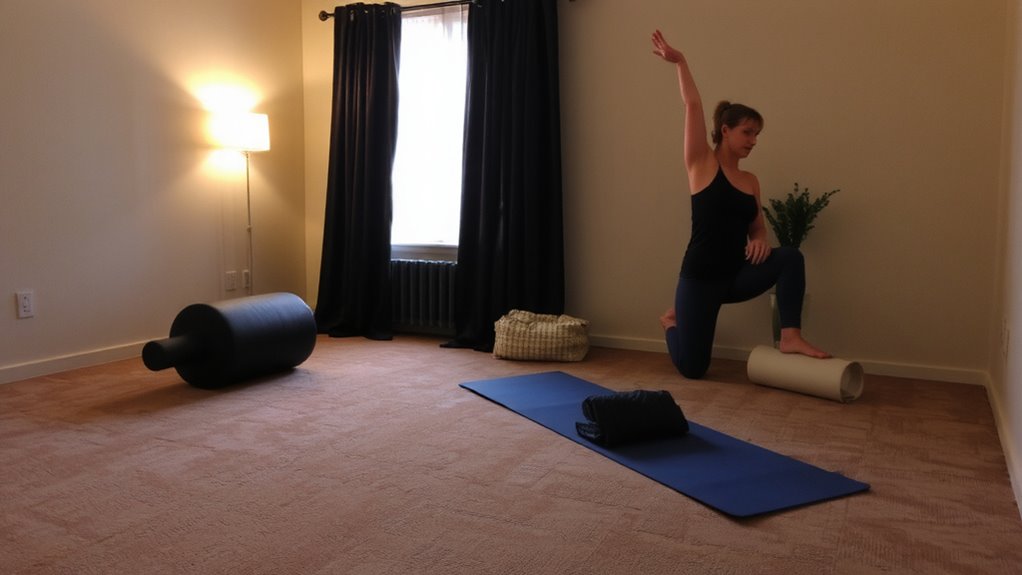
Because your muscles accumulate tension daily from sitting, standing, or exercising, foam rolling before bed acts as a targeted reset, helping release deep-seated tightness that sleep alone can’t resolve. This simple practice delivers myofascial release, easing the connective tissue surrounding muscles for improved mobility and comfort. It also provides a circulation boost, promoting nutrient delivery and waste removal at the cellular level-key for overnight recovery. High-density foam rollers perform well, balancing firmness and support without excessive soreness. For deeper muscle work, consider using a massage gun to complement your foam rolling routine. Below is a quick visual guide.
| Body Area | Sensation Target |
|---|---|
| Quads | Deep pressure, mild burn |
| Hamstrings | Tension melting away |
| Upper Back | Knot dissolution |
| Calves | Warmth and circulation boost |
Used consistently, foam rolling becomes more than recovery-it’s a nightly cue to your body: unwind, reset, and prepare.
The 5 Best Bedtime Stretches for Deep Sleep
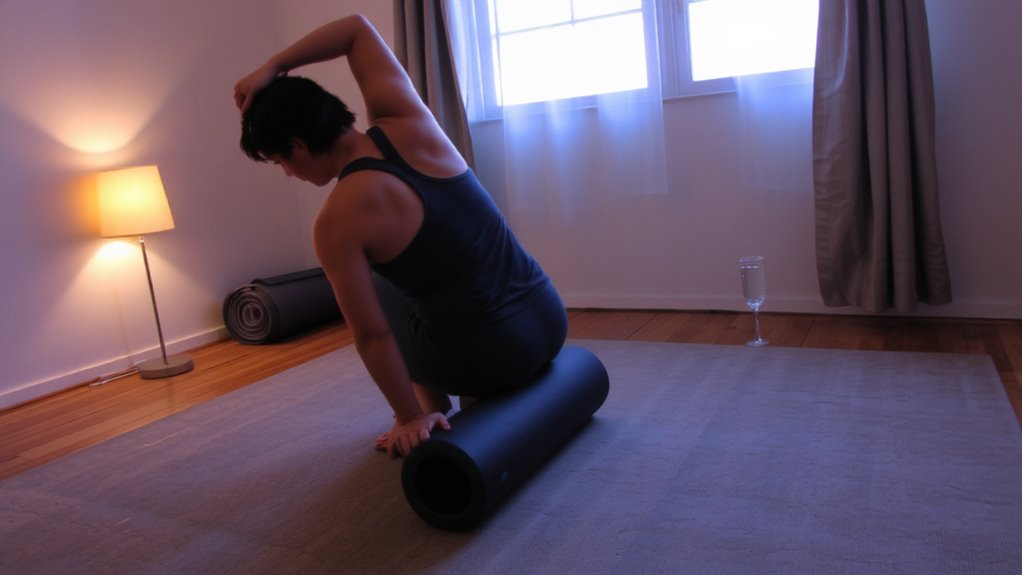
If you’re looking to enhance recovery and signal to your body that it’s time to wind down, incorporating targeted stretches before bed can make a clear difference in both muscle relaxation and sleep quality. Try the child’s pose-it gently lengthens your spine and shoulders, supporting better sleep posture. Forward folds release hamstrings and lower back tension, aiding muscle recovery after long days. The supine spinal twist helps realign your vertebrae and eases spinal compression from sitting. Don’t skip the seated butterfly-it opens hips restricted by inactivity. Finally, the lying quad stretch balances anterior tension often worsened by running or cycling. Each stretch should be held for 30–45 seconds, breathing deeply to enhance tissue relaxation. These moves, when repeated nightly, encourage both physical restoration and mental calm. When paired with quality recovery gear like supportive mats and proper sleepwear, they amplify your body’s readiness for restorative deep sleep. A high-density workout mat provides the optimal balance of cushioning and support for effective bedtime stretching.
How to Build a 10-Minute Sleep Routine That Sticks
Since consistency matters more than complexity when it comes to winding down, building a 10-minute sleep routine that sticks means pairing simplicity with strategic movement and the right recovery tools. Start with foam rolling major muscle groups for five minutes, applying gentle pressure to release tension without strain. Follow with five targeted static stretches, holding each for 30 seconds while focusing on breath awareness-slow, deep inhales and exhales help signal your nervous system to relax. Choose a consistent time and place, minimizing distractions so the routine becomes automatic. Use a habit tracker or journal for consistency tracking, which boosts accountability and reveals patterns over time. Quality foam rollers and non-slip mats support effective execution, reducing friction and enhancing comfort. While gear matters, it’s the daily repetition-not the equipment’s cost-that delivers results. This blend of mindful movement and tracking builds a sustainable ritual that supports long-term sleep quality.
When to Roll and Stretch for Faster Sleep
When should you roll and stretch to actually fall asleep faster? The ideal timing is 20 to 30 minutes before bed. This window allows your body to process the physical input while beginning the wind-down phase. Start with foam rolling-it loosens tight fascia and eases muscle tension, priming your system for deeper relaxation. Follow with static stretching, focusing on major muscle groups like hamstrings, hips, and shoulders. This ideal sequence shifts your nervous system toward parasympathetic dominance, which supports sleep onset. Rolling first enhances the effectiveness of stretching by improving tissue pliability. Done consistently, this routine signals your brain that it’s time to rest. While fitness recovery tools vary in density and texture, even basic foam rollers and consistent form deliver measurable results. The performance isn’t flashy, but the cumulative effect on sleep quality is clear-precision and timing matter more than equipment.
3 Mistakes That Ruin Your Nightly Routine
How often do you roll out your muscles too aggressively, only to lie awake feeling more alert than relaxed? Pushing too hard activates your nervous system instead of calming it, undermining the recovery benefits foam rollers and stretching are meant to provide. Your body interprets intense pressure as stress, not relaxation. Pair that with inconsistent timing-rolling at 9 p.m. one night and 11 p.m. the next-and you disrupt your circadian cues. This inconsistency weakens the predictability your sleep cycle needs. Overthinking habits also sabotage your routine; fixating on perfect form or soreness shifts focus from mindfulness to anxiety. Instead of easing into rest, you remain mentally active. For ideal recovery, use moderate pressure and stick to the same nightly window. Combine that with awareness of mental patterns, and your routine becomes a true signal for sleep, not another source of strain.
What Happens When You Do This Every Night
While you might not notice dramatic changes overnight, committing to a nightly ritual of foam rolling and stretching gradually reshapes your body’s recovery response, enhancing both sleep quality and muscular health. Over time, you’ll find your circadian rhythm syncing more naturally with your bedtime, thanks to the calming neuromuscular signals these activities promote. Consistent foam rolling reduces fascial tension, speeding up muscle recovery by improving blood flow and reducing soreness. When paired with static stretching, it increases range of motion and lowers the risk of stiffness. Nightly use of quality foam rollers-especially those with textured surfaces-enhances myofascial release more effectively than smooth counterparts. You’re not just relaxing; you’re training your body to recover better and sleep deeper. With regularity, this ritual becomes a cornerstone of physical resilience, making recovery predictable and performance sustainable, all through disciplined, gear-supported recovery habits.
On a final note
You give your body what it needs to recover when you prioritize foam rolling and static stretching nightly. These tools reduce muscle tension, improve circulation, and signal your nervous system to wind down. Used consistently, they enhance sleep quality and support fitness recovery. Paired with a predictable routine, this approach outperforms passive methods like counting sheep. Investing in durable, textured foam rollers and nonslip mats guarantees longevity and effectiveness, making them practical additions to any recovery-focused gear lineup.