Maximizing Recovery Through Strategic Application of Kinesiology Tape Techniques
You’re not just taping to support tired muscles-you’re using kinesiology tape to boost circulation, guide proper movement, and speed recovery. Choose durable, skin-friendly tape and prep clean, dry skin for lasting hold. Apply to knees, shoulders, or lower back with targeted stretch: 25–50% for healing, 50–75% for activation. Peel slowly with warm water to protect skin. Get the technique right, and you’ll see how strategic application transforms recovery from passive to proactive.
Notable Insights
- Apply kinesiology tape with targeted stretch levels to enhance circulation, lymphatic drainage, and muscle activation for faster healing.
- Prep skin properly by cleaning, drying, and trimming hair to ensure strong adhesion and minimize irritation during wear.
- Use 25–50% tape stretch to support recovery in acute phases by improving blood flow and reducing swelling.
- Apply tape to key areas like knees, shoulders, and lower back to improve joint alignment, stability, and neuromuscular control.
- Remove tape slowly at a 180-degree angle, close to the skin, to protect skin integrity and maintain recovery progress.
Why Kinesiology Tape Speeds Recovery
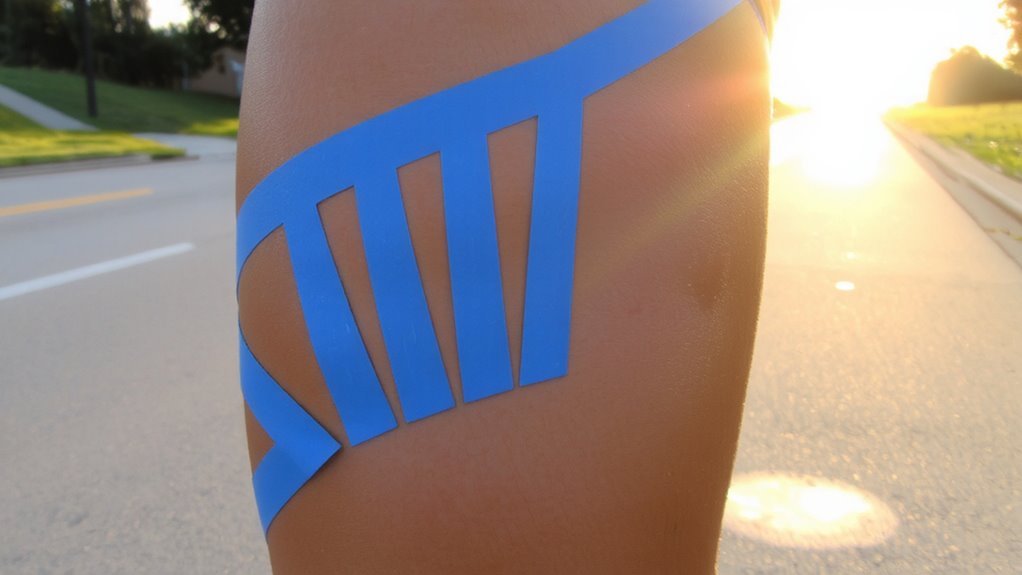
While you might think recovery hinges solely on rest and nutrition, kinesiology tape plays a surprisingly active role in speeding up the healing process. By supporting weak or fatigued muscles without restricting movement, it promotes natural muscle activation, helping maintain proper biomechanics during recovery. The tape’s elasticity gently lifts the skin, reducing pressure on pain receptors and stimulating neural feedback, which enhances neuromuscular control. You also get a circulation boost as the microspace created beneath the tape improves blood and lymph flow, flushing out metabolic waste and delivering oxygen-rich blood to injured tissues. Unlike rigid taping methods, this flexible support allows functional movement, making it ideal for active recovery. Studies show consistent use leads to reduced swelling and faster return to activity. When applied correctly, kinesiology tape isn’t just a passive aid-it’s a dynamic tool that works with your body’s mechanics to accelerate healing and maintain performance readiness.
Choose the Right Tape and Prep Your Skin
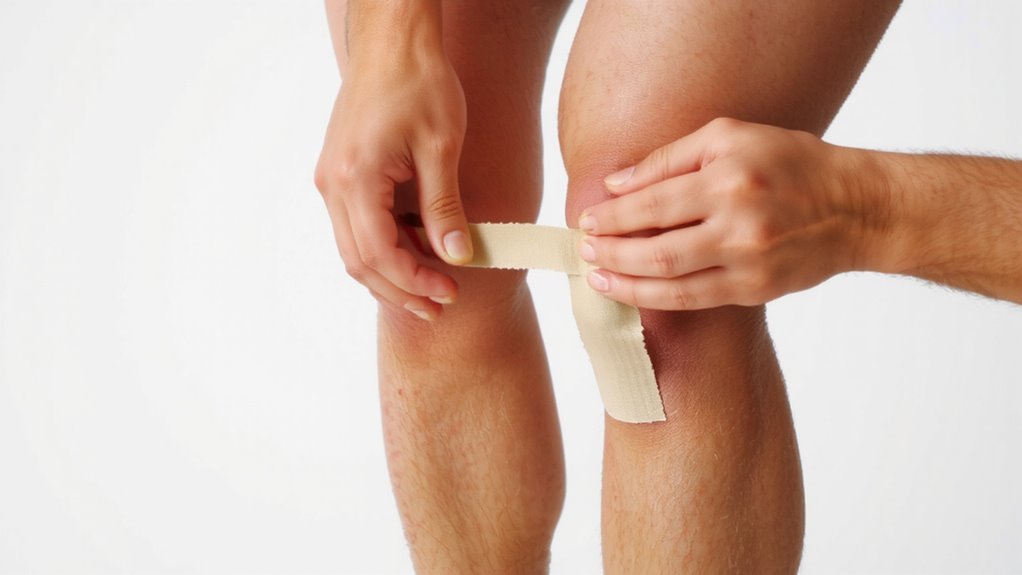
A good recovery routine starts with the right kinesiology tape and proper skin preparation, so don’t just grab the first roll you see. You need a tape with strong adhesive strength to stay put during movement and sweating, yet it shouldn’t irritate your skin. If you have skin sensitivity, opt for hypoallergenic or cotton-based tapes-they’re gentler but still support muscle and joint function. Before applying, clean and dry the area completely; oils, lotions, or sweat can weaken adhesion. Trim excess hair if needed to prevent discomfort during removal. Always do a patch test if you’re prone to reactions. High-quality tape conforms well to contours, offering stability without restricting motion. The best tapes balance elasticity, durability, and comfort, enhancing recovery without compromising skin health. Taking these steps guarantees maximum effectiveness so your body can respond as intended.
Tape Knees, Shoulders, and Lower Back
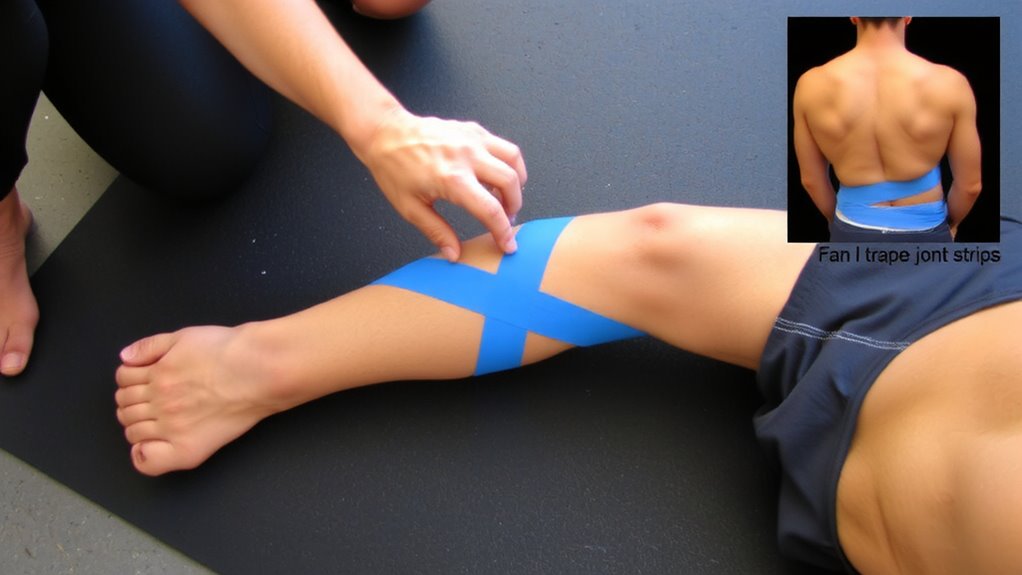
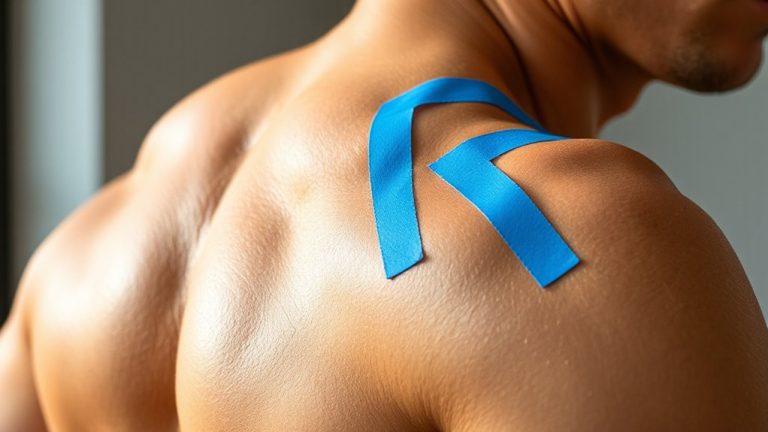
You’ve picked the right kinesiology tape and prepped your skin-now it’s time to apply it where you need it most: the knees, shoulders, and lower back. Proper placement enhances knee alignment and supports shoulder stability during recovery and activity. Targeted taping reduces strain, promotes circulation, and helps maintain joint integrity through dynamic movement.
| Body Area | Tape Function |
|---|---|
| Knee | Improves tracking and alignment |
| Shoulder | Enhances stability and posture |
| Lower Back | Reduces low-grade muscle tension |
| Overuse Zones | Supports fatigue-prone tissue |
Strategic application provides subtle but consistent feedback to neuromuscular systems, encouraging ideal mechanics. The elastic properties of quality kinesiology tape mimic skin and fascia, allowing unrestricted motion while delivering structural cues. When applied correctly, these techniques don’t just soothe-they actively retrain movement patterns. This makes them practical tools in both rehab and performance settings, bridging recovery gaps others overlook.
Use Stretch Levels for Faster Healing
Since healing hinges on both tension and support, choosing the right stretch level in kinesiology tape can make a noticeable difference in recovery speed and effectiveness. You control how much tension the tape applies by pre-stretching it before application-typically between 25% and 75%, depending on the injury and area. Light stretch (25–50%) offers gentle support with minimal restriction, ideal for early-stage recovery where circulation and lymphatic drainage are priorities. Higher stretch (50–75%) enhances tension control, supporting weak or fatigued muscles without limiting range of motion. This level also promotes muscle activation by subtly stimulating sensory receptors in the skin and fascia. When used strategically, proper stretch levels don’t just stabilize-they encourage functional movement that speeds healing. You’re not just taping; you’re guiding your body’s repair process with precision, making kinesiology tape a dynamic tool in fitness recovery.
Remove Tape Without Irritating Skin
Getting the most out of kinesiology tape means paying attention not just to how it’s applied, but how it’s taken off-especially since aggressive removal can undo the benefits gained during recovery. Skin sensitivity varies, so a gentle removal technique is essential to prevent irritation or damage, particularly for individuals with delicate or reactive skin. Start by loosening one edge and slowly peel the tape back on itself at a 180-degree angle, keeping it close to the skin to minimize tug. Warm water or a damp cloth can help dissolve adhesive residue, making the process smoother. Avoid yanking or using harsh solvents, which compromise skin integrity. A thoughtful, slow approach supports consistent taping routines, preserving both comfort and recovery gains. Gentle removal isn’t just practical-it’s a sign of respecting your body’s limits.
On a final note
You’ve applied kinesiology tape correctly-choosing quality elastic tape, prepping clean, dry skin, and matching stretch levels to injury type. When used on knees, shoulders, or lower back, proper technique supports healing by improving circulation and reducing strain. Evidence shows taping boosts recovery when combined with rest and rehab. Removing tape slowly, with oil, minimizes irritation. It’s not a fix-all, but as part of a smart recovery plan, kinesiology taping is a practical, effective tool worth using.