Cycling Interval Sessions With Reduced Seat Height to Lessen Patellar Shear
You can reduce patellar shear during cycling intervals by lowering your saddle 5–10 mm, which decreases knee extension and compressive stress on the joint. This small adjustment maintains power output while supporting knee-friendly mechanics, especially during high-cadence efforts. It’s a practical trade-off that prioritizes joint health without sacrificing efficiency. Many riders with anterior knee pain find relief with this tweak as part of a broader fit strategy - there’s more to optimizing comfort and performance than saddle height alone.
Notable Insights
- Lowering saddle height by 5–10 mm during intervals reduces patellar shear forces on the downstroke.
- A slightly lower seat promotes a bent knee at the pedal stroke’s bottom, decreasing joint stress.
- Reducing saddle height 1–2 cm below race position can alleviate anterior knee pain during high-intensity efforts.
- Maintaining 85–95 RPM cadence with a lowered saddle supports efficient pedal mechanics and knee protection.
- Temporary saddle adjustments during intervals balance power output and joint preservation for injury-prone riders.
How Cyclists Can Reduce Knee Pain With Lower Seat Height
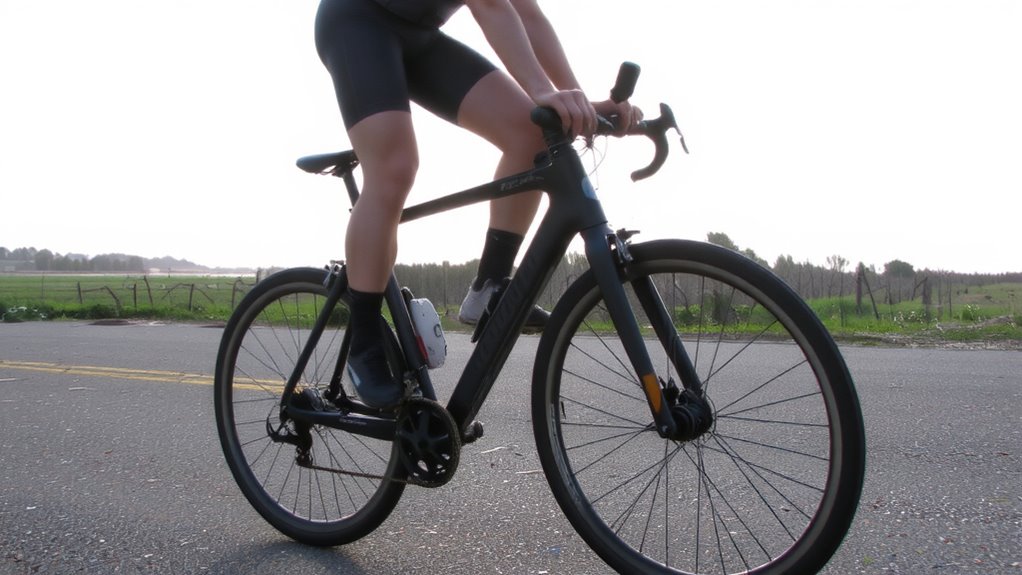
Lowering your seat height slightly can make a meaningful difference in reducing knee pain, especially during intense interval training. When your saddle is too high, it forces your knee to overextend, straining tendons and disrupting normal knee biomechanics. By adjusting the seat just 5–10 millimeters lower, you promote a more natural joint angle, reducing compressive forces during high-cadence efforts. Bike fit assessments confirm this small change often enhances pedal efficiency while decreasing the risk of overuse injuries. You’ll notice less fatigue in the quads and smoother power transfer throughout the stroke. Although some fear losing power, studies show minimal impact on output when the adjustment stays within biomechanical sweet spots. For cyclists prioritizing fitness recovery and joint longevity, this tweak offers a practical edge. Consistent use of professional bike fit assessments guarantees your position supports both performance and comfort, making smart geometry choices a key part of sustainable training.
Can a Lower Seat Ease Patellar Stress During Intervals?
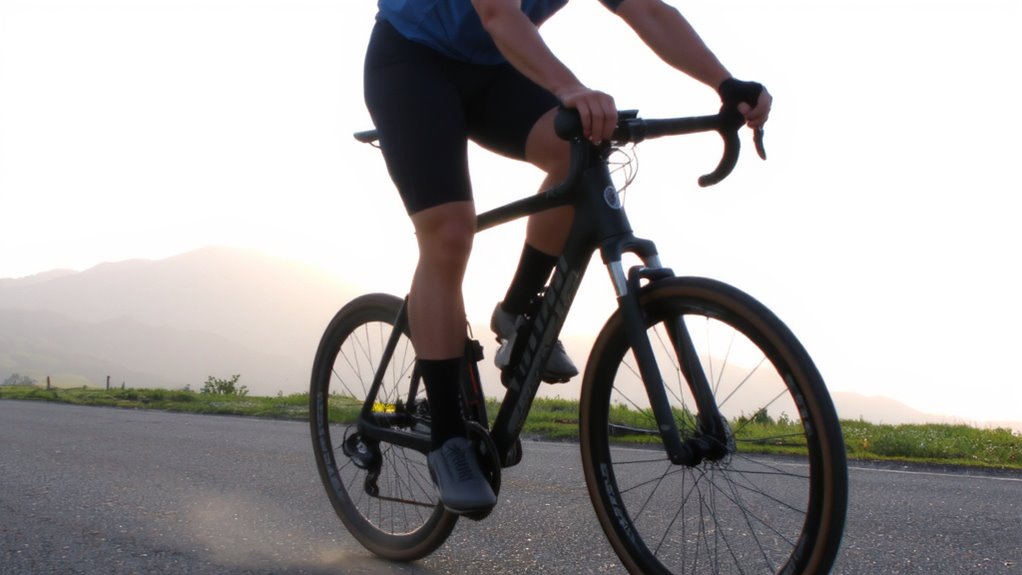
Your knee’s comfort during intense intervals might depend more on saddle position than you think. Lowering your seat slightly can reduce patellar shear forces, especially when pedal loads spike with high interval intensity. A proper bike fit isn’t just about power transfer-it’s also about joint protection. When your seat’s too high, your knee extends excessively, increasing compressive stress on the patella with every powerful downstroke. Dropping the saddle a few millimeters encourages a slightly bent knee at the bottom of the stroke, distributing load more evenly across the joint. Riders with a history of anterior knee pain often report noticeable relief during hard efforts with this tweak. While aggressive riders may worry about efficiency, the priority here is sustainable training through smarter biomechanics. This small adjustment fits seamlessly into most setups and could be key to long-term recovery and resilience.
Does Dropping Your Seat Cost Power?
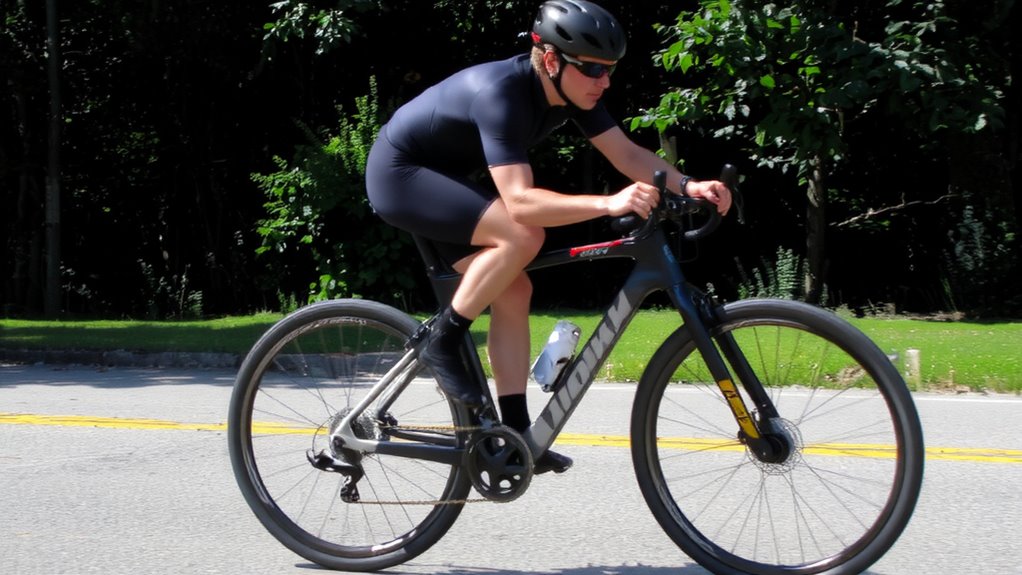
Could sacrificing a few millimeters in seat height mean preserving your power over the long haul? You might worry that lowering your seat cuts power, but research suggests the drop isn’t as costly as feared. While ideal seat height maximizes pedal efficiency by aligning your knee over the pedal spindle, slight reductions-say 5 to 10 mm-only minimally affect force production. Your quads still engage effectively, and the reduced patellar shear may prevent flare-ups that derail training. Concerns about aerodynamic drag are also overblown; such small changes don’t meaningfully alter your frontal profile. In fact, maintaining consistent training due to less knee stress could boost long-term power output. The slight trade-off in mechanics is often offset by better recovery and fewer interruptions. So yes, there’s a theoretical dip in efficiency, but real-world performance might actually improve when you stay injury-free and keep riding hard.
How Low Should You Set Your Seat for Knee Relief?
A small adjustment in saddle height might not slash your power as much as once feared, but now the real question is how low you can actually go when chasing knee relief. You’re aiming to reduce patellar shear without compromising knee biomechanics. Dropping the seat 1–2 cm below your ideal race height often helps, especially during high-cadence intervals. This slight dip encourages better joint alignment, minimizing strain on the tendon. Going lower than 3 cm, though, usually does more harm than good-your hips rock, efficiency drops, and new stresses emerge. Think of it as a short-term trade-off: you’re prioritizing recovery over output. It’s not about maximum comfort but strategic relief. Used correctly, the lowered seat supports healing while letting you maintain aerobic fitness. Stick to prescribed interval sessions, not long rides, and monitor how your knees respond. This isn’t a fix-all, but a tool within smart recovery.
Step-by-Step: Adjusting Your Bike for Knee-Friendly Intervals
Start by loosening the seatpost clamp bolt with a hex wrench-most modern frames use a 4mm or 5mm Allen key, and this small adjustment is easier than you’d think. Lower your saddle just 1–2cm from your usual position; this slight drop reduces patellar shear during high-intensity intervals. Retighten the bolt securely to prevent slipping mid-ride. Once adjusted, focus on smooth pedal technique-aim for circular strokes rather than mashing, which minimizes joint strain. Pair this with cadence optimization: maintain 85–95 RPM to balance power output and knee comfort. These changes enhance fitness recovery by reducing inflammation over time. Proper bike fit isn’t just about power; it’s about sustainability. A slightly lower seat, combined with efficient movement patterns, supports consistent training without sacrificing joint health. This setup works particularly well on indoor trainers or controlled outdoor routes where rhythm and form are easier to monitor.
When to Avoid a Lower Seat and Try Other Fixes
Why might lowering your seat not always be the best move for knee comfort during intervals? Because it can increase knee instability and lead to ligament strain, especially if your saddle drops too far below ideal alignment. When the seat’s too low, your knee stays excessively flexed, forcing the patella to endure uneven tracking and added stress. Over time, this compromises joint stability and might worsen existing vulnerabilities. Instead of lowering further, consider other fixes: check cleat position, as improper alignment can mimic seat-height issues. Tighten pedals or inspect worn bearings that affect stroke symmetry. Evaluate your cadence-too low and you’re pushing instead of spinning, increasing load through the joint. If pain persists, reassess your overall fit. A professional bike fitting can identify subtle mismatches in reach, stack, or crank length. Don’t trade patellar shear for new risks-smart adjustments reduce strain without sacrificing power or joint integrity.
On a final note
You’ll reduce patellar shear during hard intervals by lowering your seat slightly, easing knee strain without sacrificing much power. Studies suggest a 1–2 cm drop can decrease joint stress markedly, especially in high-cadence efforts. While power output may dip marginally, the trade-off supports long-term knee health. Pair this adjustment with proper cleat alignment and recovery routines. It’s not a fix for all, but when used wisely, it’s a practical tool in a cyclist’s recovery and injury-prevention toolkit.