Daily Joint Mobility Drills for Hips to Prevent Stiffness in Sedentary Individuals
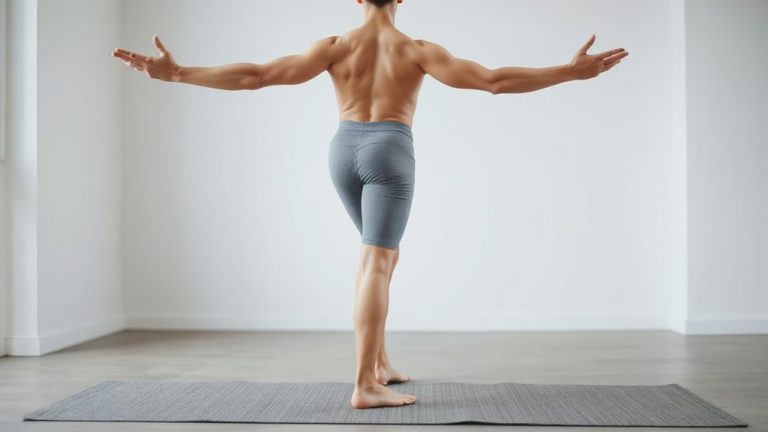
You sit all day, and your hip flexors tighten, shortening by up to 30% over time, which limits mobility and strains your lower back. Daily joint mobility drills-like hip circles, leg swings, and kneeling stretches-restore range of motion in under 10 minutes. These movements boost circulation, lubricate joints, and reset posture. Doing them consistently with proper form and breathing enhances effectiveness. Skip the gear; all you need is a mat. Stick with it, and you’ll soon feel smoother, stronger moves throughout your day.
Notable Insights
- Perform daily hip flexor releases on a mat to counteract tightness from prolonged sitting.
- Use dynamic leg swings with wall support to improve hip range of motion safely.
- Incorporate controlled breathing to enhance muscle relaxation during mobility drills.
- Practice morning or bedtime mobility routines to maintain consistent joint lubrication.
- Integrate seated figure-four stretches and standing lunges during work breaks to reduce stiffness.
Why Desk Workers Lose Hip Mobility
While you’re sitting at your desk every day, your hips are gradually losing the range of motion they need to function properly. This is due to sedentary physiology, where prolonged sitting shortens hip flexors and tightens key muscles around the joint. Your hip anatomy-designed for movement-suffers when locked in a flexed position for hours. The capsule, ligaments, and surrounding musculature adapt to this limited motion, reducing joint lubrication and neural feedback over time. Without regular movement stimuli, the body treats immobility as the new normal. Fitness recovery isn’t just about rest-it’s about actively reversing these adaptive changes. Joint mobility drills counteract stiffness by signaling the nervous system to restore range. Performance observations show consistent use of proper recovery tools, like foam rollers and mobility bands, enhances tissue quality and joint glide. These gear choices support long-term hip health by addressing the root cause: underused, compressed joints starved of dynamic input.
How Tight Hips Wreck Posture and Movement
Tight hips don’t just feel stiff-they actively reshape how you move and hold yourself. When you sit all day, your hip flexors shorten, limiting hip flexion and pulling your pelvis forward. This leads to anterior pelvic tilt, which forces your lower back to arch excessively. Over time, that tilt compromises spinal alignment, giving you lower back pain and inefficient movement. You’ll notice it when walking, standing, or climbing stairs-your stride feels restricted, your glutes don’t fire right, and your body compensates in subtle, damaging ways. Poor pelvic tilt control also reduces force transfer between upper and lower limbs, making daily tasks harder. Ignoring this imbalance doesn’t just dull performance-it raises injury risk during even mild activity. Even if you exercise occasionally, tight hips undermine your effort, skewing joint mechanics and weakening stability. Correcting this isn’t optional if you want efficient, pain-free motion. Addressing restricted hip flexion early keeps your posture intact and movement patterns functional.
5 Quick Hip Mobility Drills (Under 10 Minutes)
Since time is often the biggest barrier to consistent mobility work, a few well-chosen hip drills can deliver significant gains in under 10 minutes-no gym membership or equipment required. You can start with a hip flexor release using just a mat or towel; this targets tightness from prolonged sitting and improves pelvic alignment. Follow it with dynamic leg swings-forward-to-back and side-to-side-holding onto a wall for stability. These controlled movements increase range of motion and activate key stabilizing muscles. Performing them daily boosts circulation, reduces stiffness, and enhances functional movement patterns. While fitness gear like foam rollers or resistance bands may enhance recovery, they’re unnecessary here. The simplicity and efficiency of these drills make them highly sustainable. When done consistently, they offer measurable improvements in hip mobility, posture, and overall movement quality-critical for sedentary individuals aiming to stay active and injury-free. A high-density foam roller can be useful for deeper myofascial release between sessions.
How to Do These Drills Right
How do you guarantee these hip mobility drills actually deliver results? Focus on proper form, breathing techniques, and joint alignment throughout each movement. Rushing through reps sacrifices effectiveness and increases injury risk. Instead, move deliberately, syncing your breath with motion-inhale to prepare, exhale to deepen the stretch. This boosts oxygen flow and enhances muscle relaxation. Maintaining correct joint alignment guarantees targeted mobility without stressing surrounding tissues.
| Drill Element | Why It Matters |
|---|---|
| Breathing Techniques | Enhances muscle engagement and control |
| Joint Alignment | Prevents strain and maximizes benefit |
| Controlled Tempo | Builds neuromuscular coordination |
Use supportive fitness gear like non-slip mats to maintain positioning and track consistency. Quality recovery tools, such as foam rollers, complement drills by releasing soft tissue tension, improving long-term hip function and daily comfort.
When to Do Hip Mobility Drills (At Work or Home)
Where can you fit hip mobility drills into your daily routine without disrupting productivity? You can do them at home during morning prep or just before bed-both times let you focus without distractions. At work, use midday breaks wisely: a 5-minute session after lunch resets your energy and counters prolonged sitting. Pair drills with posture checks every few hours to interrupt stiffness before it worsens. Standing up to perform gentle lunges or seated figure-four stretches keeps your hips active and your mind sharp. These moments aren’t downtime-they’re strategic recovery, enhancing circulation and joint lubrication. Unlike passive recovery methods, active mobility work delivers measurable improvements in range of motion. Fitness recovery isn’t just about rest; it’s about intelligent movement integration. Using simple gear like resistance bands at home amplifies results, but none are essential. Consistency across environments matters more than equipment.
5 Mistakes That Make Tight Hips Worse
You’re probably already using hip mobility drills during your morning routine or at work breaks to stay loose and focused, but if your hips still feel stiff, your technique might be working against you. Overtraining joints is a common misstep-repeating drills too aggressively or too often leads to inflammation, not improvement. Your body needs recovery time; without it, gains in mobility diminish. Also, performing these movements in poor footwear-like worn-out sneakers or flat-soled shoes without arch support-alters your alignment and increases joint strain. Stability matters during hip openers, and unsupportive shoes compromise form. Consider minimalist training shoes with a firm sole for flat-ground work or barefoot sessions on a mat when appropriate. Evaluate your recovery practices: sleep, hydration, and structured rest days enhance adaptation. The right gear and balanced volume let your mobility efforts succeed.
On a final note
You’ll notice improved movement and reduced stiffness when you consistently do these hip mobility drills. They’re practical for desk workers, requiring minimal time and space. While recovery tools like foam rollers or mobility bands can help, they’re no substitute for regular motion. Quality fitness gear supports the process, but proper form and timing matter more. Doing drills daily, especially after sitting, yields real benefits. This routine is a sustainable way to maintain joint health.