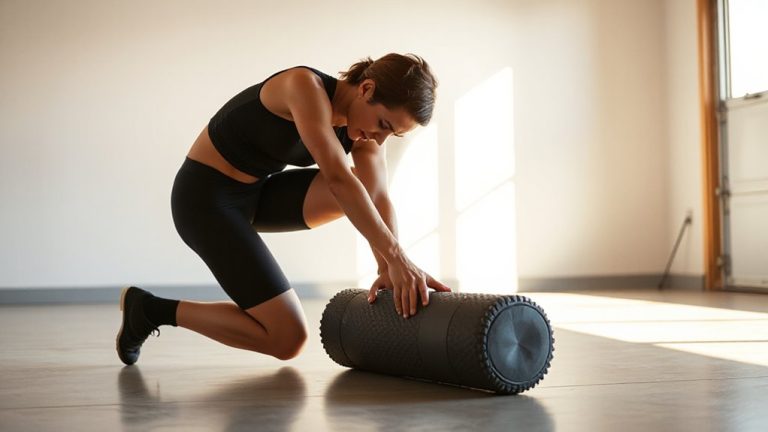
Half Happy Baby Pose With Towel Grip to Accommodate Shoulder Impingement
You can safely perform Half Happy Baby with a towel grip to ease shoulder impingement by maintaining proper alignment and reducing rotator cuff strain. The towel allows controlled tension, preventing excessive internal rotation that aggravates the joint. Keep your shoulder grounded, avoid hiking it toward your ear, and use deep breaths to enhance the stretch. This modification supports recovery during early phases, especially when overhead motions are uncomfortable-there’s more to optimizing this gentle variation for long-term joint health.
Notable Insights
- Half Happy Baby with a towel reduces shoulder strain by maintaining proper alignment and decreasing rotator cuff load.
- Using a towel allows controlled grip adjustment to avoid excessive internal rotation and impingement aggravation.
- The pose gently opens the anterior shoulder while creating subacromial space to relieve tendon and bursae compression.
- Keep shoulders grounded and arms relaxed to prevent hiking, which can worsen impingement during the stretch.
- Use a soft, stable towel and avoid yanking to ensure safe, effective stretching of hips without shoulder compromise.
What Is Half Happy Baby and Why It Helps Shoulder Impingement
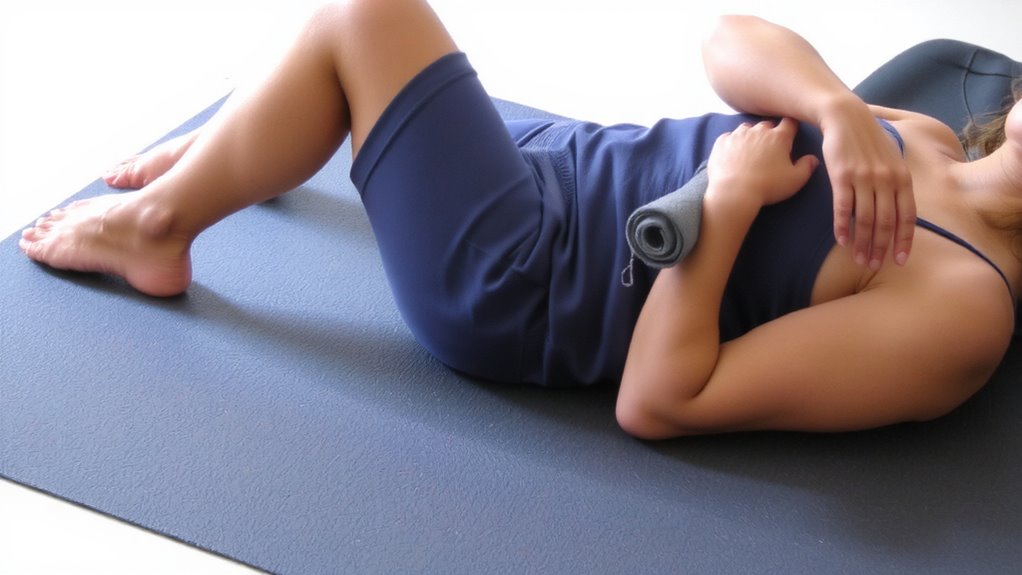
While it might sound like a yoga pose more suited for relaxation than rehabilitation, the Half Happy Baby-especially when modified with a towel grip-can be a smart, accessible way to tackle shoulder impingement. You maintain anatomical alignment by keeping your shoulder blades grounded, reducing excessive strain on the rotator cuff. This position gently opens the anterior shoulder, counteracting the tightness caused by hunching or overuse. The subtle internal rotation helps create space in the subacromial region, decreasing compression of tendons and bursae. It also promotes neural release by calming irritated nerves that may contribute to pain and restricted motion. Unlike aggressive stretches, this modification supports gradual, controlled progress-ideal for recovery. It’s low-risk, requires minimal equipment, and integrates well into daily movement hygiene. When used consistently, it delivers measurable improvements in mobility and comfort, especially when traditional exercises prove too intense or poorly aligned with your healing needs.
Use a Towel for Shoulder-Safe Support
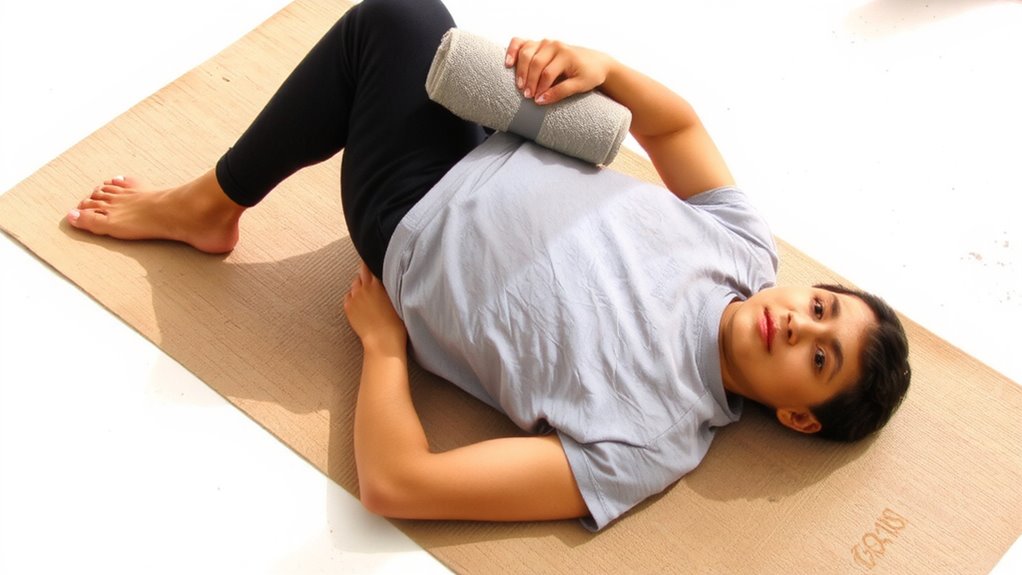
Your modified Half Happy Baby gains real value when you add a simple towel for support-turning a basic stretch into a shoulder-safe movement hack. The towel allows you to maintain proper grip alignment without overloading sensitive shoulder structures. By holding both ends of the towel, you create controlled towel tension that reduces joint compression while still enabling effective lengthening of the inner thigh and hip. This slight leverage keeps your shoulders neutral and prevents excessive internal rotation, a common irritant in impingement. Unlike rigid straps, a soft towel adapts to your grip, offering forgiving feedback and minimizing strain. It’s portable, washable, and ideal for daily use in fitness recovery routines. You’ll notice better form stability and reduced discomfort, especially if you’re rehabbing from repetitive strain. Used correctly, the towel becomes more than an assist-it’s a functional upgrade that enhances both safety and stretch efficacy over time.
How to Do Half Happy Baby With a Towel
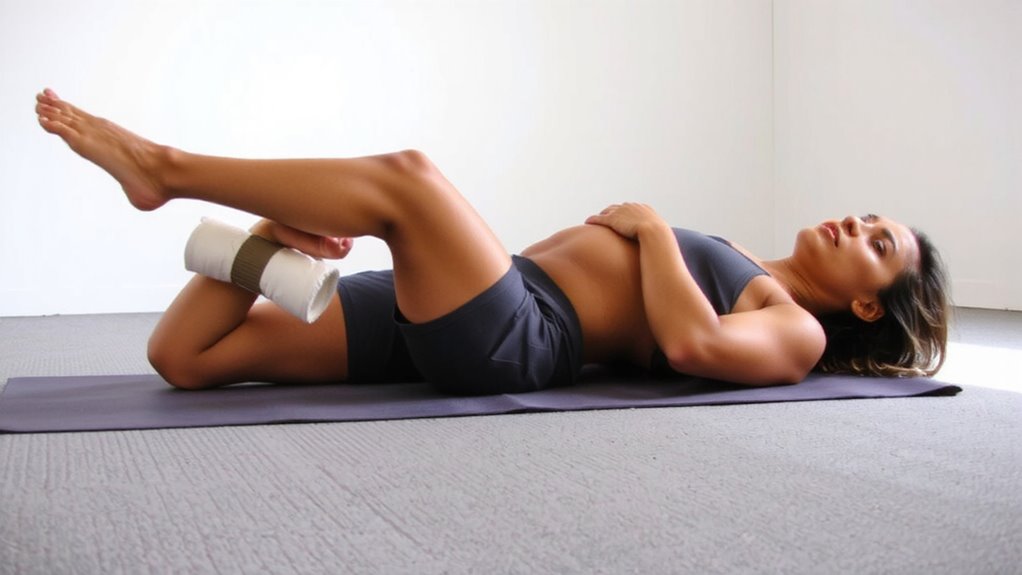
A well-executed Half Happy Baby with a towel starts by lying on your back, bending one knee toward your chest while keeping the other leg extended and grounded. Loop a towel around the ball of your bent foot, holding each end in opposite hands. Use a towel grip adjustment to maintain comfort-don’t pull too tightly, especially if you’re managing shoulder impingement. Keep your arms relaxed and let the strap do the work, supporting joint alignment without strain. Focus on gentle stretch timing: hold for 30 to 60 seconds per side, breathing deeply to enhance muscle relaxation. This method improves hip flexibility while minimizing shoulder load, making it ideal for recovery days. The towel’s length and texture matter-opt for a long, non-slip fabric to guarantee stability. Consistent practice promotes mobility, but success hinges on proper form and mindful progression, not intensity.
Avoid These Common Mistakes
Getting the most out of Half Happy Baby with a towel means paying attention not just to what you’re doing, but also to what you’re not supposed to do. You might unknowingly create improper alignment by letting your shoulder hike toward your ear or twisting your torso. This compromises the stretch and increases risk, especially with shoulder impingement. Keep your neck relaxed and spine neutral to maintain form. Another common issue is applying excessive tension-yanking the towel or forcing the stretch. That doesn’t enhance results; it triggers muscle guarding and could slow recovery. Use gentle, controlled pressure instead. The towel should support, not strain. Choose a durable, non-slip fabric that holds up under light resistance. Replace it if frayed, as compromised gear contributes to poor technique. Consistent, mindful practice beats aggressive maneuvering every time. For even better results, consider upgrading to a dedicated stretching strap with loops designed for targeted mobility work.
When to Practice With Shoulder Impingement
When should you consider practicing Half Happy Baby with a towel if you’re dealing with shoulder impingement? You’re likely in the early recovery phase when pain management and inflammation reduction are central goals. This modification is ideal when overhead movements or lying on your side triggers discomfort, as the towel reduces strain by increasing your grip reach. It’s not for acute flare-ups-wait until sharp pain subsides. Instead, use it during rehab when your physio recommends gentle mobility work. The supported stretch promotes blood flow, which aids in inflammation reduction, while keeping the shoulder in a safe, externally rotated position. You’re not pushing limits; you’re maintaining range of motion without aggravating tissues. Think of it as functional fitness recovery-measured, intentional, and aligned with joint-sparing techniques. Used wisely, this version supports healing without overloading, making it a practical addition to a recovery-focused routine.
Modified Variations for Shoulder Impingement Recovery
You’re already using the towel in Half Happy Baby to manage shoulder strain, but recovery doesn’t stop at one adjustment-variations matter because they let you progress safely while respecting tissue tolerance. Try a wider grip on the towel or bending the opposite knee to reduce rotational pull on the affected shoulder. These prop modification strategies help maintain joint alignment while preserving the pose’s therapeutic stretch. You might also experiment with a strap instead of a towel for more precise length control, enhancing tension distribution. Always prioritize pain monitoring-sharp or radiating discomfort means backing off. Mild tension is expected; pain isn’t. Gradually shorten your hold time if needed, letting sensitivity guide progression. These variations aren’t just alternatives-they’re feedback tools. Used wisely, they integrate recovery into your routine without overloading healing tissue. Consistency with awareness trumps intensity every time.
On a final note
You’ve seen how the half happy baby pose, when supported by a towel, reduces strain on compromised shoulders. This modification maintains alignment while protecting sensitive joints, making it ideal during recovery. The towel acts as reliable fitness gear-affordable, portable, and effective. Used correctly, it enhances accessibility without sacrificing form. For shoulder impingement, this approach balances safety and stretch, supporting consistent practice, which is key to rehabilitation and long-term joint health.