Corpse Pose Refinement: Layering Blankets Based on Individual Thermal Regulation Needs
You cool down fast in Savasana as your metabolism slows and muscles relax, so proper blanket layering matters for recovery. Match layers to your body type-ectomorphs need insulation, endomorphs prefer breathable fabrics. Start with a moisture-wicking base, add mid-weight warmth, and finish with a light top layer for comfort. Adjust for season and room temperature. Your ideal setup keeps you warm without sweating or shivering-and fine-tuning it reveals deeper rest.
Notable Insights
- Metabolic slowdown in Savasana reduces body heat, making layered blankets essential for maintaining thermal comfort.
- Ectomorphs benefit from at least one insulating blanket layer due to rapid heat loss from low body fat.
- Mesomorphs maintain heat well but gain relaxation from light blanket coverage to stabilize skin temperature.
- Endomorphs often overheat; use breathable, ultra-light fabrics to avoid excessive warmth during Savasana.
- Layer blankets strategically: moisture-wicking base, insulating mid-layer, and breathable top for seasonal and individual needs.
Why Your Body Cools Down in Savasana
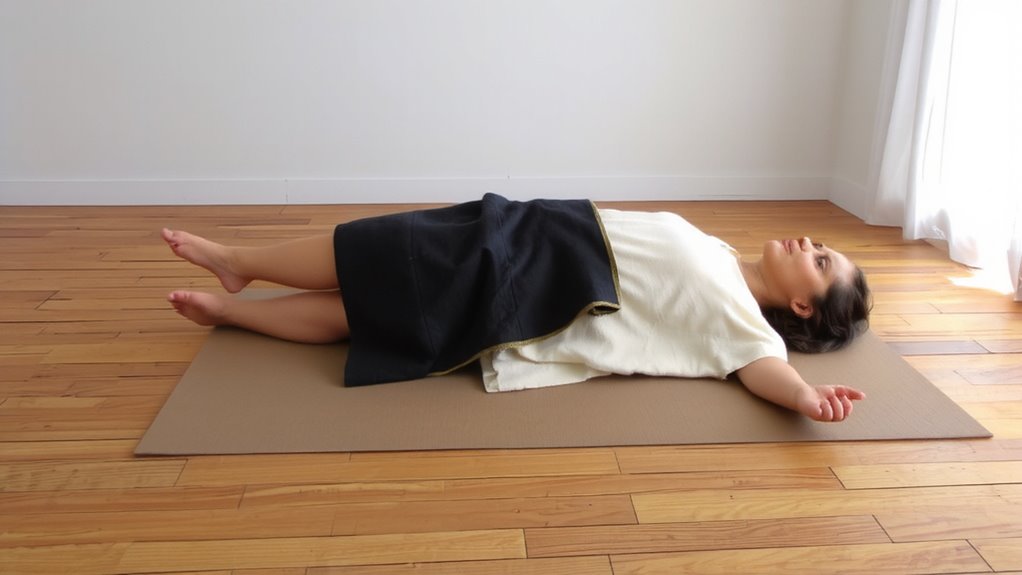
Sometimes, especially after an intense session, you’ll notice your body cools down quickly during Savasana, and there’s a clear physiological reason behind it. Your metabolic rate drops markedly once active movement stops, reducing internal heat production. As your muscles relax and breathing slows, your body enters recovery mode, making you more sensitive to ambient temperature. Even a mildly cool room can feel chilly under these conditions. Without the internal furnace of exertion, your skin temperature falls, especially on the limbs and back. This rapid cooling isn’t just uncomfortable-it can inhibit full relaxation and reduce the recovery benefits of your practice. A light blanket isn’t indulgence; it’s practical gear that bridges the gap between dropping metabolic rate and ambient temperature. Thoughtful layering supports nervous system regulation, making Savasana not only restful but physiologically effective.
What Your Body Type Says About Blanket Needs
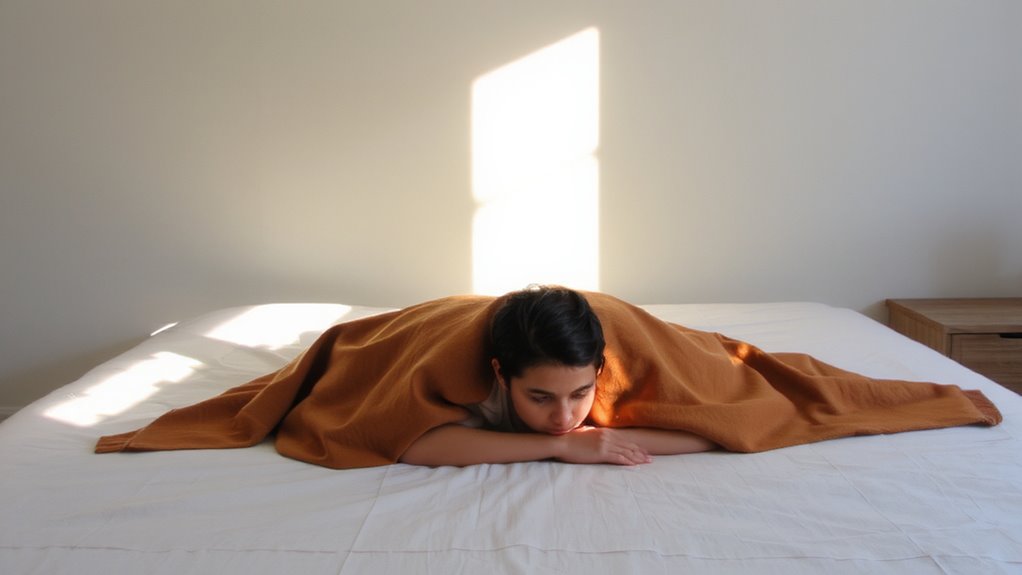
A well-chosen blanket isn’t just a comfort add-on-it’s a recovery tool calibrated to your body’s thermal dynamics. Your body type directly influences how quickly you lose heat during savasana, making blanket selection a strategic decision. Ectomorphs, with less body fat and faster metabolisms, often have heightened thermal sensitivity and cool down rapidly, needing at least one insulating layer. Mesomorphs, muscular and dense, retain heat better but can still benefit from light coverage to stabilize core temperature. Endomorphs, naturally insulating due to higher fat composition, may find heavier blankets excessive and do better with breathable fibers. Ignoring these differences risks disrupting relaxation and impairing recovery. The right match isn’t about comfort alone-it’s about maintaining thermal equilibrium so your nervous system stays in parasympathetic dominance. Recognizing your body type’s role guarantees your blanket supports, rather than hinders, ideal rest.
Pick the Best Base Blanket for You
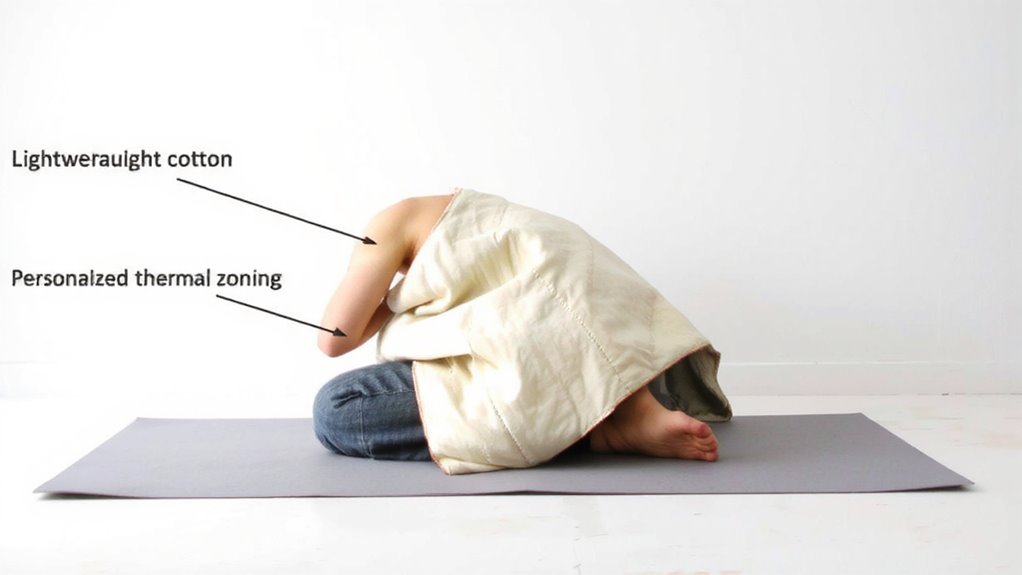
Thermal efficiency starts with material choice, and your base blanket should align with both your body’s heat retention and the room’s ambient temperature. If you run hot, a breathable blanket material like cotton or bamboo viscose helps wick moisture and regulate warmth without overheating. For cooler sleepers, brushed microfiber or wool offers gentle insulation while remaining lightweight. Consider how the fabric feels against your skin-some prefer the crispness of cotton, while others favor the soft drape of fleece. Your personal preference plays a big role, but don’t overlook durability and ease of care. Natural fibers breathe well but may wrinkle or shrink; synthetics resist wear but can trap heat. The best base balances thermal response, comfort, and maintenance. Choosing wisely guarantees your recovery space supports rest without disruption.
How to Layer Blankets for Comfort
Layering your blankets effectively can make a noticeable difference in how well you recover during rest, especially when you account for both body heat dynamics and room conditions. Start with a breathable base, then add lightweight layers you can adjust based on your fabric weight tolerance and personal color preference, which may influence perceived warmth. Darker tones absorb heat, while lighter ones reflect it-subtle, but useful. Use a structured stack that balances insulation and breathability, especially during extended recovery phases.
| Layer | Fabric Weight | Purpose |
|---|---|---|
| 1 | Light | Moisture-wicking base |
| 2 | Medium | Heat retention |
| 3 | Medium-Light | Air circulation |
| 4 | Heavy | Deep warmth (optional) |
| 5 | Ultra-light | Surface comfort |
This approach supports thermal equilibrium and enhances fitness recovery by aligning gear performance with individual physiology.
Adjust Your Blanket Stack With the Seasons
You’ll likely need fewer layers in summer and more in winter, but how you adjust your blanket stack matters just as much as the number of blankets you use. Opting for blankets with appropriate seasonal weight guarantees your body stays regulated without overheating or chilling. In warmer months, choose lightweight cotton or muslin-they offer gentle pressure while allowing airflow, supporting effective climate adaptation. Come winter, swap in flannel or wool blankets that retain heat efficiently, maintaining core warmth during extended holds. Consider layering a mid-weight blanket beneath a heavier one to fine-tune insulation without bulk. This approach balances comfort and thermal performance, aligning with your body’s recovery needs. Proper seasonal adjustment isn’t just about temperature-it’s about optimizing restorative conditions. Thoughtful climate adaptation in your Savasana setup enhances parasympathetic activation, making each session more effective.
Is Your Savasana Blanket Setup Working?
How do you know if your Savasana blanket setup is truly supporting recovery? Observe your breathing patterns during the final minutes of Corpse Pose-smooth, deep, and rhythmic breaths suggest your body isn’t fighting temperature stress. If you’re shivering or sweating, the insulation isn’t matched to your thermal regulation needs, undermining mental relaxation. An effective blanket layer should stabilize core temperature without restricting movement or circulation. Too heavy, and it compresses the diaphragm; too thin, and the nervous system stays alert. Adjust based on personal feedback: Are you sinking into stillness, or fidgeting beneath excess fabric? Ideal setups use breathable, weighted layers that retain warmth without trapping moisture. Evaluate after each session-consistent comfort improves recovery efficiency. Your breath and mental clarity are the best indicators. When both settle easily, your blanket strategy is likely working.
On a final note
You’ve learned how thermal regulation affects recovery, and now your Savasana setup should reflect it. Blankets aren’t just comfort-they’re functional gear. A well-layered stack, matched to your body’s needs and the season, improves parasympathetic activation. Base materials matter: wool regulates best, cotton breathes well. Adjust layers mindfully. If you shiver or overheat, rethink the stack. Like any fitness tool, your blanket system should be refined, purposeful, and effective.