Partner-Assisted Passive Stretching Integrated With Mutual Breath Counting
You’re using partner-assisted passive stretching with synchronized breath counting to boost flexibility and recovery more effectively than solo routines. By coordinating slow inhales and exhales-like a 4-count in, 6-count out-you and your partner time each movement, reducing resistance and enhancing muscle release. This method builds trust through shared control, communication, and focus on alignment. Using nonslip mats and supportive gear improves stability and comfort, ensuring safer, deeper stretches. Practical and accessible, it turns routine stretching into a mindful, connective practice with measurable results in mobility and relaxation-discover how to apply it with precision.
Notable Insights
- Partner-assisted passive stretching uses gentle support or resistance while both partners follow a shared breath-counting rhythm.
- Synchronized breathing, like four-count inhales and six-count exhales, enhances relaxation and stretch control.
- Breath timing helps the receiver signal readiness, allowing the partner to adjust stretch intensity safely.
- Key stretches include seated forward bend, supine hip opener, and partner child’s pose with mutual breathing focus.
- Clear communication and non-slip mats ensure safety, comfort, and effective neuromuscular feedback during sessions.
What Is Partner Stretching With Breath Counting?
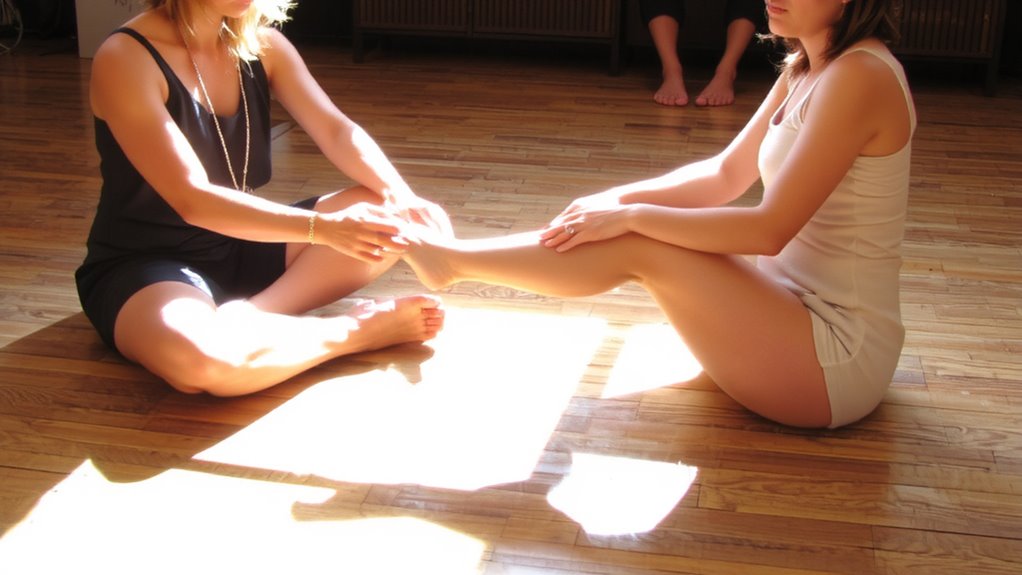
Partner-assisted stretching with breath counting blends technique and timing to enhance flexibility and muscle recovery. You engage in controlled, passive stretches while your partner provides gentle resistance or support, guiding your movements. Breath counting synchronizes your respiration with each phase, typically using a four- or six-count inhale-exhale rhythm to regulate intensity. This method isn’t just about physical gain-it’s a practice rooted in trust building, as you rely on your partner’s feedback and control. Shared focus deepens the experience, aligning both participants’ attention on alignment, tension, and release. Unlike solo routines, this approach demands communication and mutual awareness, making it particularly effective for fitness recovery. When paired with quality fitness gear-like nonslip mats or supportive straps-performance improves noticeably. Though not a substitute for professional therapy, it’s a practical, low-cost addition to recovery protocols, especially for athletes or those in active rehabilitation.
How To Sync Your Breathing During Partner Stretches
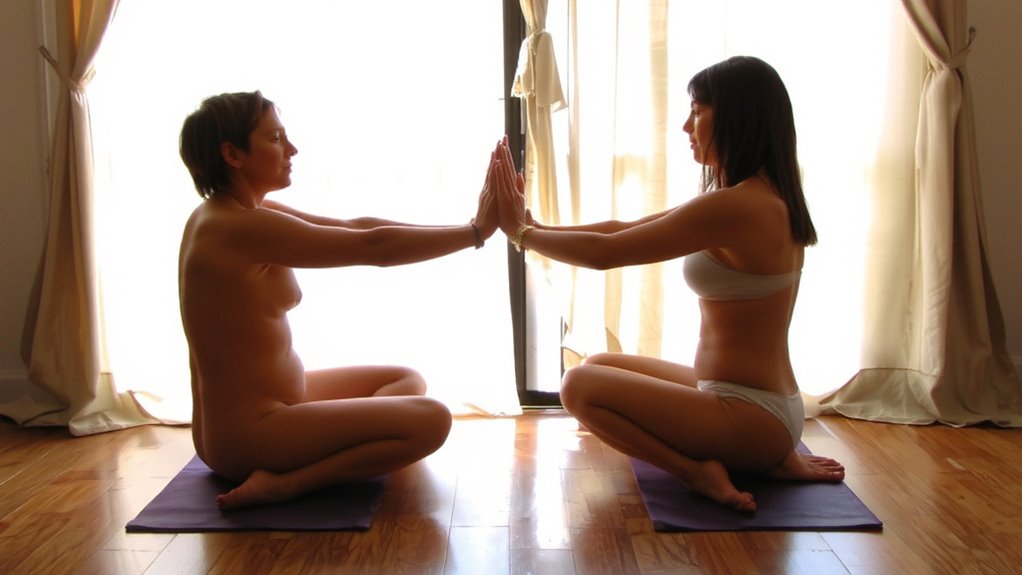
How do you make each stretch count when another person is guiding your movement? You sync your breath rhythm with your partner’s cues. Inhale deeply as the stretch begins, and exhale slowly as the stretch deepens-this coordination supports a smooth energy flow and reduces resistance. Matching breath rhythm isn’t just about timing; it creates a shared physiological signal that enhances relaxation and trust. Use a slow count-four counts in, six out-to maintain control and prevent overexertion. Your partner can adjust pressure based on your breathing pattern, making the stretch more effective and safer. This mutual breath counting sharpens focus, minimizes strain, and turns passive stretching into active recovery. Over time, consistent breath synchronization improves flexibility gains and neuromuscular feedback. For best results, practice in a quiet space with comfortable, moisture-wicking activewear that allows full range of motion without restriction.
5 Safe Partner Stretches To Try Together
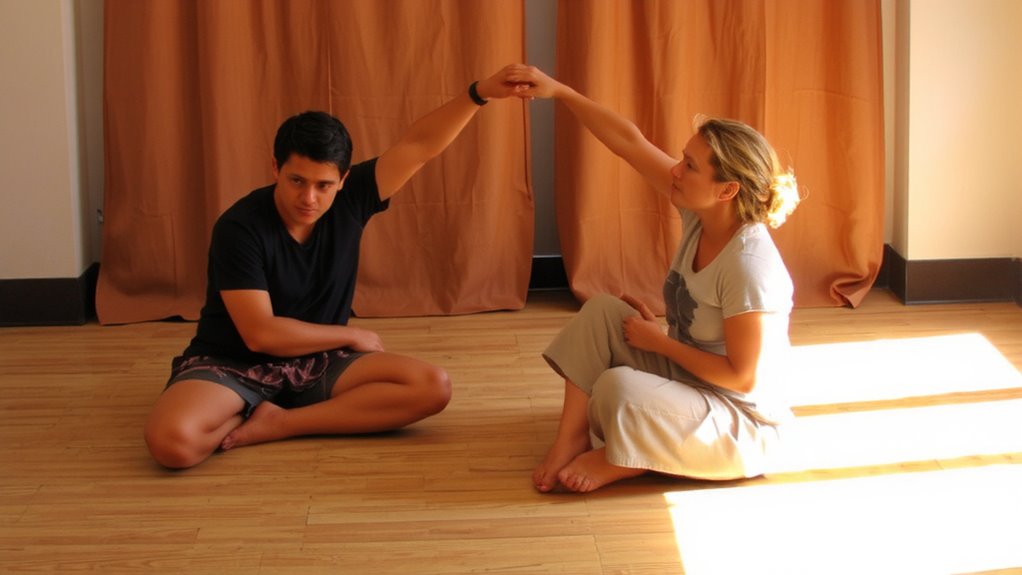
While building trust and alignment through breath sync sets the foundation, you’ll want to apply that connection to stretches proven for safety and effectiveness. These partner stretches enhance joint mobility while supporting ongoing trust building. Focus on controlled movements and mutual awareness to maximize benefits without strain.
| Stretch Type | Partners’ Roles | Key Benefit |
|---|---|---|
| Seated Forward Bend | One gently presses, one yields | Improves hamstring flexibility |
| Supine Hip Opener | One guides knee, one breathes | Increases hip joint mobility |
| Partner Child’s Pose | One assists forward lean | Encourages spinal release |
| Shoulder Clasp | Both compress gently | Opens thoracic space |
Each stretch relies on clear communication and steady breath pacing. When performed regularly, these routines support fitness recovery by loosening tight areas and improving range of motion. Using supportive gear like nonslip mats enhances stability and comfort during execution.
How To Avoid Overstretching And Stay Comfortable
When you’re deep into a partner stretch, it’s easy to push a little too hard, especially when trying to match your partner’s rhythm or achieve a deeper release. Overstretching can compromise your form and lead to strain, undermining injury prevention efforts. Instead, maintain comfort awareness by tuning into subtle body signals-tightness is normal, sharp pain isn’t. Communicate openly; a simple “ease up” keeps safety prioritized. Your partner shouldn’t force movement; effective stretching relies on gradual, shared effort. Use mutual breath counting to sync timing and prevent rushed motions. This coordination supports controlled, smooth extensions, reducing the risk of overexertion. Comfort isn’t just about ease-it’s a marker of proper technique. Well-designed fitness recovery gear, like supportive mats or joint wraps, can enhance stability and feedback during stretches. These tools, when used mindfully, promote sustained practice without sacrificing safety. Ultimately, respecting limits today guarantees better mobility tomorrow. A high-quality stretching strap can provide added control and leverage during assisted stretches, making it easier to maintain proper alignment and avoid overstretching.
Deepen Connection Through Coordinated Movement
You’ve already learned how staying within your comfort zone and using breath cues can protect against strain-now it’s time to build on that foundation by synchronizing your movement with your partner in a way that enhances both physical results and interpersonal awareness. As you coordinate stretches with your partner’s breath and motion, you foster emotional synchronization, allowing both of you to attune to each other’s tension levels and energy. This isn’t just about flexibility; it’s shared mindfulness in action. With each mutual breath count guiding slow, controlled movement, trust deepens and focus sharpens. The practice transforms passive stretching into an interactive ritual, where timing and responsiveness matter as much as technique. When breathing and motion align, you reduce resistance and improve muscle release-key for effective fitness recovery. Using quality, non-slip mats and supportive gear guarantees comfort throughout, letting you stay present rather than distracted by instability or discomfort.
On a final note
You’ll find partner-assisted stretching with breath counting enhances recovery by combining targeted flexibility work and synchronized respiration. It promotes mindful movement, reduces muscle tension, and improves joint range-key for post-workout cooldowns. When paired with quality fitness gear like non-slip mats and supportive straps, performance and safety increase. Used consistently, this practice supports long-term mobility, making it a practical, effective addition to recovery routines.