Hip Mobility Drills With Standing Hip Circumduction
You’ll boost hip mobility with standing circumduction by moving your leg in slow, controlled circles, engaging the joint fully without gear. Keep your posture upright, core tight, and avoid leaning or swinging. Do 8–10 reps per side daily, ideally before workouts or in the morning. This drill enhances joint lubrication, balance, and movement efficiency-especially when paired with leg swings or glute bridges. There’s more to discover about optimizing your routine just ahead.
Notable Insights
- Standing hip circumduction enhances hip mobility through controlled, full-range leg circles without equipment.
- Maintain upright posture and engage the core to isolate hip movement and prevent compensations.
- Perform 8–10 slow repetitions per side, focusing on control rather than speed or momentum.
- Do this drill daily, especially before workouts, to improve joint lubrication and reduce stiffness.
- Pair with dynamic stretches like leg swings and glute bridges for comprehensive hip activation.
What Is Standing Hip Circumduction?
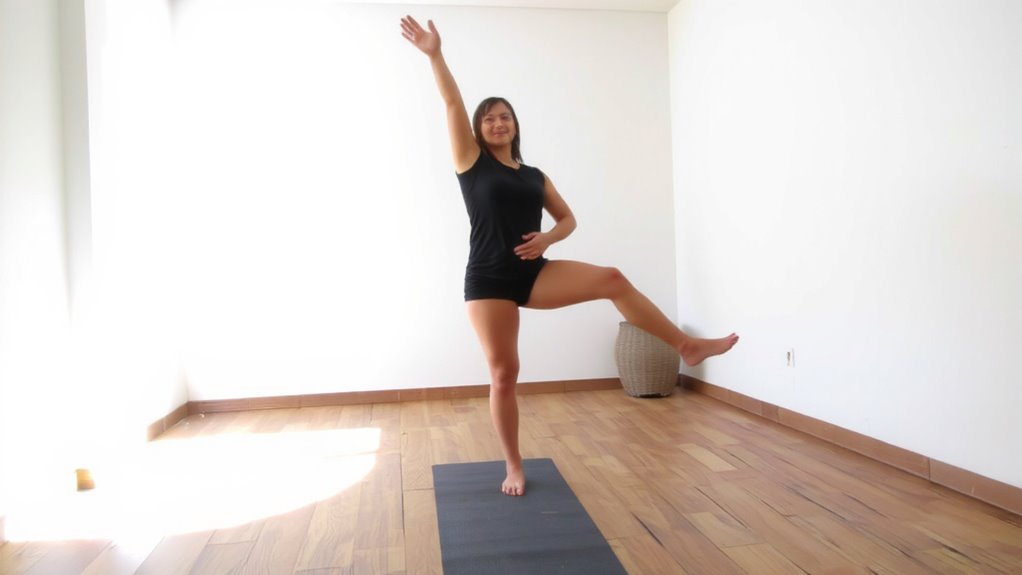
Picture your hip joint as a ball-and-socket engine-smooth, coordinated movement keeps it running. Standing hip circumduction is a mobility drill where you move your leg in slow, controlled circles, engaging the full range of motion your hip allows. This motion supports proper anatomical alignment by reinforcing neutral joint positioning throughout the arc. It also stimulates synovial fluid distribution, enhancing joint lubrication and reducing friction during movement. You don’t need fitness gear to perform it, though using a balance aid like a stability bar can improve form during early practice. The drill’s effectiveness lies in its simplicity and functional carryover to walking, running, and lifting. While not a recovery tool per se, its preventive value is clear-consistent practice may reduce stiffness and offset imbalances. As part of a broader mobility routine, standing hip circumduction offers measurable benefits for joint health and movement efficiency.
How to Do Hip Circumduction Right
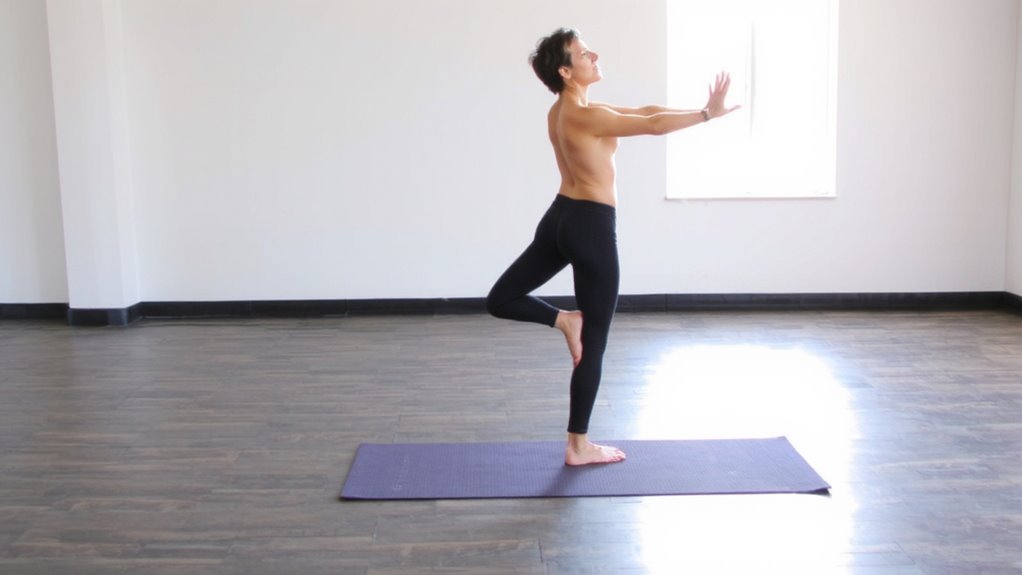
Why do some people glide through hip circumductions with ease while others struggle to maintain control? The difference often comes down to proper alignment and controlled motion. You should stand tall, engage your core, and keep your pelvis stable throughout the movement. Initiate the circumduction from the hip joint, not the lower back, letting your leg trace slow, deliberate circles. Keep your supporting knee slightly bent and avoid shifting your weight excessively. A controlled motion guarantees you activate the right muscles-like the glutes and hip rotators-without straining connective tissue. Quality matters more than quantity; aim for 8–10 smooth reps per side. You don’t need special gear, but supportive footwear or a non-slip mat can help maintain stability. With consistent practice and attention to form, your hips will gain mobility and coordination, laying a solid foundation for more advanced drills.
Common Mistakes to Avoid in Hip Circumduction
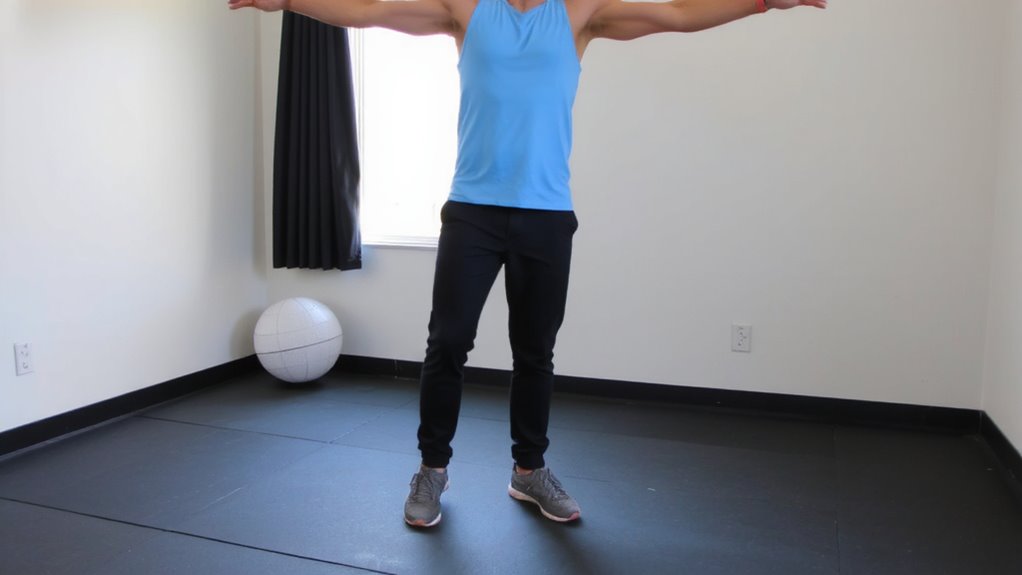
How often do you find yourself swinging through hip circumductions only to realize you’re not actually mobilizing the right joint? It’s easy to fall into the trap of improper alignment, letting your pelvis tilt or spine compensate as you move. This shift turns a targeted mobility drill into a sloppy swing, reducing effectiveness. You’re not gaining real range-you’re just covering ground. Excessive momentum only makes it worse, turning controlled articular rotations into reckless flailing that bypasses joint integrity. Without maintaining a stable core and neutral pelvis, you’re not improving hip capsule mobility but potentially straining surrounding tissues. Focus on slow, deliberate circles, feeling the hip joint guide the movement. Your footwear matters, too-slip-resistant soles help maintain stance, while minimalist designs encourage natural motion. Avoid rushing; precision beats speed when retraining movement patterns.
How Often (and When) to Do Hip Circumductions
You’ve likely already experienced how easily hip circumductions can go off track if alignment and control slip, turning what should be a precision joint mobility exercise into inefficient movement. That’s why ideal timing and frequency guidelines matter. Doing them daily-morning or pre-workout-primes your hips without fatiguing them. Aim for 8–10 reps per side, 1–2 sets, two to three times daily if mobility is a current focus.
| Emotion | Reason |
|---|---|
| Frustration | Skipping form for reps |
| Confidence | Smooth, controlled circles |
| Impatience | Expecting fast results |
| Satisfaction | Feeling joint glide |
| Clarity | Knowing ideal timing |
Stick to frequency guidelines to avoid compensation patterns. Overdoing it brings diminishing returns, especially without proper recovery. Consistency beats volume. Let each session reinforce neuromuscular control, not exhaustion. Your gear-supportive footwear or grip mats-should enable movement, not restrict it.
What You Gain From Daily Hip Circumduction
Regularly incorporating hip circumductions into your routine typically enhances joint awareness and movement efficiency over time. You’ll notice improved balance as your stabilizing muscles adapt to controlled, multi-directional motion. This isn’t just about flexibility-your neuromuscular system becomes better at coordinating hip movement, which translates to increased agility during dynamic activities like cutting, pivoting, or sprinting. Daily practice promotes synovial fluid circulation, keeping the joint well-lubricated and reducing stiffness. Over weeks, you’ll likely find daily movements easier and athletic performance smoother. The drill’s low load and high control make it ideal for consistent use without strain. While no equipment’s needed, pairing it with proper recovery gear-like quality foam rollers or compression wear-can support tissue health. It’s a small investment with measurable returns: better coordination, reduced injury risk, and a more responsive lower body.
Add These Mobility Drills After Hip Circumduction
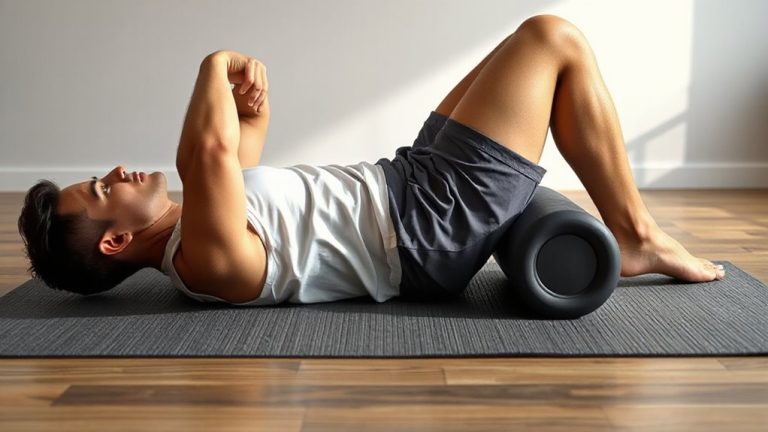
Building on the joint awareness and neuromuscular coordination you develop with daily hip circumduction, adding complementary mobility drills can amplify movement efficiency and reinforce long-term joint health. After completing your circles, incorporate dynamic stretching like leg swings and controlled lunges to enhance flexibility through full ranges of motion. These movements prime your hips for functional activity while reducing stiffness. Don’t skip joint activation exercises-glute bridges and banded lateral walks fire up key stabilizers, ensuring your muscles respond efficiently during movement. Together, these drills improve alignment and control, especially when performed with proper form and consistency. While recovery tools like foam rollers or massage guns may feel good, they shouldn’t replace active mobility work. Prioritize movement quality over passive fixes. Dynamic stretching and joint activation deliver real, measurable improvements, helping you maintain resilience, avoid compensation patterns, and perform better in daily life and training.
Why Your Hips Need to Move Freely Every Day
Why do so many people overlook the importance of daily hip mobility despite its clear impact on movement and long-term joint health? You likely sit for hours, tightening hip flexors and disrupting muscle balance-this sets the stage for dysfunction. Without consistent motion, your hips lose range, increasing wear and reducing stability. Daily mobility combats stiffness, supports proper alignment, and enhances joint health by lubricating the capsule and nourishing cartilage. It’s not just about flexibility; it’s about functional control and injury prevention. Think of your hips as a hinge that powers walking, squatting, and bending-neglecting it affects everything. Simple routines like standing circumduction improve neuromuscular coordination and restore balance.
| Benefit | Purpose | Practical Impact |
|---|---|---|
| Improved ROM | Increase joint range | Easier daily movement |
| Reduced Pain | Address muscle imbalances | Fewer lower back issues |
| Better Stability | Enhance joint health | Safer lifting mechanics |
| Injury Prevention | Maintain muscle balance | Lower strain risk |
| Posture Support | Align pelvis and spine | Less fatigue during standing |
On a final note
You’ll see real gains in hip function by adding standing circumduction to your daily routine. It boosts range of motion, lubricates the joint, and corrects movement patterns-key for recovery and injury prevention. Paired with mobility drills, it enhances performance and supports long-term joint health. While not a substitute for structured rehab, it’s a practical, low-effort tool that fits easily into warm-ups or cooldowns, especially when consistency matters most.