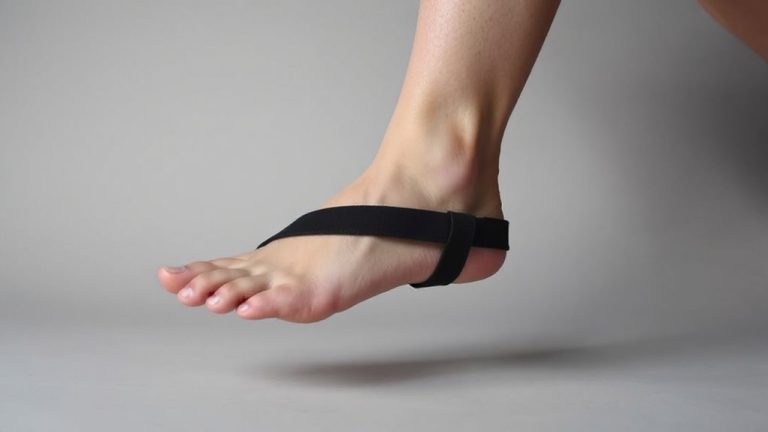
How Wearable Myokinetic Sensors Detect Subclinical Muscle Damage Before DOMS Appears
Your wearable myokinetic sensors pick up subtle changes in muscle vibrations and electrical activity during and after workouts, detecting microtears and early inflammation before DOMS shows up. They use accelerometers and EMG to spot imbalances, asymmetries, and weakening contractions linked to subclinical damage. By analyzing real-time biomechanical and neuromuscular data, these devices alert you to fatigue or strain early. That way, you can adjust training before injury occurs-staying ahead of recovery needs with science-backed precision that goes deeper than soreness.
Notable Insights
- Myokinetic sensors detect microtears and inflammation by identifying subtle biomechanical changes before soreness develops.
- They monitor muscle symmetry and force distribution to reveal imbalances indicating early subclinical damage.
- Piezoelectric and EMG components capture altered muscle vibrations and electrical signals caused by microdamage.
- Real-time alerts notify users of weakening contractions or asymmetrical activation patterns linked to overuse.
- Continuous post-workout tracking identifies accumulating strain, enabling intervention before DOMS or injury occurs.
What Is Subclinical Muscle Damage: And Why It Matters
While you might not feel sore or notice a drop in performance, subclinical muscle damage can still be occurring beneath the surface, making itself known only through subtle physiological shifts. Microtears form in muscle fibers during intense or unfamiliar exercise, triggering low-grade inflammation that, while not immediately painful, can impair tissue function over time if unaddressed. Unlike acute soreness (DOMS), this damage doesn’t announce itself-yet it compromises recovery and adaptation. Ignoring it may lead to accumulated strain, reducing training effectiveness and increasing injury risk. That’s why recovery nutrition is vital: timely intake of protein and nutrients helps repair microtears and modulate inflammation, supporting long-term performance. Fitness enthusiasts often overlook this silent stress, trusting how they feel as a gauge of readiness. But relying solely on perception is flawed. Effective recovery isn’t just about rest-it’s about proactive care, informed by what your body silently endures.
How Myokinetic Sensors Detect Early Muscle Stress
You can’t always feel when your muscles are under strain, but that doesn’t mean the damage isn’t adding up. Myokinetic sensors catch early stress by tracking subtle shifts in movement patterns you might miss. They monitor muscle symmetry across limbs, flagging imbalances that suggest one side is compensating. Over time, uneven force distribution becomes visible, often before soreness sets in. These sensors use accelerometers and gyroscopes to detect changes in contraction dynamics, revealing asymmetries during routine activities or workouts. Coaches and trainers rely on this data to adjust training loads before injuries occur. Unlike basic fitness trackers, myokinetic wearables offer biomechanical insights grounded in real-time physiology. Their value lies not just in measurement, but in interpretation-highlighting deviations from your baseline. With consistent use, they help maintain balanced force distribution, supporting smarter recovery and long-term performance.
How Sensors Read Muscle Vibrations and Electrical Signals
Muscle vibrations and electrical impulses tell a story your body begins long before pain kicks in. You rely on sensors to catch it early. These wearables detect subtle shifts in muscle resonance-tiny oscillations from contractions that change when fatigue builds. Embedded piezoelectric elements convert mechanical vibrations into electrical signals, while EMG electrodes track neural activity firing through fibers. When tissue microdamage occurs, signal distortion creeps in: amplitudes dip, frequencies scatter. It’s not noise-it’s data. Advanced filtering isolates true muscle patterns from movement artifacts, giving you clearer insight. Unlike basic trackers, myokinetic sensors distinguish between normal strain and warning signs, using both vibration and electrical profiles. They’re not foolproof-tight clothing or poor placement can skew results-but worn correctly, they offer a nuanced view of muscle function. This dual-input approach improves accuracy, making real-time physiology readable before symptoms appear.
How Real-Time Alerts Prevent Overuse Injuries
Signals captured by myokinetic sensors don’t just sit in the device-they trigger action. When you push through a tough session, the system monitors for early signs of trouble, like biomechanical fatigue and neuromuscular imbalance. These subtle shifts often precede pain, but the sensors detect them in real time. If your muscle activation patterns become uneven or your contractions weaken asymmetrically, the wearable sends an alert straight to your phone or smartwatch. You’ll know before strain turns into injury. Unlike basic fitness trackers, these sensors assess muscle function, not just movement. That makes them far more effective at spotting overuse risks early. Coaches and athletes who’ve used them report fewer setbacks during peak training. While the tech can’t replace recovery strategies, it sharpens your awareness. Real-time alerts don’t stop you-they help you adjust, protecting performance and joint health in the long run.
How Athletes Train Smarter With Sensor Feedback
What if you could fine-tune every rep based on how your muscles actually respond, not just how they feel? With wearable myokinetic sensors, you can. These devices give real-time feedback on muscle activation, letting you adjust form and intensity instantly. You’ll spot imbalances in muscle symmetry-critical for preventing compensatory injuries-and correct them before they escalate. Instead of guessing when to push or rest, you get data-driven insights into recovery timing, meaning you train hard when ready and avoid burnout. Coaches and athletes alike find this feedback invaluable for optimizing performance while reducing strain. It’s not just about working harder; it’s about training smarter. The sensors are lightweight, easy to place, and sync seamlessly with training apps. Over time, this precision leads to more effective sessions, better balance, and sustained progress-without relying on guesswork or delayed soreness as indicators.
Long-Term Muscle Health With Continuous Sensor Monitoring
While you might think recovery ends once the workout does, continuous monitoring through wearable myokinetic sensors reveals that muscle health evolves over days, not minutes. You’re not just tracking soreness-you’re evaluating subclinical strain, spotting imbalances before they become injuries. These sensors offer real-time data on muscle symmetry, highlighting disparities in activation between limbs that could undermine performance. Over time, consistent feedback sharpens recovery timing, letting you adjust training loads based on actual tissue response, not guesswork. Unlike basic fitness trackers, myokinetic wearables detect subtle changes in muscle contractility and fatigue, giving a clearer window into long-term adaptation. Coaches and athletes use this insight to optimize rest cycles and prevent overuse. The tech isn’t perfect-sensor placement matters, and data interpretation requires some learning-but for those serious about sustainable gains, it’s proving essential in preserving muscle function and longevity across seasons.
On a final note
You’re now able to catch muscle stress before soreness even starts, thanks to wearable myokinetic sensors. These devices track subtle vibrations and electrical activity, spotting subclinical damage early. Real-time alerts help you adjust training intensity, preventing overuse injuries. For serious athletes, this means smarter recovery and long-term muscle health. While not all fitness gear delivers, these sensors offer data-driven insights that actually work, turning subtle biomechanical shifts into actionable feedback with clear performance benefits.