Recovery-Focused Yoga Class Structure for CrossFit Athletes With Shoulder Strain
You’ll reduce recovery time and protect shoulder integrity with a yoga class that starts gently, using seated neck rolls and scapular squeezes to activate stabilizers. Arm circles and wall slides prep tissue without strain, while eagle arms and thread the needle improve mobility and joint alignment. Diaphragmatic breathing lowers inflammation, and consistent practice builds resilience-making your training smarter. Smart use of breath and movement reshapes recovery far better than passive gear alone.
Notable Insights
- Begin with diaphragmatic breathwork to activate the parasympathetic nervous system and reduce shoulder tension.
- Incorporate scapular stabilization exercises like wall slides to reinforce proper shoulder mechanics pre-movement.
- Use gentle mobility poses such as thread the needle to decompress the glenohumeral joint and enhance thoracic mobility.
- Include Eagle arms hold for 30 seconds per side to improve external rotation and stretch the posterior capsule.
- Structure class progression from stabilization to mobility, ending with mindfulness to support recovery and mental resilience.
Why Shoulder Strain Hits CrossFitters Hard
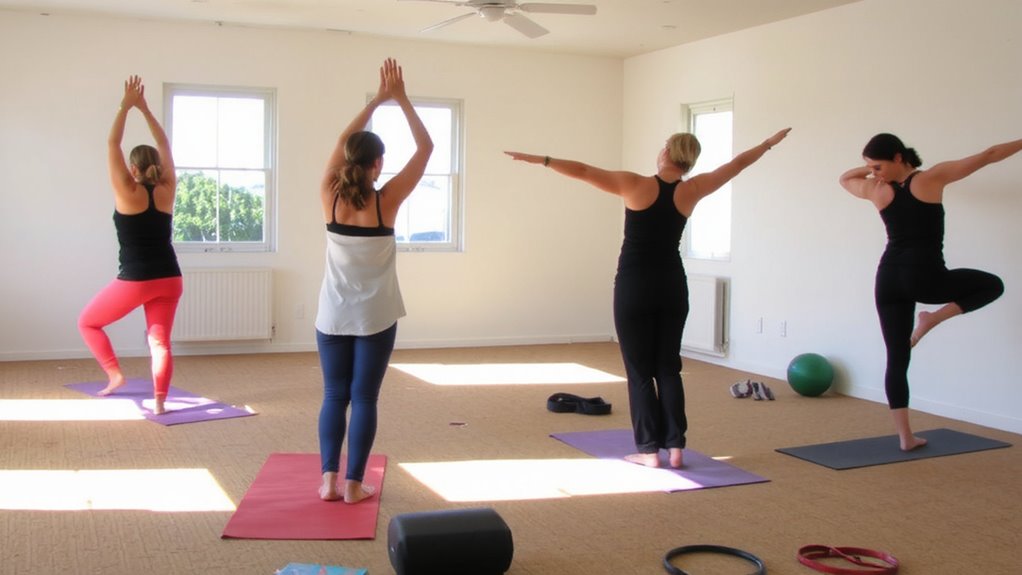
The reality is, shoulder strain hits CrossFit athletes harder than most because of the sport’s relentless demand for overhead motion and explosive power. You’re constantly pushing through movements like snatches, thrusters, and handstand push-ups, all of which exploit the shoulder’s anatomical vulnerability. This joint sacrifices stability for mobility, making it prone to injury when stressed at extreme ranges. What’s more, the repetitive trauma from high-frequency training accumulates faster than recovery occurs, especially if rest is undervalued. Even top-tier fitness gear, like wrist wraps or kipping aids, can mask fatigue rather than fix mechanics. Over time, minor strains become chronic, limiting both performance and recovery potential. You’re not just fighting soreness-you’re battling structural wear shaped by biomechanics and training volume. Recognizing this pattern is key to adjusting programming before damage becomes debilitating.
How Recovery Yoga Supports Shoulder Healing
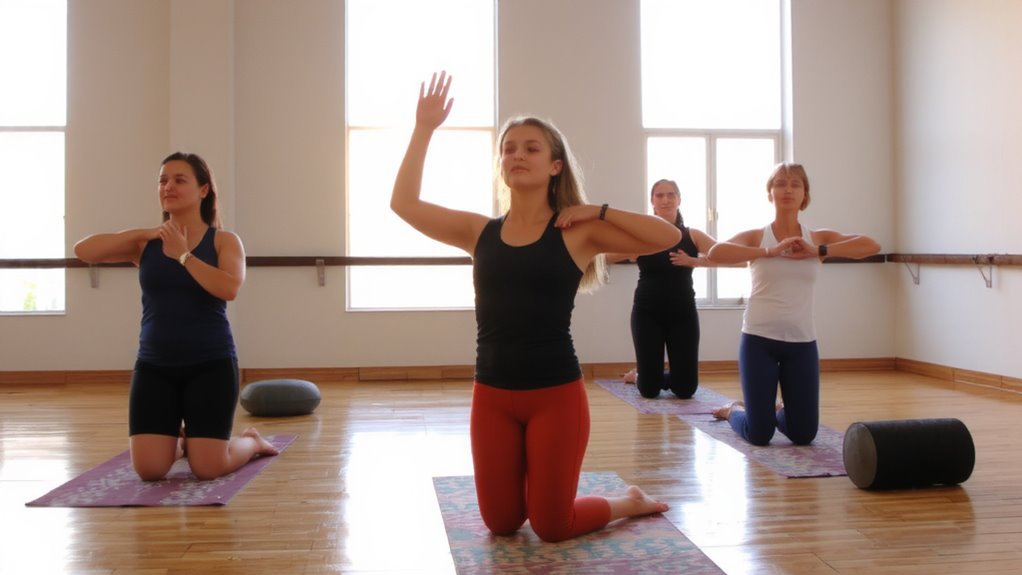
While conventional recovery tools like foam rollers and compression sleeves target surface-level tightness, recovery yoga works deeper by addressing both muscular imbalances and joint mechanics-especially critical when healing shoulder strain. You’re not just stretching; you’re retraining movement patterns through mindful alignment, which helps restore stability to the injured joint. This precise positioning reduces faulty compensation from surrounding muscles, allowing the shoulder to heal properly. Targeted stretching further supports recovery by gently lengthening tight fascia and overactive muscles, particularly in the rotator cuff and upper back. Unlike aggressive mobility drills, these controlled movements improve circulation without straining healing tissue. Recovery yoga also enhances neuromuscular feedback, so when you return to lifting, your form is both safer and more efficient. It’s not a quick fix, but it’s proven effective for athletes who prioritize long-term joint health over shortcuts.
Warm-Up Moves to Protect Injured Shoulders
You’ve just seen how recovery yoga helps rebuild shoulder integrity after strain, but preventing re-injury starts with a smart warm-up. Begin with seated neck rolls and scapular squeezes to activate postural muscles and improve shoulder alignment. Gentle arm circles, progressing from small to large, prime joint stability without overloading connective tissue. Incorporate wall slides to reinforce proper movement patterns-your back should stay flat, elbows and wrists level. These moves aren’t just prep; they’re essential feedback loops that recalibrate neuromuscular control. Using a resistance band for light external rotations further supports joint stability, especially before dynamic CrossFit sessions. Avoid jerky motions-smooth, controlled engagement matters more than range. When alignment falters, so does protection. A consistent warm-up with these elements reduces shear forces across the glenohumeral joint. Think of it as daily maintenance for athletic resilience-low time cost, high protective return.
Gentle Poses That Improve Shoulder Mobility
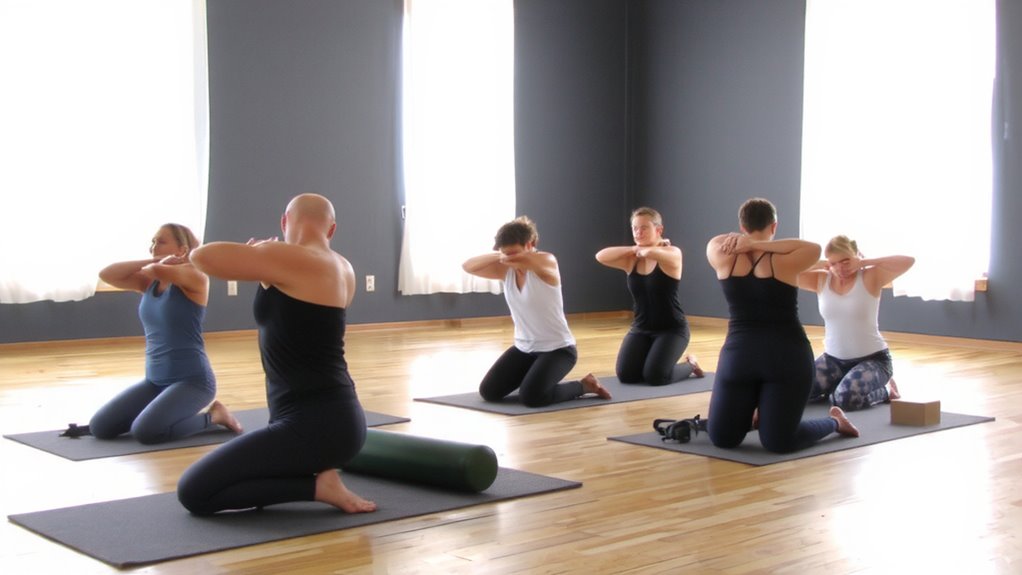
Since shoulder strain limits both performance and recovery, integrating gentle yoga poses can make a measurable difference in restoring functional mobility without aggravating sensitive tissues. You’ll find Eagle arms particularly effective-this bind encourages external rotation and scapular retraction, gently stretching the rhomboids and posterior shoulder capsule. Hold it for 30 seconds per side, breathing steadily to deepen the release. Thread the needle follows well, offering a supported horizontal adduction that decompresses the glenohumeral joint while mobilizing the thoracic spine. You’ll notice reduced stiffness after consistent practice, especially when alignment cues are maintained: keep your bottom arm straight, elbow stacked under shoulder, and neck relaxed. These poses don’t require recovery gear like foam rollers or resistance bands, but pairing them with mindful movement enhances tissue resilience. They’re low-risk, high-yield additions to your recovery protocol, especially post-WOD.
Breathwork to Reduce Inflammation and Tension
How often do you overlook the role of breath in recovery, especially when dealing with persistent shoulder strain? You’re not alone-but shifting to diaphragmatic breathing can make a real difference. When you breathe deeply into your belly, you trigger parasympathetic activation, which helps lower cortisol and slows your heart rate. This physiological shift reduces systemic inflammation and eases muscular tension around the shoulders. Unlike passive rest, this type of breathwork actively supports tissue repair. Studies show athletes who practice controlled breathing report less soreness and faster recovery times. It’s not just about technique-recovery gear like posture-supporting cushions or wearable biofeedback devices can enhance your practice by promoting proper alignment and real-time feedback. Incorporating diaphragmatic breathing into your routine doesn’t require extra time, but it does demand consistency. Start with five minutes post-workout and observe the cumulative effect on tension and inflammation.
Building Resilience to Prevent Future Injury
Why do some CrossFit athletes bounce back from shoulder strain while others face recurring setbacks? It often comes down to resilience-your ability to adapt physically and mentally. Building this resilience means more than just rehab; it requires consistent mental focus and stress management. Yoga supports this by blending mindful movement with breath control, helping you stay present and reduce tension. Over time, your body learns to recover smarter, not just harder.
| Practice | Benefit |
|---|---|
| Daily breathwork | Lowers cortisol, aids recovery |
| Mindful asanas | Improve joint stability |
| Visualization | Enhances mental focus |
| Progressive holds | Build muscular endurance |
| Meditation | Supports stress management |
You’re not just healing-you’re upgrading your recovery system. With the right mindset and tools, future injuries become less likely, and performance gains more sustainable.
On a final note
You’ve seen how recovery-focused yoga eases shoulder strain by boosting circulation, restoring range of motion, and calming nervous system stress. For CrossFit athletes, consistent practice builds resilient connective tissue and corrects movement imbalances. Paired with proper recovery gear-like targeted compression sleeves and quality foam rollers-the results are measurable: reduced inflammation, quicker recovery times, and fewer re-injuries. It’s not just stretching-it’s strategic rehab that supports long-term performance and joint health.