Customizing Acceleration Phases Based on Force Plate Data Following Calf Muscle Rupture
You rely on force plate data after a calf rupture to tailor your acceleration phases with precision, not guesswork. It reveals hidden asymmetries-like reduced propulsion (68% vs. 89%) or lower peak force (2.1 vs. 2.6 BW)-so you adjust stride, load, and timing accurately. This data guides safe progression, corrects imbalances under dynamic loads, and guarantees you meet objective return-to-play thresholds before ramping up. There’s more to uncover about optimizing each phase with targeted feedback.
Notable Insights
- Use force plate data to identify propulsion deficits in the injured limb during early acceleration phases.
- Tailor stride length and push-off intensity based on measured limb symmetry in peak vertical force.
- Progress acceleration drills only when force plate metrics show consistent bilateral loading rates.
- Detect hidden neuromuscular delays in calf push-off to adjust timing and coordination training.
- Reintroduce high-speed acceleration once force development and inter-limb symmetry match pre-injury baselines.
Why Force Plate Data Beats Guesswork After Calf Rupture
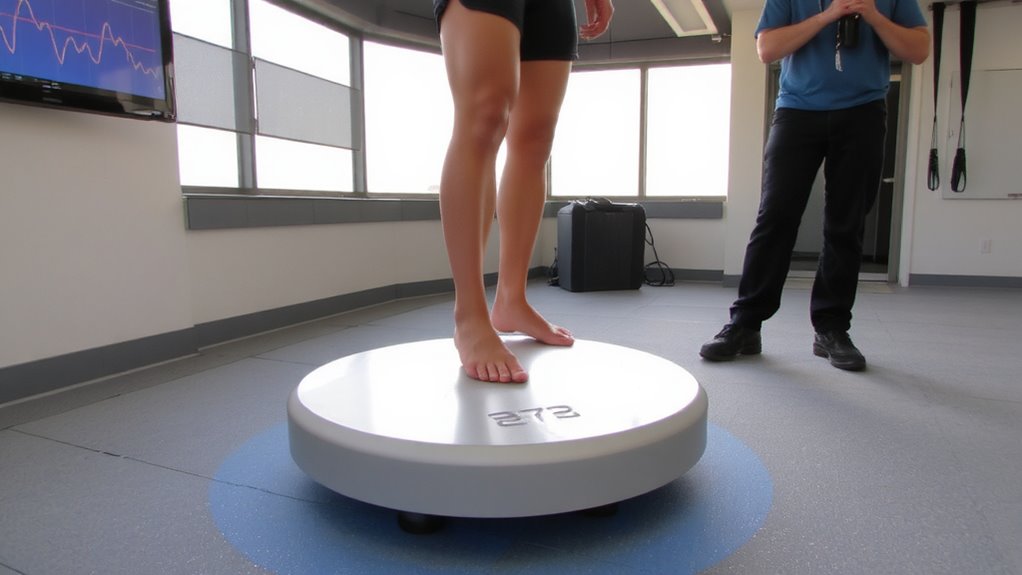
What if you could know-not guess-when your calf is ready to handle load after a rupture? Force plate data gives you that clarity, measuring exact force output, balance, and timing between limbs. Unlike subjective assessments, it tracks objective markers like muscle elasticity and neural activation, revealing how well your calf recoils and responds under pressure. You’re not just healing-you’re adapting, and the plate shows whether your nervous system fires efficiently during push-off. This isn’t generic rehab; it’s precision-guided recovery. You see deficits other methods miss, allowing adjustments before setbacks happen. When elasticity returns close to baseline and neural activation patterns normalize, you know you’re ready for progressive loading. Guesswork leads to re-injury. Data leads to confidence. With force plates, you don’t assume-you confirm. It’s not just about returning to sprinting; it’s about building resilience the right way, one measurable step at a time.
Spot Dangerous Asymmetries Before Return to Sprinting
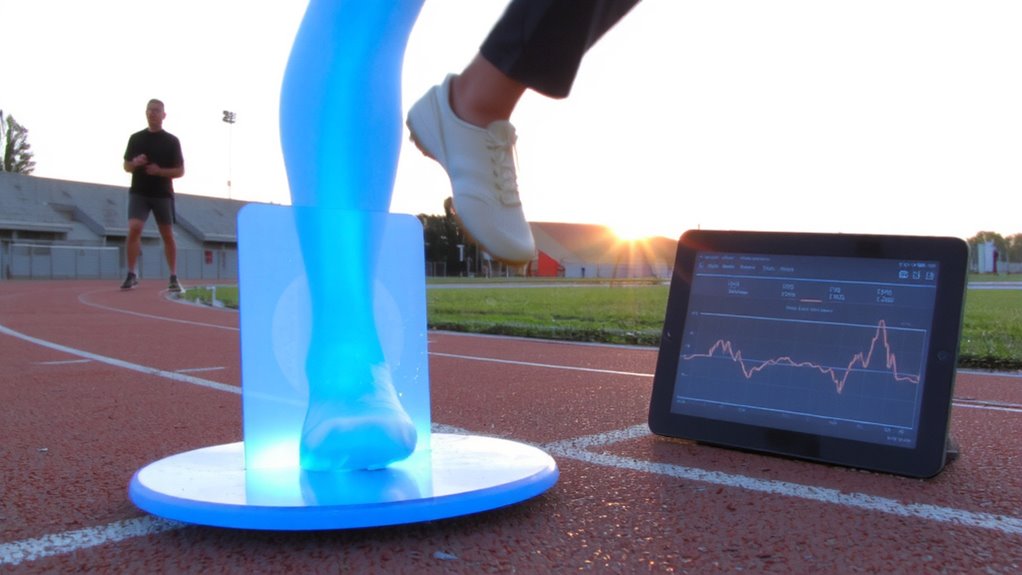
Force plate data doesn’t just tell you when you’re ready to load your calf-it reveals exactly how your body distributes that load, and that’s where asymmetries show up. Left unchecked, these discrepancies expose you to re-injury, especially during sprint acceleration. Biomechanical imbalances often hide behind acceptable strength metrics, but force plates expose them through ground reaction forces and propulsion patterns. More critically, disrupted neuromuscular timing alters firing sequences, compromising coordination and stability.
| Parameter | Injured Leg | Uninjured Leg |
|---|---|---|
| Peak Vertical Force | 2.1 BW | 2.6 BW |
| Propulsion Symmetry | 68% | 89% |
| Loading Rate | Delayed | Normal |
Spotting these deviations early lets you correct them before sprinting. You’re not ready just because pain’s gone-symmetry is your real benchmark.
Use Force Data to Guide Rehab Milestones
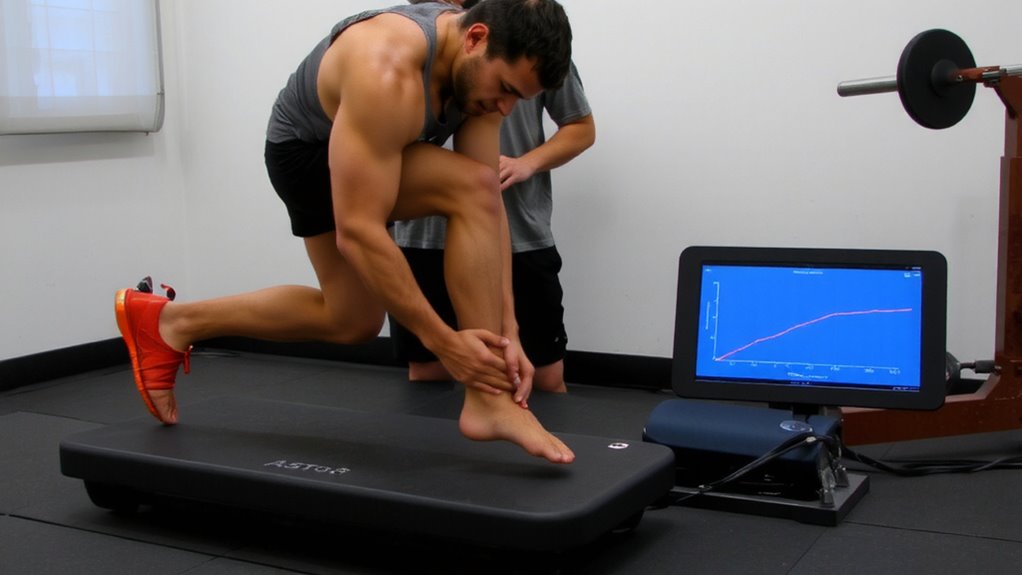
While you might feel ready to advance, your force data tells a more objective story-one that should dictate when you hit key rehab milestones. Relying on symptoms alone can mislead; instead, bilateral symmetry in peak force and impulse measurements offers a clearer benchmark. You need consistent load tolerance on the injured side before progressing, ensuring the muscle-tendon unit handles demands without compensation. Force plates detect subtle deficits even when gait normalization appears normal to the eye. Don’t advance solely based on time or subjective confidence. True readiness shows in matched propulsion forces and stable loading rates across limbs. These metrics confirm functional recovery, reducing re-injury risk. Using this data keeps your rehab evidence-based, not guesswork. Gait normalization isn’t just about walking smoothly-it’s about restoring equal, efficient force production. Your body’s response under load matters most.
Adjust Cutting and Acceleration Safely
You’ve used force data to confirm symmetrical loading and readiness for progression, so now it’s time to rethink how you move-not just how hard you push. Proper acceleration mechanics are essential post-calf rupture, especially during initial push-off phases where asymmetries can re-emerge under speed. You need to emphasize controlled, shorter strides that maintain propulsion without overloading the repaired tissue. Incorporating low-speed drills first lets you refine technique before adding intensity. Cutting precision matters just as much-sharp, unplanned direction changes challenge neuromuscular coordination and place high eccentric demand on the calf complex. Reintroduce these gradually, using feedback from force plates to assess limb symmetry and stability. Don’t rush into sport-specific movements; instead, build confidence through repetition with correct form. Your rehab gear, like monitored insoles or wearable sensors, helps track consistency, ensuring each cut and sprint aligns with your recovery stage while reducing compensatory patterns.
Catch Re-Injury Risks in Real Time
Because re-injury often happens before you even feel warning signs, real-time monitoring becomes critical during the later stages of calf rehab. Force plate data lets you catch asymmetries and performance dips the moment they appear, letting you adjust before strain sets in. You can’t rely on feel alone-by the time discomfort kicks in, damage is often already done. Fatigue monitoring through repeated jump tests shows when power output drops, signaling that your muscle isn’t recovering fast enough between efforts. That’s a red flag. At the same time, subtle shifts in loading patterns reveal how well neural adaptation is progressing-whether your body’s relearning efficient movement or compensating dangerously. Wearable sensors paired with force plates give you both immediate feedback and trend data, so you’re not guessing. Used consistently, this tech doesn’t just protect you-it smartens your comeback.
Meet Objective Thresholds for Return to Play
Real-time monitoring keeps you safe during rehab, but knowing when you’re truly ready to return to play demands more than just avoiding pain or trusting how strong you feel. You need objective metrics-force plate data reveals if your injured calf generates symmetrical propulsion, a sign muscle elasticity has sufficiently recovered. Without adequate elasticity, you’re vulnerable to strain, no matter how healed the tissue appears. Neural adaptation also matters: your nervous system must relearn precise muscle recruitment patterns under dynamic loads. Force plates detect subtle imbalances in timing and force distribution that subjective feedback misses. When your push-off force, rate of force development, and limb symmetry index match pre-injury baselines-backed by consistent session data-you meet evidence-based thresholds. These objective markers, not guesswork, confirm readiness. Relying on them reduces re-injury risk and guarantees you return not just recovered, but resilient.
On a final note
You’re using force plate data not just to track recovery, but to make smarter, evidence-based decisions after a calf rupture. These metrics reveal asymmetries and loading deficits that visual assessment often misses, letting you adjust acceleration phases with precision. When rehab milestones tie to objective force output-not time-you reduce re-injury risk. Cutting and sprinting progressions become safer, more individualized. Ultimately, this tech doesn’t replace clinical judgment, but sharpens it, ensuring return-to-play meets both performance and safety standards.