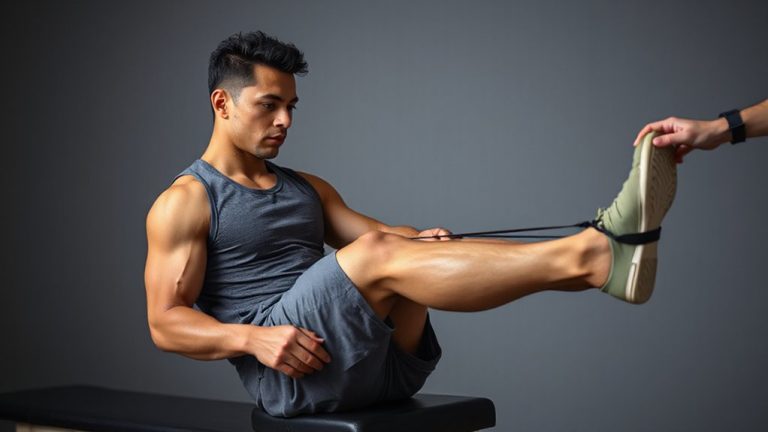
Ankle Mobility Drills With Towel Stretch in Seated Position
Sit with legs straight, loop a towel around one foot, and gently pull while keeping your back tall and knee straight. Avoid yanking the towel or slumping, which reduces effectiveness. Do this daily, especially if you’re sedentary or recovering, for best gains in dorsiflexion. Pair with banded ankle circles or tibialis raises to enhance joint awareness and strength. You’ll notice better squat depth and cleaner step mechanics with consistent use-there’s more to access about your mobility’s full potential.
Notable Insights
- Perform the seated towel stretch by looping a towel around the foot and gently pulling to improve dorsiflexion.
- Maintain a neutral foot position during the stretch to avoid inward or outward rolling.
- Hold the towel taut with straight knees to ensure consistent, therapeutic tension for 30 seconds per side.
- Combine the towel stretch with post-stretch drills like ankle circles or heel-to-toe rockers for enhanced mobility.
- Stretch daily, especially in the morning or post-activity, to maintain joint range and reduce stiffness.
How to Do the Seated Towel Stretch (Step by Step)
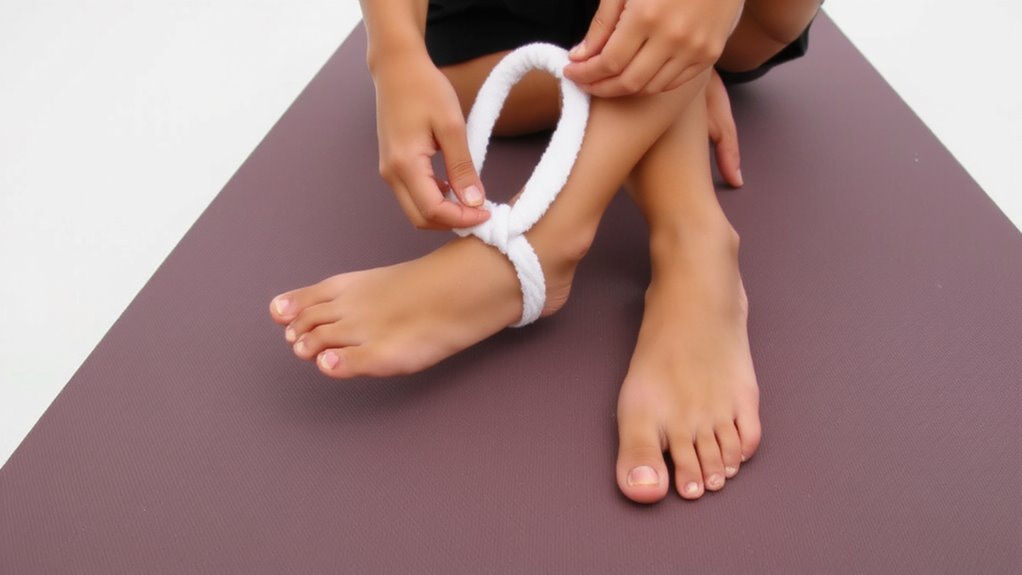
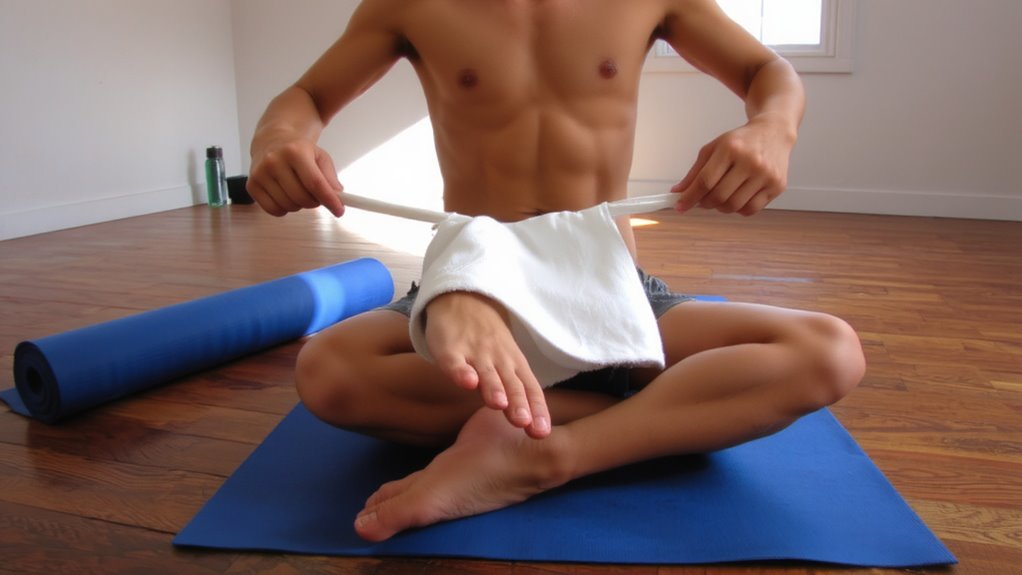
You’ll want to get this right, because the seated towel stretch is one of the simplest yet most effective ankle mobility drills for improving dorsiflexion, especially when tight calf muscles or scar tissue from past injuries are holding you back. Sit on the floor with your legs extended, loop a towel around the ball of one foot, and hold both ends with your hands. Slowly pull the towel toward you, flexing the foot and keeping the knee straight. Maintain proper alignment by sitting tall-no slouching-and engaging your core to avoid compensating with your back. Apply consistent tension throughout the stretch; don’t jerk or bounce, as smooth resistance yields better tissue adaptation. Hold for 30 seconds, then switch. This method works best when using a sturdy, non-slip towel that holds its grip. For long-term recovery and mobility gains, it’s not just about repetition, but precision-correct form and steady tension drive real improvement.
Fix These 5 Common Towel Stretch Mistakes
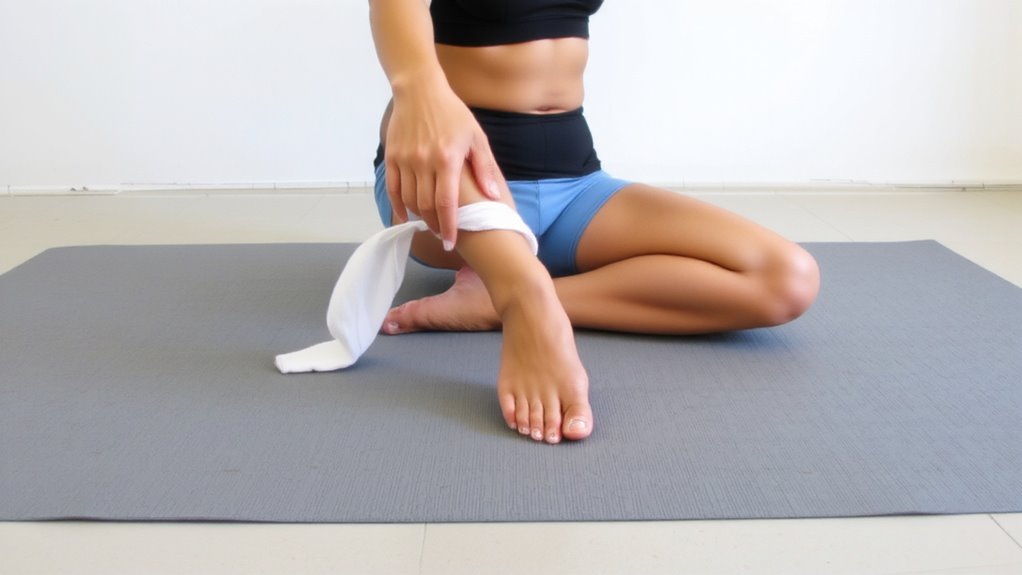
How often do you actually get the full benefit from your towel stretch, or are you unknowingly sabotaging your ankle mobility progress with subtle but costly mistakes? You’re probably not maintaining proper alignment-your foot should stay neutral, not collapsing inward or rolling outward. That misalignment reduces effectiveness and can strain joints. Another common error? Letting the towel go slack-without consistent tension, you lose the stretch’s therapeutic pull. You might also be pulling too hard, which triggers muscle guarding instead of relaxation. Keep tension smooth and gradual. Also, avoid hunching your back; sit tall to support posture and transfer force efficiently. Finally, skipping both sides creates imbalances. Do each leg evenly. These fixes aren’t drastic, but they make a measurable difference in how well your ankles respond.
When to Stretch: Daily Routine & Frequency Tips
Often, the most effective gains in ankle mobility come not from how intensely you stretch, but from how consistently you do it. For ideal timing, aim to stretch daily-ideally in the morning or post-activity when tissues are warm. Consistency benefits include improved joint range and reduced stiffness over time. Even 5–10 minutes daily yields better results than longer, sporadic sessions. Below outlines ideal frequency and timing based on activity level:
| Activity Level | Frequency | Ideal Timing |
|---|---|---|
| Sedentary | Daily | Morning or midday |
| Light Exercise | Daily | Post-workout |
| Moderate | Daily + cooldown | Pre- and post-activity |
| Intense Training | 2x daily | Morning and post-train |
| Recovery Phase | 3x daily | Upon waking, post-nap |
Stick with a routine that fits your lifestyle to maximize long-term mobility gains.
Boost Results: Pair Towel Stretches With These 3 Drills
While the towel stretch lays a solid foundation for improving dorsiflexion, pairing it with complementary mobility drills can accelerate progress and enhance functional performance. Start with ankle activation using banded distractions-loop a resistance band around your foot and perform slow ankle circles to stimulate joint awareness and prep connective tissues. Next, incorporate tibialis raises to strengthen the front shin muscles, boosting control during movement. Finish with a dynamic warmup like heel-to-toe rockers, which mimic natural gait patterns and increase blood flow. These drills, when done post-towel stretch, improve neuromuscular coordination and joint readiness. Unlike passive stretching alone, this combination supports lasting mobility gains, especially when performed consistently. Using quality fitness gear-like durable bands and supportive mats-ensures effective execution and reduces wear on joints. You’ll notice improved ease in everyday motions and better responsiveness during workouts.
Why Ankle Mobility Affects Your Squat and Step
Why does your squat feel unstable or your step seem restricted? Poor ankle dorsiflexion is likely the culprit. When your ankle can’t move freely, your body compensates, throwing off alignment and reducing joint stability. This limitation forces your knees to shift improperly during a squat, increasing strain and decreasing depth. With each step, restricted mobility dulls power transfer and alters gait, raising injury risk. Adequate dorsiflexion allows your shin to move forward while keeping your heel down, creating a solid base. Without it, even well-designed fitness recovery tools won’t fully correct movement flaws. Joint stability depends on mobility, not just strength. Towel stretches improve dorsiflexion by gently increasing range, supporting proper mechanics. Whether you’re squatting heavy or walking stairs, unrestricted ankle movement guarantees balance, efficiency, and safer biomechanics. Don’t overlook it-your entire kinetic chain depends on this small but critical joint.
On a final note
You’ve likely found the seated towel stretch effective for improving ankle mobility, especially when done consistently. Paired with complementary drills, it enhances squat depth and step stability. Common mistakes, like overpulling or poor foot alignment, can reduce its benefit. Daily practice yields the best results. While recovery tools like foam rollers or resistance bands support progress, this low-equipment exercise remains practical and measurable-ideal for home routines. Its simplicity doesn’t diminish its value; when performed correctly, it delivers real functional gains over time.