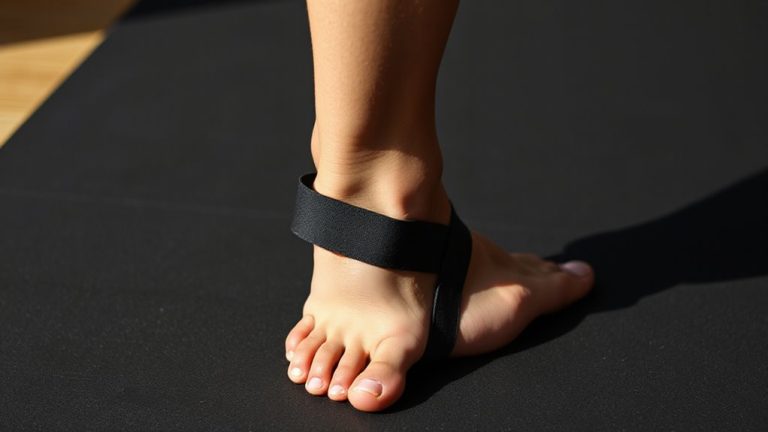
How Wearable Muscle Damage Alarms Trigger When CK Levels Exceed Recovery Thresholds
Your wearable tracks rising creatine kinase (CK) in your sweat through biosensors that detect muscle micro-tears during intense workouts. When CK levels exceed your personalized recovery threshold-based on HRV, exertion patterns, and past strain-it triggers a muscle damage alarm. This early warning helps prevent overtraining by prompting rest before soreness or injury sets in. These alerts are most accurate with consistent skin contact and proper sensor upkeep, making them a practical tool for serious recovery management. You’ll find deeper insights into how these thresholds adapt over time just ahead.
Notable Insights
- Wearables detect rising creatine kinase (CK) levels in sweat via biosensors that identify muscle damage biomarkers.
- Micro-tears from intense exercise release CK, which sweat sensors monitor in real time for early damage signals.
- Devices analyze CK trends alongside fatigue, motion efficiency, and nerve signaling to assess muscle stress.
- Recovery thresholds are personalized using historical biometrics, including HRV, rest patterns, and exertion data.
- When CK and fatigue markers surpass the individual’s threshold, the wearable triggers a muscle damage alert.
Why Your Muscle Damage Alarm Goes Off?
Why does your wearable suddenly scream that your muscles are breaking down? It’s likely because muscle fatigue has reached a critical point, overwhelming your body’s ability to repair. When you push hard, muscle fibers endure micro-tears, and prolonged strain disrupts normal nerve signaling. Your wearable detects subtle changes in electrical activity and motion patterns linked to deteriorating performance. These shifts suggest compromised coordination and weakening contractions-early signs of structural damage. Unlike simple soreness, this level of fatigue impairs recovery and increases injury risk. Modern fitness gear evaluates these signals in real time, using algorithms trained on biomechanical data. While useful, false alarms can happen if sensors misread exertion levels or hydration status. Still, consistent alerts mean you’re surpassing sustainable limits. Relying on such feedback helps optimize training, but it shouldn’t replace self-awareness. Ultimately, understanding muscle fatigue and nerve signaling improves how you interpret what your body-and your device-is trying to tell you.
How Sweat Sensors Catch Rising CK Levels?
Sweat’s your body’s silent messenger, carrying biochemical clues that modern sensors can now decode in real time. When you push your muscles, creatine kinase (CK) leaks into your sweat, and wearable biosensors pick up on this using precise enzyme detection. These devices rely on biosensor calibration to distinguish normal fluctuations from dangerous elevations, ensuring accuracy over time.
| Feature | Benefit |
|---|---|
| Enzyme Detection | Targets CK molecules specifically, reducing false alarms |
| Real-Time Analysis | Alerts you before damage becomes severe |
| Biosensor Calibration | Maintains reliability across hydration levels and sweat rates |
You’ll need consistent skin contact and proper maintenance to keep readings trustworthy. While not perfect, these systems offer a tangible edge in fitness recovery-especially during intense training blocks. They transform subjective effort into objective data, helping you train smarter.
What Happens When CK Spikes After a Workout?
What actually happens when CK levels surge post-workout? When you push your muscles hard, microscopic damage occurs, prompting cells to release creatine kinase (CK) into your bloodstream. This spike signals muscle inflammation, a natural part of adaptation, but excessive levels can impair recovery. Your body responds with swelling and stiffness, often leading to delayed onset muscle soreness (DOMS) that peaks 24–72 hours later. While some soreness means progress, persistent high CK may indicate overtraining. Wearable muscle damage alarms detect this rise through sweat biomarkers, giving you early insight. Ignoring it could mean longer downtime or injury. These devices help balance effort and recovery, though they’re only as useful as your willingness to act. Smart fitness gear like this enhances self-awareness, making recovery more measurable-and manageable-than ever.
How Your Wearable Sets Your Recovery Threshold?
How does your wearable actually know when you’ve crossed the line from productive training to risky overexertion? It builds your recovery threshold over time using your biometrics, adjusting for your unique response to strain. The device tracks muscle fatigue via movement efficiency drops and abnormal exertion patterns, pairing that with changes in heart rate variability and resting heart rate. It also evaluates your hydration balance through skin conductance and sweat metrics, since dehydration amplifies muscle damage risk. Combined, these inputs help calibrate the threshold-it’s not static, but adapts weekly based on your recovery quality, workout load, and lifestyle data. While no wearable measures creatine kinase (CK) directly, it infers when CK is likely spiking by recognizing these physiological red flags. That predictive logic makes the system useful, though slightly indirect. For fitness gear, this blend of signals offers a practical, personalized benchmark.
When to Rest: Using Alerts to Avoid Overtraining?
Why wait until soreness sets in to scale back your training? Your wearable’s muscle damage alarms detect rising CK levels before symptoms appear, giving you a data-driven cue to rest. These alerts don’t just react-they anticipate overtraining by monitoring fatigue signals like elevated heart rate, reduced HRV, and movement inefficiencies. When thresholds are crossed, the device recommends a suitable rest duration, often 24–72 hours, depending on your recovery curve. Ignoring these signals risks diminished performance and injury. Smart wearables turn subjective feelings into objective decisions, helping serious athletes time rest with precision. Though no device is infallible, integrating real-time biomarker feedback into training plans enhances recovery accuracy far beyond guesswork. The best models combine CK trends with sleep and exertion data, offering holistic insights. Ultimately, using alerts wisely means training smarter, not harder-balancing push and pause to maximize long-term gains.
On a final note
Your wearable’s muscle damage alarm helps prevent overtraining by detecting elevated creatine kinase (CK) in sweat, signaling excessive muscle breakdown. Once CK levels surpass your personalized recovery threshold, the device alerts you to rest. This real-time feedback enhances recovery precision, though accuracy depends on sensor calibration and individual variability. While not infallible, these wearables offer valuable insights, bridging fitness goals with physiological limits, making them practical tools for serious training and long-term performance sustainability.