PNF Diagonal Patterns for Upper Extremity Integration in Volleyball Player Rehab
You use PNF diagonal patterns to retrain your upper extremity by mimicking volleyball’s dynamic, multi-planar demands. D1 and D2 activate key muscles like the serratus anterior, deltoids, and rotator cuff, enhancing neuromuscular control. These patterns improve scapular stability and coordination critical for spiking and blocking. When integrated into rehab, they build functional strength and proprioception-just make sure resistance stays controlled to avoid compensation. There’s more to optimizing recovery where technique meets performance precision.
Notable Insights
- PNF diagonal patterns replicate volleyball-specific motions like spiking and blocking for functional upper extremity integration.
- D1 flexion-adduction-external rotation activates upper trapezius, serratus anterior, and posterior deltoid for scapular stability.
- D2 flexion-abduction-internal rotation targets anterior deltoid, pectoralis major, and biceps during dynamic overhead movements.
- Incorporate resisted diagonal patterns to enhance neuromuscular control and coordination in shoulder girdle musculature.
- Avoid excessive resistance and improper timing to prevent compensations and optimize motor re-education in rehab.
Use PNF Diagonals to Match Volleyball Movements
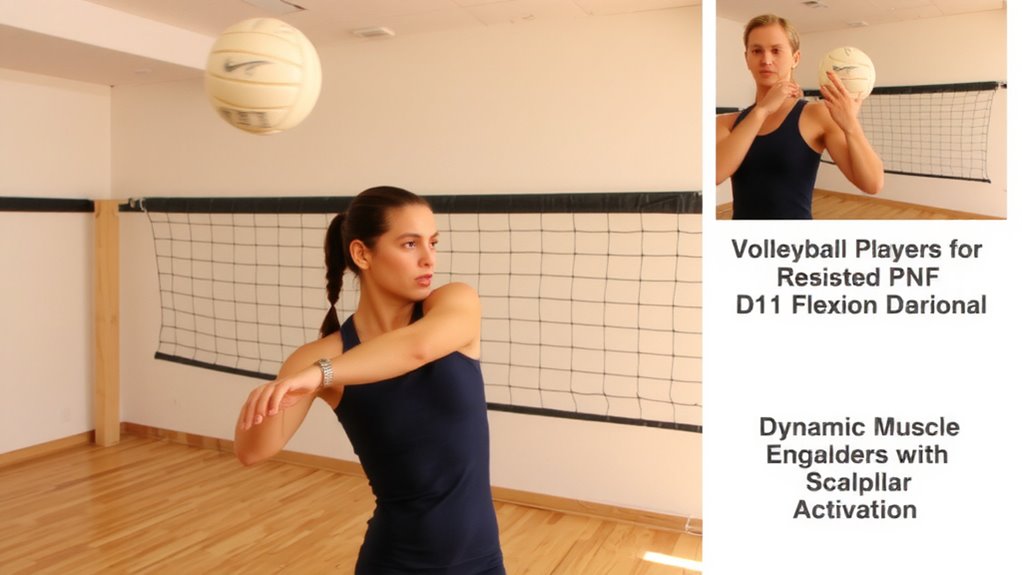
While volleyball involves explosive, multi-planar movements, using PNF diagonal patterns during rehab can closely mirror the sport-specific motions you’ll need to regain. These diagonal patterns engage muscles in coordinated, functional sequences that enhance dynamic stability-critical when you return to spiking or blocking. By incorporating resistance in diagonal arcs, you’re not just rebuilding strength; you’re retraining neuromuscular control across the kinetic chain. Scapular stabilization improves as the serratus anterior and lower trapezius activate rhythmically, preventing impingement during overhead motion. Clinically, patients show smoother shifts between phases of arm elevation, a sign of integrated motor control. Unlike isolated exercises, PNF diagonals replicate real demands, transferring better to court performance. You’ll find that resistance bands and therapist-guided manual techniques optimize feedback and loading. When performed consistently, these patterns accelerate functional recovery, preparing the shoulder for unpredictable play. It’s not just rehab-it’s sport-specific reintegration.
Know Which Shoulder Muscles D1 and D2 Activate
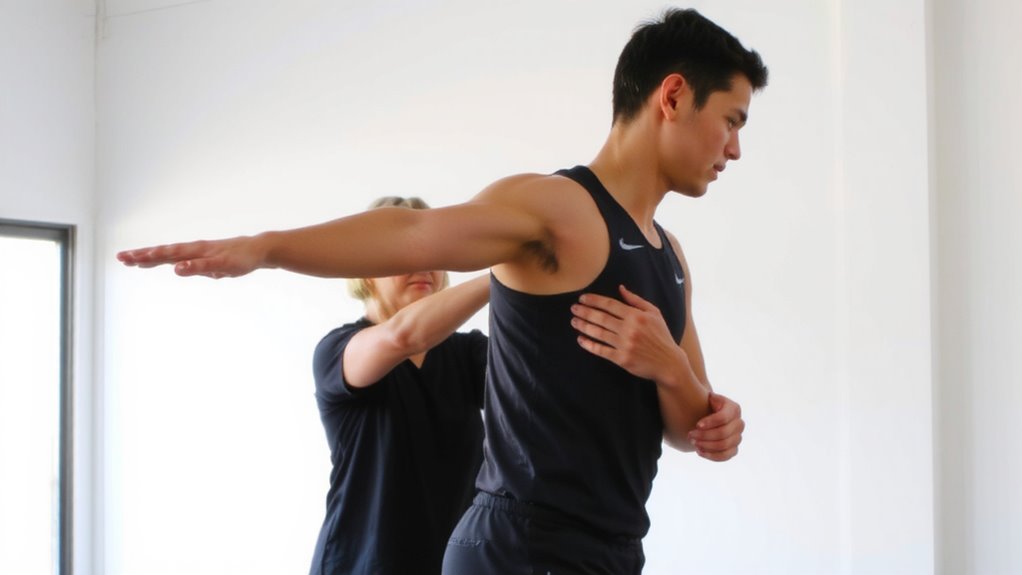
Think of D1 and D2 as blueprints for shoulder movement-they map out exactly which muscles fire and when during functional motion. With D1 (flexion-adduction-external rotation), you’re primarily engaging the upper trapezius, serratus anterior, and posterior deltoid, while D2 (flexion-abduction-internal rotation) strongly activates the anterior deltoid, pectoralis major, and biceps. This muscle activation isn’t random; it reflects pattern specificity, ensuring each diagonal trains movement that mimics volleyball actions like spiking or blocking. You’ll notice the rotator cuff muscles stabilize dynamically, enhancing joint integrity during rehab. The precision in neuromuscular recruitment sets PNF apart from generic strengthening. Pattern specificity means you’re not just building strength-you’re retraining your shoulder to move efficiently and safely. Understanding which muscles are involved helps tailor rehab exercises, ensuring you target the right structures. This focus on functional muscle activation supports faster, more durable recovery.
Master the D1 and D2 PNF Patterns
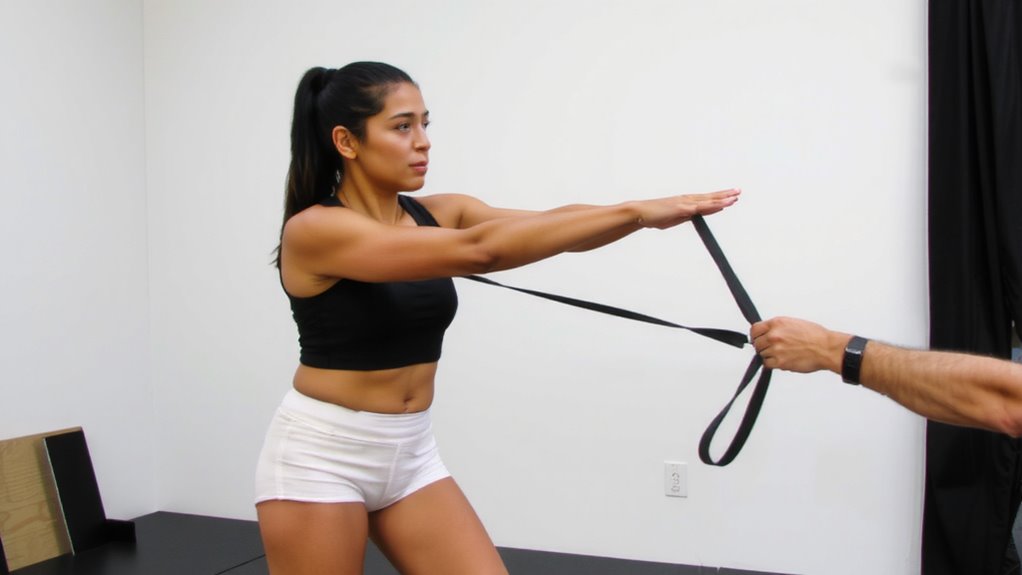
Mastering the D1 and D2 PNF patterns means you’re not just moving your arm through space-you’re retraining your neuromuscular system to fire with precision, just like it does when you spike or set on the court. These patterns demand coordinated muscle synergy, blending flexion, extension, rotation, and abduction into functional arcs that mirror volleyball’s dynamic motions. You’ll feel how D1 (adduction with internal rotation) and D2 (abduction with external rotation) engage multiple joints, promoting timing and control. Neural activation improves as your brain reconnects with weakened or inhibited muscles, especially post-injury. Proper technique-guided resistance, verbal cues, and slow reversals-ensures you’re not just going through the motions but rebuilding authentic movement efficiency. This isn’t random motion; it’s purposeful re-education. While no fitness gear replaces skilled facilitation, consistent application of these diagonals builds the foundation for resilient, sport-specific recovery-without which return to play remains risky.
Add PNF to Volleyball Rehab Drills
If you’re rebuilding your strength and coordination after a shoulder or upper limb injury, integrating PNF into volleyball-specific rehab drills isn’t just a step forward-it’s a leap toward functional readiness. You’ll enhance bilateral coordination by pairing diagonal resistance with sport-specific motions, like mimicking block landings or shift moves. These drills challenge your dominant and non-dominant limbs to work together, retraining your body’s symmetry. You’re also sharpening neuromuscular timing-critical when reacting to a spiked ball or shifting rapidly at the net. Applying PNF diagonals during controlled spike simulations or overhead pass progressions builds proprioception under dynamic loads. This isn’t just about muscle strength; it’s about restoring precision and synchronized movement patterns essential in gameplay. By embedding PNF into drills, you bridge therapy and performance, preparing your upper extremity for real-match demands with measurable, functional gains.
Avoid These Common PNF Mistakes
You’ve probably felt that moment-resistance bands taut, body angled into a diagonal reach, trying to fire up the right muscles-only to realize too late that your technique’s off. A common culprit? Improper timing between contraction and relaxation phases, which disrupts neuromuscular coordination. When you push or pull too early-or hold too long-you weaken the pattern’s effectiveness. Equally problematic is using excessive force, especially with assist issued gear like resistance bands or manual therapist input. Over-resisting won’t build strength faster; it often leads to compensatory movements, joint strain, or shoulder impingement. Proper PNF relies on controlled, rhythmic facilitation, not brute effort. You’re aiming for muscle activation, not fatigue. Monitor your form in real time-adjust resistance, prioritize smooth shifts, and sync breath with movement. Trainers should cue clearly to prevent these errors. Mastering timing and force modulation isn’t just safer-it sharpens motor learning, making your rehab carry over better to volleyball-specific motions.
On a final note
You’ll find PNF diagonal patterns highly effective for rebuilding shoulder strength and coordination in volleyball players. Matching D1 and D2 movements to sport-specific actions enhances neuromuscular control. These patterns activate key muscles like the anterior and posterior deltoids, rotator cuff, and scapular stabilizers efficiently. When integrated correctly into rehab, they improve functional recovery. Avoid common errors like poor resistance direction or inadequate stabilization, which reduce effectiveness. Prioritize form and progression for best results.