Hip Mobility Drills With Lying Figure-Four Stretches for Deep Glute Release
You can enhance hip mobility and access deep glute release with the lying figure-four stretch, a low-impact, equipment-free move that efficiently targets the piriformis and external rotators. Perform it post-workout or in your morning routine for best results, holding 30–45 seconds per side. Variations like elevated or cross-body pulls increase intensity and joint lubrication. Adding foam rolling primes the myofascia, boosting effectiveness. Consistency builds long-term joint health and movement efficiency-there’s more to discover about optimizing recovery with smart technique.
Notable Insights
- Perform the lying figure-four stretch on a stable surface to safely release tension in the glutes and piriformis.
- Cross one ankle over the opposite thigh and pull the supporting leg toward your chest for a deep hip stretch.
- Use elevated leg positioning to reduce lower back strain and intensify the glute and hip external rotator release.
- Incorporate gentle rocking motions to dynamically mobilize the hip joint and improve synovial fluid circulation.
- Hold the stretch for 30–45 seconds daily, especially post-workout or in the morning, to maintain hip mobility and reduce stiffness.
How to Do the Lying Figure-Four Stretch
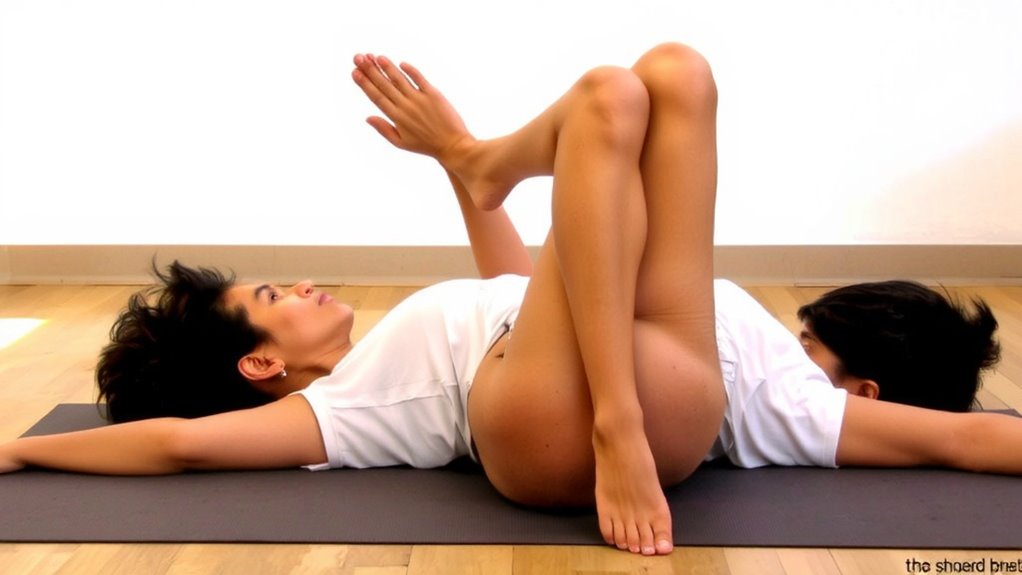
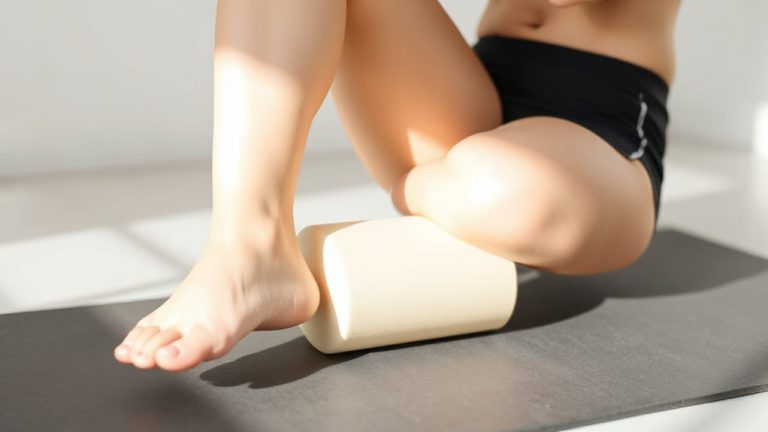
While lying on your back can seem passive, this position actually allows for deep, controlled engagement when performing the lying figure-four stretch, a key move for boosting hip mobility. Start by bending both knees and placing your feet flat on the floor. Cross your right ankle over your left thigh, just above the knee, forming a “4” shape. Gently pull your left thigh toward your chest using both hands. Focus on maintaining proper knee alignment-your top knee should point diagonally down, not flare out. Good ankle stability prevents strain, so keep the crossing ankle flexed and controlled. This stretch targets the glutes and piriformis effectively, especially when performed daily. For better results, pair it with supportive fitness gear like non-slip mats that enhance floor grip and comfort. It’s low-impact, requires no equipment, and integrates smoothly into recovery routines, making it a reliable choice for long-term joint health.
Try These Figure-Four Variations for Deeper Release
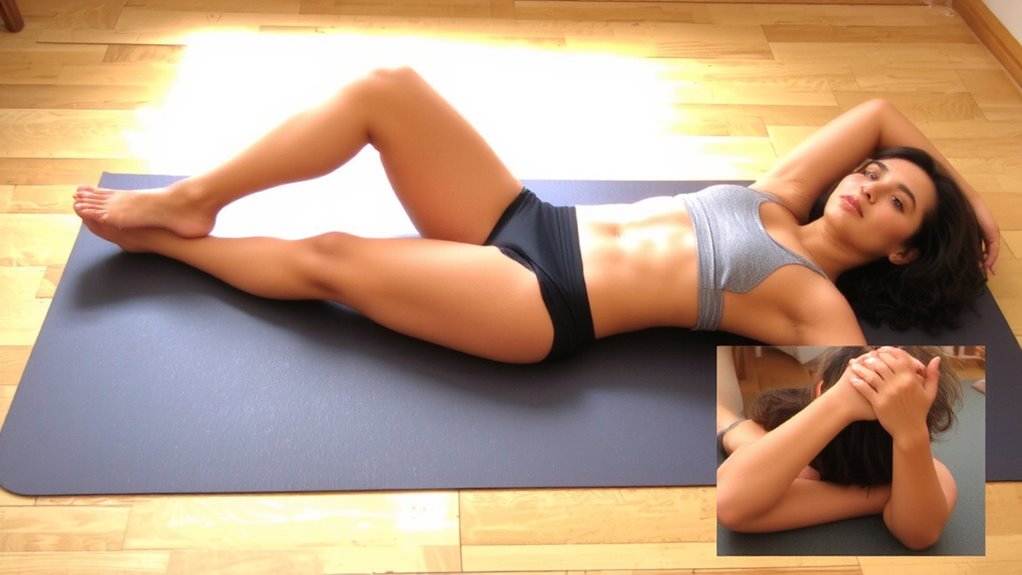
You’ve already explored the lying figure-four stretch as a foundational move for hip mobility, but adding strategic variations can amplify the release in tight glutes and the piriformis. Enhance your recovery routine with these evidence-backed tweaks that promote better hip articulation and muscle responsiveness. Pairing these stretches with foam rolling preps the myofascial tissue, allowing deeper, more effective mobility work.
| Variation | Benefit |
|---|---|
| Elevated Figure-Four | Reduces lumbar strain, increases glute stretch intensity |
| Pulsed Figure-Four Rocking | Encourages dynamic hip articulation and joint lubrication |
| Cross-Body Figure-Four Pull | Targets piriformis more directly, integrates foam rolling prep |
These variations refine mechanical tension and improve neuromuscular feedback. Using supportive fitness gear-like a stable mat or textured foam roller-ensures consistent performance and joint protection. Each adjustment offers measurable advantages over static stretching alone, making them valuable for long-term recovery and functional mobility.
When to Do the Figure-Four for Best Results
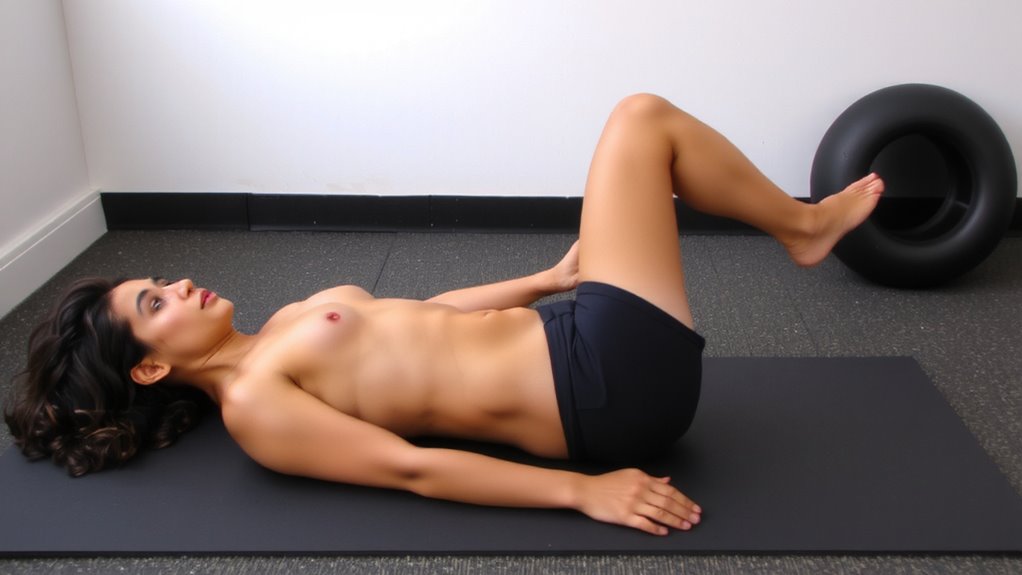
How often should you perform the figure-four stretch to maximize hip recovery and mobility gains? For best timing, aim for post-workout or during morning mobility routines when muscles are warm and more responsive. Performing the stretch when your body is relaxed enhances tissue release and reduces resistance in tight glutes and hips. The ideal positioning-lying on your back with your spine neutral and both feet flat before crossing one ankle over the opposite knee-ensures targeted activation without strain. You’ll get the best results holding the stretch for 30–45 seconds per side, two to three times daily, depending on your activity level. If you’re recovering from long sitting periods or intense training, this timing supports circulation and neural relaxation. While fitness gear like foam rollers can complement the practice, the figure-four requires no equipment, making it efficient and effective when timed right.
Make the Figure-Four Part of Your Daily Routine
Often overlooked yet highly effective, the figure-four stretch fits seamlessly into your daily routine thanks to its simplicity and minimal time demand. You can perform it anywhere-bed, floor, or even a yoga mat-without needing fitness gear. For real gains, consistency benefits shine when you commit to just 2–3 minutes daily. Morning integration works especially well; doing the stretch upon waking primes your hips for movement and counters overnight stiffness. Unlike complex recovery tools, this drill relies on body weight and position, making it sustainable long-term. There’s no learning curve or maintenance, just effective hip and glute release. Over time, regular practice supports better posture and joint function. While recovery aids like foam rollers have merit, they can’t match the functional efficiency of a well-timed, consistent figure-four. Let it become habit, and you’ll notice improved mobility and fewer kinks without extra effort or equipment.
Why Your Hips Need the Figure-Four Stretch
Tight hips are a silent setback for many, quietly undermining posture, movement efficiency, and joint health-especially in those with sedentary routines or repetitive movement patterns. You’re likely battling hip tightness without even realizing it, and that tension often leads to joint stiffness, especially in the lower back and knees. The figure-four stretch directly counters this by opening the deep glutes and external hip rotators, areas commonly restricted from prolonged sitting. When you perform it lying down, you gain better control and depth, allowing for a safer release. Unlike aggressive stretches, this version supports gradual mobility gains without straining connective tissue. Over time, consistent use improves alignment and reduces compensatory movement. It’s not just about flexibility-this stretch enhances recovery by boosting circulation and reducing muscle guard. For anyone serious about fitness recovery and longevity, the figure-four isn’t optional gear-it’s essential.
On a final note
You’ll find the lying figure-four stretch effective for boosting hip mobility and releasing deep glute tension, especially after long sits or intense workouts. When done regularly, it supports better movement patterns and reduces strain risks. Paired with quality recovery gear-like a firm foam roller or supportive mat-its benefits improve noticeably. This drill isn’t flashy, but its practical impact on recovery makes it a lasting staple worth keeping.