Medicine Ball Chest Pass Against Wall With Reflexive Trunk Recoil
You generate explosive upper-body power by driving a medicine ball from your chest into a wall with full arm extension, then immediately rebounding it on the recoil. This movement builds reactive strength through elastic trunk engagement and proper kinetic chaining. Keep your spine tall, core tight, and motion square to the wall to maximize power transfer. Mastering timing and intent sharpens neuromuscular coordination-key for athletic performance. There’s more to optimizing this drill than just throwing hard.
Notable Insights
- Perform the medicine ball chest pass with explosive leg drive to generate power through the entire kinetic chain.
- Maintain a tall spine and core engagement to optimize trunk recoil and prevent lower back strain.
- Keep the ball at chest level throughout, avoiding overhead lifts or excessive drops between reps.
- Stay square to the wall to ensure a true chest pass motion and maximize reflexive trunk rebound.
- Control the catch phase to harness elastic energy in the core, enhancing reactive power output.
What Is the Medicine Ball Chest Pass?
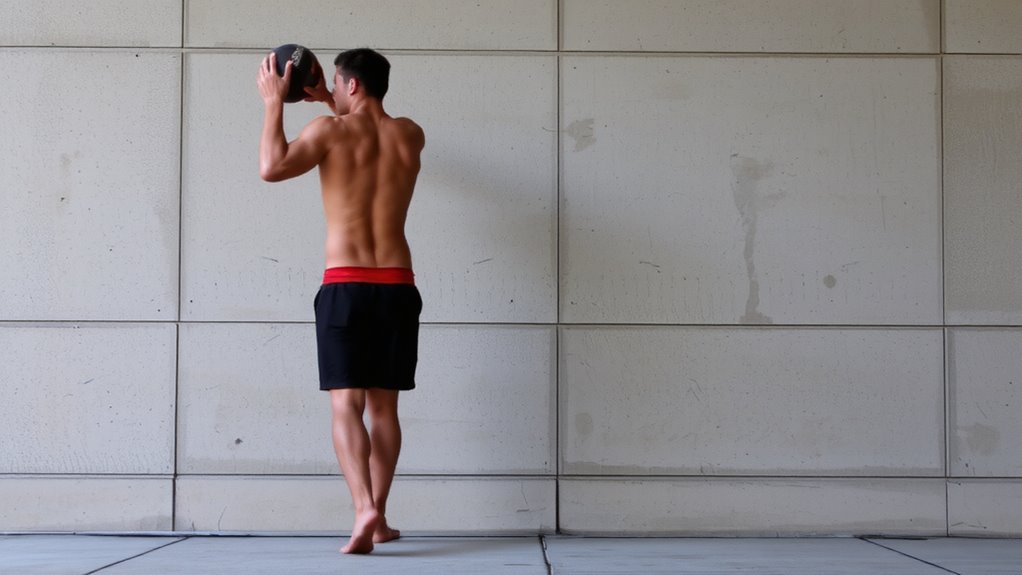
A dynamic full-body exercise, the medicine ball chest pass is more than just a test of upper-body power-it’s a functional movement that builds explosive strength and core stability. You engage your chest, shoulders, and triceps, but it’s your core and lower body drive that generate real power. Performed correctly, this movement mimics athletic pushing motions, enhancing sport-specific performance. The benefits include improved neuromuscular coordination, increased rate of force development, and enhanced trunk integration. However, limitations exist-poor technique can reduce effectiveness, and improper ball weight may strain joints or limit power output. Not all medicine balls are built for repetitive throws; cheaper models degrade quickly, affecting performance and safety. High-quality, durable medicine balls with consistent bounce and grip offer better long-term value. While useful for power training, the chest pass isn’t a standalone solution-pair it with complementary recovery and conditioning strategies for best results.
How to Do the Wall Chest Pass With Proper Form

While generating maximum power in the wall chest pass, your stance and alignment determine how efficiently force transfers from the ground through your core and into the throw. Start with feet shoulder-width apart, knees slightly bent, and maintain solid wall alignment-your body should face the wall directly, minimizing lateral drift. Hold the medicine ball at chest level, elbows tucked, and initiate the movement by driving through your legs and hips. This kinetic chain amplifies an explosive release, ensuring peak velocity at the moment of impact. Keep your core engaged throughout to stabilize the trunk and enhance force transmission. The ball should leave your hands with full arm extension, fingers guiding the final push. Land softly and reset deliberately to prepare for the next repetition. Proper form maximizes power output while reducing injury risk, making it essential for effective training with quality fitness gear designed for durability and grip reliability.
Common Chest Pass Mistakes (And Fixes)
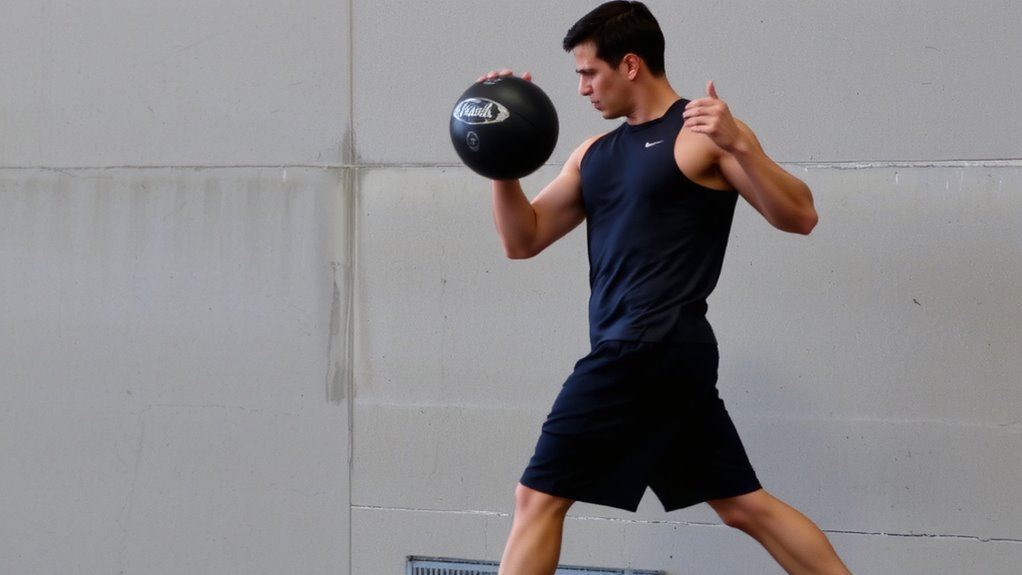
You’re already setting yourself up for success by mastering the wall chest pass with proper alignment and kinetic drive, but even well-executed reps can go off track if subtle errors creep into your form. One common mistake is leaning forward too much, which kills power and strains your lower back-keep your spine tall and engage your core. Another issue is allowing a rotational twist at the torso, turning the move into a side throw instead of a pure chest pass; stay square to the wall. Don’t mimic an overhead throw by raising the ball too high-start and finish at chest level. Letting your arms collapse on recoil reduces reflexive loading, so maintain slight bend and tension. Finally, rushing the bounce back loses the trunk’s elastic recoil. Slow down, feel the stretch, and explode forward with control for best results.
Why This Exercise Boosts Power and Reaction Speed
Explosive power and sharp reaction speed don’t come from chance-they’re built through disciplined, neuromuscular training, and the medicine ball chest pass delivers exactly that. You engage in rapid neural activation every time you explode into the throw, signaling your CNS to recruit fast-twitch fibers efficiently. This isn’t just strength work-it’s speed under load, training your body to react with intent. The reflexive trunk recoil off the wall forces you to absorb force quickly, sharpening your reactive capability. Importantly, kinetic chaining is at play: energy transfers from legs through the core to upper body in a fluid sequence, mimicking athletic movements in sport. You’re not just building power-you’re wiring your system for faster, more coordinated output. Consistent practice improves timing, coordination, and output efficiency. With durable medicine balls and adequate wall clearance, this drill becomes a cornerstone for reactive strength-practical, measurable, and highly transferable to dynamic performance.
When to Program the Chest Pass in Training
When should you actually slot the medicine ball chest pass into your routine? Proper training timing guarantees you maximize power transfer without compromising recovery. Use it during the power phase of your cycle, ideally early in the session when your nervous system is fresh. This exercise demands explosive intent, so program integration works best before strength work but after dynamic warm-ups. Avoid placing it post-heavy lifting-fatigue blunts velocity and weakens reflexive trunk recoil. Below is a quick guide for effective placement:
| Training Phase | Best Use Case |
|---|---|
| Power Development | Early in session, 3–4 sets |
| Hypertrophy | Not ideal |
| Strength Maintenance | Moderate load, low reps |
| Pre-Competition | High intent, minimal fatigue |
| Active Recovery | Avoid entirely |
Program integration isn’t just when you do it-it’s how it complements your goals without overtaxing recovery.
Progressions and Modifications for All Levels
How do you adapt the medicine ball chest pass for beginners without losing its power-developing intent, while still challenging advanced athletes? You use exercise variations and intelligent intensity scaling. For beginners, reduce the ball’s weight (4–6 lbs) and shorten the distance to the wall, letting them focus on form and trunk engagement. Perform it seated to limit leg drive, isolating upper-body mechanics. As skill grows, introduce standing passes with full triple extension. Advanced athletes benefit from heavier balls (10–16 lbs), weighted vests, or rebounders that demand quicker trunk recoil. Vary angles and stances-split stance, rotational setups-to match sport-specific demands. Intensity scaling isn’t just about weight; it includes volume, rest intervals, and intent. These progressions preserve the exercise’s explosive nature across levels, ensuring continuous adaptation. With proper gear-durable, grippable balls and shock-absorbing walls-this drill remains safe and effective throughout training phases.
On a final note
You’ll build explosive power and sharpen reaction speed with the wall chest pass, especially when you master reflexive trunk recoil. This move transfers force efficiently, mimicking athletic demands. Paired with quality medicine balls-durable, weighted, and grip-enhanced-your training gains stay consistent. These tools withstand repeated slamming, supporting long-term progress. When used wisely, this exercise and reliable gear improve both performance and resilience, making them practical, high-return choices in any power development plan.