Standing Desk Integration With Mini-Stationary Pedalers for Passive Circulation
You’re standing to stay active, but without movement, circulation slows in your legs, increasing stiffness and reducing recovery. A mini-stationary pedaler fixes this by promoting passive blood flow with low-impact motion. It fits under most standing desks, works quietly, and lets you pedal discreetly during tasks. Look for slim, belt-driven models with adjustable resistance to match your comfort and fitness goals-consistency boosts cardiovascular health and joint function over time, and the right setup turns idle standing into active recovery. Smart integration makes the benefits automatic, and ideal performance follows when you know how to fine-tune each detail.
Notable Insights
- Mini peddlers enhance passive circulation at standing desks by promoting blood flow without disrupting work.
- Proper positioning under a standing desk ensures comfort, stability, and ergonomic alignment during use.
- Compact, belt-driven peddlers offer quiet, low-impact movement ideal for professional standing desk environments.
- Adjustable resistance allows personalized, low-intensity pedaling to support cardiovascular health and reduce leg fatigue.
- Integrating short, consistent pedaling sessions into daily routines improves circulation, focus, and long-term mobility.
Why Passive Circulation Matters at Standing Desks
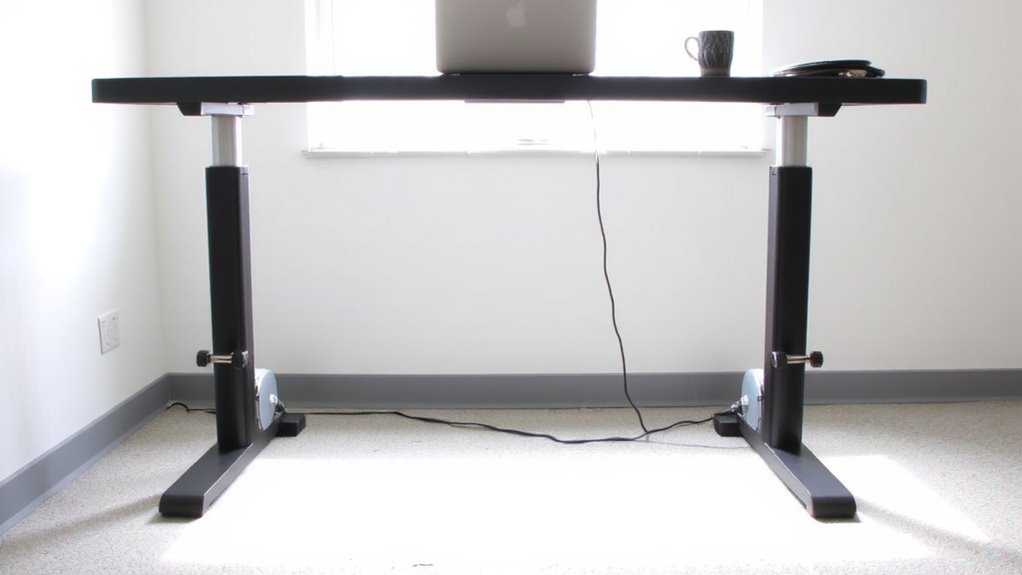
Nearly every hour you stand at your desk, your lower body faces a silent challenge-without movement, circulation slows, especially in the legs where blood must work against gravity. Over time, poor blood flow can lead to swelling, discomfort, and even long-term vascular issues. You might not feel it immediately, but the strain on your circulatory system builds. Maintaining passive circulation helps support not just cardiovascular function but also joint health by delivering essential nutrients and removing metabolic waste. Without subtle muscle activation, stiffness creeps in, particularly around knees and ankles. Standing still for hours isn’t neutral-it’s actively taxing. Fitness recovery isn’t just post-workout; it’s about reducing cumulative stress throughout the day. Proper circulation aids tissue repair and reduces inflammation. Passive movement tools indirectly preserve joint integrity. For sustained wellness, enhancing blood flow isn’t optional-it’s a functional necessity woven into daily ergonomic design.
Use a Mini Pedaler to Stay Active Without Distractions
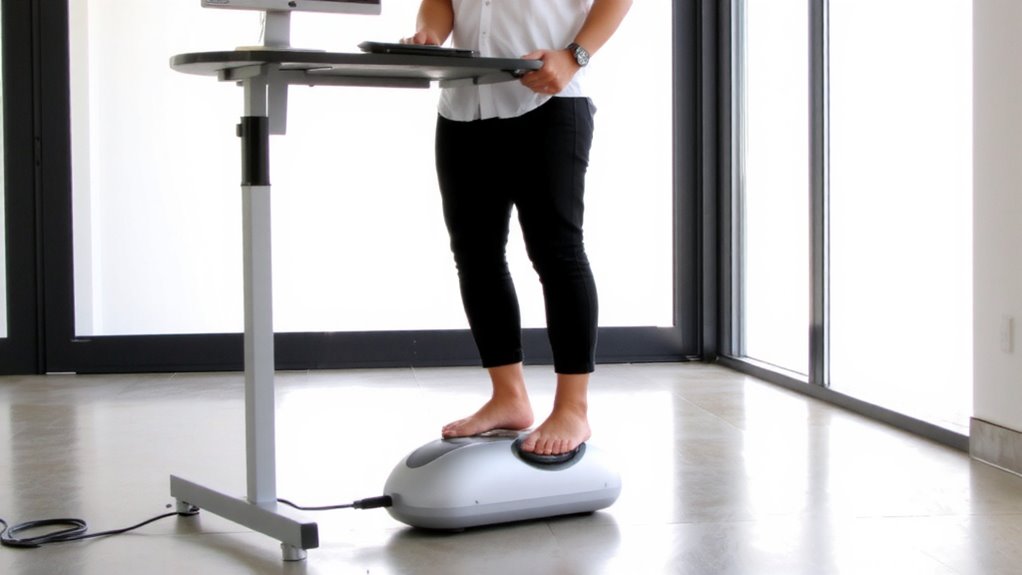
How do you stay active without pulling focus from your work? A mini pedaler lets you maintain light movement while keeping attention on tasks. It’s a form of low impact exercise, ideal for long stretches at your desk. Unlike treadmills or vigorous workouts, it doesn’t spike heart rate excessively-just enough to support blood flow. This steady motion aids passive circulation, reducing fatigue and stiffness. More importantly, it comes with mental focus benefits: users often report improved concentration and reduced restlessness. Because the movement is rhythmic and subtle, it doesn’t compete with cognitive demands. Most models offer adjustable resistance, letting you customize intensity without interrupting workflow. They’re quiet, compact, and built for durability. For fitness recovery or sustained energy, integrating a pedaler into your routine makes sense. It’s not about intensity-it’s consistency, comfort, and cognitive support through movement. For those seeking effective options, reviewing the best under-desk exercise equipment can help identify models that suit your workspace and health goals.
Position Your Pedaler Under Any Standing Desk
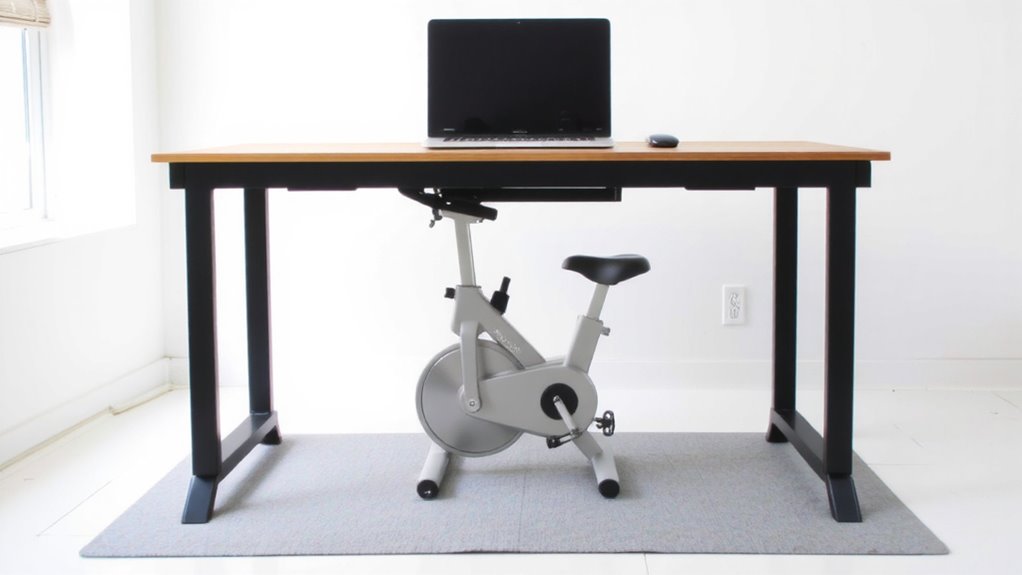
While your standing desk supports posture and movement, slipping a mini pedaler underneath can enhance circulation without altering your setup. You maintain ergonomic alignment by keeping your back straight and shoulders relaxed, whether standing or seated occasionally. These compact units fit under most desks, letting you pedal discreetly during tasks. Adjustable pedal resistance lets you tailor the effort-light for passive movement, higher for gentle cardio. Most models offer smooth, quiet operation, so you stay focused. Since they don’t require dedicated floor space beyond what’s already under your desk, they’re ideal for small workspaces. Just make certain there’s enough legroom so your knees don’t strain. With consistent use, you boost lower-body circulation and reduce stiffness, supporting long-term comfort. It’s not about intense workouts-it’s subtle, functional motion that complements your day.
Choose the Right Under-Desk Pedaler for Your Space
A good under-desk pedaler should match both your workspace dimensions and your activity goals, so you’ll want to take into account size, adjust在玩家中ability, and noise output before making a choice. Look for a compact design that fits neatly beneath your desk without crowding your legroom-especially important if you’re alternating between sitting and standing. Units with adjustable resistance let you tailor workouts to your fitness level, while a slim footprint guarantees compatibility with most standing desk frames. Prioritize quiet operation if you work in shared spaces or during calls, as loud pedaling can be distracting. Belt-driven models tend to offer smoother, quieter performance compared to chain-based ones. Check weight capacity and stability too, since wobbling can disrupt focus. A well-built pedaler balances durability with subtle integration into your workspace, supporting passive circulation without compromising professionalism.
Build a Daily Pedaling Habit at Work
If you’re serious about boosting circulation and staying active during long work hours, turning pedaling into a consistent habit matters more than the device itself. Pedaling consistency builds endurance and supports cardiovascular health without demanding peak effort. Start with just 10–15 minutes per hour, gradually increasing duration as it feels natural. Pair this routine with habit tracking-use a simple log or app to record daily sessions. Seeing progress reinforces commitment and reveals patterns in energy and focus. Consistent use enhances metabolic rate and reduces stiffness, but only if integrated mindfully into your workflow. It’s not about intensity; it’s about regular movement that complements standing. Over time, tracked pedaling becomes automatic, improving both physical resilience and productivity. The right tools help, but sustained benefits rely on repetition, not resistance levels. Make movement a default, not a distraction, and you’ll see real gains in daily liveliness.
Optimize Comfort and Performance While Pedaling
The best way to get the most out of your under-desk pedal exerciser isn’t just about how long you pedal-it’s about how well you’re positioned and supported during use. Proper ergonomic alignment guarantees your knees stay slightly bent at the bottom of each stroke, reducing joint strain and promoting smooth, consistent motion. Adjust the machine’s height so your legs don’t overextend, and keep your feet flat for better stability. Resistance control lets you modulate intensity without sacrificing form-start low, then gradually increase as your muscles warm up. A smooth resistance system reduces noise and wear, making it ideal for office settings. Pair this with a supportive standing mat if alternating positions, and check your posture regularly. Small tweaks in positioning and resistance improve both comfort and long-term performance, helping maintain circulation throughout the workday without causing fatigue or discomfort.
On a final note
You’ll find that pairing a mini-stationary pedaler with your standing desk boosts passive circulation without disrupting focus. These compact units fit neatly under most desks, offering low-impact motion that supports vascular function and reduces sedentary strain. When chosen wisely-considering noise, resistance settings, and footprint-they enhance daily wellness. Consistent use improves endurance and comfort, making them practical additions to ergonomic workspaces. They’re not exercise replacements, but valuable tools for sustained health.