The Effects of Late-Night Protein Shakes on Sleep Architecture in Resistance Trainers
You’re likely disrupting your deep sleep when you drink a large, slow-digesting protein shake right before bed. While casein supports overnight muscle repair, consuming it too late can delay sleep onset and reduce REM quality. Your digestion may stay elevated, increasing heart rate and fragmenting recovery. Though 20–40 g of casein 30–60 minutes pre-sleep is generally safe, oversized or high-fat mixes raise discomfort risks. Proper timing guarantees gains aren’t sacrificed-there’s more to optimizing recovery than just protein intake.
Notable Insights
- Late-night protein shakes can delay sleep onset due to increased digestion and mild metabolic arousal.
- Casein is preferred over whey before bed for its slow digestion and steady amino acid release.
- Consuming 20–40 g of protein 30–60 minutes before bed optimizes muscle repair without disrupting sleep.
- Oversized protein servings may cause discomfort, elevate heart rate, and impair sleep quality.
- Poorly timed shakes can reduce REM sleep, affecting recovery and cognitive function despite unchanged total sleep time.
How Deep Sleep Fuels Muscle Repair

Recovery isn’t just about rest-it’s about what happens in the quiet hours of deep sleep, when your body shifts into repair mode. While you’re in those deep stages, your brain signals a surge in growth hormone, which directly accelerates muscle recovery. This hormone helps rebuild tissue broken down during training, making sleep a non-negotiable part of your fitness regimen. Without sufficient deep sleep, even the most precise nutrition and training lose effectiveness. Fitness gear like sleep trackers can help monitor these cycles, offering insights into your recovery quality. Though late-night protein shakes may support amino acid availability, their real benefit depends on whether they help or hinder your ability to reach these critical deep stages. The key isn’t just consuming protein-it’s ensuring your body uses it efficiently through high-quality sleep. Prioritize sleep depth, and you optimize both recovery and performance.
Does Late Protein Hurt Sleep Quality?

Why do so many lifters toss back a protein shake right before bed-could it actually backfire? You’re likely aiming to boost overnight recovery, but timing matters. Consuming protein late can trigger digestive discomfort, especially with slower-digesting casein or high-fat blends. Your gut’s still working when you’re trying to rest, and that might interfere with falling asleep. Some people also report an elevated heart rate post-consumption, possibly due to metabolic activity or ingredient sensitivities like caffeine in certain protein blends. While moderate doses (20–40 g) are generally well-tolerated, oversized servings increase the risk. For most, a shake 30–60 minutes pre-bed works fine, but if you notice restlessness or stomach issues, adjusting timing or type could improve sleep quality. Listen to your body-it’s your best recovery tool.
What Happens to Sleep Stages After a Late Shake?
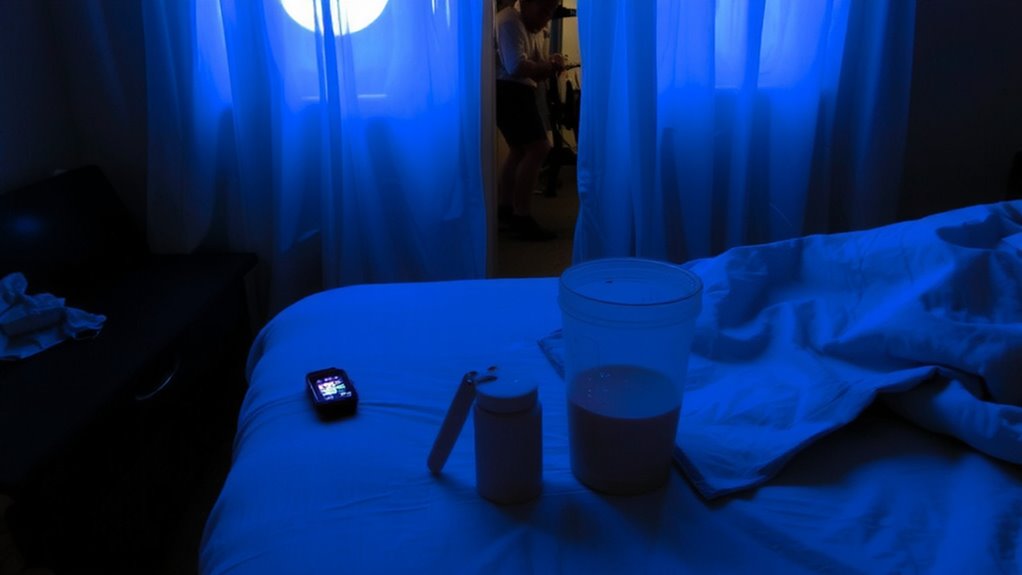
How might your sleep architecture shift when you’re digesting protein during the night? You might notice increased sleep latency, as your body stays slightly more alert during digestion. While protein metabolism supports muscle repair, it can interfere with your natural wind-down process. Studies suggest late shakes may reduce time in REM sleep, leading to REM disruption-this stage is vital for cognitive recovery and memory consolidation. You’re not necessarily waking up, but your brain’s cycling pattern changes. Though total sleep time might stay the same, the quality of deep and REM stages often dips. For resistance trainers, this trade-off between overnight protein synthesis and sleep integrity requires careful balancing. The timing, quantity, and individual metabolism all influence outcomes. For ideal recovery, minimizing REM disruption while supporting anabolism is key. Your body needs both restful sleep and nutrients-but not necessarily at the exact same time.
Casein Vs. Whey: Which Is Better Before Bed?
You’ve likely heard that a protein shake before bed supports muscle growth, but not all proteins behave the same way during the night. When it comes to overnight recovery, casein has the edge over whey due to its slow-digesting nature. Its gel-like structure slows amino acid release, providing a steady stream to muscles while you sleep-ideal for resistance trainers aiming to reduce muscle breakdown. Whey, in contrast, digests quickly, causing a rapid spike in amino acids that may not last through the night. Plus, many report better digestive comfort with casein before bed, as it’s less likely to cause bloating or reflux when lying down. While both support muscle protein synthesis, casein’s sustained delivery and nighttime compatibility make it the smarter pre-sleep choice for recovery-focused training programs.
Signs Your Protein Shake Is Ruining Your Sleep
Could that protein shake you’re sipping before bed actually be keeping you awake? If you’re waking up restless or feeling groggy, the answer might be yes. Digestive discomfort is a red flag-your body shouldn’t be working hard to break down protein when it should be powering down. Heavy shakes, especially those high in fat or fiber, delay gastric emptying, disrupting sleep onset. Poor nutrient timing plays a big role; consuming large doses too close to bedtime strains your system. You might also notice frequent nighttime bathroom trips or heartburn, both linked to late intake. While protein supports recovery, mistimed shakes can undermine sleep architecture. Watch for these signs: if your sleep feels lighter or you’re waking mid-cycle, rethink your routine. It’s not just about fitness gear or supplements-it’s how and when you use them that shapes recovery. Adjusting timing could be the real game-changer.
Best Times to Take Protein for Gains and Sleep
When should you actually be taking protein to maximize muscle gains without sabotaging sleep? Protein timing plays a vital role in optimizing muscle synthesis, especially for resistance trainers. Consuming 20–40 grams of protein within an hour post-workout supports recovery by spiking muscle protein synthesis when your body is most receptive. Spreading intake across meals-about every 3–4 hours-keeps synthesis elevated throughout the day. While late-night shakes were once praised, recent evidence suggests they might disrupt sleep architecture, particularly if consumed too close to bedtime. You’re better off taking your last protein dose at least 90 minutes before sleeping to allow digestion. Casein or micellar protein before bed *can* work if timed right, but monitor your sleep quality. For most, aligning protein timing with training windows and natural circadian rhythms delivers the best balance of gains and restful sleep.
On a final note
You’re likely optimizing recovery by consuming protein at night, especially casein, which digests slowly and supports muscle repair without severely disrupting sleep. Research suggests minimal impact on sleep architecture in most resistance trainers. Still, individual responses vary-some may experience restlessness. For best results, time your shake 30–60 minutes pre-bed, avoid high-sugar blends, and monitor sleep quality. This strategy balances muscle protein synthesis and restorative deep sleep effectively.