Diaphragmatic Breathing With Rib Expansion Focus to Support Postural Restoration
You’re likely breathing too shallowly, letting chest and neck muscles take over-this strains your posture and weakens core stability. Diaphragmatic breathing with rib expansion reactivates your diaphragm, boosting intra-abdominal pressure and engaging deep core muscles like the transversus abdominis. By focusing on lateral rib glide during inhalation, you restore thoracic mobility, reduce shoulder tension, and align your spine more naturally. It’s a foundational reset for posture and movement efficiency-understanding the mechanics is key to lasting change.
Notable Insights
- Diaphragmatic breathing enhances core stability by activating the transversus abdominis and promoting spinal alignment.
- Focusing on lateral rib expansion improves thoracic mobility and reduces compensatory shoulder elevation during inhalation.
- Restricted rib movement contributes to poor posture; rib glide restores symmetry and supports diaphragm function.
- Nasal inhalation with rib expansion increases intra-abdominal pressure, stabilizing the spine during movement.
- Coordinating breath with rib focus resets postural muscles, improving movement efficiency and reducing upper back tension.
How Shallow Breathing Wrecks Posture
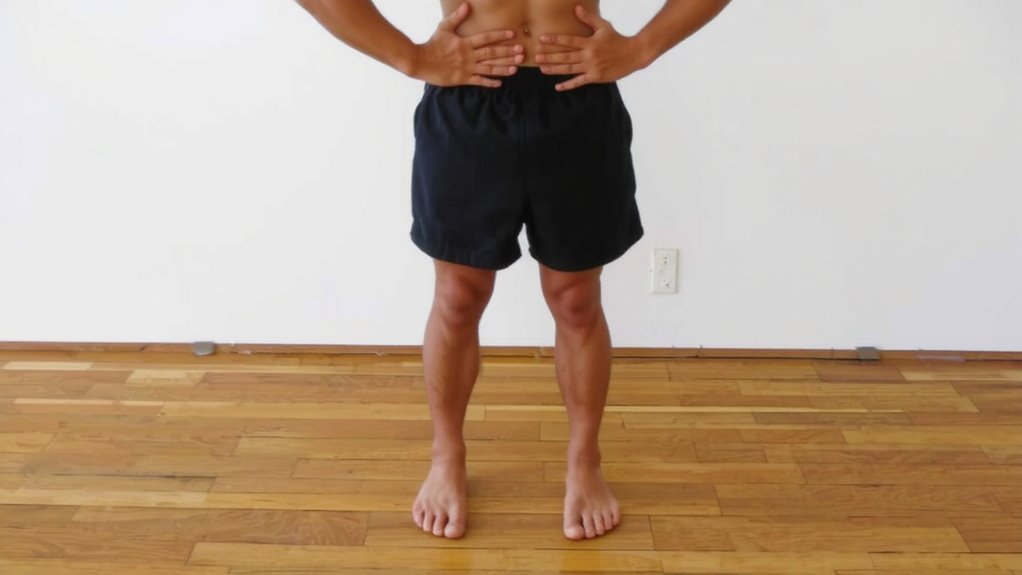
While you might not think about how you breathe from moment to moment, shallow breathing can quietly undermine your posture over time, especially if you’re active or rely on fitness gear like supportive braces or posture correctors. This kind of breathing often leads to chronic chest tightness, restricting rib movement and forcing accessory muscles to compensate. You’ll likely notice increased shoulder elevation with each inhale-your traps and neck muscles hike upward, promoting forward head posture and upper back tension. Over time, this pattern disrupts spinal alignment and reduces respiratory efficiency, which can degrade performance and slow recovery. Even high-quality posture correctors won’t fix the root cause if your breath remains short and clavicular. These devices may offer temporary support, but without addressing breathing mechanics, their long-term effectiveness is limited. Proper rib cage mobility and thoracic expansion are essential-ignoring them compromises both form and function during movement.
Diaphragmatic Breathing: Engage Your Core for Alignment

Why do so many people overlook the foundation of proper alignment when chasing fitness gains? You’re likely focusing on reps, weights, or gear when you should start with your breath. Diaphragmatic breathing isn’t just calming-it’s a critical tool for core engagement and spinal stabilization. When you inhale deeply through your nose, your diaphragm descends, increasing intra-abdominal pressure. This naturally activates deep core muscles like the transversus abdominis, creating a stable cylinder around your spine. Unlike shallow chest breathing, this method supports endurance, balance, and safe movement patterns. Consistent practice improves neuromuscular control, ensuring your core isn’t just strong but responsive. Fitness recovery isn’t just about rest or foam rollers-proper breathing rebuilds postural integrity from within. You don’t need expensive gear; you need awareness. Diaphragmatic breathing builds alignment through intelligent core engagement, making every movement more efficient and less prone to injury.
How Rib Expansion Restores Postural Balance
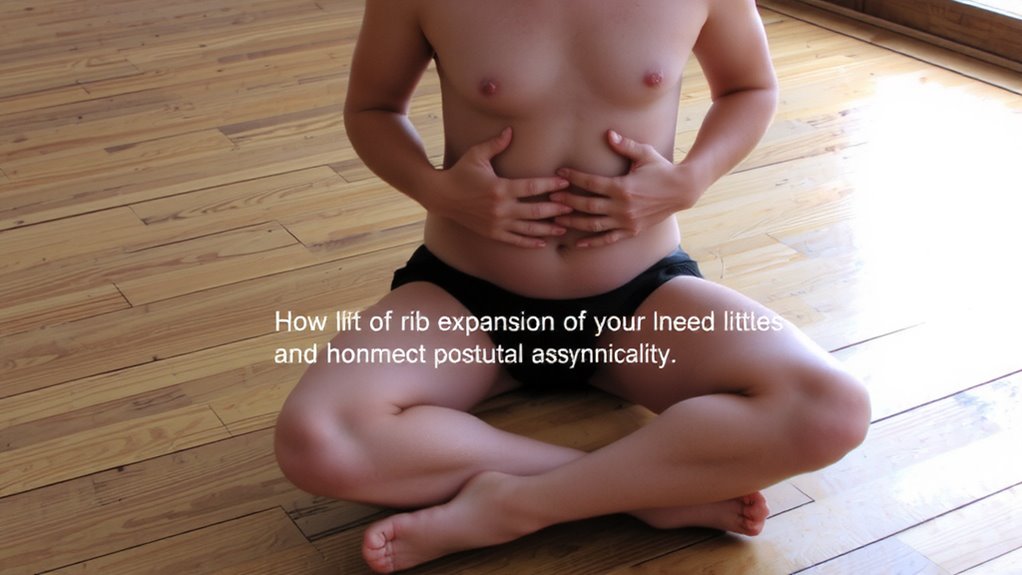
If you’ve ever felt tightness in your chest or notice your shoulders rounding forward despite good posture cues, restricted rib mobility might be undermining your alignment-no fancy recovery tool can fix that. When your ribs don’t expand properly, thoracic mobility declines, forcing your spine and shoulders to compensate. This often leads to asymmetrical breathing patterns and reduced spinal symmetry, especially if you sit for long periods. Rib expansion helps restore balance by allowing even movement across the rib cage, which supports proper diaphragm function and reduces overreliance on neck and shoulder muscles. Over time, this improves postural control and decreases strain on joints and connective tissues. Unlike foam rollers or massage guns, which address symptoms, rib-focused breathing targets the biomechanical root of postural dysfunction. You don’t need gear-just awareness and consistency. The real recovery isn’t bought; it’s built through functional movement.
Practice Diaphragmatic Breathing With Rib Focus
Since proper diaphragmatic breathing depends on unrestricted rib movement, focusing on rib expansion during each inhale guarantees you’re not just breathing deep, but breathing smart. As you inhale, envision a gentle rib glide-your lower ribs widening laterally, not just lifting upward. This lateral lift creates space for the diaphragm to descend fully, enhancing oxygen exchange and reducing reliance on accessory neck and shoulder muscles. You’ll notice improved coordination between breath and posture, especially when seated or moving through functional patterns. Pay attention to symmetry; both sides of the ribcage should expand equally. Practicing with hands lightly on your lower ribs helps you monitor movement and refine control. Consistent focus on rib glide trains neuromuscular pathways, making efficient breathing more automatic. Over time, this precision supports better intra-abdominal pressure regulation, a key factor in postural stability and long-term spinal health.
Breathe Better, Move Better
How does something as automatic as breathing become a cornerstone of elite movement? Because when you train breath coordination, you’re not just filling lungs-you’re syncing core mechanics with motion. Poor breathing patterns disrupt posture and reduce movement efficiency, but diaphragmatic breathing with rib expansion helps reset this balance. You develop mindful awareness, learning how each inhale engages the diaphragm and expands the lower ribs laterally, stabilizing the thorax. This isn’t just relaxation-it’s functional preparation. With consistent practice, breath becomes a dynamic governor of movement quality, enhancing spinal alignment and joint control. Studies show athletes using this method report improved recovery times and muscular coordination. Fitness recovery tools like foam rollers or resistance bands work better when paired with proper breath coordination, since oxygen delivery and muscle relaxation improve. You’re not overhauling your gear-you’re optimizing the system already in place. Breathe better, and your body will move better, too.
On a final note
You’ve seen how shallow breathing undermines posture, and why diaphragmatic breathing with rib expansion matters. This technique boosts core engagement, improves alignment, and supports postural restoration by balancing musculature around the trunk. When practiced consistently, it enhances respiratory efficiency and movement quality. Fitness recovery tools like rib belts or posture correctors may help, but they’re no substitute for proper breathing mechanics-your body’s foundational gear.