Suspension Trainer Single-Arm Rows to Induce Instability and Trunk Engagement
You’ll build serious back strength with suspension trainer single-arm rows, but it’s your core that keeps you stable as the unstable straps challenge balance and alignment. Using a neutral grip and tight torso, you’ll activate lats and rear delts while fighting rotation, turning each rep into a full-body effort. Leaning too far or shrugging shoulders reduces gains, so focus on form and tempo. The real payoff? Functional power that transfers beyond the gym.
Notable Insights
- Adjust suspension straps to mid-chest height and use a neutral grip to optimize range of motion and joint alignment.
- Perform rows with a staggered or parallel stance to manage stability and enhance trunk engagement.
- Engage the core tightly and keep the back flat to prevent rotation and support unilateral back activation.
- Focus on controlled, slow tempos to maximize time under tension and minimize momentum-induced compensation.
- Progress difficulty by adjusting foot position or adding load while maintaining strict form to ensure effectiveness.
How to Do a Suspension Trainer Single-Arm Row
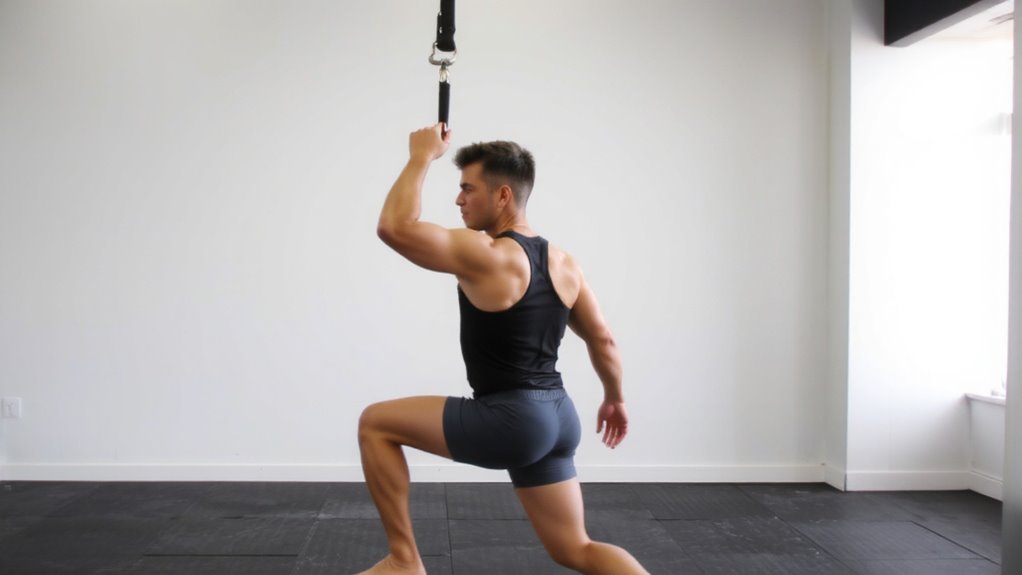
Form is everything when it comes to mastering the suspension trainer single-arm row, and getting it right starts with setup. You’ll want to adjust the strap length so the handles hang at mid-chest height-this guarantees maximal range of motion. Stand with feet staggered or parallel, depending on stability needs; narrow foot positioning increases core demand, while a wider base offers more control. Grab the handle with a neutral grip, maintaining a tight core and flat back. Engage your lats as you pull your chest toward the anchor point. Grip variation-using an underhand or overhand hold-can shift emphasis across back muscles. Keep movements slow, resisting the urge to jerk. The suspension trainer’s instability challenges balance, but proper execution guarantees focused engagement without strain. Quality straps with durable carabiners make a noticeable difference in control and safety over time. Consistency with form builds efficiency and reduces injury risk.
Why This Move Builds Back and Core Strength
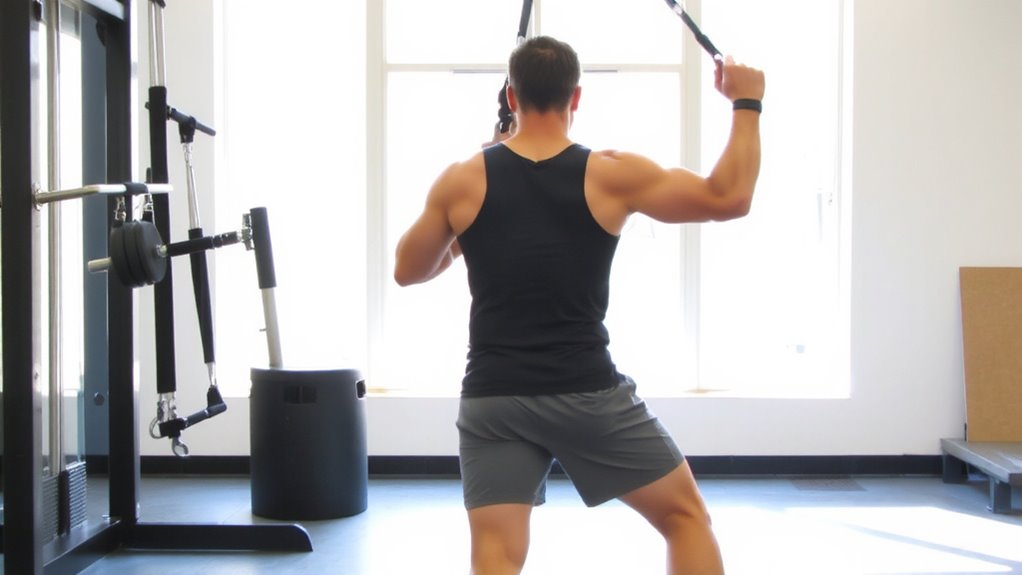
The real power of the suspension trainer single-arm row lies in its dual demand on muscular strength and stability-your back doesn’t just pull, it anchors, while your core doesn’t just brace, it actively resists rotation. This creates a significant balance challenge, forcing unilateral muscle activation across your lats, rhomboids, and rear delts. Because the suspension straps are unstable, your body can’t rely on momentum or compensation from the opposite side, increasing time under tension and neuromuscular demand. You’re not only building back strength but also refining control and coordination. The constant micro-adjustments required amplify muscle activation in both the prime movers and stabilizers. Suspension trainers excel here-their portability and adjustability make progressive overload easy by simply changing your foot position. Unlike fixed machines, they promote functional strength through instability, making this move a potent blend of efficiency and effectiveness for serious training.
Why You Feel It in Your Core (And Should)
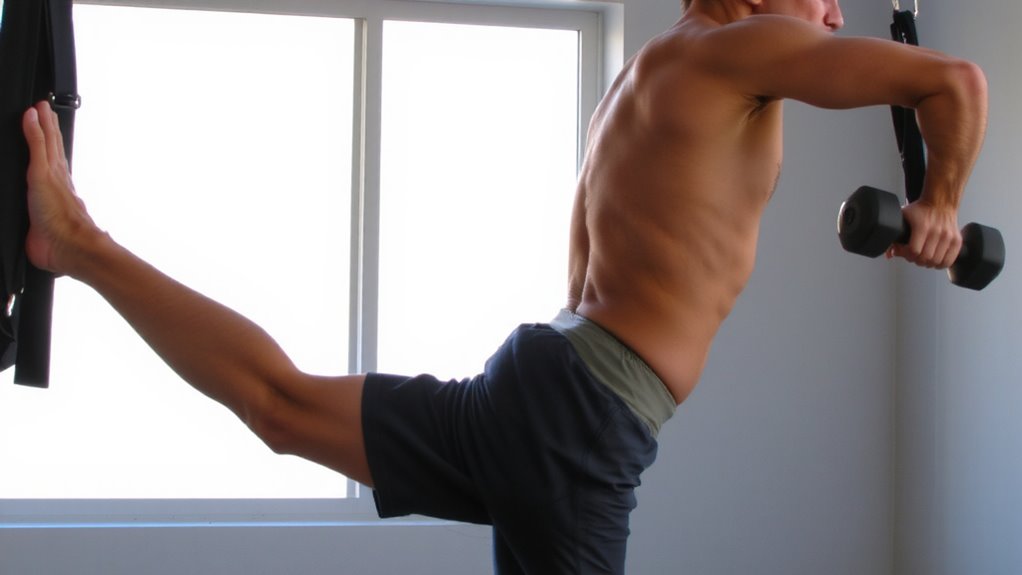
While your back does the pulling during suspension trainer single-arm rows, it’s the core’s job to keep you from twisting, and that’s exactly why you feel it engaging so intensely. The unstable nature of the straps demands constant micro-adjustments, spiking muscle activation across your abs, obliques, and lower back. You’re not just building strength-you’re training your body to maintain core stability under uneven loads, which mimics real-world movement patterns. That intense feeling in your midsection? It’s proof your body’s stabilizers are working hard. This isn’t incidental; it’s by design. Suspension trainers amplify instability, forcing your core to respond dynamically with each repetition. Unlike fixed machines, they promote full-body integration, making each row a compound challenge. Feeling it in your core means the exercise is working as intended-enhancing control, balance, and functional strength. You should feel it; it’s where real trunk engagement begins.
Common Mistakes and How to Fix Them
How often do you find yourself leaning too far back during single-arm rows, turning what should be a controlled back and core exercise into a sloppy upper-body yank? This form breakdown usually happens as fatigue sets in, compromising both effectiveness and safety. Without proper fatigue management, you’ll recruit the wrong muscles and increase injury risk. Keep your core braced, hips square, and movement smooth through the full range.
| Mistake | Why It Happens | How to Fix It |
|---|---|---|
| Leaning backward | Poor core engagement | Tighten abs, shorten stride |
| Shrugging shoulders | Over-gripping handles | Relax traps, pull with lats |
| Sagging hips | Core disengagement | Brace midsection, align body |
| Jerking motion | Momentum takeover | Slow down, focus on control |
Stay mindful of positioning and pacing-your stability and strength gains depend on it.
How to Program for Strength or Endurance
Some strength and endurance adaptations you’ll want to track depend heavily on how you set your reps, sets, and rest when using suspension trainers for single-arm rows. For strength, aim for 4–6 sets of 6–8 reps with long rest (2–3 minutes) and heavy loading-lean further forward or add weight to apply progressive overload effectively. Tempo variation helps too: use a slow eccentric (3–4 seconds) to increase time under tension and control. For endurance, shoot for 2–3 sets of 15–20 reps with 60 seconds rest and moderate lean. Briefer rest periods increase metabolic demand, improving muscular stamina. Suspension trainers excel here because instability amplifies core engagement regardless of goal. Adjust foot positioning and strap length to fine-tune difficulty. Consistent programming with planned tempo variation and progressive overload guarantees ongoing adaptation. Over time, you’ll notice improved back development, scapular stability, and overall trunk resilience-key markers of effective, sustainable programming.
On a final note
You’ll build real strength and core stability with suspension trainer single-arm rows, thanks to the constant demand for balance and alignment. The straps force your back and obliques to work harder, improving functional fitness. When done right, the movement transfers well to daily activities and athletic performance. Just maintain control, avoid sagging hips, and keep tension consistent. This exercise earns its place in any effective, gear-based routine.