Assessing Core Endurance Deficits in Gymnasts and Correcting With Progressive Plank Variations
You need solid core endurance to maintain proper form and prevent injury during long gymnastics sessions, yet many fail basic assessments like the prone plank, side plank, and glute bridge hold. Fix common mistakes-hip sagging, flared ribs, shallow breathing-to maximize effectiveness. Start with foundational forearm and kneeling planks, then progress to dynamic variations once stability improves. Time your holds on a high-density mat for feedback and consistency. Training smart with progressive planks boosts fatigue resistance and body control-key for lasting performance. You’ll soon see how small adjustments accelerate results.
Notable Insights
- Use prone, side plank, and glute bridge holds to assess core endurance with strict form to identify deficits.
- Time each plank variation to detect imbalances and track improvements in sustained core activation.
- Correct common errors like sagging hips and flared ribs to ensure effective core engagement and alignment.
- Start with kneeling or forearm planks to build foundational endurance before advancing to harder variations.
- Progress plank难度 gradually using timing, stability challenges, and proper placement in training to enhance gymnastic performance.
Why Core Endurance Matters for Gymnasts
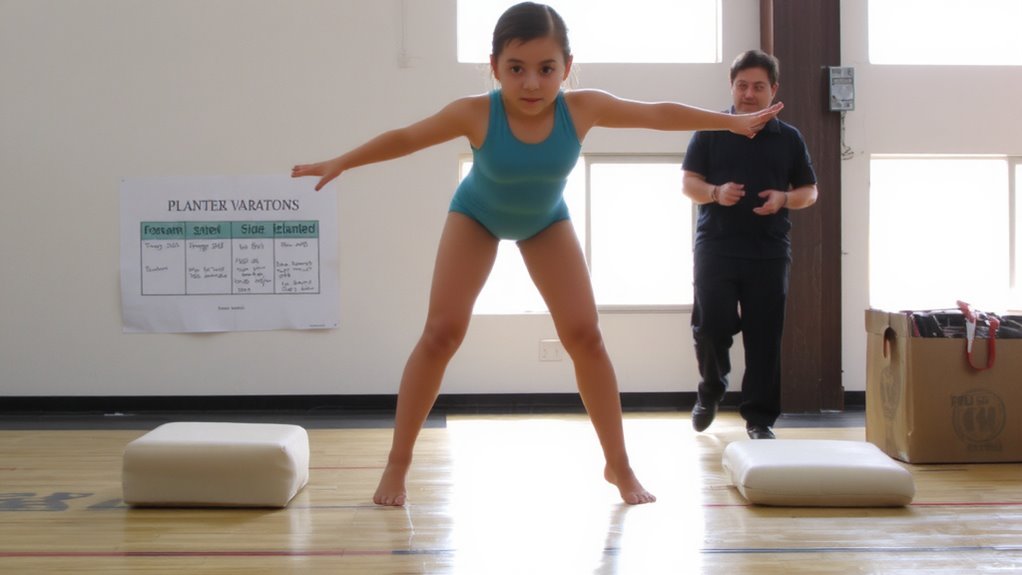
While it might not always grab the spotlight like flips or dismounts, core endurance plays an essential role in a gymnast’s overall performance and injury prevention. You rely on a strong, enduring core to maintain proper body alignment during complex routines, and without it, your technique suffers. Core endurance supports performance enhancement by stabilizing movements across all events, allowing cleaner execution and better control. It also contributes directly to injury prevention-when your core fatigues too soon, stress shifts to joints and ligaments, increasing injury risk. Gymnasts with superior core endurance recover faster between sets, maintaining form under fatigue. Unlike short bursts of strength, endurance guarantees sustained activation, critical during long practices or competitions. Though fitness gear like resistance bands or ab rollers can aid training, nothing replaces consistent, progressive core work. Your body performs and recovers best when built on this foundational stamina, making core endurance non-negotiable for long-term success.
Test Core Endurance With These 3 Assessments
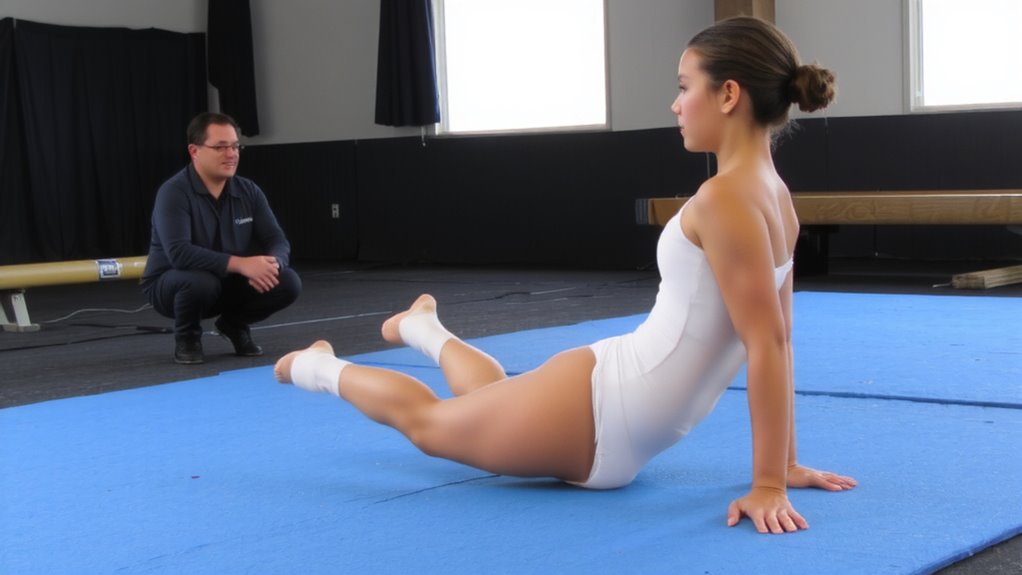
How well can your core hold up when fatigue starts creeping in? These three assessments help you find out. First, the prone plank test measures how long you can maintain proper core bracing-when you stop, note if failure came from true muscle fatigue or loss of form. Next, the side plank, held on one forearm, challenges lateral stability; time both sides to spot imbalances. Finally, the glute bridge hold tests posterior chain endurance, often overlooked but essential for gymnastic control. Each assessment should be done with strict technique, no sagging or hiking. They’re quick, require no gear, and deliver honest feedback. Use them periodically to track progress and identify weak links. When muscle fatigue hits, your body reveals where core bracing breaks down-knowing that is half the battle. For those looking to enhance training, incorporating a core workout machine can provide progressive resistance and support.
Fix These 5 Common Plank Form Mistakes
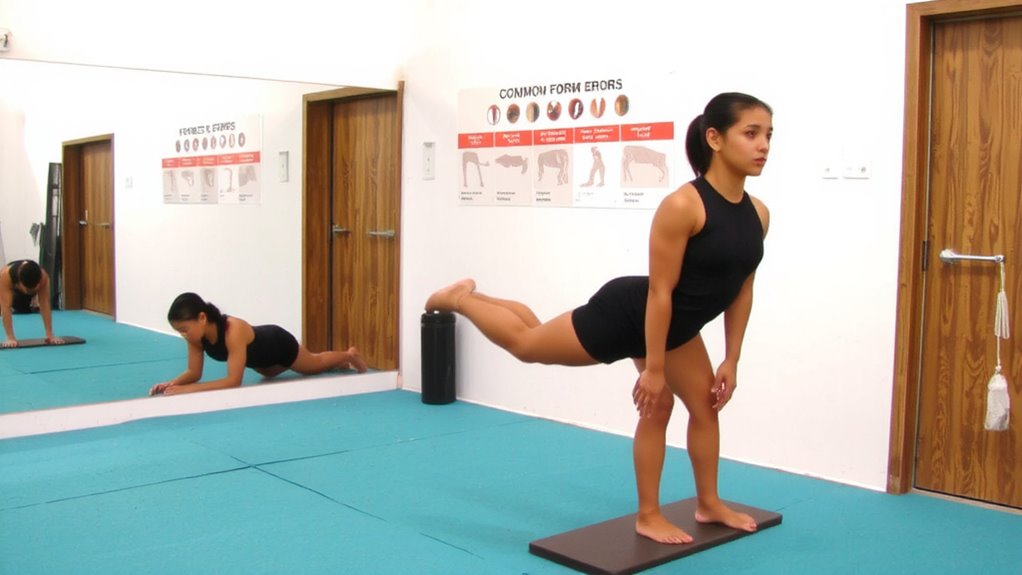
You’ve tested your core endurance with the prone plank, side plank, and glute bridge hold-now it’s time to make sure you’re getting the most out of each second you spend holding those positions. Poor form sabotages progress, even in seasoned gymnasts. Common mistakes include sagging hips, flared ribs, and holding your breath. Proper joint alignment keeps your body in a straight line from head to heels, reducing strain on the lumbar spine. Don’t forget your breathing technique-steady, controlled breaths maintain intra-abdominal pressure and delay fatigue.
| Error | Fix |
|---|---|
| Hips too high or low | Align shoulders over elbows, body straight |
| Neck misaligned | Keep head neutral, gaze under shoulders |
| Shallow breathing | Inhale deeply through nose, exhale slowly |
Fix these, and your planks build real stability.
Build Stability With Foundational Plank Progressions
A strong core isn’t built just by holding a plank-it’s built by progressing through variations that match your current stability and strength. Start with the forearm plank on a mat, focusing on maintaining a neutral spine from head to heels. Your shoulders should stay stacked over elbows, with consistent scapular retraction to prevent sagging or hiking. Hold 20–30 seconds initially, ensuring form stays tight. If you can’t maintain alignment, regress to a kneeling plank until control improves. These foundational variations train the deep stabilizing muscles critical for gymnastics performance. Unlike advanced dynamic versions, these progressions emphasize quality over duration, building neuromuscular awareness. Using a firm mat helps maintain joint alignment and offers feedback if form breaks down. Coaches should evaluate spine position and scapular control before advancing. Consistent, correct practice strengthens endurance while reducing injury risk-making foundational planks a non-negotiable step in any gymnast’s routine. A high-density workout mat provides optimal support and stability during plank progressions.
Advance to Dynamic Planks for Endurance
Dynamic planks take your core endurance to the next level by introducing movement that challenges stability under changing conditions. You’re no longer just holding still-you’re actively engaging through motion, which builds dynamic control essential for gymnastics. Exercises like plank lifts, knee-to-elbow crawls, or shoulder-tapping planks force your core to stabilize while limbs move, improving coordination and endurance. This movement integration trains your body to maintain tension during complex actions, mirroring demands in routines. Unlike static holds, dynamic planks require constant micro-adjustments, enhancing neuromuscular efficiency. They’re tough, but they prepare you for real athletic performance. When performed with control, these variations minimize joint strain while maximizing core recruitment. Use them after mastering foundational planks to safely progress. With consistent practice, you’ll notice improved strength endurance, better body awareness, and smoother shifts between skills-key for high-level gymnastics performance.
Integrate Planks Into Gymnastics Training Programs
Building on the active stability developed through dynamic planks, it’s time to contemplate how these exercises fit within a broader gymnastics training framework. You should integrate planks strategically, aligning training timing with low-fatigue phases-typically early in sessions or as part of active recovery-to preserve form and neuromuscular control. Performing planks before high-skill technical work enhances core readiness without inducing strain. Equipment integration also plays a key role: using mats with proper density supports spinal alignment, while timing devices guarantee accurate endurance measurement. Resistance bands or sliders can progress difficulty, but only when foundational stability is evident. Avoid pairing planks with high-impact loading, as this compromises technique. When programmed consistently and assessed regularly, plank variations improve not just endurance but movement efficiency across skills. The right balance of training timing and thoughtful equipment integration maximizes transfer to gymnastics performance.
On a final note
You now understand how core endurance directly impacts gymnastic performance and injury resilience. By using targeted assessments and correcting common plank errors, you build a solid foundation. Progressive plank variations challenge stability and stamina, integrating seamlessly into training. When combined with proper recovery and supportive fitness gear-like moisture-wicking apparel and durable mats-these exercises deliver consistent, measurable gains in strength and form over time.