Mental Imagery Scripts Used Mid-Elliptical Session to Enhance Mind-Muscle Connection
You can boost your elliptical workout by using mental imagery to strengthen the mind-muscle connection. Picture your glutes powering each upward glide, envision pressing roots through your heels to fire the quads, and visualize smooth piston-like hamstrings driving the motion. Add arm-focused cues like pulling ropes or squeezing lemons to engage upper body muscles. Syncing breath and movement sharpens focus, turning routine cardio into effective, full-body neuromuscular training-there’s a structured way to make every minute count.
Notable Insights
- Visualize glutes powering each stride uphill to enhance lower body activation and neuromuscular engagement.
- Imagine pressing roots into the ground with each step to intensify quad engagement and improve stability.
- Picture legs moving like smooth pistons to focus hamstring contraction and rhythmic muscle firing.
- Use arm cues like pulling ropes or squeezing lemons to boost biceps, triceps, and shoulder activation.
- Sync breath with motion-inhale for three strides, exhale for three-to deepen focus and muscle control.
Activate Your Mind-Muscle Connection on the Elliptical
Why settle for passive cardio when you can turn your elliptical session into a focused muscle engagement workout? You’re not just gliding-you’re activating. Use mental rehearsal to visualize each glute, quad, and hamstring firing with every stride. This isn’t just daydreaming; it’s neuro-muscular programming. Pair it with sensory cues-feel the tension in your thighs, notice the press of your heel, tune into the rhythm of your breath. These signals deepen the mind-muscle connection, making every repetition more effective. Unlike passive cycling, ellipticals offer low-impact resistance ideal for sustained engagement, especially when paired with intentional focus. High-end models with adjustable resistance and incline settings amplify this effect, letting you modulate intensity to match your mental script. Recovery improves too, as mindful movement reduces unnecessary strain. The gear supports it, but your focus makes it work. You’re not just enduring the workout-you’re directing it.
Use These 3 Lower Body Visualization Scripts
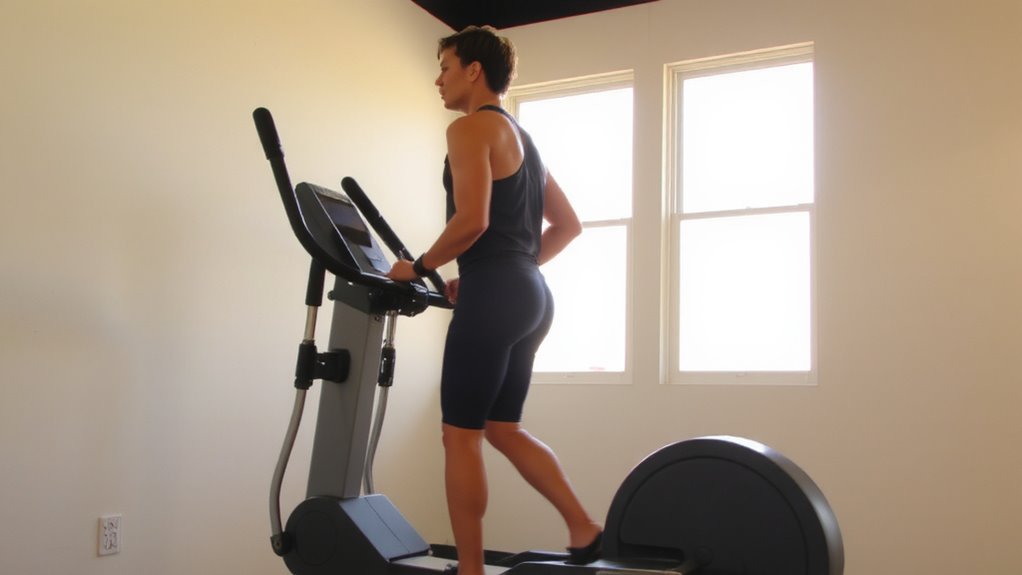
One effective way to sharpen your lower body focus during elliptical training is by using targeted visualization scripts-simple mental cues that align your attention with muscle activation. These scripts enhance body alignment and promote joint stability, ensuring each stride is efficient and controlled. Focus on your glutes, quads, and hamstrings with intention, turning passive motion into purposeful work.
| Visualization | Muscle Focus | Emotional Effect |
|---|---|---|
| Gliding uphill | Glutes | Empowerment |
| Pressing roots into ground | Quads | Grounded strength |
| Smooth piston motion | Hamstrings | Rhythmic confidence |
| Balanced, steady platform | Full leg | Stability and control |
You’ll notice improved form and reduced fatigue when pairing these scripts with proper posture. Unlike passive cardio, this approach demands mental engagement-but the payoff in neuromuscular efficiency is worth it, especially for those using high-resistance settings or recovery-focused routines.
Engage Your Arms With Mental Imagery

You’ve already learned how mental cues can sharpen lower body engagement on the elliptical, turning routine strides into targeted muscle work. Now, shift focus upward: arm tension matters more than you think. Most people underestimate upper body involvement, letting arms swing passively. But by using mental imagery-like pulling ropes or squeezing lemons-you create intentional tension, activating biceps, triceps, and shoulders more efficiently. Combine this with visual cues: picture resistance bands stretching behind you with each pull, or envision your hands gripping heavy weights you’re slowly dragging forward. These cues boost neuromuscular firing, turning a cardio cruise into integrated strength training. Devices with adjustable resistance help, but mental engagement amplifies results regardless of machine specs. Proper form guarantees tension stays in the muscles, not joints. Over time, this focus improves endurance and muscle definition, especially when recovery practices like foam rolling and hydration support tissue repair. Gear matters, but your mind drives the gains.
Sync Your Breath to Movement and Focus
When movement and breath fall out of rhythm, efficiency drops and fatigue sets in faster, so syncing your breathing to each stride or pull on the elliptical isn’t just calming-it’s strategic. You’re aiming for rhythmic breathing that matches your effort: inhale for three strides, exhale for three, creating a pattern that supports endurance. This isn’t just about air intake; it’s about timing your breath to enhance focused motion, turning mechanical repetition into intentional performance. Controlled breath regulates heart rate, stabilizes core tension, and sharpens concentration. With each cycle, you anchor yourself in the present movement, reducing mental drift. Devices like heart rate monitors or cadence sensors can verify ideal pacing, but your breath remains the most accessible feedback tool. Consistent rhythmic breathing improves oxygen delivery, delays fatigue, and deepens mind-muscle connection. When paired with focused motion, it transforms your elliptical session from passive exercise into an act of deliberate training.
Create Your 30-Minute Mental Workout Plan
Building on the rhythm and focus established through synchronized breath and movement, you’re now ready to shape that awareness into a structured mental workout. Use interval pacing to alternate between high-focus visualization and steady-state recovery, enhancing mind-muscle linkage without physical strain. Maintain core stability throughout, anchoring your posture and mental clarity. This 30-minute plan maximizes mental engagement while supporting physical form.
| Phase | Focus Area |
|---|---|
| 0–6 min | Breath-movement sync |
| 7–15 min | Lower body engagement |
| 16–21 min | Core stability emphasis |
| 22–27 min | Interval pacing drills |
| 28–30 min | Integration and reset |
This sequence supports sustained concentration and neuromuscular precision. Proper mental structuring mirrors effective fitness recovery-both demand consistency, the right mental “gear,” and deliberate pacing to optimize results.
Why Visualization Makes Cardio More Effective
Why does visualization elevate cardio performance beyond mere physical exertion? Because it sharpens your focus and directly boosts cardio efficiency. When you picture yourself pushing harder, moving smoothly, or maintaining steady breathing, your body responds as if it’s real. This mental rehearsal strengthens neural pathways, helping you sustain effort longer. You’re not just going through the motions-you’re training your mind to endure, which builds mental endurance. Studies show athletes who use visualization report feeling less fatigued during prolonged sessions, even at the same heart rate. On equipment like ellipticals or treadmills, pairing mental imagery with rhythmic movement enhances coordination and output. It’s not magic-it’s neuroscience. And unlike recovery tools or fitness gear, visualization costs nothing but delivers measurable returns. Regular use conditions your brain to manage stress, pace effort, and recover faster. In short, visualizing isn’t passive-it’s active mental training that makes every minute on the machine count.
On a final note
You’ll find that combining mental imagery with your elliptical workout sharpens focus and improves muscle engagement. Visualization isn’t just for pros-it boosts endurance, form, and efficiency. Paired with quality recovery gear like compression sleeves or foam rollers, these techniques support better performance and faster recovery. Thoughtful design in fitness tools matters, and when matched with mindful exercise, delivers measurable results. It’s practical, science-backed, and worth integrating into your routine.