Swimming Catch-Up Stroke Modifications to Protect Shoulders During Breaststroke Return
You can reduce shoulder strain during breaststroke by slowing your tempo and timing your catch-up stroke precisely-hands meeting before the next kick. Enter hands closer to your shoulders, palms out, to minimize joint stress. Keep elbows slightly below hand level during the pull to protect your rotator cuff. These adjustments improve alignment, decrease compression forces, and build safer muscle memory, especially over long sessions. A few well-placed changes now lead to even greater refinements ahead.
Notable Insights
- Slow your stroke tempo to reduce shoulder compression during peak effort.
- Enter hands close to the shoulder line to minimize rotator cuff strain.
- Keep elbows slightly lower than hands during the pull for safer alignment.
- Time the catch-up so hands meet before the kick to synchronize movement and reduce load.
- Initiate hand entry with fingers first, palms outward, to smooth recovery and protect joints.
Slow Your Breaststroke Tempo to Protect Shoulders

While the breaststroke is often seen as the most joint-friendly swimming style, rushing through the pull phase can place unnecessary strain on your shoulders, especially if you’re logging long swim sessions or returning from injury. Slowing your tempo helps maintain a controlled stroke rhythm, reducing compressive forces in the joint during peak effort. A deliberate recovery pace allows your muscles and connective tissues time to reset, minimizing fatigue-induced form breakdown. This isn’t just about caution-it’s biomechanical efficiency. Fitness recovery gear like compression sleeves may offer support, but they can’t compensate for poor timing. You’re better off refining technique first. Controlled stroke rhythm synchronizes breath, propulsion, and glide, spreading load evenly across the kinetic chain. It also makes it easier to detect early warning signs of strain. Ultimately, a slower, more deliberate approach enhances both performance sustainability and shoulder health, especially when rebuilding post-injury. Let tempo work for you-not against you.
Enter Hands Closer to Reduce Shoulder Strain
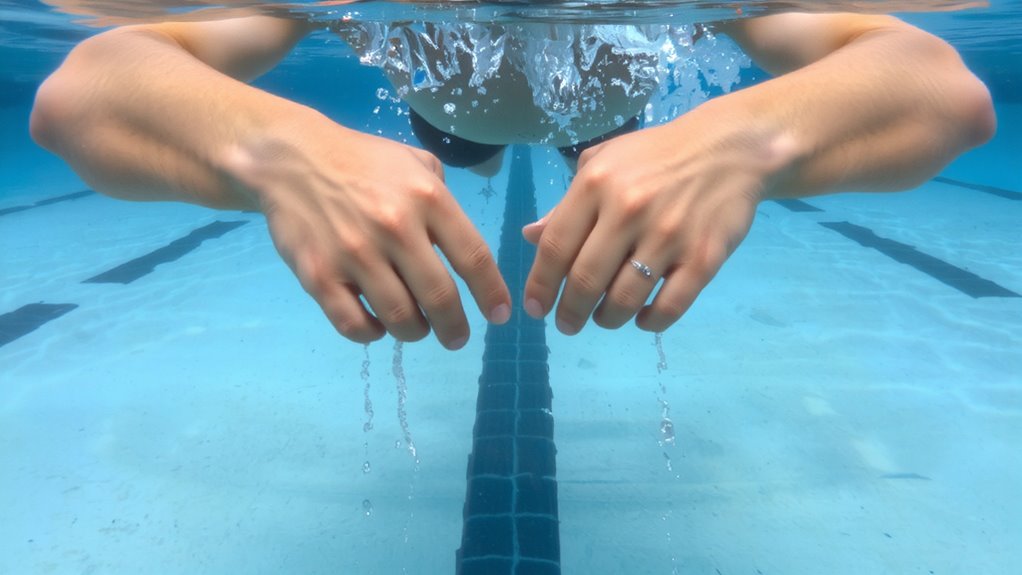
If you’re reaching too wide during your stroke entry, you’re likely forcing your shoulders into excessive external rotation, which can pinch the rotator cuff over time. To reduce this strain, adjust your hand position so your hands enter the water closer to your shoulders, not flared out wide. This small tweak promotes safer joint alignment and decreases stress on the tendons. Proper entry timing also matters-hands should re-enter the water just after the previous stroke completes, avoiding early entry that increases shoulder load. A narrow entry streamlines your catch and supports better force distribution. In swim gear, look for compression sleeves or shoulder supports with targeted stabilization, as these can enhance proprioception and encourage proper mechanics during recovery-focused sessions. When timed right and combined with mindful technique, this modification doesn’t just protect-it improves efficiency. Consistent use of correct hand position and entry timing supports long-term joint health, especially during breaststroke return phases.
Keep Elbows Lower During the Pull Phase
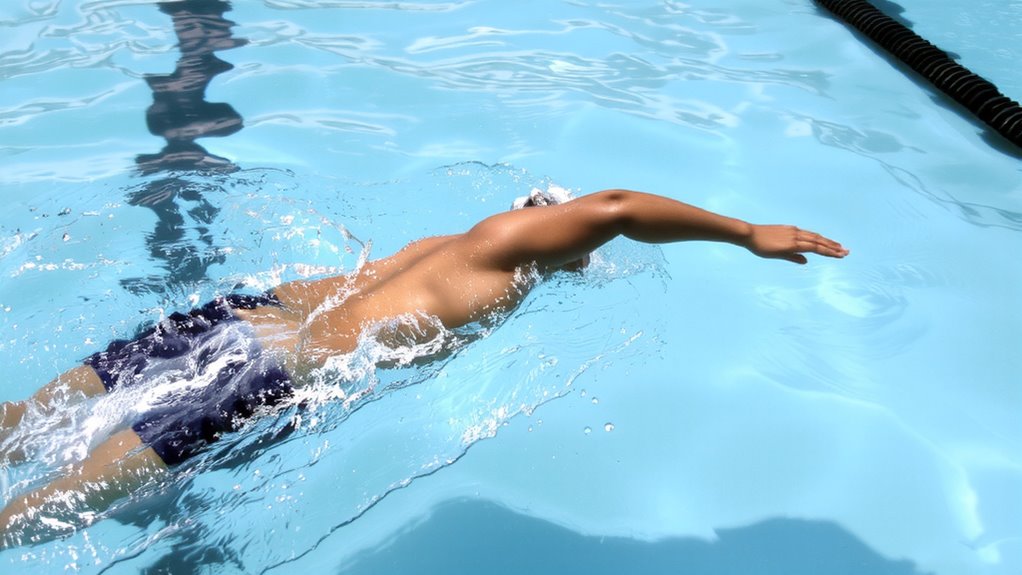
You’ve already adjusted your hand entry to reduce shoulder strain, and now it’s time to refine what happens next-the pull phase. Keeping your elbows lower during this movement improves elbow alignment, reducing unnecessary torque on the joint. When your elbows stay slightly below hand level, you maintain a high-elbow, low-pressure catch that harnesses water resistance efficiently without overloading the rotator cuff. This position also promotes better stroke timing and minimizes shoulder elevation, which decreases the risk of impingement. Unlike gear promising quick recovery, proper technique like this delivers lasting protection by addressing root biomechanics. You’re not just moving water-you’re moving it smartly. Consistent practice reinforces safer muscle memory, making each stroke more sustainable. Over time, this small adjustment can substantially influence shoulder health, especially when returning to breaststroke after injury. It’s not about power; it’s about precision and control under resistance.
Time Your Catch-Up Stroke for Shoulder Safety
How often do you consider when your hands meet during each stroke cycle? Timing your catch-up stroke isn’t just about efficiency-it’s key to shoulder safety. Aligning hand recovery with proper kick timing reduces joint stress and supports a smooth breathing rhythm. Rushing the catch increases strain, especially during breaststroke return when shoulders are vulnerable. Let your hands meet before initiating the next kick to maintain rhythm and joint alignment.
| Phase | Benefit |
|---|---|
| Hand meet before kick | Reduces shoulder load |
| Sync with breathing rhythm | Enhances oxygen flow and control |
| Delayed catch-up | Improves kick timing and stroke balance |
This coordination builds sustainable stroke mechanics, especially crucial during fitness recovery. Properly timed movements reduce reliance on compensatory muscles, letting you train smarter with less wear on soft tissues.
Fix Hand Entry to Smooth Breaststroke Recovery
Why do so many swimmers struggle with shoulder discomfort during breaststroke recovery? Poor hand positioning at entry is often the culprit. When your hands slice into the water too far forward or wide, it increases water impact on the shoulders, straining tendons and joints. To reduce this, enter with hands just ahead of the shoulders, palms facing outward, and fingers breaking the surface first. This subtle tweak lessens resistance and aligns the arms for smoother recovery. You’ll notice less fatigue over time, especially during longer sets. Correct hand positioning isn’t just about form-it’s a protective mechanism. Over time, improper entry can lead to inflammation or chronic pain, undermining your fitness recovery. Using gear like resistance bands or shoulder sleeves post-swim helps, but they won’t fix flawed mechanics. Adjusting hand entry is a foundational change that makes equipment more effective.
Build a Safer Breaststroke Routine Step by Step
While perfecting isolated stroke elements matters, building a safer breaststroke routine means integrating those fixes into a consistent, joint-friendly sequence that supports long-term fitness recovery. You’ll need to focus on Breaststroke timing to avoid rushing the pull and creating shoulder strain. Let your arm recovery follow the breath, then initiate the kick only after your hands pass your shoulders. This order improves kick synchronization and reduces upper-body stress. Think of it as a smooth wave: pull, breathe, glide, kick. Maintain a tight core to prevent hip drop during the kick, which disrupts momentum and alignment. Using fins early on can reinforce proper timing by enhancing feedback. Over time, reduce reliance on gear as muscle memory develops. A well-structured routine prioritizes control over speed, helping protect your shoulders while maintaining cardiovascular benefit. Consistency with this sequence supports sustainable fitness recovery.
On a final note
You’re reducing shoulder strain by adjusting your catch-up stroke, and that’s smart. Slower tempos, proper hand entry, and lower elbows decrease joint load while maintaining propulsion. These tweaks aren’t just safer-they enhance stroke efficiency over time. Quality gear, like supportive swim caps and well-fitted goggles, complements good technique by minimizing distractions. Together, smart form and reliable equipment make recovery easier and training more sustainable, especially during high-volume sessions.