Hip Mobility Drills With Standing Hip Extension With Band
You’re doing the standing hip extension with a band right when your glutes drive the motion, your spine stays neutral, and the band stays taut without jerking. This drill boosts hip mobility and glute activation, especially with proper form and a secure, latex resistance band. Avoid leaning or rotating your hips; focus on control and breath. It’s ideal for warm-ups or recovery days, supporting joint health and posture-plus, there’s more to uncover about optimizing this movement.
Notable Insights
- Perform standing hip extensions with a resistance band to activate glutes and improve hip extension mobility.
- Maintain a neutral spine and stable core to ensure proper alignment during the movement.
- Use a securely anchored band to provide consistent resistance and enhance joint proprioception.
- Incorporate a two-second pause at peak extension to increase time under tension and neuromuscular engagement.
- Integrate the exercise into warm-ups or recovery routines for optimal hip function and mobility gains.
Proper Form for Standing Hip Extension With Band
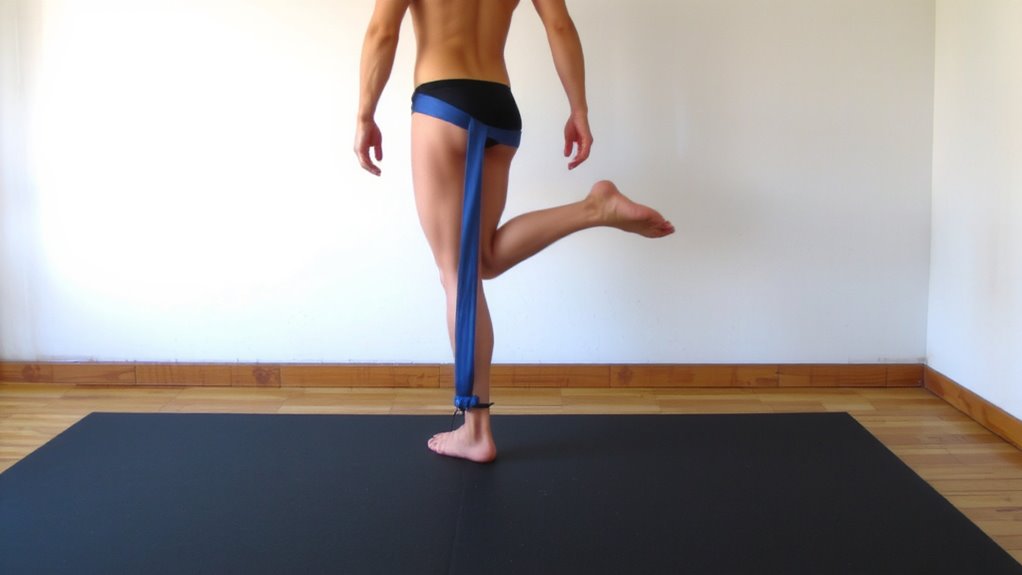
Starting with your feet shoulder-width apart and a resistance band securely looped around your ankle and anchored behind you, focus on maintaining a neutral spine throughout the movement. Your foot positioning should be stable-avoid rotating the supporting foot or shifting your weight excessively. As you extend the banded leg backward, guarantee smooth, controlled motion driven by your glute, not your lower back. You’ll feel consistent band tension when form is correct; sudden spikes or slack suggest poor alignment or jerky tempo. Quality band tension builds strength gradually, making recovery more effective by targeting the hip without straining joints. This drill supports mobility and muscular balance, particularly helpful post-workout or during active recovery. Properly maintained bands-resistant to fraying and consistent in resistance-enhance performance and longevity. Focus on control, not speed, and align each repetition with breath and intention-this movement prepares your hips for load-bearing activities.
Mistakes in Standing Hip Extension With Band
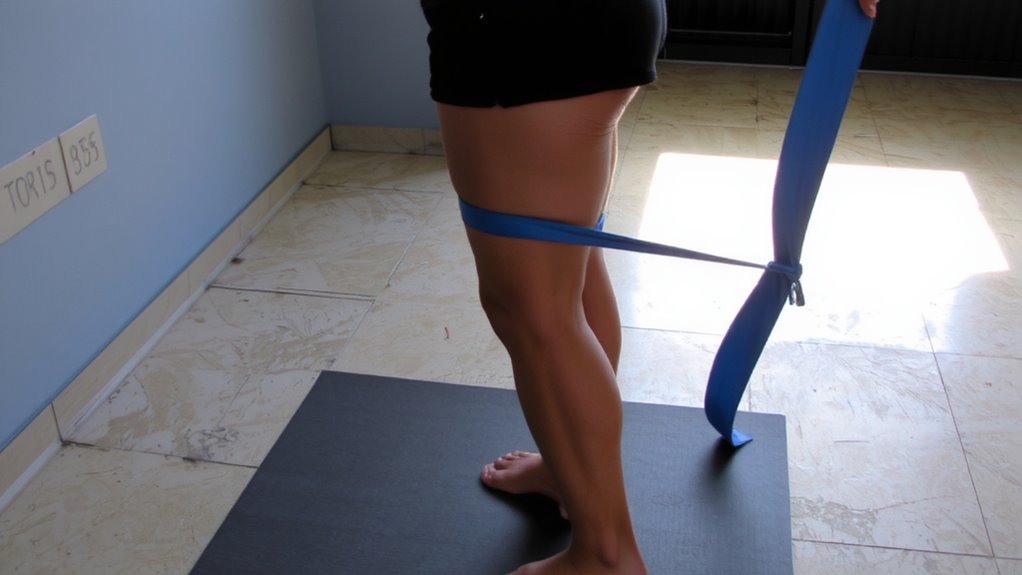
A common mistake you might make during the standing hip extension with a band is allowing your torso to lean forward or your lower back to arch as you extend the leg. This shifts stress from the glutes to the lumbar spine, increasing joint strain and reducing exercise effectiveness. You may also fail to anchor the band securely, leading to band slippage, which disrupts tension and compromises form. Letting your knee bend excessively or rotating the hips can further reduce glute activation. Maintaining a neutral spine and engaging your core helps stabilize your posture. Perform the movement slowly and deliberately to maximize control and muscle recruitment. Avoid jerking or using momentum, as this diminishes gains and raises injury risk. Consistent technique prevents unnecessary joint strain and guarantees the band remains effective throughout the set. Proper setup and mindful execution are essential for peak hip mobility development and long-term joint health.
Choosing the Right Resistance Band
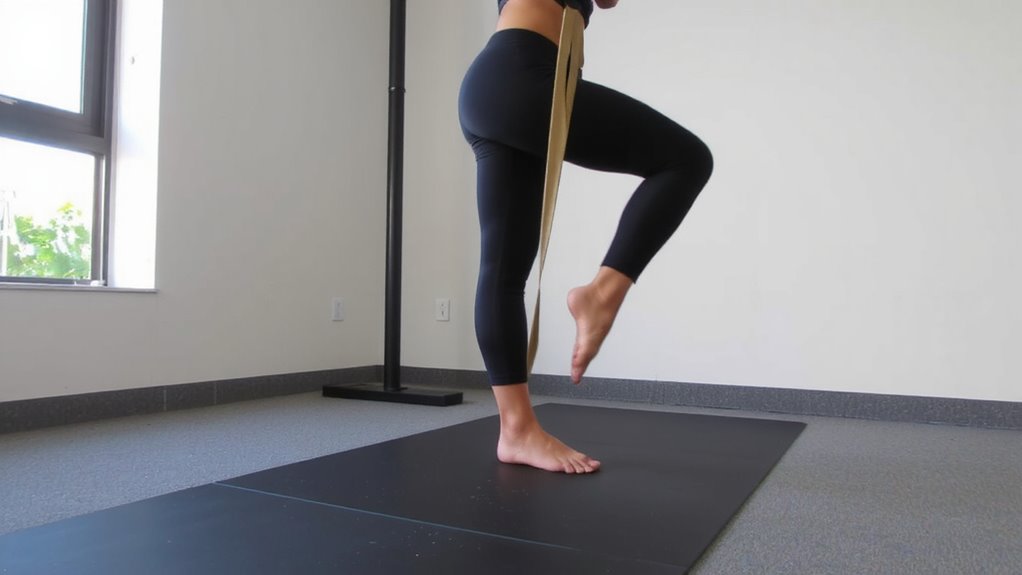
While resistance bands might look simple, picking the right one for hip mobility drills makes a noticeable difference in both safety and progress. You’ll want to take into account band material, as latex offers durability and consistent elasticity, while fabric resists snapping but may slip during movement. For standing hip extensions, your ideal resistance band should match your strength and mobility level-starting light (light or medium resistance levels) guarantees you maintain proper form without straining joints. Too much tension encourages compensation, too little limits neuromuscular activation. Most users benefit from a set offering varied resistance levels, letting you progress gradually. Avoid bands with inconsistent thickness or rough seams, as they create weak points and discomfort. A quality band provides smooth tension, retains elasticity over time, and stands up to weekly use. Choose wisely-it directly affects drill effectiveness and long-term hip function.
3 Glute-Activating Variations of Standing Hip Extension
You’ve picked the right resistance band-durable, smooth, and suited to your strength-so now it’s time to put it to work in ways that truly fire up your glutes. Try standing hip extensions with a bent knee to shift focus from the hamstrings to the glutes, enhancing glute engagement through targeted muscle activation. Another effective variation: perform the movement with a slight torso lean forward while keeping your core tight. This increases tension on the glute maximus and encourages proper pelvic alignment. You can also add a pause at peak extension-holding for two seconds-to amplify time under tension, which boosts neuromuscular signaling. For even greater activation, rotate your leg slightly outward during the extension. These variations aren’t just subtle tweaks; they’re strategic adjustments that improve the quality of each rep. Done right, they make the exercise far more effective for building glute strength and stability.
When to Do Standing Hip Extensions With Band
When should you slot standing hip extensions with a band into your routine for maximum benefit? These drills shine in both warm-ups and recovery phases, making them a smart addition to your timing routines. Use them pre-workout to activate glutes and improve hip mobility, or post-activity to aid muscle relaxation and joint reset. They’re especially useful on rest days to maintain movement quality without strain.
| Phase | Purpose | Frequency |
|---|---|---|
| Warm-up | Activate glutes, prime hips | 2–3 sets of 10–12 reps |
| Recovery | Encourage blood flow, reduce stiffness | Daily or every other day |
| Strength Training | Reinforce form, prevent compensation | 1–2 sets pre-lift |
The resistance band’s low load fits perfectly in recovery phases, supporting joint health without overloading tissues-ideal for long-term mobility maintenance.
How This Move Improves Posture and Balance
Tight hips can quietly undermine your posture and throw your balance off without you even realizing it. The standing hip extension with a band directly counters this by promoting proper pelvic alignment, which begins to realign your entire kinetic chain. When your pelvis isn’t tilted excessively forward or back, your spine maintains a more neutral position, enhancing spinal stabilization. This improved control reduces compensatory patterns during movement, helping you stand taller and move with greater confidence. Over time, consistent use of this drill supports balanced weight distribution across your feet, sharpening proprioception and minimizing sway. You’ll notice better control during daily activities and athletic moves alike. The band adds resistance that reinforces neuromuscular coordination without overloading joints. It’s a simple, effective tool for long-term postural health. With regular practice, this drill becomes a foundational habit-one backed by biomechanics, not hype.
How Hip Mobility Unlocks Glute Strength
Improving hip mobility isn’t just about gaining range of motion-it’s a key driver in activating underused muscles, especially your glutes. When your hips move freely, you achieve better hip alignment, allowing your glutes to engage efficiently during movement. Poor mobility often forces compensatory patterns, where weaker glutes remain dormant while larger muscles take over-this dulls muscle activation and limits strength gains. With consistent band work like standing hip extensions, you encourage proper joint positioning and neuromuscular feedback. This enhances glute recruitment during both drills and functional movements like squats or lunges. Think of it as reprogramming your body to use the right muscles at the right time. Over time, you’ll notice firmer contractions and improved power output. The band adds resistance and sensory cues, refining technique. It’s not flashy gear, but when used right, it supports lasting strength and functional recovery by promoting alignment and precise muscle activation.
On a final note
You’ll find standing hip extensions with a band effective for building glute strength and improving hip mobility when performed with proper form. Choosing the right resistance band matters-light to medium tension works best for activation. Done consistently, this drill enhances posture and balance. It’s a practical addition to recovery routines, especially when using durable, low-stretch bands. Over time, it supports functional movement patterns critical for overall lower-body performance and joint health.