Applying Sequential Compression Boots to Prevent Venous Stasis Post-Surgery
You’re wearing sequential compression boots because they actively prevent venous stasis by mimicking muscle contractions, boosting blood flow when movement is limited. The sleeves inflate in sequence, squeezing your calves to reduce pooling and clot risk-especially essential after surgeries like knee or hip replacements. Proper fit and alignment guarantee effective compression. Skip the mistakes-like wrong sizing or loose straps-and you’ll get real benefits. There’s more to get right for maximum recovery.
Notable Insights
- Apply sequential compression boots to ensure proper fit and effective venous acceleration post-surgery.
- Position the boot so the heel aligns with the sleeve’s contour for optimal compression.
- Secure the boot with adjustable straps to maintain even pressure and prevent slippage.
- Connect tubing firmly to the pump and confirm device operation before use.
- Monitor skin regularly for redness or irritation to prevent complications during therapy.
How Do Compression Boots Prevent Blood Clots After Surgery?
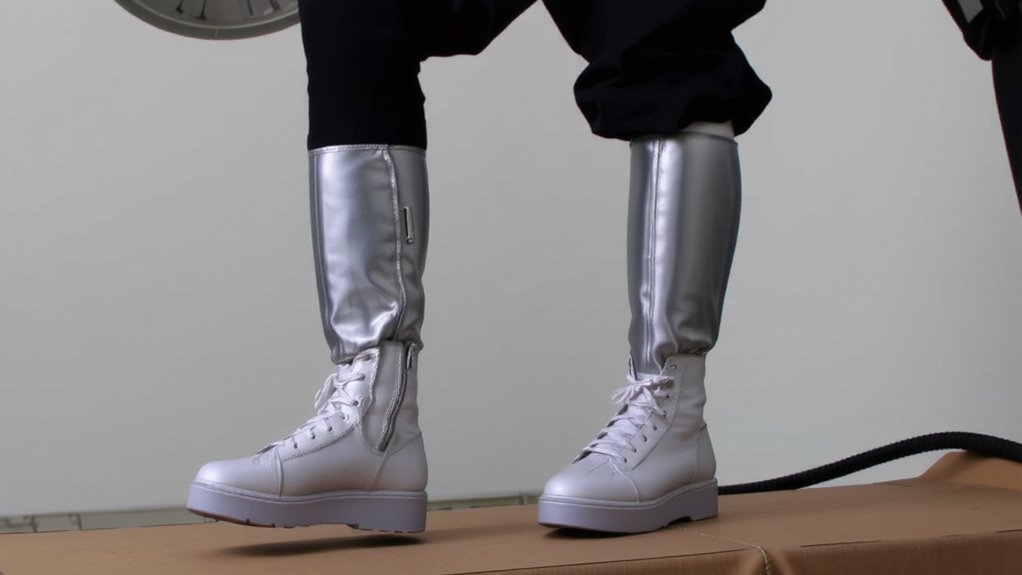
You’ve probably seen those bulky sleeves wrapped around a patient’s legs after surgery-those are sequential compression boots, and they’re doing far more than just looking medical. They provide mechanical stimulation through inflatable chambers that rhythmically compress the calves, mimicking muscle contractions. This action boosts venous acceleration, pushing blood back toward the heart and reducing stagnation. Without movement during recovery, blood can pool and form dangerous clots, but these boots help maintain circulation. Their clinical design targets deep veins effectively, offering a non-invasive defense against deep vein thrombosis. While not a substitute for ambulation, they’re a reliable supplement, especially in early post-op hours. Studies support their role in lowering clot risk, making them standard in many hospitals. Though bulky, their performance justifies the space they take. For recovery gear, few balance simplicity and efficacy quite like compression boots-practical, evidence-backed, and quietly essential in post-surgical care. Top models offer customizable pressure settings and portability for home use, making best compression boots a valuable consideration for extended recovery.
How to Apply Compression Boots: A Step-by-Step Guide
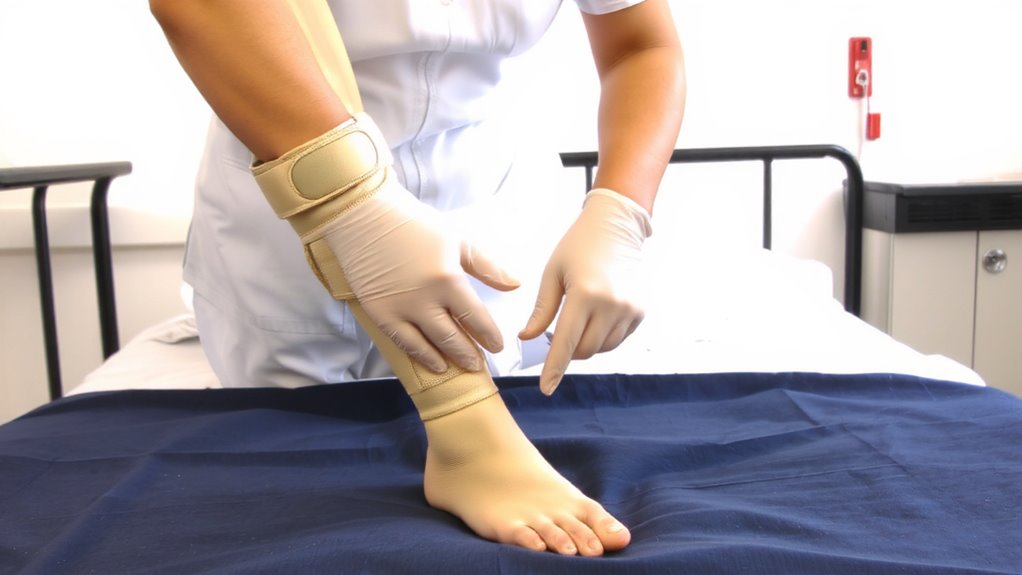
Proper application of compression boots guarantees both safety and effectiveness during post-surgical recovery. Begin by ensuring proper sizing-boots that are too tight restrict circulation, while loose ones reduce compression efficiency. Slide your leg into the sleeve smoothly, aligning the heel with the boot’s contour to prevent bunching. Most models use inflatable chambers that sequentially compress the calf to mimic muscle contractions. Once positioned, perform secure fastening using adjustable straps-these maintain contact without impairing skin integrity. Check that the tubing connects firmly to the pump unit, and confirm the device is powered. Monitor skin regularly for redness or discomfort, adjusting as needed. Properly applied, these boots enhance venous return and reduce clot risk. Their design balances clinical performance with patient comfort, making them a reliable choice in recovery protocols when used correctly. For optimal results, consider investing in medically rated devices such as those reviewed in the best leg compression boots guide.
Which Surgeries Require Compression Boots?
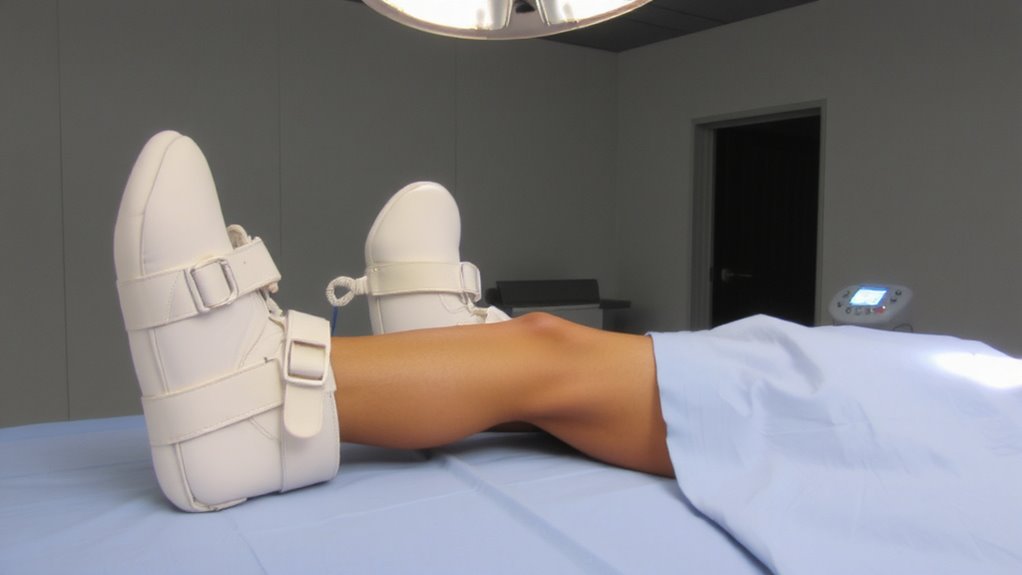
While not every surgical procedure demands additional circulatory support, certain operations considerably benefit from the use of sequential compression boots due to prolonged immobility and elevated clot risk. You’ll most often need them during major orthopedic surgeries like knee replacement and hip arthroplasty, where movement is limited for days or weeks. These procedures markedly disrupt normal blood flow, increasing your chance of deep vein thrombosis. Compression boots help by rhythmically squeezing your calves, mimicking muscle contractions that keep blood moving back to the heart. Think of them as essential recovery gear-just as important as pain control or proper wound care. They’re not just padding; they’re active medical devices designed to prevent venous stasis when you can’t walk. For surgeries involving extended bed rest, especially joint replacements, using them isn’t optional-it’s a smart, evidence-backed step to protect your circulatory health post-op.
7 Mistakes That Reduce Compression Boot Effectiveness
Why do some patients still face circulation issues despite wearing compression boots? It often comes down to mistakes in application. Improper sizing is a major culprit-if the cuffs are too loose or too tight, they can’t effectively stimulate blood flow. Boots that don’t match your limb dimensions may create uneven pressure, reducing their preventive benefit. Incorrect positioning also weakens performance; placing the ankle portion too high or misaligning the air bladders disrupts the sequential compression pattern essential for venous return. Even high-quality boots fail when fitted carelessly. Clinical observations show that both issues compromise the device’s ability to mimic natural muscle pumping. You must guarantee a snug, anatomically precise fit following manufacturer guidelines. Taking time to adjust the boots correctly enhances functionality markedly. These errors aren’t just minor oversights-they directly impact your recovery trajectory by undermining one of the most reliable mechanical interventions for post-surgical stasis prevention.
How Long Should You Wear Compression Boots After Surgery?
How long should you actually keep compression boots on after surgery? Duration guidelines vary based on your procedure and risk for blood clots, but most patients wear them until they’re mobile enough to walk regularly. Typically, that’s 1 to 3 days post surgery, though your doctor will tailor the post surgery timeline to your recovery pace. If you’re having major orthopedic or abdominal surgery, you might need them longer-especially if you’re bed-bound. Compression boots work best when used consistently during early immobility, so skipping sessions or removing them too soon can reduce effectiveness. Always follow your care team’s instructions, since they’ll adjust duration based on your circulation, swelling, and overall progress. While the gear is reliable and built for continuous use, proper fit and skin checks matter just as much as the hours logged. Don’t guess-adhere to clinical advice for best outcomes.
On a final note
You’ll find compression boots effective for reducing venous stasis and preventing post-surgical clots, especially after major procedures like orthopedic or abdominal surgery. When applied correctly and worn consistently, they enhance circulation without drugs. Yet, improper fit or premature removal cuts their benefit. Though not a standalone solution, paired with early mobility, they’re a valuable recovery tool. Their real-world performance hinges on proper use, making them practical-but only if protocols are followed precisely.