Harnessing Hormonal Responses: Strategies for Enhancing Adaptation and Supercompensation Post-Training
You maximize recovery by syncing nutrition, sleep, and stress control to boost hormones that drive adaptation. Post-workout, eat 20–40g protein and 40–60g carbs within 45 minutes to spike insulin and blunt cortisol. Lift heavy to raise testosterone, then support it with zinc and vitamin D. Prioritize deep sleep and overnight fasting to amplify growth hormone. Track HRV, mood, and sleep-these tell you when to push or back off. There’s more to optimizing recovery than gear-timing and biology come first.
Notable Insights
- Consume 20–40g protein and 40–60g carbs within 45 minutes post-exercise to optimize insulin, reduce cortisol, and support anabolic recovery.
- Perform heavy resistance training with 3–5 sets of 5–8 reps at 80–85% 1RM to stimulate natural testosterone release and muscle adaptation.
- Prioritize deep, consistent sleep to enhance growth hormone pulses critical for tissue repair and long-term supercompensation.
- Practice mindfulness and controlled breathing post-workout to lower cortisol, supporting immune function and recovery balance.
- Monitor HRV, sleep, and mood daily to assess recovery status and adjust training intensity for optimal hormonal adaptation.
Prioritize Hormonal Balance for Faster Recovery

Why do some athletes bounce back faster after intense workouts while others struggle to regain their edge? The answer often lies in hormonal balance. When you prioritize recovery, you enable hormonal synergy-where cortisol, insulin, and growth hormone interact constructively to repair muscle and restore energy. Without this balance, even the most rigorous training can backfire. Recovery nutrition plays a pivotal role here: consuming quality protein and carbs within 30–60 minutes post-exercise optimizes insulin response, curbing catabolism and boosting anabolism. This timing isn’t arbitrary-it aligns with the body’s heightened nutrient sensitivity. Products like compression gear or cooling recovery boots may assist circulation, but they’re secondary without internal balance. Data shows athletes who strategically combine post-workout nutrition with sleep and stress management return stronger, faster. In practice, your recovery protocol should hinge less on gadgets and more on leveraging hormonal synergy through disciplined recovery nutrition and lifestyle control.
Increase Natural Testosterone After Workouts
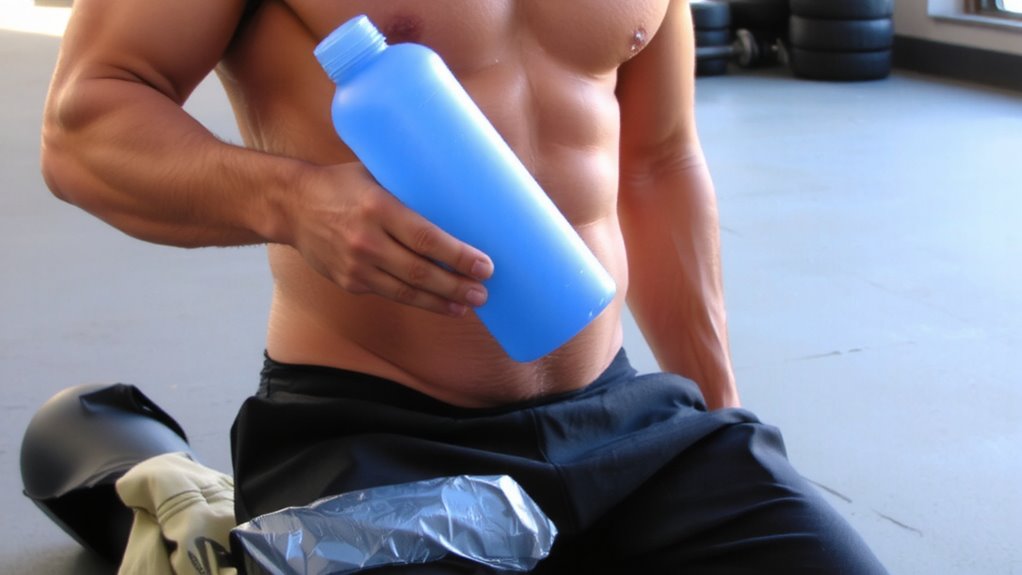
| Strategy | Benefit | Practical Application |
|---|---|---|
| Heavy Resistance Training | Stimulates testosterone release | 3–5 sets of 5–8 reps at 80–85% 1RM |
| Post-Workout Nutrition | Enhances recovery & hormone balance | 20–40g protein + 40–60g carbs within 45 min |
| Zinc & Vitamin D | Supports testosterone production | Include via diet or supplement post-training |
Lower Cortisol to Avoid Overtraining
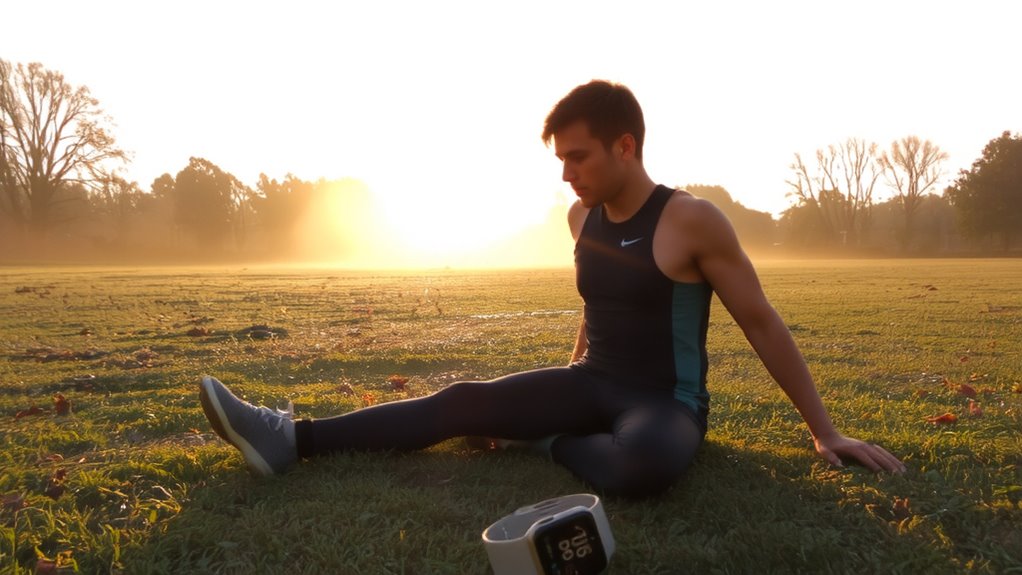
Could your recovery be undermined by an invisible culprit lingering after every intense session? Cortisol, the primary stress hormone, spikes during rigorous training and, if left unchecked, impairs muscle repair and immunity. Chronically elevated levels hinder supercompensation, increasing overtraining risk. You need effective stress management-mindfulness, controlled breathing, or even post-workout quiet time-to signal your body it’s safe to shift from survival to recovery mode. Pair that with smart recovery nutrition: a mix of protein and carbs within 45 minutes post-exercise blunts cortisol’s rise and replenishes glycogen. Ignoring these practices doesn’t just delay gains-it compromises long-term adaptation. Fitness recovery isn’t just about gear or rest; it’s about hormonal balance. Your body responds best when you actively lower cortisol through consistency in lifestyle and post-workout habits.
Stimulate Growth Hormone With Sleep and Fasting
What if the most powerful recovery tool wasn’t in your gym bag but in your daily routine? You can substantially boost growth hormone (GH) naturally-without supplements or gear-by prioritizing deep sleep and intermittent fasting. During deep sleep, especially in the first few cycles, your body releases pulses of GH essential for tissue repair and muscle growth. Skimping on quality rest sabotages this process, no matter how advanced your fitness tracker. Intermittent fasting, particularly 14–16 hour overnight fasts, lowers insulin and elevates GH to mobilize fat and support recovery. Unlike recovery gadgets, these methods are free and physiologically proven. While compression gear or percussive therapy may feel helpful, they don’t match the hormonal impact of solid sleep and timed fasting. You’re not just recovering-you’re optimizing biology.
Time Meals to Accelerate Hormonal Recovery
You’ve already seen how sleep and fasting can amplify growth hormone naturally, but timing your meals is just as powerful when it comes to shaping the hormonal environment for recovery. Strategic meal timing boosts insulin sensitivity and supports ideal nutrient partitioning-directing fuel toward muscle repair instead of fat storage. Consuming protein and carbs within 45–60 minutes post-workout maximizes anabolic signaling. Here’s how key timing strategies compare:
| Strategy | Benefit |
|---|---|
| Pre-workout meal (1–2 hrs prior) | Enhances energy and nutrient partitioning during training |
| Immediate post-workout nutrition | Spikes insulin to shuttle amino acids into muscles |
| Nighttime casein intake | Slows amino acid release, supporting overnight recovery |
| Intermittent feeding windows | Helps align meal timing with circadian hormonal rhythms |
| Spaced protein feedings (every 3–4 hrs) | Sustains muscle protein synthesis throughout the day |
This approach refines recovery at the hormonal level.
Adjust Training Intensity for Optimal Adaptation
Why do some athletes plateau despite relentless effort? You’re likely pushing too hard without adjusting training intensity properly. Consistently high-intensity sessions, combined with excessive training frequency and exercise volume, can disrupt hormonal balance, elevating cortisol and impairing recovery. Instead of driving adaptation, this approach may stall progress. To optimize supercompensation, vary intensity using periodized blocks-rotate between heavy, moderate, and light loads. This modulation supports anabolic hormone release, like testosterone and growth hormone, while managing fatigue. Research shows that strategic deloading weeks enhance neuromuscular recovery and performance gains. Monitor how your body responds to changes in load, but avoid obsessive tracking-focus remains on structured progression. Adjusting intensity isn’t a sign of weakness; it’s a scientifically sound method to align stress with recovery capacity, ensuring consistent adaptation and long-term improvement in strength and endurance.
Track Sleep, HRV, and Mood for Recovery Feedback
How well are your body’s signals guiding your recovery? Paying attention to sleep quality, heart rate variability (HRV), and daily mood gives you real-time feedback on how effectively you’re adapting. Poor sleep or a declining HRV often precedes fatigue, signaling that your nervous system is strained-likely from excessive training or stress. Tracking these metrics isn’t just data collection; it’s smart recovery tracking. Devices like WHOOP or Oura Ring offer accurate HRV and sleep staging, helping you spot trends before performance drops. But don’t ignore subjective markers-your mood reflects hormonal balance, including cortisol and serotonin. When mood sours alongside poor sleep quality, it’s a red flag. Consistently logging these three elements lets you adjust training before overreaching occurs. It’s not about avoiding stress-it’s about managing it with precision.
On a final note
You’ve learned that balancing hormones like testosterone and cortisol speeds recovery and boosts adaptation. Smart meal timing, quality sleep, and controlled training intensity all drive supercompensation. Tracking HRV, sleep, and mood gives real feedback on recovery status. While fitness gear like recovery boots or wearables can support the process, they’re secondary to hormonal health. Ultimately, optimizing internal responses delivers better, more sustainable gains than gear alone ever could.