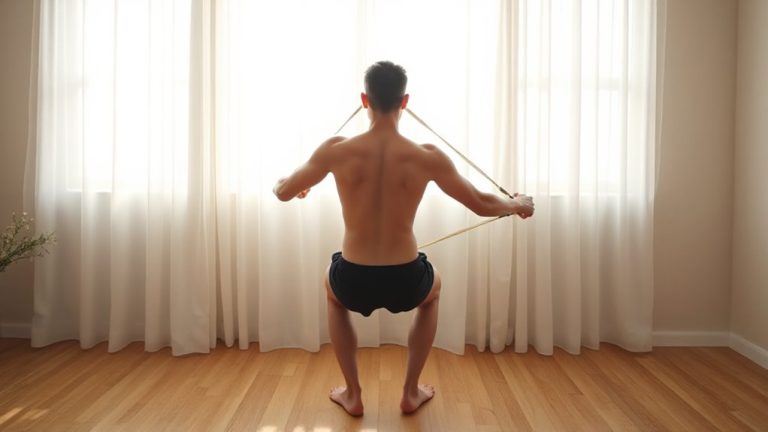
Functional Strength Drills for Improving Landing Mechanics in Volleyball Spikers
You absorb up to seven times your body weight when landing from a spike, so functional strength drills are essential. Unlike traditional lifting, these train your core, hips, and legs to work together, improving joint alignment and reducing injury risk. Exercises like single-leg landings, drop jumps, and step-downs build neuromuscular control and eccentric strength. Add resistance band walks and lateral bounds to stabilize knees and ankles. Pair with foam rolling to maintain tissue quality and support faster recovery. Master these movements and you’ll uncover even more ways to stay powerful and injury-free.
Notable Insights
- Perform single-leg landings to enhance balance and neuromuscular control during volleyball jumps.
- Use drop jumps to improve plyometric strength and correct knee alignment on landing.
- Incorporate lateral bounds to develop multiplanar stability and force absorption capabilities.
- Execute step-downs to strengthen eccentric control and prevent knee valgus during impact.
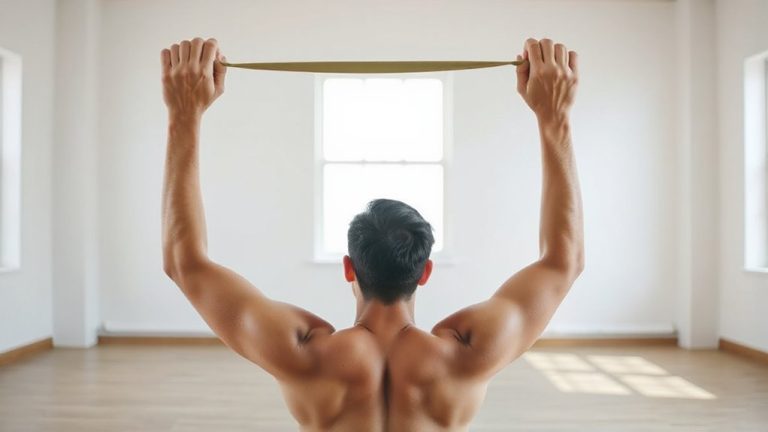
- Add resistance band walks to reinforce hip-knee synergy and improve joint stabilization.
Why Poor Landings Cost Spikers Their Edge
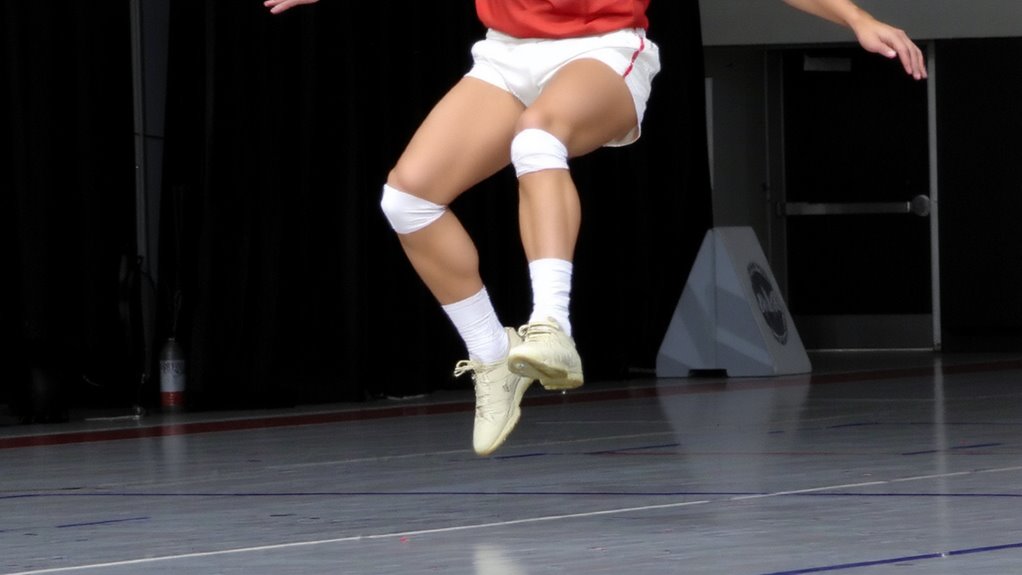
Why do so many volleyball spikers lose hard-earned momentum after a powerful attack? Because poor landings sabotage your performance and increase injury risk. You absorb up to seven times your body weight upon impact, and without proper control, knee valgus often occurs-your knees cave inward, stressing ligaments and reducing stability. This misalignment, paired with ankle instability, compromises force distribution and slows recovery between plays. You’re not just losing balance; you’re undermining the very power you generated mid-air. Functional fitness gear like resistance bands and balance discs can help correct these flaws, but only if used consistently. Overreliance on traditional gear without addressing movement patterns offers false security. Training must emphasize joint alignment and proprioception. You can’t afford to ignore these mechanics-every faulty landing chips away at your edge, limiting explosiveness and long-term resilience on the court. Choosing the right footwear, such as best volleyball shoes, can significantly improve impact absorption and lateral support during landing.
Functional Vs. Traditional Strength: What You Must Know
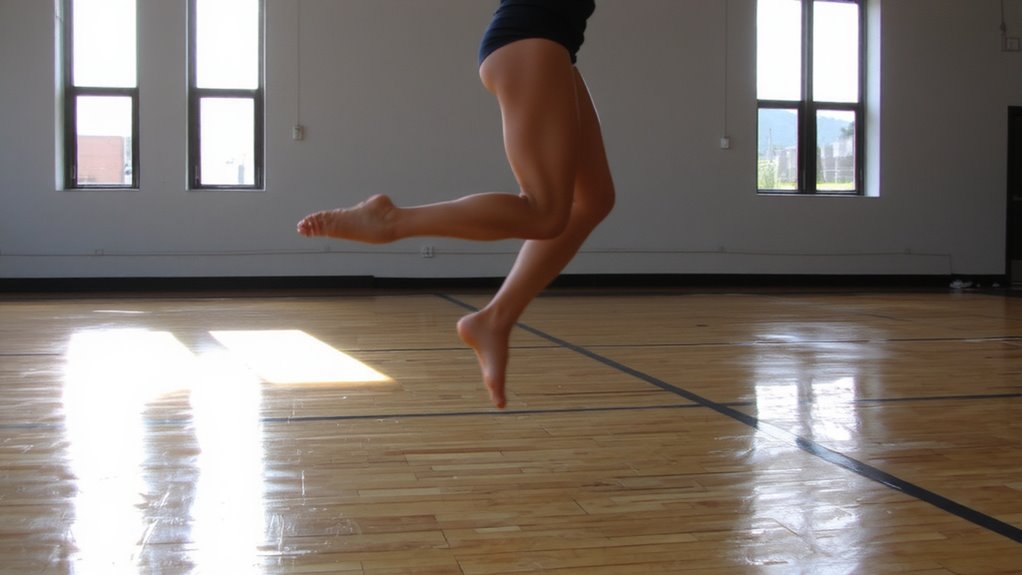
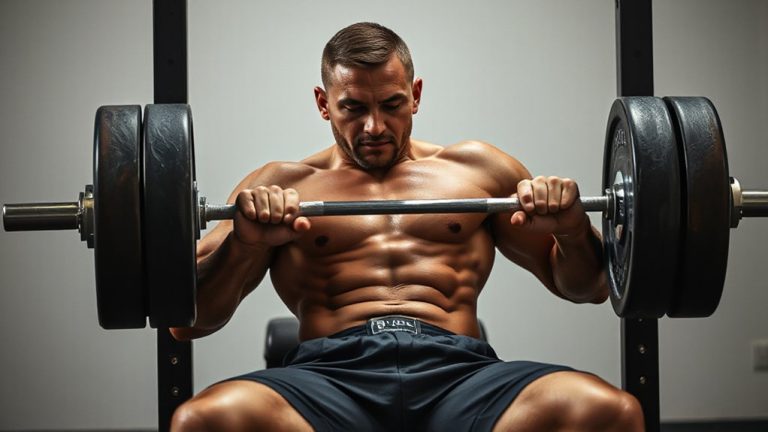
While traditional strength training builds raw muscle power through isolated movements like bench presses and leg curls, functional strength focuses on integrated, sport-specific patterns that mimic the demands of spiking-launching, rotating, landing-so you develop control where it matters most. You’re not just building strength; you’re refining muscle activation across chains of movement that directly impact performance. Unlike traditional lifts, functional drills enhance neuromuscular coordination and ground reaction force efficiency, helping you absorb load safely upon landing. That means your body handles impact smarter, reducing injury risk. Traditional training has value, sure, but without functional carryover, you’re missing the full equation. You need exercises that simulate real volleyball mechanics-those that engage core, hips, and legs together. In the end, functional strength doesn’t replace traditional work; it upgrades it, making your muscle activation more effective and your movement more resilient.
The Right Way to Jump and Land After a Spike
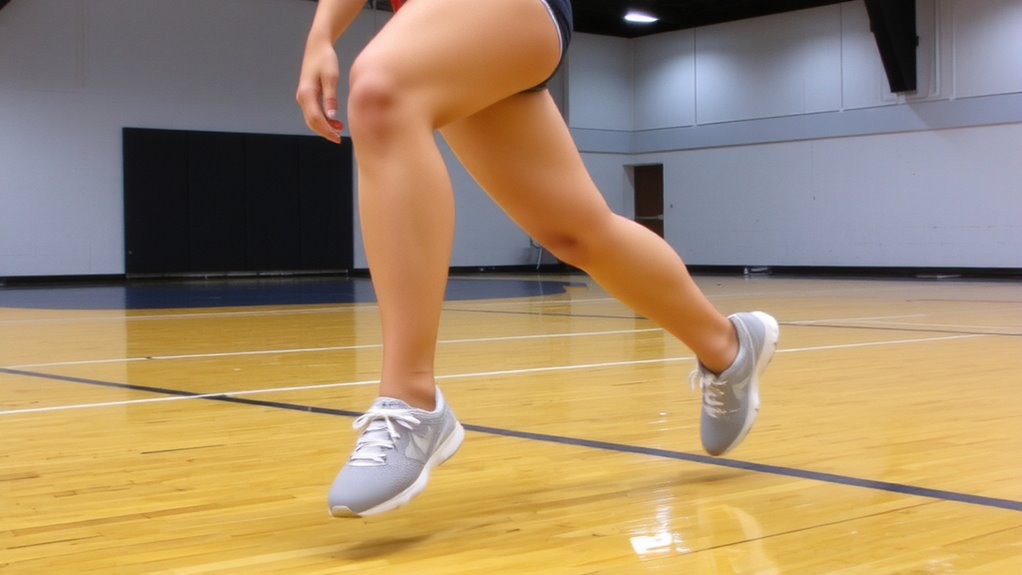
How often do you think about what your body does the moment you come back down after a spike? Most players focus on height and power, but how you land matters just as much. The right way starts mid-air-you’ve already set your landing zone. As you descend, engage your core and prepare for impact. Land softly on the balls of your feet, rolling back to the heels with knees bent and hips slightly back. This guarantees balanced alignment, reducing stress on joints. Keep your chest up and shoulders back-maintain proper posture throughout. Avoid letting knees cave inward; track them over toes. Your spine should stay neutral, not rounded or over-arched. Doing this consistently builds safer movement patterns and guards against injury. It’s not just about strength-it’s control. Repeating correct landings conditions your neuromuscular system, making good mechanics automatic during fast gameplay.
5 Drills for Total Jump-Landing Control
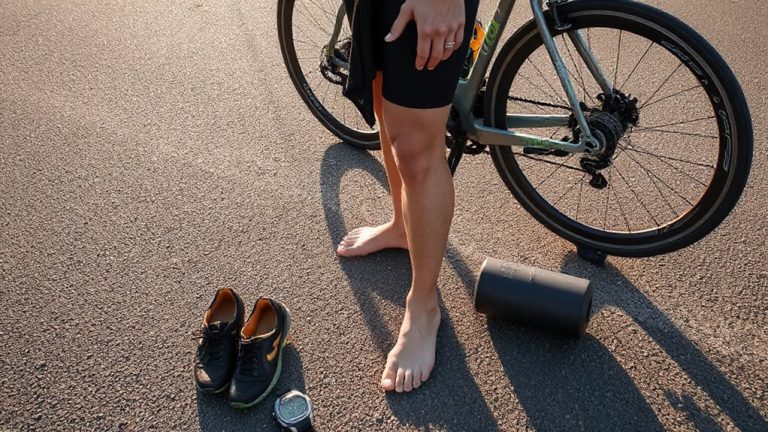
Once you’ve mastered the mechanics of jumping and landing, it’s time to lock in that control through targeted drills that sharpen your neuromuscular precision. Drills like single-leg landings, drop jumps, and lateral bounds build plyometric precision by reinforcing proper joint alignment and muscle response. You’ll train your body to absorb force efficiently, reducing error on the court. Incorporating balance integration into each movement-such as holding a landing for three seconds on an unstable surface-trains proprioception and stability simultaneously. These drills aren’t just about power; they’re about control under fatigue. Perform them barefoot or in minimalist court shoes to enhance ground feedback. Consistency matters more than volume: 3 sets of 6–8 reps, 3 times weekly, yield measurable improvement. Over time, your landings become automatic, accurate, and safer-critical when split-second decisions define performance.
Strong Ankles and Knees = Safer Landings
Your landing’s stability starts with the strength of your ankles and knees-these joints bear the brunt of every spike-driven descent, absorbing up to five times your body weight in impact. Strong, resilient joints improve knee alignment and enhance ankle mobility, reducing injury risk during rapid deceleration. Functional training must target these areas deliberately. Supportive gear like knee straps for squats can further protect the joint during high-impact training phases.
| Exercise | Focus | Benefit |
|---|---|---|
| Calf Raises | Ankle mobility | Builds tendon resilience |
| Terminal Knee Extensions | Knee alignment | Reinforces patellar tracking |
| Resistance Band Walks | Hip-knee linkage | Supports joint synergy |
| Step-Downs | Eccentric control | Improves landing mechanics |
| Ankle Dorsiflexion Drills | Mobility range | Enhances ground adaptation |
These drills, performed consistently, condition connective tissues and refine neuromuscular responses. You’ll not only withstand repetitive landings but also maintain form under fatigue-crucial in late-set scenarios. Equipment like resistance bands and stable platforms amplifies specificity, making gains more transferable to actual play.
Stabilize Single-Leg Landings Like Pros
Most elite spikers don’t just jump higher-they land smarter, and a huge part of that comes from mastering single-leg stability under dynamic conditions. You need balance control that reacts instantly the moment your foot hits the floor. That’s where proprioception training becomes non-negotiable. Drills like single-leg landings on unstable surfaces or quick drop-step stabilization force your neuromuscular system to adapt in real time, sharpening joint awareness and reducing injury risk. These movements mimic game-like scenarios where fatigue and uneven footing challenge your form. Elite athletes integrate these exercises not just for performance, but for sustainable play. You’ll notice better knee alignment, reduced wobble, and faster recovery between spikes. The right approach builds resilience-your body learns to absorb force efficiently, protecting joints through precision, not just brute strength. Consistent proprioception work transforms shaky landings into controlled, confident stops.
Program These Drills Into Weekly Practice
How do you turn effective drills into lasting performance gains? You program them consistently and smartly into weekly practice. Start with periodization planning-phase your training so landing mechanics peak during competition. Early in the season, focus on form and control; later, shift to explosive reps under fatigue. Slot functional strength drills 2–3 times per week, aligning them with skill sessions to reinforce neuromuscular habits. Use exercise variation to prevent adaptation plateaus: rotate single-leg landings, resisted jumps, and deceleration catches every 3–4 weeks. This keeps the nervous system responsive and reduces overuse risk. Pair these drills with recovery strategies like foam rolling and proper sleep, since tissue resilience supports motor learning. Quality execution beats volume-track landing technique weekly. With structured integration, these drills don’t just improve mechanics; they become automatic, reducing injury risk and boosting in-game performance through smarter, stronger movement patterns. For optimal recovery, consider using a high-density foam roller to release muscle tension and enhance tissue quality.
On a final note
You’ve learned that proper landing mechanics aren’t just about power-they’re about control and long-term resilience. These functional drills sharpen neuromuscular coordination, reduce joint stress, and translate directly to safer, more explosive movements on the court. Unlike traditional strength work, they mimic real-game demands, improving proprioception and stability where it matters most. When paired with quality recovery gear-like compression sleeves that enhance circulation and durable ankle supports-you’ll maintain performance and lower injury risk throughout the season.