Breath-Coordinated Walking Intervals Using Box Breathing for Autonomic Regulation
You can practice breath-coordinated walking by matching your steps to a 4-4-4-4 box breathing rhythm: inhale for four steps, hold for four, exhale for four, and pause for four. This pattern supports autonomic regulation, lowers stress, and improves mental focus without needing fitness gear. The rhythm stabilizes heart rate variability and enhances neuromuscular efficiency. For best results, walk with a midfoot strike and upright posture. Adjust to a 3-3-3-3 cycle if it fits your natural stride better. Ideal practice times include early morning or post-stress periods. Consistency builds resilience more effectively than relying on technology-there’s more to discover about refining the technique.
Notable Insights
- Align each phase of box breathing (inhale, hold, exhale, pause) with four steps to establish a rhythmic gait-breath pattern.
- Adjust step-breath intervals to 3:3:3:3 or 2:2:2:2 if better suited to natural walking cadence and comfort.
- Practice breath-coordinated walking in quiet environments to enhance focus and support autonomic nervous system balance.
- Use consistent inhalation and exhalation timing to stabilize CO₂ levels and activate the parasympathetic nervous system.
- Optimize timing by walking during low-stress periods like morning or evening to improve vagal tone and recovery.
How to Walk and Breathe in Sync
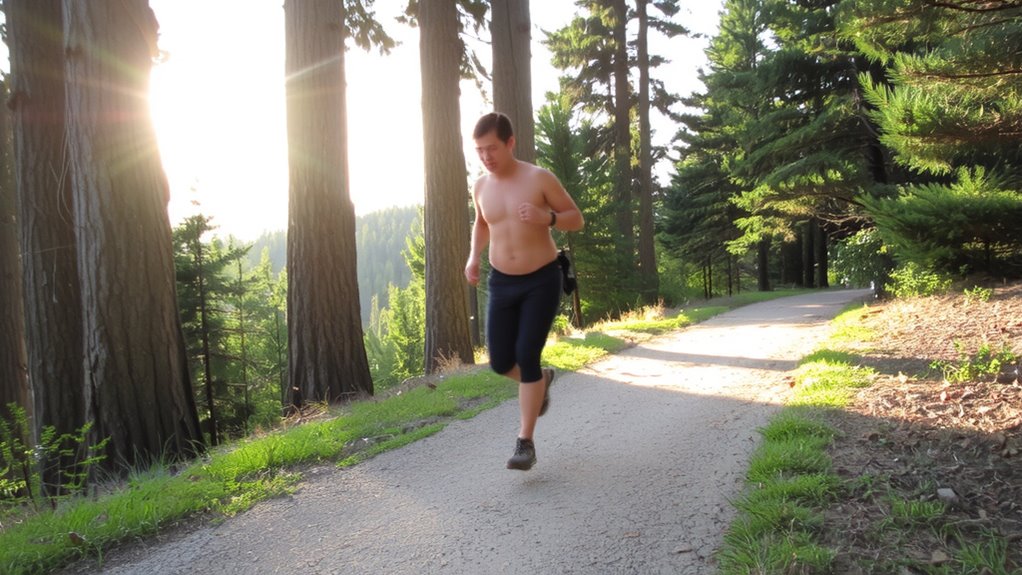
Rhythm is key when syncing your breath with each step. You’ll want to focus on step timing and breath alignment to build a sustainable walking practice. Inhale for four steps, filling your lungs completely, then exhale steadily for another four. This box breathing pattern creates a predictable cadence that supports endurance and form. Good fitness gear, like supportive shoes and moisture-wicking clothing, enhances comfort so you can maintain alignment without distraction. The right footwear improves step timing by promoting even strides, reducing fatigue. Breath alignment isn’t just about counting-it’s about syncing movement with respiratory cycles to optimize recovery. Over time, this method conditions both body and nervous system. While trackers and smart apparel can monitor progress, they’re not essential. Simplicity works best. Consistent practice trumps gear. You’re building resilience with every mindful step, aiding long-term fitness recovery through disciplined, breath-coordinated walking.
Why Breath-Coordinated Walking Calms Your Nervous System

You’ve already seen how syncing your breath with each step builds a steady rhythm, one that supports endurance and form through controlled inhalations and exhalations. This coordination does more than improve performance-it triggers nervous system synchronization, shifting your body from stress-dominant mode to a calmer state. When your breath rhythm harmony aligns with movement, the vagus nerve activates, promoting parasympathetic activity. That means lower heart rate, reduced muscle tension, and improved recovery. Unlike generic walking, breath-coordinated strides encourage predictable oxygen flow, stabilizing CO₂ levels and preventing fight-or-flight triggers. Fitness recovery isn’t just about rest-it’s about regulation, and this method offers measurable autonomic balance. Well-designed fitness gear, like supportive footwear or moisture-wicking apparel, enhances the experience by minimizing distractions, letting you maintain focus on breath and pace without discomfort interrupting the rhythm.
Use Box Breathing to Stay Focused on the Move

How do you maintain focus when your mind starts to wander mid-stride? Box breathing offers a simple solution. You inhale for four counts, hold for four, exhale for four, and pause again for four-this rhythm builds breath awareness and sharpens mental presence. As you walk, syncing your breath this way turns each step into an anchor, pulling attention back from distractions. It’s not just calming; it’s a tool for sustained concentration. Unlike fitness gear that promises quick recovery, box breathing requires no maintenance, no charging-just practice. Studies show rhythmic breathing patterns enhance parasympathetic activation, which supports mental clarity during movement. You’re not just walking; you’re training focus. The beauty lies in its accessibility: no special equipment needed. Whether you’re recovering from a workout or managing daily stress, this method improves cognitive control. It’s effective, evidence-based, and easily integrated into any walking routine, making it a reliable strategy for staying present on the move.
Pick Your Ideal Step-Breath Rhythm
Box breathing sets a steady mental pace, but matching that pace to your stride turns the practice into something dynamic. You can align your step timing with your breath rhythm to enhance coordination and efficiency. Try a 4-step inhale, 4-step hold, 4-step exhale, and 4-step pause-this mirrors classic box breathing and stabilizes your movement. If that feels off, adjust gradually: a 3:3:3:3 or 2:2:2:2 pattern might better suit your natural gait. The key is consistency, not rigidity-your ideal rhythm should feel sustainable, not forced. Breath rhythm influences heart rate variability, and when synced with step timing, it supports autonomic balance. Wearable fitness gear with cadence tracking can help fine-tune this alignment. Over time, this synchronization improves neuromuscular efficiency and promotes recovery by reducing sympathetic overdrive. It’s not just about pace-it’s about integrating breath and motion for smoother, more regulated exertion.
When to Practice for Stress and Clarity
When does breath-coordinated walking offer the greatest benefit for stress relief and mental clarity? The ideal timing is during shifting periods-early morning or just before bed-when your body and mind are most receptive to autonomic regulation. Practicing then helps set a calm tone for the day or unwind a busy nervous system. You’ll notice sharper mental clarity when integrating box breathing into low-distraction environments, like quiet streets or nature trails. Midday sessions, especially after work stressors, also provide measurable recovery benefits. Aim for consistent rhythm-not duration-for steady gains. Unlike passive rest, this active recovery engages both body and mind, supporting cardiovascular health and cognitive reset. While fitness gear like heart rate monitors can enhance feedback, they’re optional. Your breath and steps are the core tools. With deliberate practice at the right times, you build resilience and focus without costly equipment or complex setups.
Fix Common Breathing-Walking Problems
You’ve likely noticed how breath-coordinated walking improves focus and eases stress, especially when practiced in the quiet hours of morning or evening. But if your rhythm feels off, check your posture alignment-slouch嘟 restricts diaphragmatic movement and disrupts your box breathing pattern. Stand tall with shoulders relaxed and spine neutral to support steady airflow. A common issue is mismatched foot strike timing; landing heavily on your heels can throw off breath synchronization. Aim for a midfoot strike, allowing smoother shifts between steps and breath phases. This promotes cadence efficiency and reduces joint strain, especially during longer sessions. Breath-walking problems often stem from ignoring biomechanics, so align your form with your breathing cycle. Correcting these elements enhances autonomic regulation, turning simple walks into effective recovery tools. Proper technique, more than gear, determines success.
On a final note
You’ve learned how breath-coordinated walking, especially with box breathing, supports autonomic regulation. This practice enhances fitness recovery by balancing sympathetic and parasympathetic activity. When paired with quality footwear and moisture-wicking apparel, performance and comfort improve. These gear choices reduce strain, letting you focus on rhythm and breath. It’s not just walking-it’s a deliberate, recoverative practice backed by respiratory and neuromuscular control, ideal for mental clarity and physiological resilience.