Controlled Downhill Sprinting to Gradually Increase Eccentric Load on Quads Post-Injury
You can use controlled downhill sprinting to safely increase eccentric load on your quads after injury. A 3–5% incline at 60–80% effort optimizes muscle activation while minimizing knee strain. This method boosts strength, collagen alignment, and neuromuscular control through progressive overload. Start with 4–6 reps, 2–3 times weekly, using proper footwear and feedback devices. You’ll soon discover how terrain and tempo adjustments fine-tune recovery and performance.
Notable Insights
- Downhill sprints provide controlled eccentric loading to enhance quad strength and tissue adaptation post-injury.
- Start with a 3–5% incline at 60–70% effort to optimize quad engagement while minimizing knee strain.
- Begin with 4–6 reps, 2–3 times weekly, allowing 48 hours between sessions for recovery.
- Progress gradually by increasing reps weekly, ensuring bilateral symmetry and proper form.
- Use footwear with heel cushioning and wearable feedback to monitor load and reduce overuse risk.
Emphasize Eccentric Loading in Quad Rehab
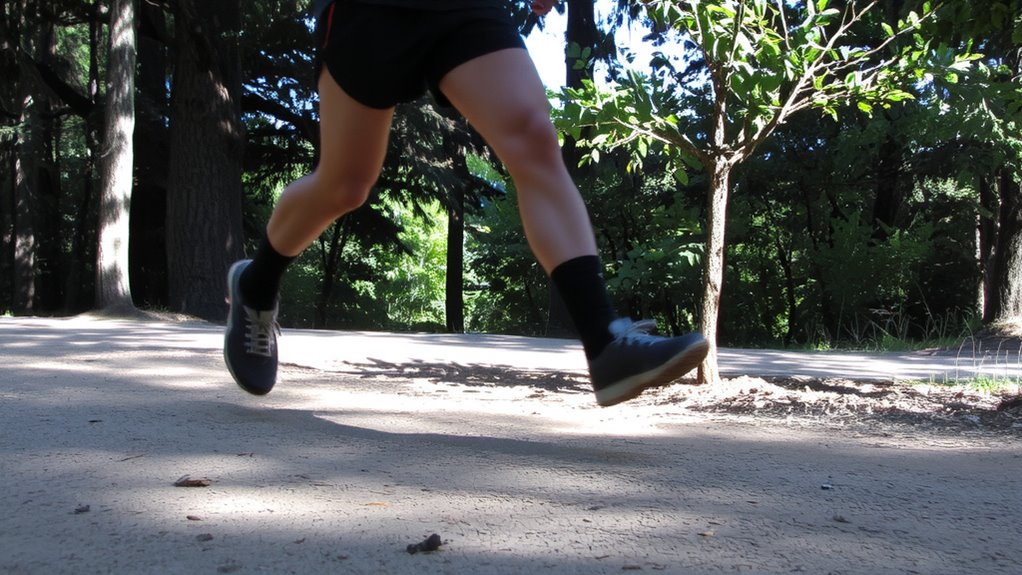
While traditional rehab often prioritizes gentle, low-resistance movements, you’ll likely see better strength retention and tissue adaptation when eccentric loading is introduced early in quad recovery. This phase of muscle lengthening under tension boosts muscle activation more effectively than concentric work alone, helping rebuild quad strength with greater neuromuscular efficiency. Controlled eccentric training also enhances collagen alignment in healing tendon and muscle fibers, contributing to more resilient tissue. You’ll find that tools like weighted vests or resistance bands allow adjustable loads, supporting progressive overload without compromising form. When used correctly, such fitness gear improves movement specificity and supports long-term injury prevention. Monitoring tempo and range of motion guarantees you stay within therapeutic thresholds. Though it demands attention to detail, integrating eccentric focus isn’t just effective-it’s strategic. It prepares the quads to handle real-world forces, making it a cornerstone of modern rehab protocols.
Use Downhill Sprints to Target Quads Safely
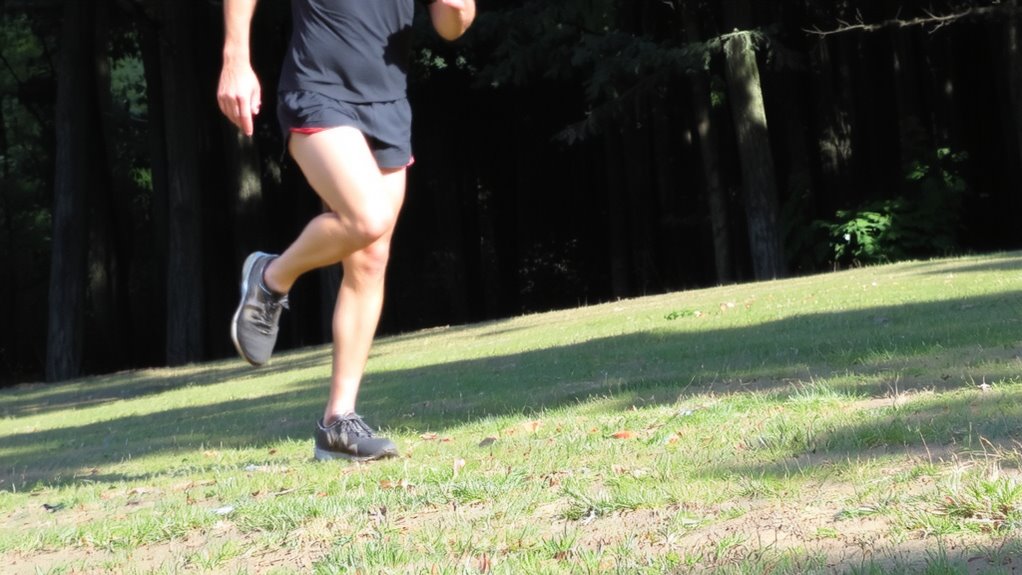
Downhill sprints aren’t just for elite runners chasing speed-they’re a calculated tool for targeting quads with precision during rehab. You’re engaging in controlled eccentric loading, which safely ramps up demand on the quadriceps without excessive joint strain. This promotes quad dominance in a functional way, helping restore strength where it’s needed most post-injury. By modulating intensity through slope and form, you encourage balanced muscle symmetry-critical for preventing compensatory patterns. Unlike flat-ground sprints, downhill efforts emphasize lengthened muscle contractions, enhancing tissue resilience. When paired with proper recovery gear like compression sleeves and monitored through wearable feedback devices, you reduce overuse risk. You’re not just rebuilding strength-you’re refining movement quality. It’s not about speed; it’s about neuromuscular re-education, controlled stress, and incremental progression that supports long-term joint stability and performance readiness.
Pick the Best Incline and Speed for Quad Loading
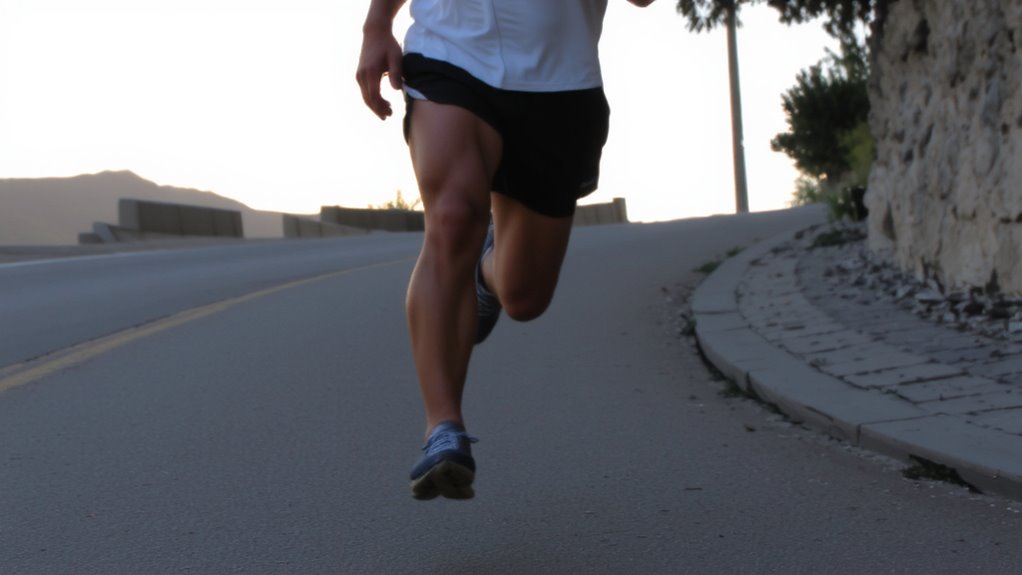
Since not all slopes deliver the same training effect, you’ll want to aim for a 3–5% incline to optimize quad loading without overstressing the knees. Proper incline selection guarantees effective eccentric engagement while minimizing joint strain. Pair this with precise speed calibration-start at 60–70% of max effort and adjust based on form and fatigue. Going too steep or too fast increases injury risk; too shallow or slow reduces training benefit.
| Incline (%) | Speed (% Max Effort) |
|---|---|
| 3 | 60–70 |
| 4 | 65–75 |
| 5 | 70–80 |
This range balances load and control, letting you progressively challenge the quads safely. Always reassess as recovery progresses-small tweaks in incline or speed can notably alter muscle demand.
Program Reps and Frequency for Safe Progression
You’ve dialed in the right incline and speed to load your quads safely, so now it’s time to structure how often and how much you do. Start with 2–3 sessions per week, allowing 48 hours between bouts for recovery-this balances stimulus and adaptation without overloading healing tissue. Begin with 4–6 reps per session, focusing on controlled descents to maximize eccentric loading. Gradually increase volume by one rep per session weekly, tracking for asymmetries. Monitoring quad strength bilaterally guarantees muscle symmetry, reducing re-injury risk. Use wearable feedback tools if needed to compare force output. Frequency matters, but consistency with low-to-moderate volume early on supports tendon resilience and neural re-education. Avoid aggressive jumps in reps; instead, prioritize form and even effort between limbs. This measured approach builds durable quad strength while maintaining joint integrity, setting a foundation for more intense work later-without rushing.
Add Downhill Sprints at This Rehab Stage
Once quad strength and eccentric control have improved through structured downhill walking, introducing downhill sprints becomes a strategic next step in late-stage rehab. You’re now ready to handle greater eccentric loading, which better prepares your quads for real-world demands. Start with short, controlled sprints on consistent, low-grade slopes-this minimizes mental fatigue while letting you focus on mechanics. Gradually introduce terrain variability, like uneven grass or packed dirt, to challenge neuromuscular coordination safely. Keep sessions brief-3 to 5 reps, 2 times per week-to avoid overloading healing tissue. Proper footwear with heel cushioning and lateral support helps manage impact forces. Downhill sprints bridge rehab and return-to-sport, but only if you maintain technical precision. Push too hard, and mental fatigue clouds form, increasing injury risk. Progress thoughtfully, and you’ll build both physical and neurological resilience.
On a final note
You’re using controlled downhill sprinting to safely rebuild quad strength post-injury, and that’s smart. Eccentric loading helps restore muscle function with less joint strain. When done at a moderate incline-around 3–5%-and with gradual speed increases, it targets quads effectively. Start with 2–3 sets of 3–5 sprints, 1–2 times weekly, progressing only when form stays crisp. Pair this with proper footwear offering heel stability and shock absorption to reduce impact risks.