Prone Hip Extensions With Internal Rotation Bias for Deep Glute Maximus Recruitment
You’re lying face down with legs straight and arms at your sides, lifting one leg while rotating your heel inward 15–20 degrees to bias internal rotation. This primes the deep inferolateral fibers of your gluteus maximus, boosting activation more than standing or cable variations. Keep your hips square and avoid arching to maximize glute engagement. Controlled tempo and heel drive enhance neuromuscular control. There’s a smarter way to build glute strength from the ground up.
Notable Insights
- Perform prone hip extensions face down, lifting one leg while maintaining a neutral spine and square hips.
- Engage the gluteus maximus by lifting the leg straight back with a slow, controlled motion.
- Rotate the leg inward 15–20 degrees to enhance deep glute max fiber recruitment and improve alignment.
- Avoid lower back arching or torso rocking by bracing the core and initiating movement through the heel.
- Use internal rotation bias to increase gluteal EMG activity and reduce compensatory hamstring involvement.
How to Do Prone Hip Extensions (Step-by-Step)
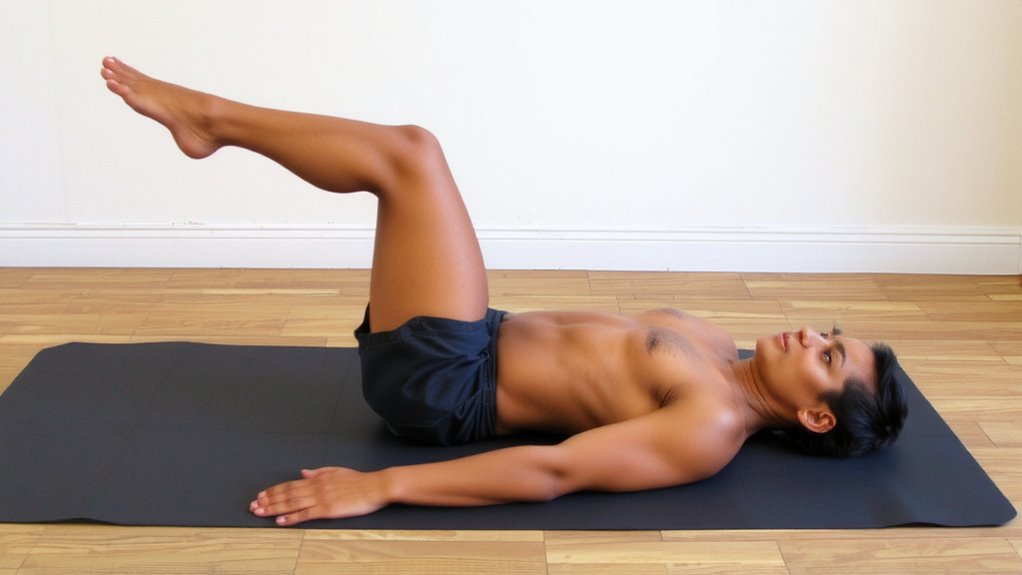
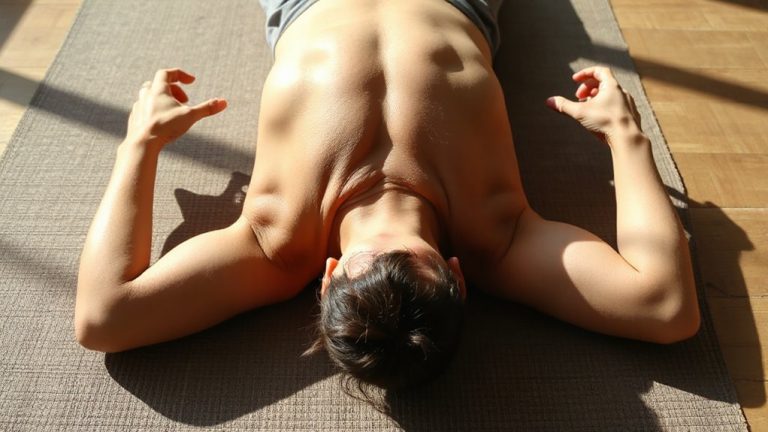
Start by lying face down on a mat with your arms at your sides and palms facing down-this setup keeps your core engaged and your spine neutral. Lift one leg straight back, focusing on squeezing the glute at the top without arching your lower back. Keep your hips square to the floor to maintain proper leg alignment and avoid compensating with your lower back. You should feel clear muscle engagement in the gluteus maximus, not the hamstrings. Perform 10–12 reps per side, moving slowly to maximize control. A quality non-slip mat enhances stability, reducing unwanted hip rotation. This movement’s simplicity belies its effectiveness-especially when form is prioritized. Proper leg alignment guarantees targeted activation, while consistent muscle engagement strengthens posterior chain stability. Minimal gear is needed, but attention to surface texture and joint padding improves session comfort and long-term adherence, making it practical for recovery-focused routines.
Why This Move Activates Your Glutes Better
The gluteus maximus craves isolation, and prone hip extensions deliver it with surgical precision. By positioning your body face-down, you eliminate momentum and reduce hip flexor involvement, forcing the glutes to work without assistance-this is peak muscle isolation. You’ll feel the burn right where it counts, confirming the target engagement. What’s more, the setup promotes superior neural activation; your brain-to-muscle connection sharpens, sending stronger, more focused signals to the glute fibers. Electromyography studies back this up, showing higher amplitude in glute firing during prone movements compared to standing or cable variations. Because the movement is grounded and controlled, you can fine-tune form to maximize results. This isn’t just activation-it’s intelligent activation. For anyone serious about glute development, especially with recovery or imbalances in play, this exercise stands out for its consistency, biomechanical advantage, and clear performance feedback.
Why Turning Your Leg Inward Works
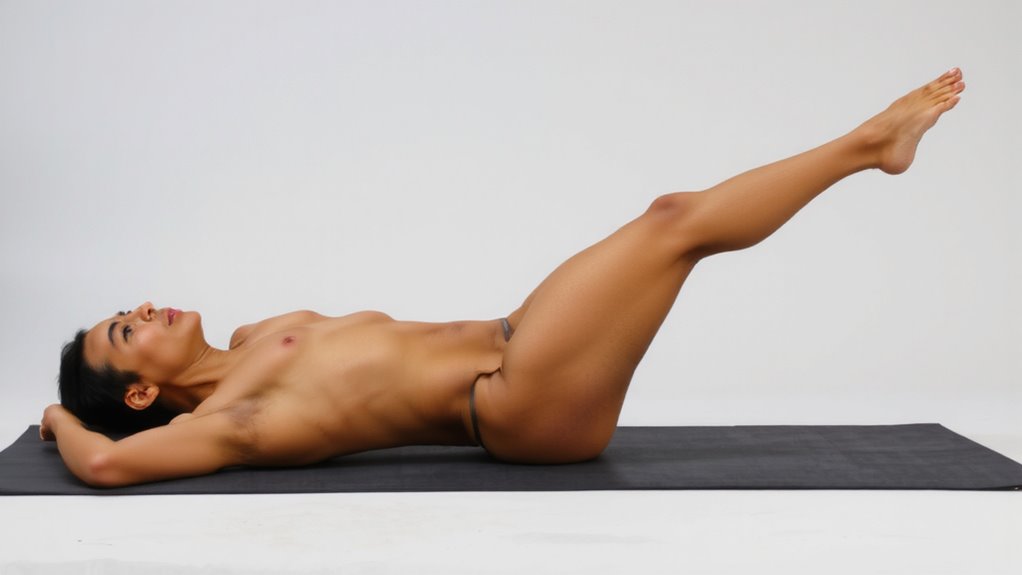
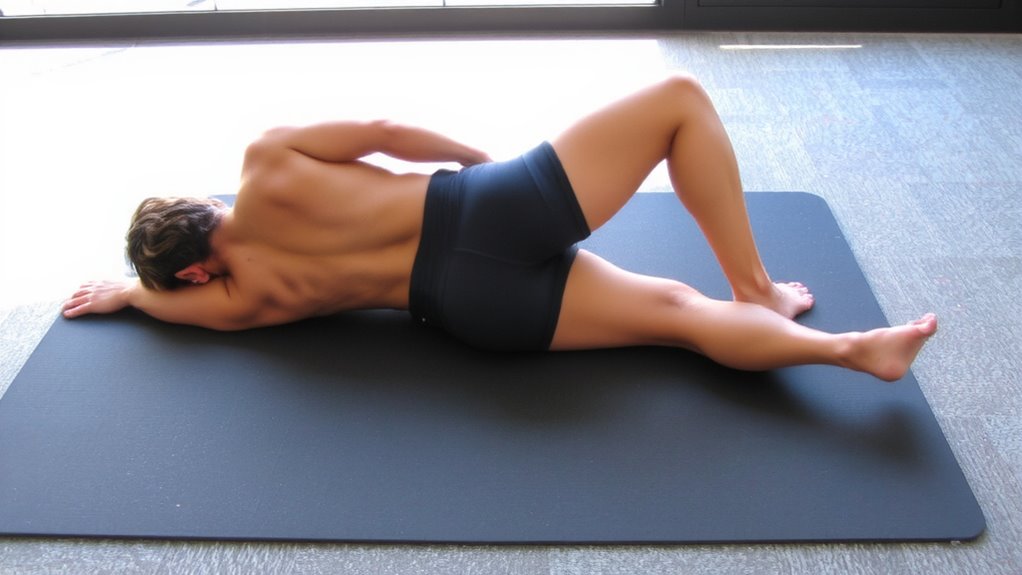
While your hip hinges through its range, rotating your leg inward slightly-think 15 to 20 degrees-can dramatically shift muscle recruitment in your favor. This subtle tweak improves joint alignment, positioning the femur so the deep fibers of your glute maximus engage more effectively. Without it, you’re more likely to default into hamstring or lower back compensation. The internal rotation creates a clear muscle bias toward the posterior glute, especially the maximus’s inferolateral portions often left underactivated. Studies using EMG confirm this orientation spikes gluteal firing while reducing unwanted quad and hamstring involvement. It’s not just about movement-it’s about precision. Your body responds best when mechanics are optimized, and this small rotation aligns the hip’s axis with the pull of the gluteal fibers. You’ll feel the difference immediately: more burn in the right spot, less strain elsewhere. Consistent use means better neuromuscular control and stronger, more resilient glutes over time.
Common Mistakes and How to Fix Them
Though you might feel the burn in your glutes during prone hip extensions, poor form can undercut your gains and invite strain elsewhere. One common error is losing overhead alignment-you let your hips sag or hike, which shifts tension away from the glute max. Keep your torso stable and pelvis neutral throughout. Another issue is momentum swinging; you’re not lifting with control if your leg whips up fast. That cheats the muscle and increases lower back stress. Instead, drive through the heel, engage the glute deliberately, and move slowly. Brace your core to prevent rocking. Use a mirror or record yourself to check form. Proper technique guarantees the internal rotation bias effectively targets deep glute fibers. You’ll build strength faster and reduce risk of strain, especially at the lumbar spine. Consistency with correct movement beats high reps with sloppy execution every time.
Easier and Harder Versions to Try
You’ve nailed the basics and cleaned up your form, so now let’s adjust the difficulty to match your progress. Whether you need Modified variations or advanced progression strategies, tweaking intensity guarantees continued glute maximus activation without compromising technique. Use the table below to guide your adjustments:
| Difficulty | Variation | Purpose |
|---|---|---|
| Easier | Knee-supported lift | Reduces lumbar strain |
| Easier | Reduced range of motion | Enhances control |
| Intermediate | Standard prone extension | Builds baseline strength |
| Harder | Ankle weight addition | Increases load progressively |
| Hardest | Pause at peak contraction | Maximizes glute time under tension |
Choose progressions that align with your strength and stability. These strategies guarantee sustainable development while minimizing compensatory patterns. Consistent application of proper progressions leads to better recruitment and long-term gluteal development.
When to Use This Exercise (Workout Timing & Programming)
Because glute maximus activation plays a key role in hip extension and overall posterior chain function, timing prone hip extensions within your workout matters for maximizing gains. You’ll get the most benefit placing this move early in activation routines or as a pre-fatigue exercise before compound lifts like deadlifts. This primes the glutes through targeted muscle synergy, enhancing recruitment during heavier movements. For exercise pairing, combine it with band walks or glute bridges to create a potent glute-focused superset. Avoid saving it for the end when fatigue compromises form. Since the internal rotation bias demands control, performing it when you’re fresh guarantees suitable motor patterning. It’s also ideal post-activation potentiation protocols, though not as a finisher unless mobility is your goal. Programming it 2–3 times weekly, with intentional rest, supports consistent neuromuscular adaptation without overloading recovery.
Prone Hip Extensions: Form, Benefits, and Tips
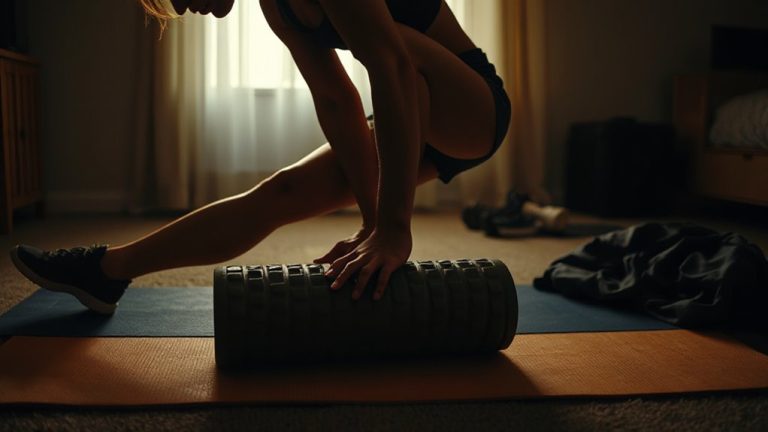
When performed with precision, prone hip extensions build foundational glute max engagement while minimizing lumbar compensation, making them a reliable tool for both rehabilitation and performance settings. You maintain face-down on a mat, lifting one leg while keeping your hips stable-this promotes hip stability and encourages muscle symmetry by isolating each side equally. Avoid overarching your back; instead, focus on squeezing the glute at the top. Use slow tempo to maximize control. For added feedback, place a foam roller under your pelvis to reduce rocking.
| Emotion | Benefit | Outcome |
|---|---|---|
| Confidence | Improved alignment | Better daily movement |
| Relief | Reduced low back strain | Pain-free movements |
| Assurance | Balanced strength | Enhanced hip stability |
| Motivation | Visible muscle symmetry | Progress you can feel |
| Empowerment | Reclaimed movement control | Lasting physical autonomy |
On a final note
You’ll get the most from prone hip extensions when form stays strict and internal rotation is controlled. This version targets the deep glute max fibers better than many standard moves, making it a smart pick for glute activation and posterior chain rehab. Pair it with proper recovery tools-like foam rollers or compression gear-and you’ll maintain tissue quality and maximize gains over time. It’s not flashy, but it works.