Cervical Mobility Drills With Resistance Band Neck Extensions
Anchor your resistance band at eye level and loop it across your forehead to start neck extensions. Keep your spine neutral, core engaged, and chin slightly tucked as you move your head back against the tension. This drill boosts cervical mobility, corrects forward head posture, and builds stabilizer strength. Use controlled reps-don’t jerk or overextend. Light to moderate bands work best for consistent, safe progress. You’ll see how proper setup and form reveal better results.
Notable Insights
- Anchor the resistance band at eye level behind your head to perform controlled neck extensions.
- Maintain a neutral spine and slight chin tuck to ensure proper cervical alignment during the exercise.
- Use slow, deliberate movements to strengthen neck extensors and improve cervical mobility.
- Avoid hyperextension by stopping at the point of tension, not pain, at the end range.
- Perform drills 2–3 times weekly with gradual resistance progression to enhance neck stability and posture.
How to Do Resistance Band Neck Extensions (Step by Step)

Neck strength often gets overlooked in training, but resistance band neck extensions can make a real difference in both performance and injury prevention. Anchor the band behind your head at about eye level. Loop it so it rests across your forehead, keeping the band tension moderate-too much can compromise control. Stand tall, spine neutral, and engage your core to stabilize. Slowly extend your head backward, resisting the pull of the band. Focus on smooth motion, ensuring proper head alignment throughout-your chin should stay slightly tucked to avoid hyperextension. Don’t jerk or rush; controlled movement builds strength safely. The band’s resistance challenges deep cervical stabilizers better than bodyweight alone. Over time, consistent use improves posture and reduces strain during lifts or prolonged sitting. Quality bands with durable stitching maintain consistent band tension and last longer with proper care. This drill isn’t flashy, but it’s effective preventive maintenance for neck health and overall movement efficiency. For added recovery benefits, consider pairing this exercise with a shiatsu massager to relieve muscle tension in the neck and shoulders.
Get Your Resistance Band Set Up Correctly
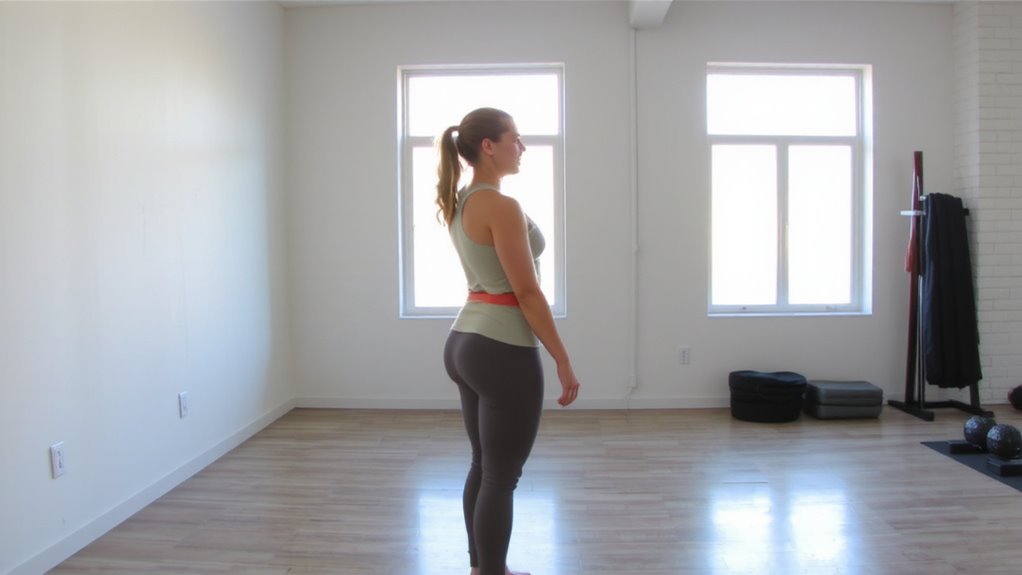
A properly set resistance band makes all the difference in neck training-too loose and you won’t get enough tension, too tight and you risk poor form or strain. You’ll want to secure your band at an anchor position just above head height, like a door latch or squat rack, ensuring it doesn’t shift during movement. The band tension should offer noticeable resistance without forcing you to overcompensate with your shoulders or jaw. Lighter bands work well for beginners, while advanced users may need higher resistance levels to maintain progressive overload. Always check that the band is firmly knotted or clipped, and that the anchor position stays stable throughout the set. A consistent setup improves exercise accuracy and reduces injury risk, making your cervical drills both safer and more effective over time.
Fix These Common Neck Extension Mistakes

While you’re aiming to build strength and stability in your neck, poor technique during extension drills can undermine your progress and increase injury risk, especially if you’re pushing for intensity without control. A common mistake is allowing your head to jut forward, which compromises neck alignment and places excessive strain on the cervical spine. Keep your chin slightly tucked throughout the movement to maintain a neutral position. You might be tempted to use heavier band resistance, but that often leads to momentum-driven reps and early muscle fatigue in supporting muscles rather than targeted strengthening. Instead, choose a band that allows full control through a comfortable range of motion. Avoid hyperextending at the top-stop when you feel tension, not strain. Perform each rep slowly, focusing on contraction quality. Proper form guarantees effective training without unnecessary joint stress, maximizing gains while minimizing risk.
Why Neck Mobility Improves Posture and Reduces Pain
You’ve likely noticed that poor neck mechanics don’t just affect your range of motion-they echo through your entire posture, often feeding into chronic discomfort. When your cervical spine lacks mobility, surrounding muscles compensate, leading to stiffness and asymmetry. Restoring movement helps reestablish muscular balance, reducing strain on joints and soft tissues. Improved neck mobility directly supports ergonomic alignment, ensuring your head stays centered over your spine instead of drifting forward-a common trigger for tension headaches and upper back pain. Without this foundation, even the best fitness gear can’t correct the underlying dysfunction. You’ll sit taller, move more efficiently, and experience fewer overuse injuries. Think of neck mobility as a keystone: it doesn’t work in isolation, but its influence spreads outward. When muscular balance and spinal positioning improve, pain often diminishes not from aggressive intervention, but from returning the body to its natural, functional state. For optimal spinal support during recovery and rest, consider investing in a chiropractor-recommended mattress to maintain proper alignment while sleeping.
Why Resistance Bands Work for Neck Mobility
Because resistance bands offer adjustable tension and controlled resistance, they’re uniquely suited for strengthening the often-neglected muscles that support cervical mobility. You can precisely modulate the elastic tension to match your capacity, making bands safer and more adaptable than free weights for delicate neck work. The consistent pull enhances muscle activation throughout the full range of motion, which is critical for building endurance without straining joints. Unlike bulkier gear, resistance bands provide smooth, linear feedback that promotes proper form and neuromuscular control. Their lightweight design allows for portable, low-impact training, ideal for frequent, mindful sessions. High-quality bands maintain elasticity over time, though you should inspect them regularly for wear. When used correctly, they deliver efficient, targeted engagement of the deep cervical flexors and extensors. For fitness recovery and functional conditioning, few tools balance performance, affordability, and precision quite like resistance bands.
How Often to Do Neck Extensions (And When to Increase Intensity)
Typically, performing neck extensions with a resistance band two to three times per week allows for sufficient muscle stimulation while supporting consistent recovery. You’ll want to monitor your form and fatigue levels closely, since overtraining can undermine gains and increase injury risk. Progress tracking helps you assess improvements in range of motion, endurance, and comfort during movement-key indicators of effective adaptation. Once you can complete all sets with proper control and minimal strain, it’s time to think about intensity progression. This might mean increasing band tension slightly or adding a few reps, but avoid abrupt jumps in resistance. Quality matters more than quantity, especially with cervical exercises. Regular, mindful practice with gradual intensity progression yields better long-term results than sporadic, aggressive sessions. Using durable, non-slip bands guarantees consistent performance, contributing to safer, more effective workouts over time. Incorporating a proper neck and back stretcher can further enhance flexibility and support recovery between sessions.
On a final note
You’ll find resistance band neck extensions effective for building cervical stability and improving mobility when done correctly. The band’s consistent tension targets deep neck flexors better than bodyweight alone, promoting neuromuscular control. Just guarantee proper form-overextending or using too much resistance risks strain. Used wisely, this drill supports posture, reduces neck pain, and integrates well into warm-ups or recovery routines, especially for those with desk-bound lifestyles.