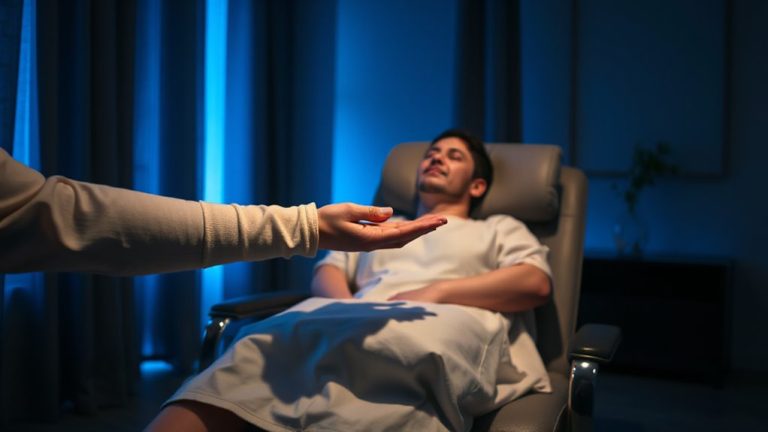
How to Implement Active Recovery Protocols Between Rehabilitation Sessions
You should use active recovery between rehab sessions to boost blood flow and maintain joint mobility without straining healing tissues. Try light cycling or glute bridges with resistance bands to stay safe and effective. Space sessions 24–48 hours apart to allow repair, and foam roll tight areas for 30–60 seconds to reduce stiffness. Track pain and movement changes daily to adjust intensity. Smart gear like high-density rollers and recovery bands makes the process more reliable and targeted-there’s more to optimizing your routine just ahead.
Notable Insights
- Schedule active recovery sessions 24–48 hours after intensive rehab to support tissue repair and prevent overtraining.
- Incorporate low-intensity activities like walking or cycling to boost circulation and reduce muscle soreness.
- Use resistance bands and foam rollers to maintain mobility, reduce stiffness, and promote blood flow safely.
- Focus on pain-free, controlled movements that enhance joint mobility and neuromuscular activation without strain.
- Track daily pain levels and mobility changes to adjust recovery protocols based on progress or plateaus.
Why Active Recovery Beats Passive Rest in Rehab
While passive rest might seem like the safest choice when recovering from injury, active recovery often delivers better long-term outcomes by promoting circulation, maintaining joint mobility, and preventing muscle atrophy. You’re not just healing-you’re rebuilding. Engaging in controlled, low-intensity movement boosts blood flow, leading to increased circulation that delivers oxygen and clears metabolic waste more efficiently. This isn’t just about physical repair; it’s about function. Activities like gentle cycling or swimming support enhanced neuromuscular activation, helping your brain reconnect with injured areas to restore coordination and strength. Unlike passive rest, which can lead to stiffness and weakness, active recovery keeps tissues supple and responsive. It also primes your body for future rehab sessions, improving adaptability. Using quality fitness gear like adjustable resistance bands or supportive compression wear can further optimize these benefits. Recovery bands designed for muscle relief can enhance this process by providing targeted resistance and support during movement, with best recovery bands offering optimal tension and durability for rehabilitation use. You’re not rushing healing-you’re guiding it strategically.
Pick Safe Movements for Your Injury
You’ve seen how staying gently active supports healing better than complete rest, but not all movement is equal when you’re recovering from an injury. Choosing safe exercises means prioritizing joint mobility and controlled muscle activation without overstressing damaged tissues. You should focus on movements that promote blood flow and neuromuscular engagement while avoiding pain or compensation patterns. For instance, cycling with low resistance can enhance knee joint mobility after ligament sprains, while gentle glute bridges support lumbar stability through targeted muscle activation. Tools like resistance bands or foam rollers help modulate intensity, allowing precise control over range and effort. These aren’t just convenient-they’re proven to maintain function without delaying recovery. The right movement keeps your system responsive, reducing stiffness and guarding against atrophy, all without risking re-injury. Safety here isn’t limiting progress; it’s enabling smarter healing. For those with knee concerns, incorporating low-impact options like a recumbent bike can provide effective conditioning with minimal joint stress, making it one of the best exercise equipment for bad knees.
Schedule Active Recovery Between Sessions
Because recovery doesn’t end when your workout does, scheduling active recovery between intense sessions can make a meaningful difference in how quickly and effectively your body adapts. You need to evaluate recovery timing just as carefully as you do exercise intensity-spacing sessions properly prevents overtraining and supports tissue repair. Active recovery, like light cycling or walking, boosts circulation without adding strain, helping clear metabolic waste and reduce soreness. Ideal session spacing depends on your injury status and fitness level, but 24–48 hours between demanding rehab exercises is often effective. During this window, low-intensity movement improves neuromuscular coordination and prepares your body for the next session. Ignoring this balance risks setbacks, especially when using resistance bands or stability tools in rehab. Proper recovery timing isn’t passive-it’s strategic. By planning active recovery, you maintain momentum while respecting your body’s need to heal and rebuild safely.
Use Foam Rolling to Reduce Stiffness Now
When stiffness starts creeping in after a tough session, grabbing a foam roller can make a noticeable difference in how quickly you bounce back. Applying targeted pressure to tight areas helps break up adhesions and improves blood flow, speeding up recovery. You’re not just massaging sore muscles-you’re facilitating muscle release, which enhances flexibility and reduces discomfort. High-density foam rollers offer firm support, making them ideal for deeper tissue work without causing bruising when used correctly. Spend 30 to 60 seconds per muscle group, moving slowly to identify tender spots. Pause briefly on these trigger points, letting your body weight apply controlled pressure. Regular use post-rehabilitation supports faster recovery times and maintains muscle function. While not a substitute for professional therapy, foam rolling is a practical, cost-effective tool that fits seamlessly into active recovery routines. It’s a simple habit with measurable benefits. For best results, choose a high-density foam roller based on your specific recovery needs and intensity level.
Track Pain and Mobility to Adjust Your Plan
How do you know if your recovery routine is actually working? You track pain and mobility with consistent daily journaling and structured progress tracking. Rate your pain on a 0–10 scale each day and note changes in range of motion, strength, and functional movement. Over time, patterns emerge-decreasing pain, smoother motion, better tolerance to activity-all signs your plan is effective. If discomfort lingers or mobility plateaus, it’s a cue to modify stretches, adjust recovery tools, or consult your therapist. Tools like mobility apps or simple handwritten logs help maintain accuracy. Unlike passive rest, active recovery requires feedback to fine-tune frequency, intensity, and technique. Daily journaling isn’t just habit; it’s data. Combined with progress tracking, it transforms subjective feelings into measurable outcomes. This method guarantees you’re not guessing. You’re adapting based on evidence-maximizing healing while avoiding setbacks.
On a final note
You’ll recover better with active rest than passive downtime-it boosts circulation and eases stiffness without straining healing tissues. Choose low-impact movements like walking or cycling, timed between rehab sessions to maintain momentum. Foam rolling helps too, though it’s no substitute for proper load management. Track symptoms closely; progress isn’t linear. Pair smart recovery with reliable gear-think supportive footwear and quality rollers-and you’re set for more consistent, sustainable gains in mobility and strength.