Strategies for Accelerated Healing of Muscle Strains and Tears in Athletes
You should start with proper RICE-rest completely, ice for 20 minutes every 2 hours, compress only during the day, and keep the injury elevated. Add light cycling by Day 3–5 and daily dynamic stretches to boost blood flow. Eat 20–30 grams of protein every few hours and load up on antioxidants and omega-3s. Consider compression gear, and if available, explore stem cell or gene therapy cautiously. Progressive resistance and functional tests guarantee safe return-there’s more to optimizing recovery where science meets strategy.
Notable Insights
- Apply the RICE protocol correctly: rest with total unloading, ice for 20 minutes every 2 hours, timed compression, and consistent elevation.
- Begin smart movement between Day 3–5, including gentle cycling, walking, and daily dynamic stretching to enhance blood flow and tissue repair.
- Optimize nutrition with 20–30 grams of protein every few hours and antioxidant-rich, omega-3-filled foods to support muscle regeneration.
- Utilize resistance bands and foam rolling during Week 2 to promote strength recovery and flexibility under controlled, progressive loading.
- Consider advanced therapies like stem cell or gene therapy for severe cases, weighing potential benefits against risks and costs.
Stop, Protect, Heal: The Right Way to Use RICE
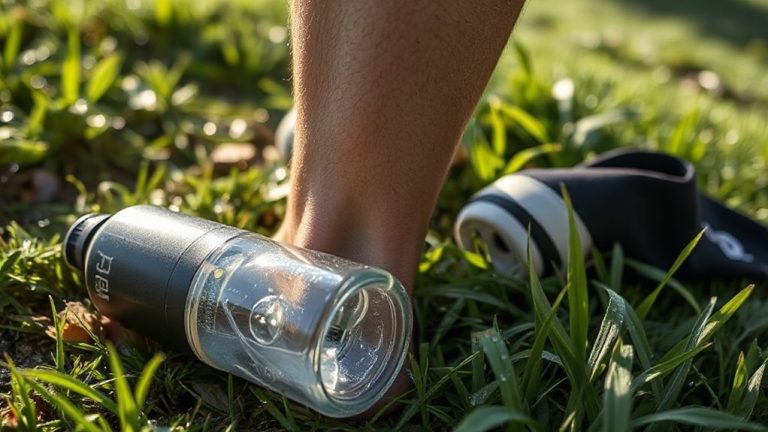
Why do so many athletes still get the basics of RICE wrong despite its long-standing use? You often skip steps or misapply them, undermining recovery. Rest doesn’t mean light activity-it means total unloading of the injured muscle. Ice therapy, when used correctly, reduces inflammation, but you overdo it or apply it too infrequently. Twenty minutes every two hours during the first 48 hours is ideal. Compression timing is just as critical; wear it too long, and you risk restricting blood flow. Use a high-quality compression sleeve only during waking hours, never while sleeping. Elevation should be consistent, not occasional. Modern recovery gear helps, but only if you follow proven protocols. When you ignore the specifics-like proper ice therapy intervals or compression timing-you delay healing. Precision matters. RICE works best when done right, not just roughly. Stick to the guidelines, and you’ll protect the tissue and set the stage for true recovery. For advanced support, consider using leg compression boots as part of a comprehensive recovery plan.
Speed Healing With Smart Movement
Once the acute phase of injury is under control and swelling’s been managed with proper RICE application, you can start introducing movement-because staying completely still for too long slows tissue repair and weakens muscle fibers. Smart movement through active recovery and dynamic stretching boosts circulation, encourages collagen alignment, and restores flexibility without overloading healing tissue. You’re not just regaining motion-you’re rebuilding strength safely. Below are key movement types, their purposes, and ideal timing during recovery:
| Movement Type | Purpose | When to Use |
|---|---|---|
| Gentle cycling | Promotes blood flow | Day 3–5 post-injury |
| Walking intervals | Supports active recovery | As pain allows |
| Dynamic stretching | Improves range of motion | Daily, pre-rehab exercises |
| Resistance bands | Rebuilds strength gradually | Week 2 onward |
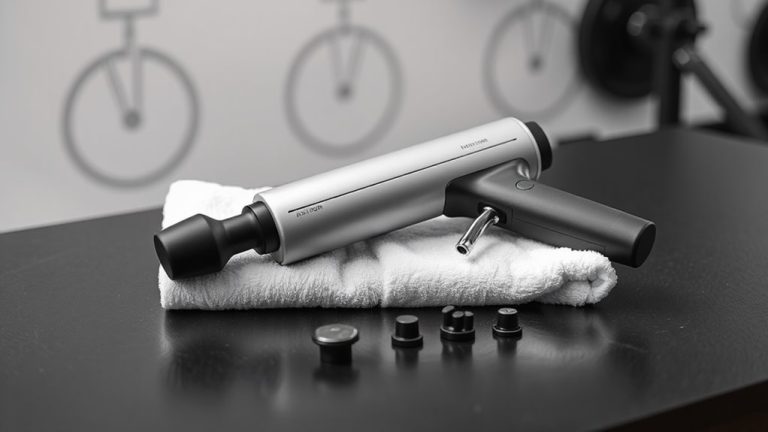
Used wisely, these methods speed healing while minimizing re-injury risk. Incorporating targeted sports recovery gear can further enhance recovery by supporting circulation and reducing muscle stiffness.
Eat to Recover: Nutrients That Repair Muscle Faster
Recovery isn’t just measured in rest days or rehab sessions-it’s built molecule by molecule through the nutrients you feed your body. Your muscle fibers need protein intake to rebuild stronger after strain, ideally 20–30 grams every few hours post-injury to maximize synthesis. Lean meats, eggs, dairy, and plant-based sources like lentils support this repair. You also need an antioxidant boost to combat inflammation caused by tissue damage-berries, spinach, and nuts reduce oxidative stress and may speed healing. Omega-3 fatty acids from fish or flaxseed complement this by regulating inflammatory responses. Skipping these nutrients slows recovery, no matter how advanced your fitness gear or rehab routine. Think of food as internal rehab: precise, consistent, and essential. Proper fuel doesn’t replace therapy, but without it, even the best protocols underperform. You’re not just healing-you’re rebuilding from within.
Cutting-Edge Options to Jumpstart Muscle Recovery
While your routine may already include rest, nutrition, and physical therapy, emerging technologies are redefining how quickly and completely you can bounce back from a muscle strain. Gene therapy is showing promise by targeting damaged tissues at the cellular level, potentially speeding regeneration by altering protein expression where it’s needed most. Though still largely experimental, early trials suggest it could reduce recovery time markedly-especially in severe tears. Stem cell treatment, meanwhile, has gained traction among professional athletes seeking faster healing. By injecting concentrated cells into injured areas, your body may regenerate muscle fibers more efficiently than it would naturally. While results vary, many report noticeable improvements within weeks. These options aren’t without risk or cost, and long-term effects remain under study. Still, if you’re aiming to return stronger and sooner, they’re options worth considering-especially when conventional methods aren’t enough.
Rehab That Builds Strength and Flexibility Safely
You’ve likely heard about the promise of stem cells or gene therapy speeding up healing from muscle strains, but even the most advanced treatments mean little if your rehab program doesn’t build real-world strength and flexibility safely. That’s where progressive loading earns its place-gradually increasing resistance trains your muscle to handle stress without re-injury. It’s not just about lifting more; it’s about timing, form, and consistency. Controlled stretching complements this by restoring range of motion without overstretching healing fibers. Together, they create a resilient, functional muscle. Equipment like resistance bands and foam rollers help, but only if used correctly. Over-relying on gadgets without a structured plan limits gains. Focus on movement quality, not speed. Your rehab should mirror sport-specific demands, preparing you for real action-not just clinic reps. Choosing the right foam roller can enhance recovery, and understanding factors like density and texture is key-start with a medium-density roller for balanced support and effectiveness.
Prevent Re-Injury by Managing Your Workload
If you’re returning to training after a muscle strain, simply feeling pain-free isn’t enough to guarantee readiness-your muscle’s tolerance to load may still lag behind your confidence. That’s where load monitoring becomes essential. Tracking your training volume, intensity, and frequency helps you spot red flags before setbacks occur. Apps and wearables can log reps, speed, and even muscle activation, giving you objective data-not just gut feelings. But data alone won’t protect you; recovery pacing is just as critical. Push too hard, too soon, and you risk re-injury. Ease in with submaximal efforts, gradually increasing demand over days or weeks. Think of it like rebuilding a bridge-you can’t rush structural integrity. Combine smart load monitoring with disciplined recovery pacing, and you’ll create a resilient foundation. It’s not about training harder-it’s about training smarter. Your muscles will adapt, but only if you respect their limits.
Return-to-Play Milestones: Are You Ready?
How do you know when it’s truly safe to return to full competition after a muscle strain? It’s not just about pain fading-you need clear, objective markers. Functional testing is essential: it assesses strength, agility, and explosive movements specific to your sport. Passing tests like sprint intervals, eccentric loading, or hop drills shows your muscle can handle real demands. But physical readiness isn’t enough-psychological readiness matters just as much. If you’re hesitant, fearful of re-injury, your performance and movement patterns suffer. Confidence in your recovery reshapes your coordination and reaction time. Combine both elements: pass functional benchmarks *and* feel mentally prepared. Coaches and therapists should guide this process, using stepwise return-to-play protocols. Skipping milestones risks setbacks. True readiness means your body and mind agree: you’re not just healed-you’re ready.
On a final note
You’ve got better tools and knowledge than ever to speed muscle recovery. RICE, smart movement, and targeted nutrition lay the foundation, while advanced therapies offer extra leverage when needed. Modern recovery gear-like compression units and percussive devices-can help, but only with consistent, proper use. Rehabilitation and load management aren’t optional; they’re essential. Skip steps, and re-injury risk spikes. Follow the plan, and you’ll return stronger, safer, and smarter.