Maximizing Recovery Through Strategic Application of Heat Therapy Techniques
You should only use heat after the first 48 hours post-exercise, once swelling goes down and muscles feel stiff. Moist heat, like steam towels or warm compresses, penetrates deeper than dry heat, relaxing tight fibers more effectively. Limit each session to 15–20 minutes, 3–4 times daily, and always allow skin to cool between uses. Apply heat to tension-prone areas like your lower back, neck, or hamstrings. Stretch soon after heating to boost flexibility. Avoid using heat too early or on inflamed tissue, and don’t skip a protective barrier to prevent irritation. You’ll see even better results when timing and technique work together seamlessly.
Notable Insights
- Apply heat only after the initial 48-hour acute phase to avoid worsening inflammation and support muscle recovery.
- Use moist heat for deeper tissue penetration and more effective muscle relaxation compared to dry heat.
- Limit heat application to 15–20 minutes per session, up to 3–4 times daily, to prevent skin irritation.
- Target heat therapy to stiff or tight muscles like the lower back, neck, shoulders, and hamstrings for optimal relief.
- Perform dynamic stretches immediately after heating to enhance flexibility and maximize recovery benefits.
Use Heat Only When It Helps Recovery
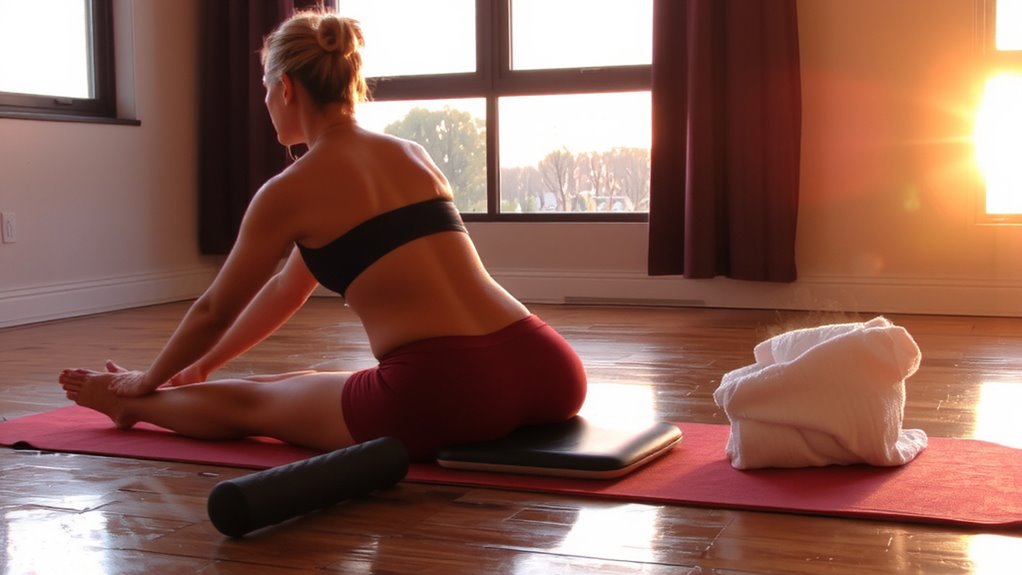
How often do you reach for a heating mue pad after a tough workout, assuming it’s the best way to ease sore muscles? While heat can support recovery, using it at the wrong time may worsen inflammation. Heat timing is critical: avoid heat during the first 48 hours post-injury or post-intense exercise, when swelling is likely. Instead, save it for later stages, when muscles feel stiff and tight. This approach enhances blood flow safely, promoting relaxation and flexibility. Therapy safety depends on proper duration and temperature-limit sessions to 15–20 minutes and use a barrier to prevent burns. Never apply heat while sleeping or with poor circulation. Though many fitness gear brands promote heat therapy devices, not all guarantee even heat distribution or auto-shutoff features. Choose wisely. Ultimately, heat helps only when applied thoughtfully-prioritize recovery science over comfort alone. For consistent and safe heat delivery, consider selecting from the best heating pads based on performance and safety features.
Choose Moist Heat for Deeper Muscle Relief
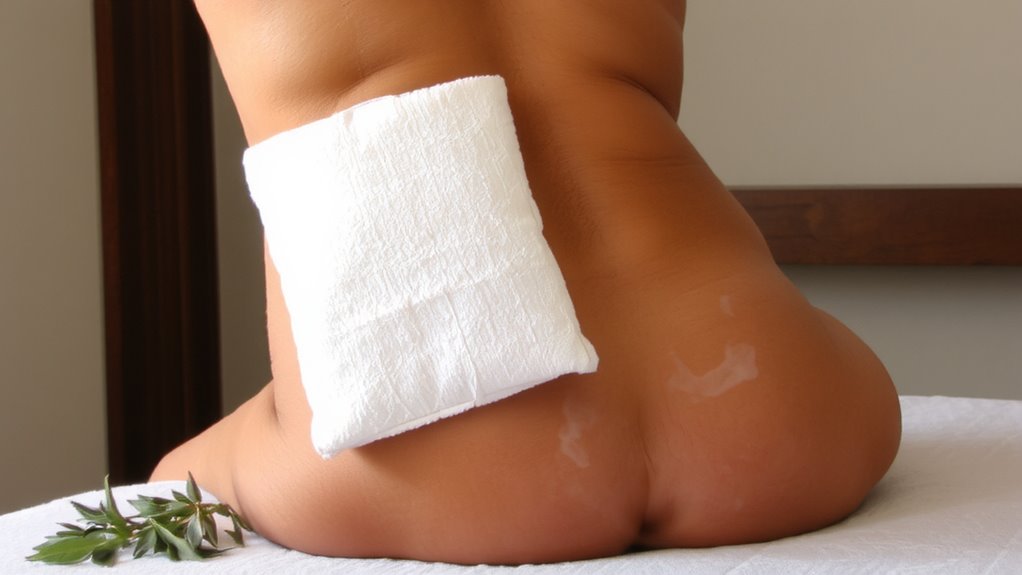
A moist heating pad often outperforms dry heat when targeting deep muscle soreness because it penetrates tissue more effectively. You’ll find that steam towels and warm compresses deliver not just surface warmth but also reach deeper muscle layers, promoting quicker relaxation of tight fibers. Unlike dry options, moist heat reduces thermal resistance in the skin, allowing consistent transfer of warmth where you need it most. Steam towels, especially those made from microfiber or cotton blends, retain heat longer and cool more evenly than standard pads. Warm compresses, when properly wrung and applied, limit moisture contact while maximizing thermal conduction. For recovery after intense workouts or chronic stiffness, these tools offer a measurable edge in comfort and efficacy. You’re likely to feel relief faster, and the results tend to last longer. Choosing moist heat isn’t just practical-it’s a smarter recovery move backed by physiology and user experience. Among the best heat packs for soothing comfort, moist heating pads provide an optimal balance of sustained warmth and deep tissue penetration.
How Long to Apply Heat for Best Results?
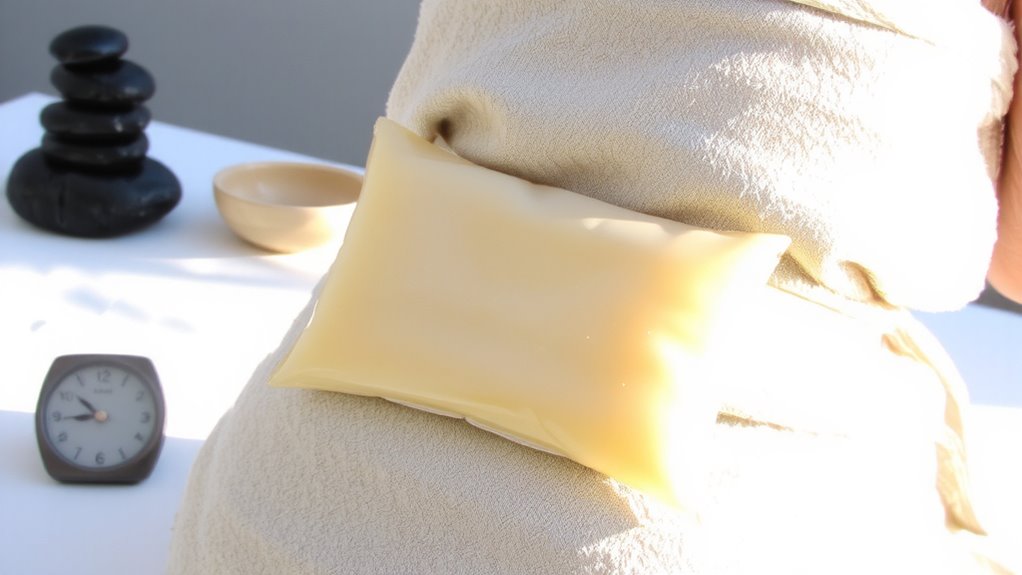
Most experts recommend applying heat for 15 to 20 minutes at a time to get the best recovery benefits without risking skin irritation or tissue damage. You’ll want to focus on duration optimization-long enough to increase blood flow and relax tight muscles, but not so long that you compromise skin health. Timing precision matters, especially when using electric heating pads or wraps that maintain consistent temperatures. Overuse can lead to thermal buildup, reducing effectiveness or causing discomfort. For chronic stiffness, two to three daily sessions are typically enough. Always allow your skin and tissues to return to baseline temperature between applications. While some high-end recovery gear boasts timers and auto-shutoff features, you still need awareness. These tools support timing precision, but your judgment guarantees safety and effectiveness. Short, controlled sessions give ideal results-consistent use beats prolonged exposure every time.
Where to Apply Heat on Tight Muscles
When targeting tight muscles, you’ll get the best results by applying heat directly over the affected area, especially where muscle tension or stiffness is most noticeable-common spots include the lower back, neck, shoulders, and hamstrings. Accurate muscle location matters because heat penetrates tissue best when placed precisely where tension builds. You’ll find that targeted application promotes blood flow and softens tight fibers, boosting tension relief substantially. Whether using a heated pad, wrap, or warm towel, guarantee the device conforms well to the body’s contours for even coverage. Avoid applying heat on swollen or injured areas, as it may worsen inflammation. For chronic tightness, consistent use on the correct muscle location enhances recovery. High-quality heat wraps with adjustable straps offer better positioning and sustained warmth, improving overall performance. Proper placement doesn’t just soothe discomfort-it supports deeper physiological repair, making it a smart move in any recovery routine.
Boost Flexibility: Stretch After Heating
You’ll get the most out of your recovery routine by stretching shortly after applying heat, as warmed muscles respond better to elongation. Heat promotes muscle relaxation, loosening stiff tissues and increasing blood flow-ideal conditions for improving flexibility. This is the perfect window to incorporate dynamic stretching, which gently guides muscles through functional motions, enhancing range of motion without triggering strain. Unlike static stretches done cold, dynamic movements after heating reduce resistance in muscle fibers, allowing smoother, safer elongation.
| Stretch Type | Best Time | Benefit |
|---|---|---|
| Leg swings | Post-heat | Enhances hip mobility |
| Arm circles | Post-heat | Warms shoulder girdle |
| Walking lunges | Post-heat | Activates legs dynamically |
| Torso twists | Post-heat | Improves spinal flexibility |
Using heat therapy followed by dynamic stretching maximizes flexibility gains, making it a strategic move in any fitness recovery plan.
Avoid These 5 Heat Therapy Mistakes
Applying heat before dynamic stretching sets the stage for better mobility, but even the most well-timed routine can fall short if common errors go unnoticed. One key issue is incorrect timing-applying heat after intense exercise, when inflammation is high, can worsen swelling instead of easing it. Wait until the acute phase passes. Overuse frequency is another pitfall; daily sessions without breaks may lead to skin irritation or reduced sensitivity over time. Limit sessions to 15–20 minutes, no more than 3–4 times daily. Using low-quality heating pads with uneven heat distribution risks burns or inconsistent results, so invest in medical-grade gear with auto-shutoff features. Also, avoid direct skin contact-always use a barrier. Finally, don’t ignore contraindications like diabetes or poor circulation, where heat could cause tissue damage. Smart, informed use maximizes benefits while minimizing risks in your recovery practice.
Build a Recovery Routine With Heat Therapy
How do you turn heat therapy from an occasional relief tactic into a consistent recovery advantage? You build a routine centered on heat timing and therapy consistency. Apply heat for 15–20 minutes post-workout or before bed, using a heating pad, infrared sauna, or warm bath to boost circulation and relax tight muscles. Timing matters-avoid heat immediately after intense injury or inflammation; save it for recovery phases. Consistent use over days amplifies benefits, reducing stiffness and improving flexibility. Pair therapy with stretching for better results. Choose devices with adjustable heat settings and auto-shutoff for safety and long-term use. Whether it’s a microwavable wrap or a high-end heating mat, maintenance and proper storage extend lifespan. Stick to your schedule, track how your body responds, and adjust temperature or duration as needed. With disciplined heat timing and therapy consistency, you’re not just treating soreness-you’re optimizing recovery.
On a final note
You’ll get the most from heat therapy when using it strategically in recovery. Moist heat penetrates deeper, easing tight muscles better than dry options. Apply it for 15–20 minutes, targeting stiff areas like hamstrings or shoulders, then stretch to boost flexibility. Avoid common mistakes-like overheating or using it too soon after injury. When integrated correctly, heat therapy enhances recovery routines, supports muscle function, and complements quality fitness gear for lasting performance.