Setting Gait Analysis Benchmarks to Approve Jogging After Tibial Stress Fracture Healing
You’re not ready to jog just because your tibia feels pain-free-gait analysis must confirm symmetry and control. Wearable sensors can detect asymmetries in step timing, cadence variability, and ground reaction forces above 5%, which raise re-injury risk. Look for consistent stride length, 170–180 steps per minute cadence, and midfoot strike to reduce tibial load. Deviations like hip rotation lag or ankle stiffness mean neuromuscular deficits remain. Proper benchmarks include stable ground contact time and smooth step shifts-without them, your mechanics are still compensating. There’s more to discover about fine-tuning recovery safely.
Notable Insights
- Pain-free status alone is insufficient; biomechanical readiness must be confirmed before approving jogging post-tibial stress fracture.
- Step symmetry should show less than 5% asymmetry in ground reaction forces to reduce re-injury risk.
- Cadence should consistently reach 170–180 steps/minute to minimize impact loading and improve stride efficiency.
- Wearable sensors or insoles should confirm stable ground contact time with minimal variability across 3–5 runs.
- Midfoot strike pattern and adequate ankle dorsiflexion are required to ensure proper shock absorption and tibial load distribution.
What Gait Metrics Say About Return to Jogging After Tibial Stress Fracture
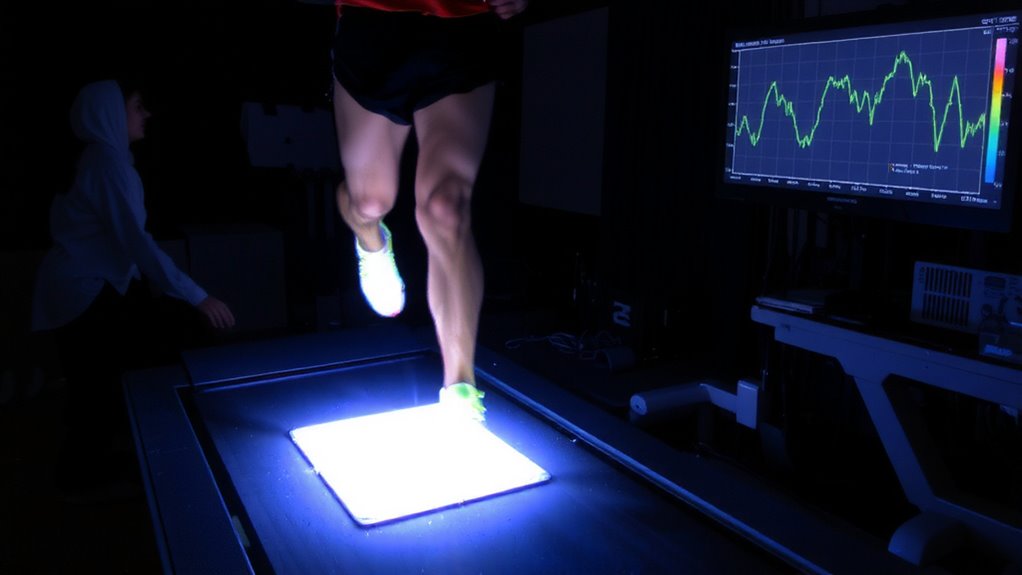
While you might feel ready to resume jogging after your tibial stress fracture has healed, your gait metrics can reveal whether your body is truly prepared for the impact. Asymmetries in hip rotation often persist post-injury, altering force distribution and increasing re-injury risk. If your recovery didn’t include targeted mobility work, restricted rotation may shift stress to the tibia during stance phase. Likewise, reduced ground clearance on the injured side suggests residual weakness or altered neuromuscular control, particularly in the swing phase. These deviations compromise running efficiency and shock absorption. Even if pain-free, your biomechanics might not support consistent jogging demands. Monitoring such metrics gives you objective insight beyond subjective readiness. Without correcting these imbalances, standard running shoes or recovery gear won’t fully protect you. True return readiness comes not from time elapsed, but from restored, symmetrical movement patterns proven through gait observation.
Tools to Measure Running Biomechanics Post-Injury
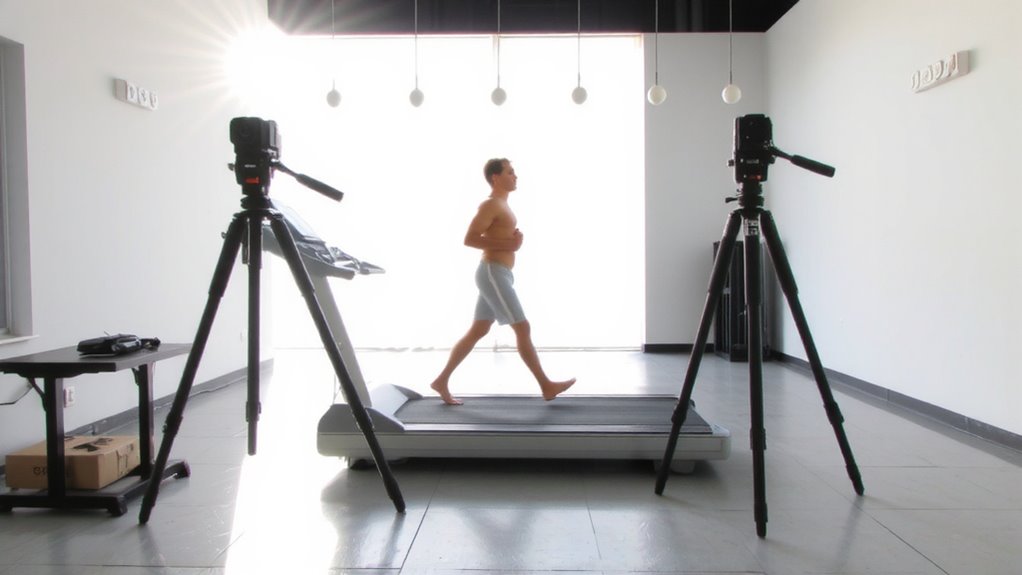
Gait analysis doesn’t have to mean a lab coat and a treadmill surrounded by cameras-your recovery journey now has accessible tools that bring precision into everyday settings. Wearable sensors and smartphone apps now let you track cadence variability and foot placement reliably, offering real-time feedback without needing a lab. These devices capture subtle imbalances, helping you adjust before setbacks occur. While high-end systems offer depth, even mid-tier wearables provide clinically relevant data when calibrated correctly.
| What You Track | Why It Matters |
|---|---|
| Cadence variability | High fluctuations may signal instability and delayed neuromuscular recovery |
| Foot placement | Asymmetry or inconsistency increases tibial load and re-injury risk |
| Step smoothness | Jerky shifts hint at compensatory patterns slowing full recovery |
Smart use of these tools bridges rehab and return, putting control in your hands.
Step Symmetry and Impact Loading After Healing
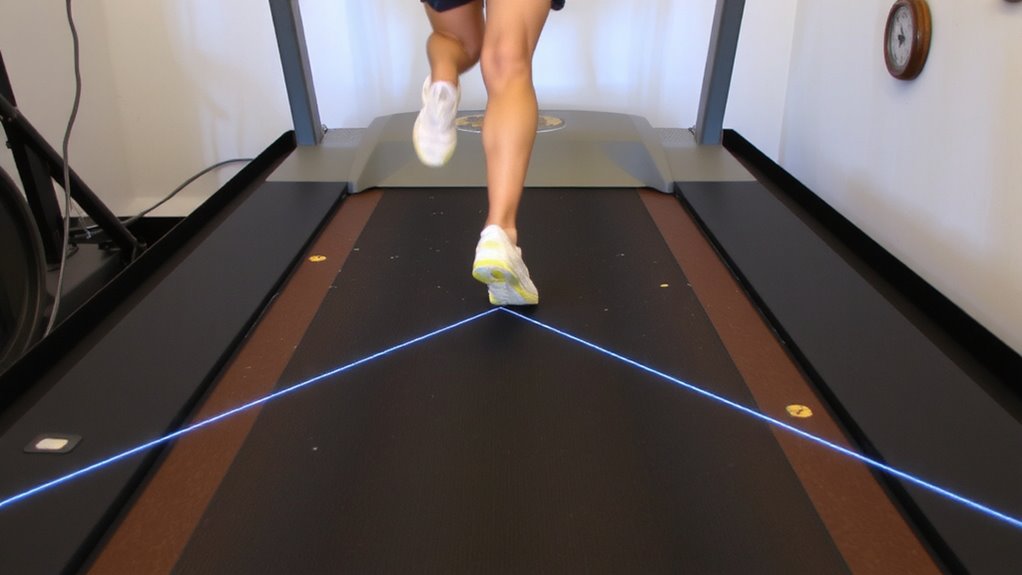
You’ve already started using wearable sensors and apps to monitor cadence and foot placement, giving you real-time insight into how your body moves during early jogging. Now, focusing on step symmetry, you’ll notice minor imbalances between limbs, especially in ground reaction forces-these can linger even after radiographic healing. Asymmetries over 5% may increase re-injury risk, so aim to reduce them gradually. Stride consistency improves with controlled loading; devices measuring vertical loading rates help you adjust impact. Real-world data shows returning runners often overstride on the injured leg, spiking ground reaction peaks. You’ll benefit from feedback-driven adjustments: shortening stride, increasing cadence, and promoting even force distribution. While consumer gear isn’t lab-precise, it offers practical tracking for rehabilitation benchmarks. Consistent use supports safer progression, but always pair tech insights with clinical evaluation to confirm readiness.
Knee and Ankle Movement Patterns to Monitor
Since knee and ankle kinematics play a critical role in post-injury jogging mechanics, it’s important you keep a close eye on how these joints move as you ease back into running. Abnormal femoral alignment can alter knee tracking, increasing strain on the healed tibia, while excessive tibial torsion may disrupt ankle stability and shock absorption. You should monitor for asymmetries or compensatory motions that suggest incomplete biomechanical recovery. Using motion analysis or wearable sensors helps capture subtle deviations not visible to the naked eye. Below are key movement patterns to evaluate regularly:
| Joint | Movement to Monitor | Clinical Concern |
|---|---|---|
| Knee | Valgus collapse during stance | Poor femoral alignment |
| Ankle | Reduced dorsiflexion | Limited shock absorption |
| Knee | Hyperextension at heel strike | Altered tibial load distribution |
| Ankle | Excessive pronation | Linked to tibial torsion |
| Both | Asymmetrical joint timing | Indicator of residual dysfunction |
Setting Safe Return-to-Run Benchmarks
When easing back into running after a tibial stress fracture, you’ll need clear, measurable benchmarks to guarantee your return is both safe and effective, rather than relying on how you feel alone. Stride consistency is key-uneven patterns increase tibial load and risk setbacks. Devices like force-sensing insoles or motion-capture systems can track your symmetry and rhythm across runs. Ground contact time should also stabilize; excessively long or variable durations suggest compensation or fatigue. You’re ready for light jogging when both metrics show minimal variance over multiple sessions-ideally three to five consecutive runs-with no pain during or after. Don’t rush progression. Even with supportive recovery gear like compression sleeves or orthotic inserts, function must precede intensity. Relying on data rather than discomfort keeps your rehab on course and lowers re-injury odds considerably. These benchmarks set a realistic, science-backed threshold for advancing safely.
Fix Gait to Prevent Re-Injury
A well-documented return-to-run plan builds the foundation, but refining how you run matters just as much for long-term protection. You’re likely keen to resume your usual pace, but without adjusting your gait, you risk re-injury. Focus on your foot strike-switching from a heavy heel strike to a midfoot pattern can reduce impact forces on your tibia. Research shows this shift lowers peak loading rates, which is critical post-fracture. Equally important is your cadence rate; aim for 170–180 steps per minute. A higher cadence encourages shorter, more controlled strides, decreasing stress on healing bone. Gait analysis tech, like treadmill assessments with motion sensors, helps pinpoint flaws objectively. Devices such as metronomes or smartwatches can guide real-time adjustments. These tools aren’t just trendy-they deliver measurable feedback. Combine them with strength training, and you’ll build resilience, not just recovery.
On a final note
You’ve healed, but your gait might still betray risk. Asymmetries in step timing or excessive impact loading can linger, raising re-injury odds. Motion-capture systems and wearable sensors help detect these subtle faults, while knee flexion and ankle stability reveal readiness. Setting clear biomechanical benchmarks-like symmetry within 5% and normalized loading rates-makes return-to-jog decisions objective. Don’t rely on pain alone; fix faulty movement now to stay running long-term.