Team-Building Exercises That Strengthen Emotional Bonds Between Athletes
You build stronger emotional bonds by starting with simple icebreakers that spark connection without pressure. Swap words in pairs to activate communication early, then shift to no-talk challenges that sharpen nonverbal awareness. Sharing personal athlete stories fosters empathy, while blindfolded tasks and rope courses build real trust through physical reliance. Defining team values together turns routines into shared rituals. There’s a proven sequence that turns these moments into lasting unity-follow the right steps, and the team’s emotional core grows sharper under stress.
Notable Insights
- Use two-word icebreaker games to spark early communication and build emotional synchronization among athletes.
- Implement no-talk challenges that rely on nonverbal cues to sharpen awareness and strengthen silent support.
- Share personal athlete stories about injury or mental health to foster empathy and meaningful connections.
- Perform blindfolded or physical trust exercises that require reliance on teammates’ guidance and communication.
- Co-create team core values to align identity, build accountability, and strengthen unity under pressure.
Start With Team-Building Games That Break the Ice
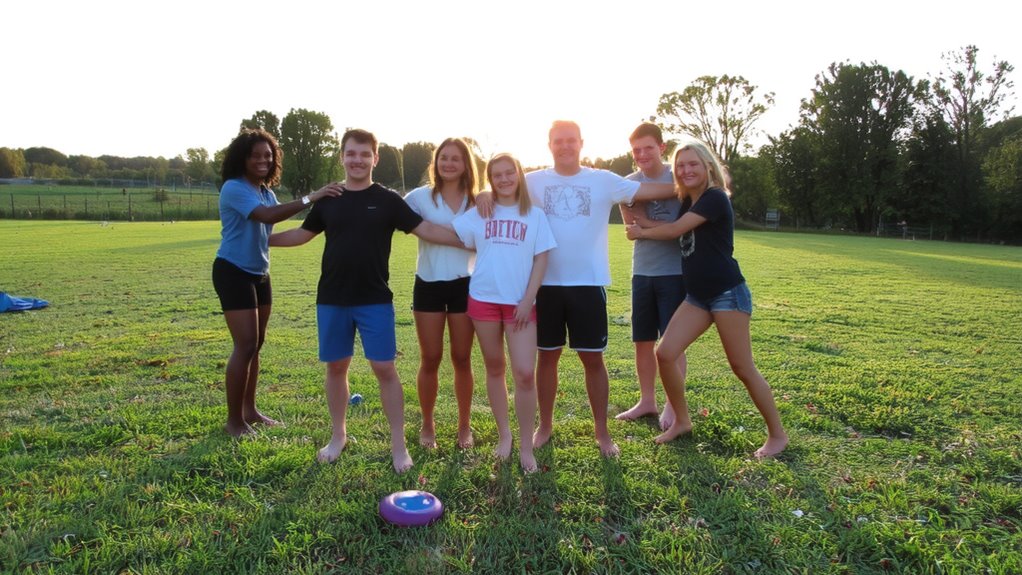
Why do some teams gel right away while others struggle to connect, even after weeks of training? You’ve likely seen it-teams that click from day one, while others remain stiff and distant. The difference often lies in starting with intentional Icebreaker activities. Simple Two word games, for instance, force quick thinking and shared focus, reducing social pressure while sparking engagement. These exercises aren’t just fluff; they activate communication pathways early, setting the tone for trust. Unlike fitness recovery tools or firness gear, which support physical restoration, Icebreaker activities target emotional synchronization-just as essential for peak team performance. They’re low-cost, easy to implement, and scalable across team sizes. When done consistently, they reduce cliques and encourage inclusivity. Coaches who prioritize these moments early often see better cohesion during high-pressure situations. So don’t overlook the power of a well-placed game-it might be the truest performance enhancer you’re not using.
Improve Communication With No-Talk Challenges
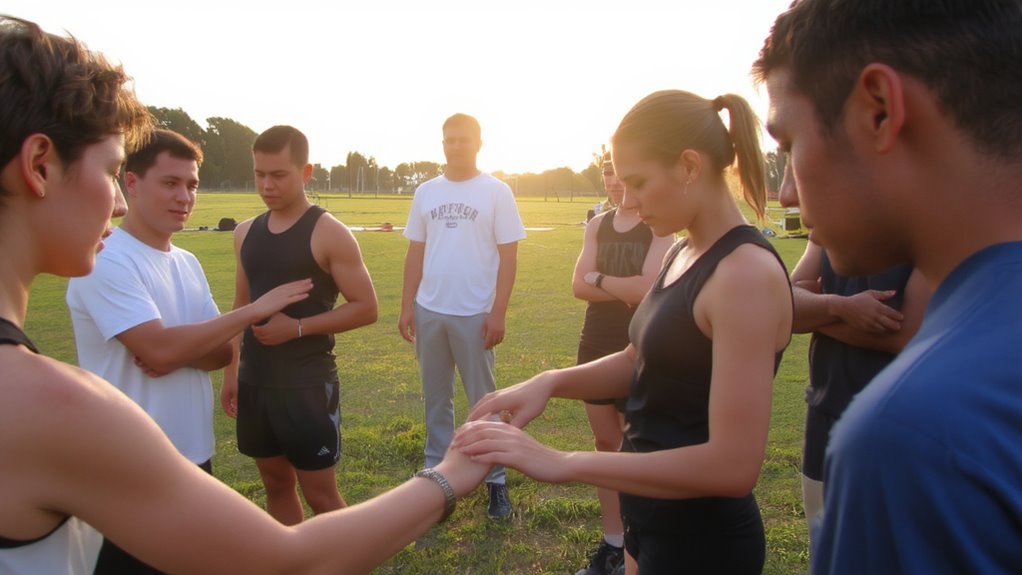
While you might assume communication exercises depend on dialogue, some of the most effective team-building strategies actually require silence. No-talk challenges push you to rely on nonverbal cues like hand signals, eye contact, and body positioning to coordinate tasks. These exercises sharpen awareness and force athletes to pay closer attention to subtle shifts in movement and expression. You’ll quickly learn that silent support can be just as powerful as spoken encouragement. Teams that master this form of connection often report smoother shifts during high-pressure moments, where verbal communication isn’t feasible. Practicing in silence builds trust-each member learns to anticipate actions and respond instinctively. Coaches observe improved synchronization in drills, suggesting that nonverbal fluency strengthens overall cohesion. While it may feel awkward at first, consistent use of no-talk challenges conditions athletes to communicate efficiently under constraints, making them more adaptable and emotionally attuned during actual competition.
Build Empathy By Sharing Athlete Stories
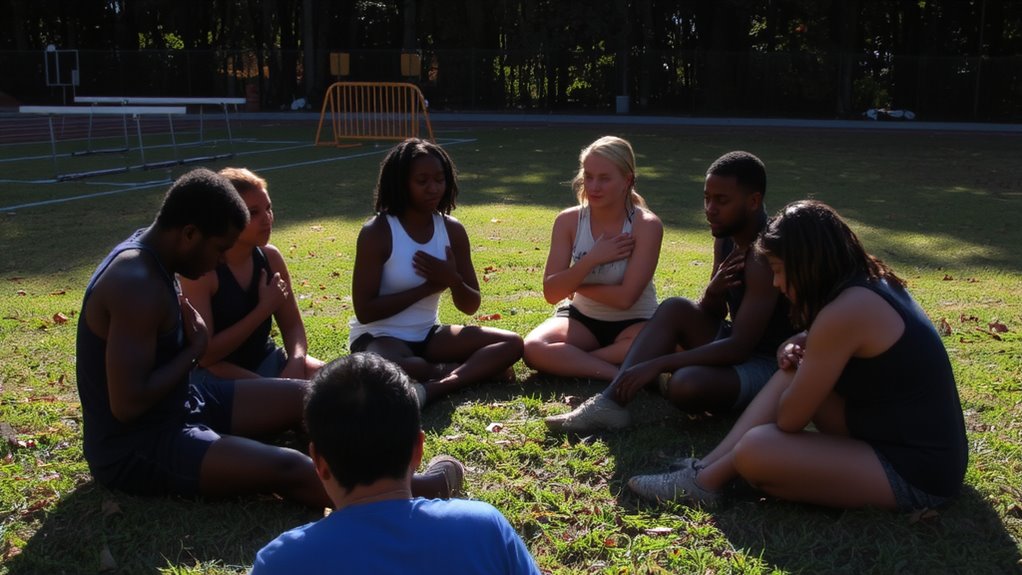
How well do you really know your teammates beyond the stats and the sweat? True connection comes from vulnerability sharing and understanding personal struggles. When athletes open up about challenges-like injury recoveries or mental health battles-it builds empathy. This isn’t just emotional support; it’s emotional intelligence in action. Consider these examples:
| Athlete | Struggle Shared | Outcome |
|---|---|---|
| Jamie | Anxiety before games | Team checks in weekly |
| Malik | ACL recovery loneliness | Group messages during rehab |
| Priya | Imposter syndrome | Leader in peer mentoring |
These stories foster deeper understanding. You start seeing teammates not just as players, but as people. Vulnerability sharing doesn’t weaken performance-it strengthens cohesion. When personal struggles are voiced in a safe space, trust grows. Empathy becomes part of team culture. And culturally strong teams communicate better, push harder, and recover faster-not just physically, but emotionally.
Strengthen Trust Through Shared Physical Tasks
You’ve heard your teammates’ stories, seen the weight they carry behind the scenes, and now it’s time to move together-literally. Shared physical tasks build trust in ways conversation can’t, especially when they demand blindfolded trust and rope course collaboration. When you’re blindfolded, relying only on a teammate’s voice to guide you through an obstacle, you’re not just following directions-you’re testing faith in one another. Rope course collaboration takes this further, forcing constant communication, balance, and mutual support under physical strain. These exercises aren’t about strength alone; they reveal how well you listen, adapt, and depend on others. Teams that practice together this way develop sharper coordination and deeper accountability. Unlike isolated drills, these tasks mirror real-game dependence, where one misstep can affect everyone. They’re measurable, observable, and reveal leadership in motion. Done regularly, they condition not just bodies but bonds-making trust a practiced skill, not just a hope.
Align As a Team By Defining Your Core Values
Trust, commitment, and accountability don’t just emerge-they’re built through shared understanding, and that starts with clearly defined core values. You shape your team identity by collaboratively naming the principles that guide behavior, performance, and support. When athletes contribute to defining these values-like discipline, respect, or relentless effort-they develop a stronger shared commitment. This isn’t just about posting slogans; it’s about aligning actions with beliefs during practice, competition, and recovery. Consistent values influence how you use fitness recovery tools-like foam rollers or compression gear-turning individual routines into team rituals when applied with mutual accountability. Teams that live their values see better cohesion, faster conflict resolution, and deeper trust. Defining core values gives your group direction and emotional consistency, especially under pressure. It turns a group of individuals into a unified unit, where every member knows not just what they’re doing, but why.
On a final note
You build stronger teams not just through drills, but by fostering trust, communication, and shared values. These exercises sharpen emotional bonds, enhancing on-field synergy. Likewise, fitness recovery and proper gear matter-they support performance and reduce injury. Compression wear, foam rollers, and quality hydration systems prove effective. When recovery habits align with team values, resilience improves. Consistency in both training and care delivers results.