Electrical Muscle Stimulation Guide: Understanding EMS Devices and Their Applications in Fitness
You use electrical muscle stimulation (EMS) to activate motor nerves with electrical pulses, mimicking your brain’s signals to trigger muscle contractions. It helps with recovery by boosting blood flow and reducing soreness, though it can’t replace weightlifting for building strength. EMS targets specific muscles with minimal joint strain, making it useful for balance and maintenance. When used right, it complements training-keep sessions short, place pads correctly, and pair it with effort. There’s more to optimizing your setup effectively.
Notable Insights
- EMS uses electrical pulses to stimulate motor nerves, causing muscle contractions similar to natural neural activation.
- It enhances recovery by improving blood flow, reducing soreness, and supporting muscle regeneration post-exercise.
- EMS is not a replacement for weight training but complements it by aiding strength and neuromuscular efficiency.
- Proper electrode placement on clean skin over target muscles ensures effective and safe stimulation.
- Home users should limit sessions to 15–30 minutes and follow device guidelines to avoid overuse or injury.
What Is EMS and How Does It Work?
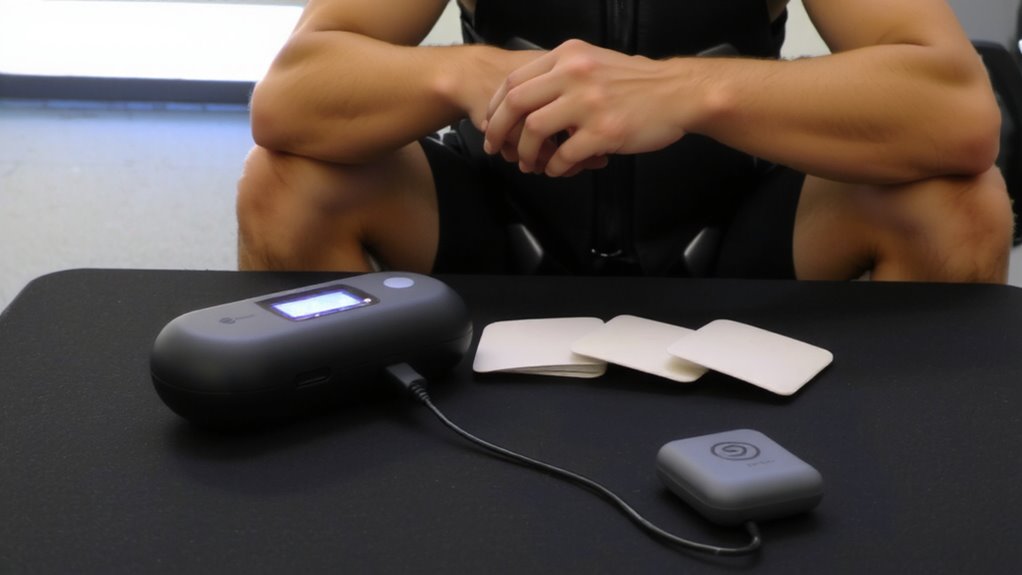
Electrical pulses-those tiny currents delivered through wires and electrodes-are at the heart of what makes Electrical Muscle Stimulation (EMS) work. You’re fundamentally using controlled nerve stimulation to trigger muscle activation without voluntary effort. When the current reaches motor nerves, they fire just as they would from brain signals, causing contractions. This mimics natural movement patterns, making EMS useful for rehabilitation and conditioning. The intensity, frequency, and pulse duration determine how deeply the nerves are stimulated and how strong the resulting contraction is. While not a replacement for active training, it’s a strategic tool when used properly. Devices vary in quality-look for adjustable settings and reliable electrode conductivity. Proper placement matters: pads must align with targeted muscle groups to maximize effectiveness. With consistent use and correct setup, you’ll see better neuromuscular response over time, supporting recovery and muscular endurance without heavy joint strain. For home users, choosing among the best EMS devices can significantly enhance training flexibility and effectiveness, especially when selecting a device with medical-grade stimulation and wearable convenience. best EMS devices
Does EMS Build Muscle Like Weightlifting?
While EMS can enhance muscle activation and support recovery, it’s not going to build muscle the same way weightlifting does. Traditional resistance training creates mechanical tension and metabolic stress that drive hypertrophy through progressive overload-something EMS alone can’t replicate. Still, EMS delivers strong muscle activation techniques by stimulating motor neurons directly, encouraging superficial muscle contractions. These contractions can improve strength to a degree, but they lack the full neuromuscular adaptation patterns triggered by voluntary lifting. For meaningful muscle growth, nothing replaces consistent resistance training. Use EMS as a supplementary tool, not a substitute. One effective way to integrate EMS into your routine is by using the best EMS machines for home workouts.
Can EMS Speed Up Recovery and Prevent Injury?

What if you could ease soreness and get back to training faster-with a little help from a device? EMS may be your edge when it comes to recovery and injury prevention. By delivering mild electrical impulses, these devices stimulate blood flow and encourage muscle regeneration, helping reduce delayed onset muscle soreness (DOMS). Athletes often use EMS post-workout to speed up recovery, reporting quicker return to peak performance. While it’s not a magic fix, the enhanced circulation supports nutrient delivery to fatigued tissues, aiding repair. Consistent use, especially during high-volume training, may decrease strain risks by promoting balanced muscle activation-key in injury prevention. Devices vary in intensity and electrode placement, so proper setup matters. Used wisely, EMS complements rest, hydration, and nutrition. Though evidence isn’t universal, many rehab specialists and trainers incorporate it as part of a smart recovery strategy. For best results, choosing a device from the top picks can ensure effective and reliable performance.
EMS vs. Weights: What’s the Difference?
How do you build strength-through the grind of lifting weights or the subtle pulse of electrical currents? Traditional weight training builds muscle through progressive resistance, engaging motor units with increasing loads-you actually lift and strain. EMS, on the other hand, uses electrical impulses to trigger involuntary contractions, stimulating deeper muscle fibers without joint stress. Weights excel at building raw power and endurance, while EMS offers targeted support for muscle symmetry and posture correction by activating underused or imbalanced areas. You’re not replacing squats with stimulation, but pairing them can refine results. EMS won’t match the hypertrophy from heavy lifts, but it helps maintain muscle tone during recovery or when mobility’s limited. It’s less about mass and more about neuromuscular efficiency. Used together, they offer a fuller approach: weights for strength, EMS for balance and precise activation. You get the best of both-power and precision.
How to Choose the Right EMS Device
Why do some EMS devices deliver results while others barely make a difference? It often comes down to design, functionality, and how well they align with your fitness goals. When choosing the right EMS device, prioritize user comfort-look for adjustable intensity levels and soft, skin-friendly electrode pads that stay in place during movement. A model with customizable programs lets you target specific muscles effectively. Device portability matters too; compact, wireless units let you train at home or on the go without setup hassle. Consider battery life and ease of use-devices with intuitive controls save time and reduce frustration. While advanced features like app connectivity can help, they’re not essential. Ultimately, the best device balances performance, comfort, and convenience, supporting consistent use without sacrificing quality or results.
Who Shouldn’t Use EMS: And Why
Just because an EMS device checks all the boxes for comfort, customization, and portability doesn’t mean it’s right for everyone. Certain health conditions make EMS use risky or outright unsafe. You should avoid these devices if you have a pacemaker, as electrical signals may cause pacemaker interference, disrupting heart rhythm. Pregnant individuals must also steer clear due to pregnancy risks, especially from abdominal stimulation that could affect fetal development. Neurological disorders and recent surgeries are additional red flags.
| Condition | Reason to Avoid EMS |
|---|---|
| Pacemaker users | Risk of pacemaker interference |
| Pregnancy | Potential pregnancy risks |
| Epilepsy | May trigger seizures |
| Deep vein thrombosis | Could dislodge clots |
| Open wounds or rashes | May worsen skin irritation |
How to Use EMS Safely at Home
While EMS technology offers a convenient way to support muscle recovery and enhance training from home, using it safely means following a few essential guidelines. Always read the manufacturer’s instructions, as settings and features vary across fitness recovery gear. Proper electrode placement is critical-position pads on clean, dry skin over targeted muscle groups, avoiding joints, bones, or irritated areas to prevent discomfort or skin reactions. Never place electrodes on the neck, chest, or head unless the device explicitly allows it. Keep session duration short, typically 15 to 30 minutes per area, to prevent overstimulation. Exceeding recommended times can lead to muscle fatigue or irritation. Use EMS as a supplement, not a replacement, for active exercise. Inspect pads regularly and replace them when they lose adhesion. Consistent maintenance guarantees effective performance and longevity of your device.
On a final note
You’ve seen how EMS can support recovery and complement training, but it won’t replace lifting weights. These devices stimulate muscles electrically, aiding circulation and reducing soreness, which makes them useful post-workout. While they help maintain muscle tone, gains in strength and size still require resistance training. Choose FDA-cleared models with adjustable intensity and proper electrode placement. Used correctly, EMS is a practical tool-best for recovery, not building muscle. Always follow safety guidelines.